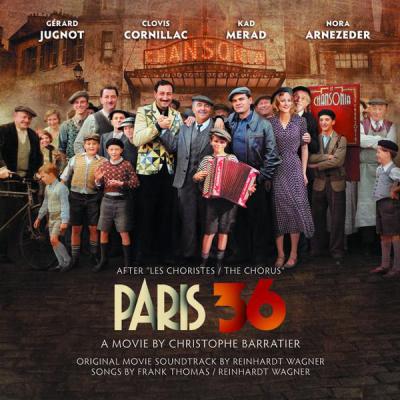
"Paris 36" Soundtrack Lyrics
Musical • 2009
Track Listing
Reinhardt Wagner
Nora Arnezeder
Reinhardt Wagner
Kad Merad
Reinhardt Wagner
Nora Arnezeder
Reinhardt Wagner
Kad Merad
Reinhardt Wagner
Kad Merad
Gerard Jugnot
Reinhardt Wagner
Nora Arnezeder
Reinhardt Wagner
Nora Arnezeder
Kad Merad
Reinhardt Wagner
Reinhardt Wagner
Gilles Sanjuan
Kad Merad
Francois Jerosme
Francois Morel
Nora Arnezeder
"Paris 36 (Bande originale du film)" – Album Guide to Tracks and Key Scenes
Overview
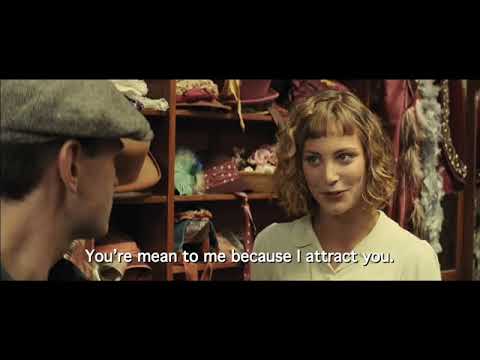
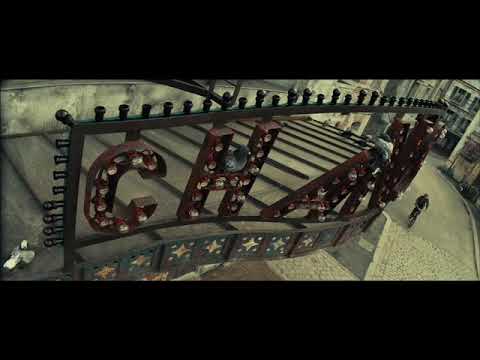
What if a movie-musical treated nostalgia like a working instrument — not a glaze, a voice? Paris 36 (Faubourg 36) does exactly that. On the eve of the Popular Front in 1936, a shuttered neighborhood music hall — the Chansonia — sputters back to life under the care of out-of-work friends, a gangster landlord, and a young singer with a chimney-smoke timbre named Douce. The soundtrack is the theater’s second stage: chanson waltzes and foxtrots, backstage reprises and a cappella hushes that make a crowd hold its breath.
Composer Reinhardt Wagner and lyricist Frank Thomas write new “standards” that feel period-true without pastiche fatigue. Many songs are performed on screen, most memorably by Nora Arnezeder (as Douce). The album moves like a revue: overture → auditions → hit number → jealous sabotage → a last, luminous curtain call.
Genres and themes fall neatly into phases: musette-tinged waltz (community), fox-trot and cabaret (ambition), tango-shadowed torch songs (danger), and lullaby-slow finales (hard-won hope). The film’s Oscar-nominated “Loin de Paname” anchors the set — a love song to Paris that doubles as a mission statement for the Chansonia. As per the Academy’s records, it was up for Best Original Song at the 82nd Oscars.
How It Was Made
Music & lyrics: Wagner (music) and Thomas (lyrics) built a book of original numbers to be performed in-story — the Chansonia’s nightly program — so cues could shift fluidly between diegetic stage sound and underscoring. The writing leans on pre-war French dance forms and chanson prosody, then lets the cast deliver them in character.
Recording & album: The commercial album (Paris 36 — Bande originale du film) first appeared in 2008 (Galène Éditions), with several tracks sung by Nora Arnezeder (“Loin de Paname,” “Attachez-moi,” “Enterrée sous le bal,” “Un recommencement,” “Partir pour la mer”). An international edition runs 23 tracks (~52 minutes) and mirrors the film’s revue structure.
On-set approach: Key moments were staged to camera with full takes. One signature choice: Arnezeder performs “Loin de Paname” a cappella in a spotlight — the quietest showstopper in the movie, engineered to let the room’s reaction be the arrangement.
Tracks & Scenes
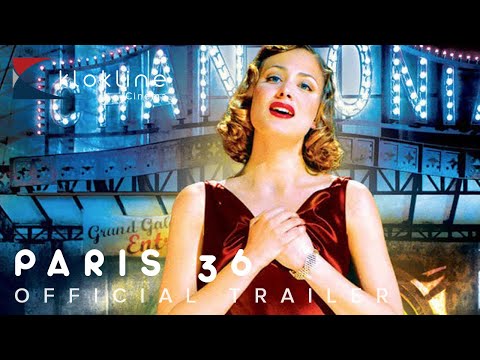
“Loin de Paname” — Nora Arnezeder
Where it plays: Douce’s breakthrough. House lights fall to a pin; she sings a cappella at first, then the tiniest accompaniment creeps in. Faces in the stalls soften; even the cynics stop fidgeting. It plays entirely on stage — pure diegesis — but the reaction shot turns it into score.
Why it matters: The film’s heart and calling card — a hymn to Paris as home, and the crowd’s first proof that the Chansonia can live again.
“Attachez-moi” — Nora Arnezeder
Where it plays: Later in the run, Douce steps into a slinkier costume and a knowing grin. The band hits a fox-trot snap; the camera plays peek-a-boo with backstage rivals and the club’s shady “protector.” Diegetic stage number with cutaway intrigue.
Why it matters: Shows Douce’s growing command — and how success paints a target on her back.
“Enterrée sous le bal” — Nora Arnezeder
Where it plays: A midnight set after bad news. Sawdust floor, soft amber top-light; waltz time turns the hall into a memory box. You can hear chairs creak as the regulars lean forward.
Why it matters: Elegy in 3/4 — grief without melodrama, and a letter to the life she’s chosen.
“Un recommencement” — Nora Arnezeder
Where it plays: Quick montage of fixes and rehearsals as the troupe claws the theater back from debt and thugs; posters go up, the pit tunes, and the neighborhood returns. Mostly non-diegetic, but it keeps stealing glances at the stage.
Why it matters: Title says it — a restart. The tune gives the work grit and lift.
“Partir pour la mer” — Nora Arnezeder
Where it plays: A backstage daydream between shows — a postcard fantasy in light steps and hand-claps, cut against the practical business of curtains and cues.
Why it matters: A breath between fights; reminds us Douce is young, not just a symbol.
“Le môme Jojo” — company (onstage comic turn)
Where it plays: Old-school music-hall patter for the regulars, a wink toward the troupe’s pint-size mascot. Diegetic, with chorus lines and a rim-shot smile.
Why it matters: Rooted in vaudeville tradition; the Chansonia isn’t just star turns — it’s community ritual.
“Sous le balcon de Maria” — Gilles San Juan
Where it plays: A romantic tenor set piece that the management uses to stretch the program; the camera catches Douce listening from the wings.
Why it matters: Places the film’s original songs alongside operetta-style set pieces — a full bill, not a one-singer showcase.
Notes & Trivia
- “Loin de Paname” (music Wagner, lyrics Thomas) was nominated for Best Original Song at the 82nd Academy Awards.
- The international soundtrack edition lists 23 tracks (~52 minutes) and functions like a complete Chansonia playbill.
- Arnezeder’s vocals carry several featured numbers — she’s the film’s on-screen voice for Douce as well as the album’s.
- The French title is Faubourg 36; the film is set against the spring 1936 Popular Front.
- Director Christophe Barratier stages “Loin de Paname” with a cappella opening to capture the crowd’s hush (a deliberate choice noted in production materials).
Music–Story Links
When the Chansonia reopens, songs aren’t commentary — they’re the plot. “Loin de Paname” earns Douce her place and buys the troupe time. “Attachez-moi” is both number and narrative feint: while the floor smiles, offstage deals harden. And each waltz that lands (“Enterrée sous le bal”) binds the room together against the film’s heavies; community forms in rhythm and rhyme long before the legal papers catch up.
Reception & Quotes
Reviews split on the film’s sugar content but praised the period feel and live-on-stage strategy; the album found fans well beyond the movie’s box office, thanks to its stand-alone charm. The Oscar nod for “Loin de Paname” sealed the music’s reputation as more than nostalgia.
“Sweet and light… an homage to French vaudeville.” — critics’ consensus summaries
“‘Loin de Paname’ — a wistful waltz to Paris, sung with luminous stillness.” — awards coverage
“Arnezeder’s numbers make the Chansonia feel real — you can smell the sawdust.” — album write-ups
Interesting Facts
- Several album cuts credit cast members on mic (e.g., comic/chorus features), emphasizing the ensemble’s theater DNA.
- The soundtrack’s label credit reads Galène Éditions on digital storefronts; some territories list “Various Artists — Version internationale.”
- Track ordering follows a classic variété bill: overture, novelty turns, star numbers, entr’acte, finale.
- “Enterrée sous le bal” began a small second life on streaming playlists of modern chanson réaliste despite being a 2008 original.
- Wagner later re-anthologized highlights (“Loin de Paname,” “Générique de fin”) on his own film-music compilation.
Technical Info
- Title: Paris 36 (Bande originale du film)
- Year: 2008 album (U.S./UK release of the film in 2009)
- Type: Original songs performed largely in-story (diegetic) + instrumental score
- Composer: Reinhardt Wagner
- Lyricist: Frank Thomas
- Key on-album vocals: Nora Arnezeder (“Loin de Paname,” “Attachez-moi,” “Enterrée sous le bal,” “Un recommencement,” “Partir pour la mer”)
- Label: Galène Éditions (international digital release)
- Awards: Academy Award nomination — Best Original Song (“Loin de Paname”)
- Setting: Paris, spring–summer 1936; the Chansonia music hall in a working-class faubourg
Questions & Answers
- Who wrote the songs for Paris 36?
- Reinhardt Wagner (music) and Frank Thomas (lyrics). Many are performed on screen as part of the Chansonia’s bill.
- Which song earned the Oscar nomination?
- “Loin de Paname,” sung in the film by Nora Arnezeder — nominated for Best Original Song at the 82nd Academy Awards.
- Is the album a score or a song compilation?
- Both: it mixes orchestral cues with fully performed stage numbers — closer to a period revue than a modern pop tie-in.
- Are the big numbers diegetic?
- Yes. Most marquee songs happen on the Chansonia stage, then occasionally reprise as underscoring.
- Where can I stream the soundtrack?
- Look for the international edition (Paris 36 — Bande originale du film) on major platforms; it runs ~23 tracks (~52 minutes).
Canonical Entities & Relations
| Subject | Verb | Object |
|---|---|---|
| Christophe Barratier | wrote & directed | Paris 36 / Faubourg 36 |
| Reinhardt Wagner | composed | songs & score for Paris 36 |
| Frank Thomas | wrote lyrics for | original songs in Paris 36 |
| Nora Arnezeder | performed | “Loin de Paname,” “Attachez-moi,” “Enterrée sous le bal,” “Un recommencement,” “Partir pour la mer” |
| Gilles San Juan | performed | “Sous le balcon de Maria” |
| Galène Éditions | released | Paris 36 (Bande originale du film) |
| Academy of Motion Picture Arts and Sciences | nominated | “Loin de Paname” for Best Original Song (82nd Oscars) |
| Chansonia | fictional venue within | Paris 36 — locus of diegetic performance |
Sources: Sony Pictures Classics trailer; Apple Music album listing (international edition); IMDb soundtrack credits; Academy Awards database; French press-kit notes; streaming track pages and lyrics resources; French & English Wikipedia entries on the film and song.
November, 18th 2025
A-Z Lyrics Universe
Cynthia Erivo Popular
Ariana Grande Horsepower
Post Malone Ain't No Love in Oklahoma
Luke Combs Good Riddance (Time of Your Life)
Green Day Bye Bye Bye
*NSYNC You're the One That I Wan
John Travolta & Olivia Newton-John I Always Wanted a Brother
Braelyn Rankins, Theo Somolu, Kelvin Harrison Jr. and Aaron Pierre The Power of Love
Frankie Goes to Hollywood Beyond
Auli’i Cravalho feat. Rachel House MORE ›