Soundtracks:  A B C D E F G H I J K L M N O P Q R S T U V W X Y Z #


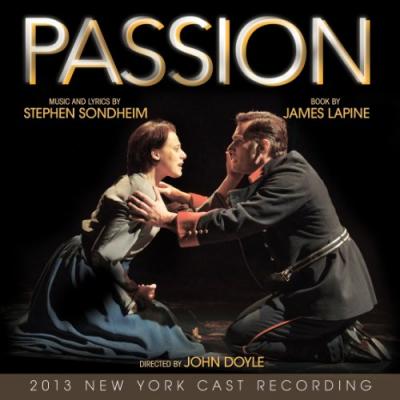
Passion Album Cover

"Passion" Soundtrack Lyrics

Musical • 1997

Track Listing


"Passion (1997 London Cast Recording)" – Album Guide to Tracks and Key Scenes

Trailer still for Sondheim’s Passion: lovers in shadow, 19th-century uniforms and candlelit rooms
Passion — trailer imagery for recent stagings; the music remains the heart.

Overview

Can a musical seduce you into believing an impossible love — then prove you believed it? Passion does exactly that. Stephen Sondheim and James Lapine strip the triangle to nerve and bone: Giorgio, a handsome officer; Clara, his married lover; and Fosca, a sick, unloved woman whose absolute devotion terrifies him. The 1997 London cast recording bottles the show’s ache and argument — ardent strings, stark brass, letters that practically sing themselves.

This album reunites the West End leads — Michael Ball (Giorgio), Maria Friedman (Fosca), Helen Hobson (Clara) — and captures the score’s chamber-opera intensity. The writing moves in breath-long phrases; leitmotifs braid (“Happiness,” “I Read,” “Loving You”) until belief turns. It’s not lush romance so much as relentless honesty, sung beautifully.

Genre phases: parlour lyricism (intimacy) → martial pulse (duty) → obsessive recitative (confrontation) → radiant threnody (acceptance). As per Sondheim’s own framing, the show is about how unconditional love “cracks someone open” — and you can hear the crack in this recording.

How It Was Made

Source & pedigree. Based on Ettore Scola’s film Passione d’amore (from Tarchetti’s novel Fosca), Passion opened on Broadway in 1994 and in London in 1996. The London company then regrouped in June 1997 for a live-in-concert recording; the commercial release is labeled the 1997 London Cast Recording.

Recording particulars. Issued in the U.K. with 27 tracks (~74 minutes), the album presents the show straight through: overture-less, letter-driven, with Jonathan Tunick’s orchestrations voiced for intimate theatre forces. Vocals sit forward; strings and winds carry the psychological weather.

Behind-the-scenes vibe from trailer frames: letters, uniforms, a chamber ensemble in shadow
How it was made — the West End cast reunited for a 1997 live concert recording

Tracks & Scenes

“Happiness” — Clara & Giorgio
Where it plays: Curtain rise as a bed, a city, and a secret arrange themselves. A lilting 6/8 duet tucks lovers under a blanket of promises before duty calls Giorgio away.
Why it matters: Establishes the show’s clean line and the cost of leaving warmth for honor.

“First/Second/Third Letter” — Clara (and Giorgio’s replies)
Where it plays: A correspondence montage: Clara’s perfume on stationery, the regiment’s cold corridors, the rhythm of waiting. Music becomes epistolary heartbeat; the stage slows to the speed of post.
Why it matters: Turns plot into pulse — the letter-music is how this story breathes.

“I Read” — Fosca
Where it plays: By lamplight, Fosca speaks the things she has only read about — beauty, feeling, expectation — and admits the hunger those pages fed. The aria is conversational, unrhymed, exposed.
Why it matters: The album’s first direct appeal from Fosca; she declares an interior, not a plea.

“Garden Sequence” — Giorgio & Fosca
Where it plays: Night air, a bench, a soldier trying to be kind. Fosca’s gratitude overwhelms into confession; Giorgio reaches for boundaries that keep melting in her tears.
Why it matters: The pivot from pity to danger. Harmonies tighten; strings feel feverish.

“I Wish I Could Forget You” — Fosca
Where it plays: After Giorgio breaks, Fosca sings a love that won’t release its prey or its singer. The melody climbs as if it can outrun itself; it cannot.
Why it matters: Sondheim’s obsessive engine at full burn — frightening and tender at once.

“Loving You” — Fosca
Where it plays: A soft declaration to Giorgio, dying and luminous. The orchestra barely breathes; the lyric refuses apology.
Why it matters: The show’s thesis set to a lullaby: love as act, not bargain.

“No One Has Ever Loved Me” — Giorgio
Where it plays: Final realization: what Fosca gave him was not flattery but a knife that opened him. He sings in a new voice — the music broader, the self smaller.
Why it matters: The conversion scene, earned by the album’s careful accumulation of motive and motif.

Also core cues: “Soldiers’ Gossip,” “Flashback,” “Is This What You Call Love?,” and the stark “Finale (Passion),” which returns the opening figures with different meaning.

Trailer collage echoing the album: letter-writing, garden bench, a fevered confession
Tracks & scenes — letters as music, obsession as melody

Notes & Trivia

  • The London album runs 27 tracks (~74 minutes) and credits Michael Ball, Maria Friedman, and Helen Hobson as leads.
  • It reunites the 1996 West End company in a 1997 live concert capture — not a standard studio cast album.
  • Passion won the 1994 Tony Awards for Best Musical, Book, and Score; the Broadway production was filmed for PBS (aired 1996).
  • Jonathan Tunick’s orchestrations favor chamber forces; the intimacy is the point.
  • Key London cut titles mirror the 1994 OBC sequence, preserving the show’s letter-driven architecture.

Music–Story Links

Letters literally sing; when Clara writes, the orchestration clears space so vowels feel like breath. In the garden, harmony tightens as Fosca’s need narrows Giorgio’s choices. And the last stretch flips subject and object: the musical idea that began as Clara’s warmth turns up inside Giorgio’s confession — proof that Fosca’s love has changed the instrument he plays.

Reception & Quotes

Responses split on comfort but converged on craft. Critics admired the score’s single-minded honesty and the London cast’s dramatic bite; fans treat this disc as the “big-voiced” companion to the leaner 1994 OBC.

“The most personal and internalized of Sondheim’s works.” — The New York Times
“A chamber fever dream, with thought set to song.” — critical summaries
“Ball and Friedman make the case with clarity and fire.” — album write-ups
End-card trailer frame: a final letter, a closed hand, a theme returning transformed
Reception — high drama sung very quietly

Interesting Facts

  • The London recording is often tagged as “cast” though captured live in concert; audience presence subtly leaks into the acoustic.
  • Several regional discs exist (e.g., Dutch-language 2004) — rare for Sondheim scores.
  • PBS’s American Playhouse telecast preserved the Broadway staging; it nudged the show into classrooms and conservatories.
  • The score’s letter cues (“First/Second/Third Letter”) are through-composed bridges — miniature arias for parchment and ink.
  • “Loving You” became a recital staple far beyond the musical-theatre world.

Technical Info

  • Title: Passion (1997 London Cast Recording)
  • Year: 1997 (album; London company)
  • Type: Live concert cast recording
  • Music & Lyrics: Stephen Sondheim
  • Book: James Lapine
  • Principal cast: Michael Ball (Giorgio), Maria Friedman (Fosca), Helen Hobson (Clara)
  • Label/rights: Exallshow Ltd. / Warner Music Group (UK release)
  • Length/Tracks: ~74 minutes; 27 tracks
  • Notable numbers: “Happiness,” “I Read,” “Garden Sequence,” “I Wish I Could Forget You,” “Loving You,” “No One Has Ever Loved Me,” “Finale (Passion)”
  • Context: Broadway premiere 1994; West End 1996; PBS telecast 1996 (Broadway cast)

Questions & Answers

Is the 1997 album a true cast recording?
It reunites the West End leads in a live BBC concert (June 1997) — so yes, cast voices, but captured in performance, not studio.
How does it differ from the 1994 OBC?
Fuller vocal heft (Ball/Friedman), slightly broader tempi in places, and a concert acoustic; the sequence mirrors the OBC’s narrative arc.
Where did the story come from?
Ettore Scola’s film Passione d’amore and I.U. Tarchetti’s novel Fosca.
Which songs define the turn?
“Garden Sequence,” “I Wish I Could Forget You,” “Loving You,” and “No One Has Ever Loved Me.” They trace pity → obsession → surrender → clarity.
Was the Broadway production filmed?
Yes — taped and aired on PBS in 1996, preserving the Lapine staging with the original Broadway cast.

Canonical Entities & Relations

SubjectVerbObject
Stephen Sondheimcomposed & wrote lyrics forPassion
James Lapinewrote the book forPassion
Michael BallperformedGiorgio (1997 London Cast Recording)
Maria FriedmanperformedFosca (1997 London Cast Recording)
Helen HobsonperformedClara (1997 London Cast Recording)
Exallshow Ltd. / WMGreleasedPassion (1997 London Cast Recording)
PBS American Playhousebroadcast1996 filmed Broadway production

Sources: Apple Music/Spotify album pages; Discogs notes on the 1997 London concert capture; Sondheim Guide (song/production history); Wikipedia overview (productions, awards); PBS/IMDb listing for the 1996 telecast.

November, 18th 2025


A-Z Lyrics Universe

Lyrics / song texts are property and copyright of their owners and provided for educational purposes only.