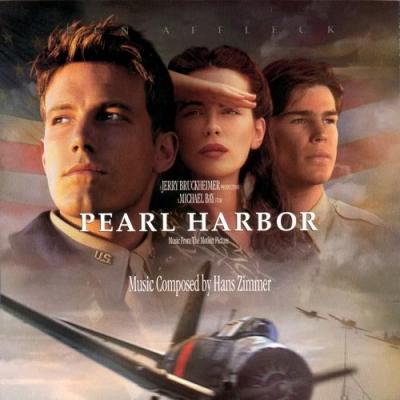
"Pearl Harbor" Soundtrack Lyrics
Movie • 2001
Track Listing
Faith Hill
“Pearl Harbor — Original Motion Picture Soundtrack (2001)” – Album Guide to Tracks and Key Scenes
Overview
How can an explosive war epic beat with a valentine’s heart? Pearl Harbor answers by braiding two musical identities: Hans Zimmer’s sweeping, melodic score and a power-ballad coda built to echo in graduation halls and weddings for years. The album swings from intimate piano motifs to percussion-heavy battle writing — romance and devastation under one flag.
The story tracks best friends Rafe and Danny and nurse Evelyn through courtship, separation, and the December 7 attack, then into the Doolittle Raid. The score’s main theme (“Tennessee”) sings small-town longing and moral clarity; set-piece cues (“Attack,” “War”) widen into thunder, brass, and martial ostinatos. Faith Hill’s end title “There You’ll Be” (written by Diane Warren) seals the film’s memory-keeping thesis.
Across the arc — arrival → adaptation → rebellion → collapse — the soundtrack’s genre map is clear: lyrical Americana piano for innocence and first love; choral-tinged orchestral writing for grief and duty; period source songs (Mills Brothers, Louis Armstrong, dance-band standards) to ground 1941 nightlife; and one glossy adult-contemporary anthem to carry the afterglow.
How It Was Made
Composer & palette. Zimmer builds around a simple hymnlike motif (piano/cello → strings) that he refracts into three threads: the lovers, the brothers-in-arms, and the cost of war. Additional music and editing flowed through his then–Media Ventures circle; Alan Meyerson’s mixes give the action cues their wide, glassy punch.
Supervision & album. Music supervision came from Kathy Nelson and Bob Badami — helpful on a picture that needed both period diegetics and a contemporary single. The album (Hollywood Records/Warner Bros.) presents Faith Hill’s “There You’ll Be” plus eight Zimmer cues, a concise narrative listen (as noted on label credits and retail listings).
Tracks & Scenes
“There You’ll Be” — Faith Hill
Where it plays: End titles and post-epilogue (approx. final minutes). The camera soft-lands after loss and mission, and the ballad carries memory into the credits; theatrical trailers and TV spots also leaned on it.
Why it matters: A Diane Warren elegy that became the film’s pop identity — grief framed as gratitude.
“Tennessee” — Hans Zimmer
Where it plays: Early courtship and return-home interludes; the theme threads Rafe/Evelyn’s New York harbor date and later reflective beats. Expect piano lead-ins that bloom to strings; non-diegetic.
Why it matters: The score’s soul — plainspoken melody that lets the movie cry without melodrama.
“...And Then I Kissed Him” — Hans Zimmer
Where it plays: Romantic crest as Rafe and Evelyn’s relationship flowers (pre-deployment) and in subsequent memory-laden reprises; non-diegetic, with harp/strings lilt.
Why it matters: A classic Zimmer lyric cue: suspended-time harmony for a kiss the plot will complicate.
“Brothers” — Hans Zimmer
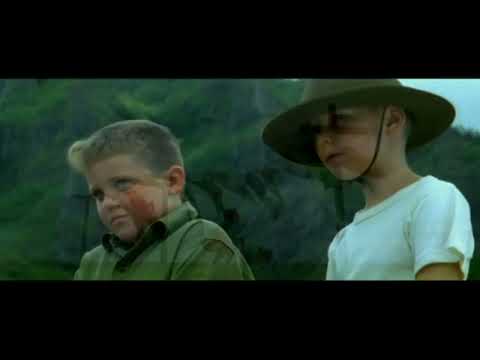
Where it plays: Rafe and Danny’s bond — boyhood Tennessee to cockpit camaraderie; non-diegetic variations around their shared decisions and sacrifices.
Why it matters: The friendship theme; steadier pulse, fewer ornaments, more resolve.
“Attack” — Hans Zimmer
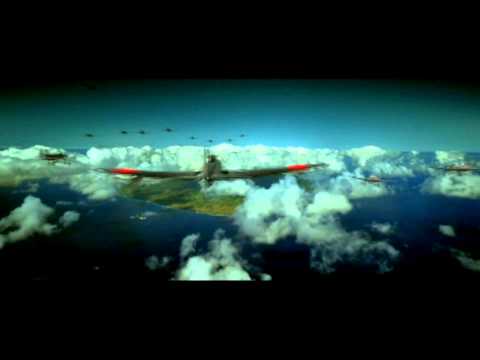
Where it plays: Core Pearl Harbor sequence (roughly mid-film, ~1:20–1:50). Orchestral surges, low brass, snare-drum undercurrent, and choral lifts ride the editing of torpedo runs, hospital triage, and shipboard crises.
Why it matters: A long-form action canvas that syncs to geography and escalating dread.
“December 7th” — Hans Zimmer
Where it plays: Aftermath montage: smoke, lists of the missing, and a quiet, reverent pace; non-diegetic strings and choir.
Why it matters: Memorial-tone writing that deliberately lowers the film’s temperature.
“War” — Hans Zimmer
Where it plays: Training and gearing-up beats for the Doolittle Raid; rhythmic ostinatos and bold brass step forward; non-diegetic.
Why it matters: “Resolve” music — the pivot from victimhood to agency.
“Heart of a Volunteer” — Hans Zimmer
Where it plays: Epilogue and farewell passages, capping the Doolittle mission and its cost; choir crowns the album’s thematic cycle.
Why it matters: The benediction — grief, pride, and continuity in one long breathe-out.
Also heard (period source): dance-band and vocal sides like “Little Brown Jug,” “Jeepers Creepers,” Mills Brothers favorites, and Hawaiian standards that paint barracks, canteens, and hotel floors — largely diegetic and scene-local, giving 1941 its lived-in sound.
Notes & Trivia
- Faith Hill’s “There You’ll Be” earned Oscar and Grammy nominations and became a crossover hit.
- The album sequence is economical — 1 pop single + 8 cues — yet it retells the film cleanly.
- Music supervisors Kathy Nelson and Bob Badami balanced 1940s source clearances with a contemporary flagship single.
- Zimmer’s main theme “Tennessee” is a fan favorite beyond the film — oft-covered by classical-crossover artists.
- Trailers famously leaned on Zimmer’s earlier “Journey to the Line” (from The Thin Red Line) before release.
Music–Story Links
When the piano of “Tennessee” opens on city lights and a borrowed patrol boat, the music treats a modest date like destiny — so we feel the fracture when war interrupts. “Attack” doesn’t just score explosions; it tracks the POV handoffs (pilots → sailors → nurses), letting rhythmic cells reset our position. And the epilogue’s “Heart of a Volunteer” reframes heroism as endurance — not fireworks, but a choir lifting what’s left.
Reception & Quotes
Reviewers were mixed on the film but singled out the score’s romance writing and the single’s radio power. The original album became a gateway Zimmer listen for non-score fans.
“Zimmer’s most elegant, consistently beautiful romance theme.” Filmtracks
“A noble melancholy — ‘Tennessee’ is the heart.” Classic FM
“‘War’ brings the percussion thunder fans expect.” Album review round-up
Interesting Facts
- Label split: The U.S. CD carried joint branding — Hollywood Records with Warner Bros. catalog numbering.
- Short and focused: At ~46 minutes, the album omits many cues; expanded/bootleg sessions circulate among collectors.
- Choir weight: The finale’s choral writing is a Zimmer hallmark that would echo in later epics.
- Source world: 1930s–40s sides (Mills Brothers, Louis Armstrong) act as gentle “room tone” for social scenes.
- Award trail: The film’s music was a Golden Globe score nominee; the Hill single landed Oscar/Grammy nods.
Technical Info
- Title: Pearl Harbor — Original Motion Picture Soundtrack
- Year / Type: 2001 / Movie
- Composer: Hans Zimmer (additional music via Media Ventures team)
- Music Supervision: Kathy Nelson; Bob Badami
- Label / Album: Hollywood Records in association with Warner Bros.; 9-track commercial album
- Key selections: “There You’ll Be” (Faith Hill), “Tennessee,” “Brothers,” “…And Then I Kissed Him,” “Attack,” “December 7th,” “War,” “Heart of a Volunteer.”
- Notable source cues: “Little Brown Jug,” “Jeepers Creepers,” Mills Brothers cuts, Hawaiian standards used diegetically.
- Awards: Best Original Song (Oscar) nomination for “There You’ll Be”; score nominated at the Golden Globes; film won the Academy Award for Sound Editing.
Questions & Answers
- Who composed the score, and what’s the main theme?
- Hans Zimmer composed it; the central melody is “Tennessee,” a piano-led hymn that recurs across love and memory scenes.
- Where does “There You’ll Be” appear in the film?
- It closes the film over the end credits, functioning as the pop coda to the story’s losses and goodbyes.
- Is there an official album — and what’s on it?
- Yes. The 9-track album pairs Faith Hill’s single with eight score cues that outline romance, attack, aftermath, and epilogue.
- Who handled period music?
- Music supervisors Kathy Nelson and Bob Badami cleared 1940s dance-band/vocal sides for parties, bars, and hotel scenes.
- Which cue underscores the harbor assault?
- “Attack” — a long, sectional cue whose percussion and brass are cut tightly to torpedo runs, hospital triage, and shipboard action.
Canonical Entities & Relations
| Subject | Relation | Object |
|---|---|---|
| Michael Bay | directed | Pearl Harbor (2001) |
| Hans Zimmer | composed score for | Pearl Harbor (2001) |
| Diane Warren | wrote | “There You’ll Be” |
| Faith Hill | performed | “There You’ll Be” |
| Kathy Nelson | music supervised | Pearl Harbor (2001) |
| Bob Badami | music supervised | Pearl Harbor (2001) |
| Hollywood Records / Warner Bros. | released | Pearl Harbor — Original Motion Picture Soundtrack (2001) |
| Touchstone Pictures / Jerry Bruckheimer Films | produced | Pearl Harbor (2001) |
Sources: Discogs release & credits; Apple Music listing; IMDb soundtrack/credits; Wikipedia (film & awards); Filmtracks review; MovieMusicUK review; Classic FM feature; period-song playlist references.
November, 18th 2025
A-Z Lyrics Universe
Cynthia Erivo Popular
Ariana Grande Horsepower
Post Malone Ain't No Love in Oklahoma
Luke Combs Good Riddance (Time of Your Life)
Green Day Bye Bye Bye
*NSYNC You're the One That I Wan
John Travolta & Olivia Newton-John I Always Wanted a Brother
Braelyn Rankins, Theo Somolu, Kelvin Harrison Jr. and Aaron Pierre The Power of Love
Frankie Goes to Hollywood Beyond
Auli’i Cravalho feat. Rachel House MORE ›