Soundtracks:  A B C D E F G H I J K L M N O P Q R S T U V W X Y Z #


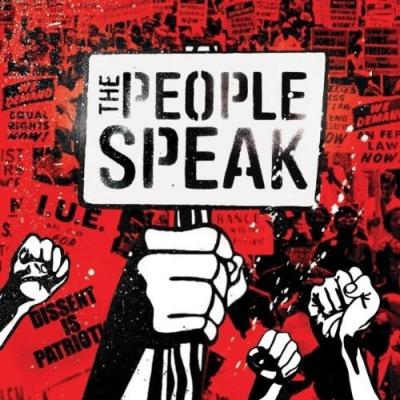
People Speak, The Album Cover

"People Speak, The" Soundtrack Lyrics

Movie • 2009

Track Listing


“The People Speak — Original Motion Picture Soundtrack (2009)” – Album Guide to Tracks and Key Scenes

The People Speak 2009 trailer still with Howard Zinn and onstage readers
The People Speak — live readings, protest songs, and an intimate, rootsy score, 2009

Overview

How do you soundtrack dissent — and still make it feel like a campfire everyone can sit around? The People Speak answers with a hybrid: readings of U.S. history’s radical voices, punctuated by protest songs new and old, plus a quiet, connective score. It’s history class staged like a concert — and it works.

Drawn from Howard Zinn’s A People’s History of the United States and Voices of a People’s History, the film moves from abolition and labor to war, civil rights, feminism, and immigration. Between spoken-word pieces, marquee artists step in as a Greek chorus: Springsteen, Dylan, Eddie Vedder, John Legend, Jackson Browne, P!nk, Lupe Fiasco, Taj Mahal, Allison Moorer, Randy Newman, Exene Cervenka & John Doe, and Rich Robinson, among others.

The mood map is simple but potent. Roots folk and Americana steady the hand; blues gives grit; soul asks hard questions; contemporary hip-hop and pop pull the material into the present tense. Across the arc — arrival → adaptation → rebellion → collapse (of old myths) — the soundtrack turns testimony into chorus.

How It Was Made

Score & sound design. Composer Pieter A. Schlosser provides the film’s original score, using intimate acoustic textures as glue between readings and performances. Light percussion, fingerpicked guitar, and spare piano keep the focus on words, not wallpaper.

Sessions & staging. The production filmed live at Boston’s Cutler Majestic Theatre and at Malibu Performing Arts Center; additional performances were captured in artist spaces (e.g., Springsteen tracked at home with just guitar and harmonica). The album release arrived via Verve/UMe as a 12-track compilation of exclusive live takes — a concise “protest canon” to accompany the documentary.

Trailer frame showing performers on a bare stage, mic stand center, audience in silhouette
Live-to-camera readings and performances — minimal staging, maximum presence.

Tracks & Scenes

“Do Re Mi” — Bob Dylan
Where it plays: A dust-bowl postcard performed solo, aligning Guthrie’s Great Depression lament with onstage readings about scarcity and migration. Filmed as an intimate performance; non-diegetic to the readings but intercut.
Why it matters: Anchors the film’s lineage — protest as American folk tradition.

“The Ghost of Tom Joad” — Bruce Springsteen
Where it plays: A home-studio performance cut directly against twenty-first-century testimonies of poverty and policing; just voice, guitar, harmonica.
Why it matters: Steinbeck echoes through Guthrie through Springsteen — the relay race of American dissent.

“Masters of War” — Eddie Vedder
Where it plays: Vedder’s rough, close-miked take follows antiwar readings; the camera holds on the lyric’s accusation as archival images pass.
Why it matters: A 1960s indictment kept in present tense — the song’s sting hasn’t dulled.

“Only a Pawn in Their Game” — Rich Robinson
Where it plays: Paired with civil-rights passages; Robinson’s delivery is unadorned, forcing attention to the words’ bitter anatomy of power.
Why it matters: Names the machinery — and the cost.

“What’s Going On” — John Legend
Where it plays: On a Boston stage, piano-and-voice; cut alongside readings on surveillance, policing, and civic grief.
Why it matters: Marvin Gaye’s question doubles as the film’s thesis.

“Dear Mr. President” — P!nk
Where it plays: Contemporary protest addressed straight to power; interleaves with post-9/11 policy readings and veterans’ testimony.
Why it matters: Bridges pop radio and the public square.

“American Terrorist” — Lupe Fiasco
Where it plays: A sharp, lyrical counterpoint during the modern chapters, juxtaposed with language from dissenters about war at home and abroad.
Why it matters: Inserts hip-hop’s reportage into a canon often framed as folk/rock.

“Sail Away” — Randy Newman
Where it plays: Newman’s satirical piano piece punctuates readings on capitalism and empire; the crowd laughs, then goes quiet.
Why it matters: Sweet melody, acid truth — perfect for the film’s tonal tightrope.

“Blues With a Feeling” — Taj Mahal
Where it plays: Between labor and civil-rights sections, a harmonica-and-voice breather; the camera lingers on hands and faces.
Why it matters: The blues as connective tissue — resilience as rhythm.

“Brother, Can You Spare a Dime?” — Allison Moorer
Where it plays: Depression-era standard framed by joblessness letters; Moorer leans into the lyric’s bruised pride.
Why it matters: History rhymes — on purpose.

“See How We Are” — Exene Cervenka & John Doe (X)
Where it plays: A roots-rock duet underscoring community action passages; the film uses its chorus like a benediction.
Why it matters: Punk-grown-up, turned toward neighborliness.

“The Drums of War” — Jackson Browne
Where it plays: Late in the film, as foreign policy voices are read; Browne’s reflective cadence steadies the transition to the finale.
Why it matters: A veteran protester calling for attention, not applause.

Trailer montage of stage lights, readers at lecterns, and musicians tuning
Song ↔ speech cross-cuts: the film turns testimony into a living mixtape.

Notes & Trivia

  • The original score is by Pieter A. Schlosser — compact cues that leave air around the words.
  • Performances were filmed in Boston and Malibu; Springsteen contributed from his New Jersey studio.
  • The soundtrack album (Verve/UMe) compiles 12 performances — a tight protest-song primer.
  • Several readings are by an all-star cast (e.g., Matt Damon, Josh Brolin, Rosario Dawson, Don Cheadle), interleaved with the songs.
  • The project later inspired UK and Australian editions with local performers and songs.

Music–Story Links

Dylan’s Guthrie covers frame labor and migration letters with the authenticity of field notes; when P!nk and Lupe arrive, the continuum snaps into view — same concerns, new vocabulary. Legend’s “What’s Going On” functions like a refrain the film keeps returning to, while Vedder’s “Masters of War” hard-cuts from rhetoric to responsibility. The sequencing is the argument: dissent is a relay; the handoff is musical.

Reception & Quotes

Critics praised the format — verbatim texts performed by actors, songs as counterpoint — and the way familiar anthems felt newly urgent in context.

“Striking, exhilarating… the performances are thrilling.” Los Angeles Times
“The perfect format for a history lesson… actual historical text, verbatim.” USA Today
Trailer beat: applause rises as the stage goes to black under a last chord
Applause as coda: songs lift the final readings into shared space.

Interesting Facts

  • Label lineage: Released on Verve/UMe with digital availability across DSPs; some stores billed it under “Various Artists.”
  • Exclusive takes: The album captures new, live versions — not previously released studio cuts.
  • Cross-genre: Folk, blues, soul, hip-hop, and alt-rock live comfortably side-by-side — by design.
  • Educational spin: The project seeded classroom editions and readings programs in later years.
  • Stage craft: Minimal sets keep lyrics and texts foregrounded; the music department mixes are deliberately dry and close.

Technical Info

  • Title: The People Speak — Original Motion Picture Soundtrack
  • Year / Type: 2009 / Documentary
  • Score Composer: Pieter A. Schlosser
  • Album: Various Artists — 12 tracks; Verve/UMe (December 2009 release window)
  • Key performances (select): Bob Dylan “Do Re Mi”; Bruce Springsteen “The Ghost of Tom Joad”; Eddie Vedder “Masters of War”; John Legend “What’s Going On”; P!nk “Dear Mr. President”; Lupe Fiasco “American Terrorist”; Randy Newman “Sail Away”; Allison Moorer “Brother, Can You Spare a Dime?”; Taj Mahal “Blues With a Feeling”; Jackson Browne “The Drums of War”; Exene Cervenka & John Doe “See How We Are”; Rich Robinson “Only a Pawn in Their Game”.
  • Filming/Recording: Cutler Majestic Theatre (Boston); Malibu Performing Arts Center; select artist studios.
  • Premiere: History Channel broadcast — December 13, 2009.
  • Availability: Album available on major DSPs; CD released in the U.S.

Questions & Answers

Who composed the original score?
Pieter A. Schlosser, whose understated cues bridge the readings and performances.
Is the soundtrack new live material or previously released tracks?
Newly recorded live performances for the project — a curated protest-song capsule.
Where were the performances filmed?
Primarily at Boston’s Cutler Majestic Theatre and Malibu Performing Arts Center, with some artist-space sessions.
What label released the album?
Verve/UMe handled the release; it’s available digitally and on CD.
Does the film include only folk and rock?
No — it spans folk, blues, soul, hip-hop, and roots rock to mirror the range of voices in the readings.

Canonical Entities & Relations

SubjectRelationObject
Howard Zinndirected/narratedThe People Speak (2009)
Chris MooredirectedThe People Speak (2009)
Anthony ArnovedirectedThe People Speak (2009)
Pieter A. Schlossercomposed score forThe People Speak (2009)
Verve / UMereleasedThe People Speak — Original Motion Picture Soundtrack
Bob Dylanperformed“Do Re Mi”
Bruce Springsteenperformed“The Ghost of Tom Joad”
Eddie Vedderperformed“Masters of War”
John Legendperformed“What’s Going On”
P!nkperformed“Dear Mr. President”
Lupe Fiascoperformed“American Terrorist”
Randy Newmanperformed“Sail Away”
Allison Moorerperformed“Brother, Can You Spare a Dime?”
Taj Mahalperformed“Blues With a Feeling”
Jackson Browneperformed“The Drums of War”
Exene Cervenka & John Doeperformed“See How We Are”
Rich Robinsonperformed“Only a Pawn in Their Game”

Sources: Wikipedia (film entry); HowardZinn.org album page; Apple Music listing; Discogs release notes; Spotify/YouTube Music album entries; IMDb (credits & premiere details); History Channel trailer upload.

November, 18th 2025


A-Z Lyrics Universe

Lyrics / song texts are property and copyright of their owners and provided for educational purposes only.