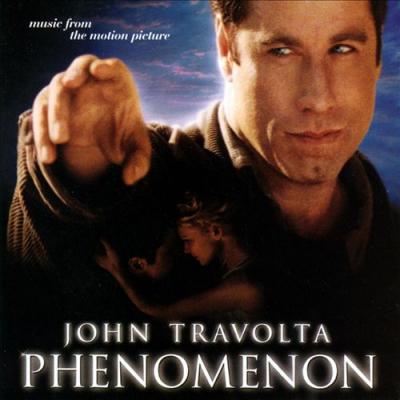
"Phenomenon" Soundtrack Lyrics
Movie • 2003
Track Listing
Eric Clapton
Bryan Ferry
Aaron Neville
Taj Mahal
Jewel
Peter Gabriel
Marvin Gaye
The Iguanas
Dorothy Moore
J.J. Cale
“Phenomenon (Music From the Motion Picture, 1996)” – Album Guide to Tracks and Key Scenes
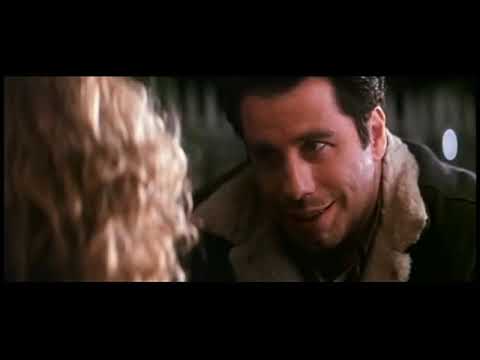
Overview
“Movie, 2003?” Close — the widely known Phenomenon is the 1996 John Travolta film; a TV sequel (Phenomenon II) aired in 2003. The soundtrack most people remember — the one that launched “Change the World” — is from 1996.
The album plays like small-town sunlight: adult-contemporary pop, classic soul, soft-blues and a hymn-like Thomas Newman piece. That blend mirrors George Malley’s arc — ordinary birthday night, extraordinary mind, community suspicion, then acceptance. It’s a needle-drop album with a composer’s heartbeat underneath.
Genres & themes in phases: rootsy singer-songwriter cuts (everyday grace); 80s/90s art-pop sheen (new awareness); classic soul (human warmth); desert-air blues (place); and one lyrical score cue to hush the room. According to the Reprise/Discogs listings, Robbie Robertson oversaw the compilation and even helped tailor Peter Gabriel’s “I Have the Touch” for the film’s texture.
How It Was Made
Compilation & production: Reprise issued an 11-track various-artists album, executive-produced/curated with input from Robbie Robertson; singles were cut by Babyface (for Eric Clapton) and Trevor Horn (for Bryan Ferry). The tracklist mixes catalog favorites (Marvin Gaye, Taj Mahal) and bespoke/reshaped material (Gabriel’s 1996 remix).
Score: Thomas Newman composed the original score; only one cue (“The Orchard”) appears on the retail album, but his glass-harp/piano textures thread the film. (as per film credits and album pages.)
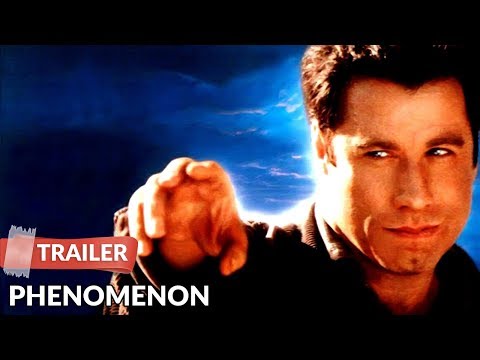
Tracks & Scenes
“Change the World” — Eric Clapton
Where it plays: A signature cue tied to the film’s release and end-credits circulation; the Babyface-produced single doubles as the album’s lodestar.
Why it matters: Became inseparable from the movie’s “quiet miracle” tone — a gentle, hopeful groove that outlived the box office.
“Have a Little Faith in Me” — Jewel (John Hiatt cover)
Where it plays: Romantic/emotional beats that lean into grace rather than spectacle — a soft-focus counterpoint to George’s sudden intellect.
Why it matters: The film’s thesis in four words; Jewel’s intimate take keeps the story human-scale.
“I Have the Touch (1996 mix)” — Peter Gabriel
Where it plays: Montage energy as George’s heightened perception turns errands and interactions into connected moments.
Why it matters: Robbie Robertson’s earthier remix swaps angular synth snap for human warmth — the right “feel” for Harmon.
“Dance with Life (The Brilliant Light)” — Bryan Ferry
Where it plays: Reflective, late-evening movement — verandas, slow drives, the town catching its breath around George’s change.
Why it matters: A custom-written meditation that gives the soundtrack its twilight shimmer.
“Crazy Love” — Aaron Neville & Robbie Robertson
Where it plays: Tender, domestic spaces; quiet reconciliation tones.
Why it matters: Neville’s feather-light phrasing turns kindness into melody.
“Corinna” — Taj Mahal
Where it plays: Main-street textures: garage doors up, radios down, summer heat on the hood of a car.
Why it matters: Roots-blues anchors the film in a real American place.
“Piece of Clay” — Marvin Gaye
Where it plays: A soul-searching interlude — dignity, humility, and the weight of how others shape us.
Why it matters: The album’s moral center; Gaye sings the movie’s empathy out loud.
“Para Donde Vas” — The Iguanas
Where it plays: Café and street color; a border-town breeze that fits Harmon’s easy rhythm.
Why it matters: Locale flavor — the record isn’t just feelings; it’s sidewalks and sunlight.
“Misty Blue” — Dorothy Moore
Where it plays: A hush after a hard truth — classic soul used like a cool cloth on the film’s warmer brow.
Why it matters: Nostalgic ache that deepens the human stakes.
“A Thing Goes On” — J. J. Cale
Where it plays: Transitional beats — the kind of low-key cue a small town would live with every day.
Why it matters: Underlines the film’s “ordinary life, extraordinary change” balance.
“The Orchard” — Thomas Newman
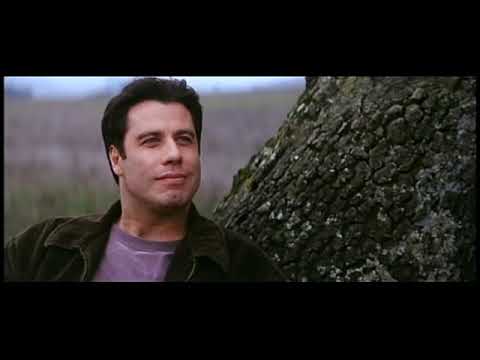
Where it plays: Score moment: shimmering mallets and piano around a quiet revelation among trees.
Why it matters: One cue on the album that points to the larger (and lovely) score.
Also heard in-film (not on the retail album): 60s Motown cuts by The Supremes (“Baby Love,” “Come See About Me”), plus additional catalog pieces sprinkled through shops, radios, and parties.
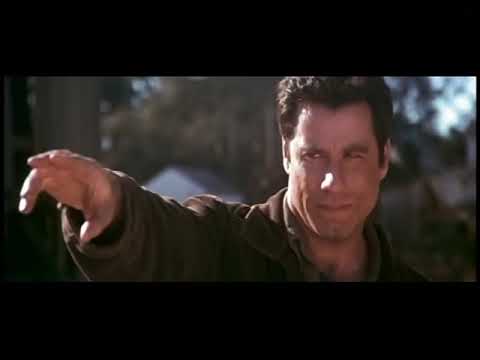
Notes & Trivia
- “Change the World” (Clapton/Babyface) broke out beyond the film and helped drive album sales.
- Peter Gabriel’s “I Have the Touch” appears in a 1996 Robbie Robertson co-remix tailored to the film’s feel.
- The album closes with Thomas Newman’s “The Orchard,” the only score cue included.
- Two Supremes classics are heard in the movie but omitted from the CD.
- There’s a 2003 TV follow-up, Phenomenon II (music by Michael Giacchino); its music is separate from this album.
Music–Story Links
When George’s world widens, the soundtrack doesn’t chase pyrotechnics — it adds warmth. Gabriel’s remixed cut gives the “heightened senses” sequences a human pulse. Classic soul cues keep the town empathetic even when fear creeps in. And Newman’s cue at the orchard turns revelation into stillness — proof that sometimes the biggest moments are quiet.
Reception & Quotes
The compilation was a commercial success — led by Clapton’s single — and became one of the decade’s adult-contemporary touchstones. Critics singled out the curation more than novelty: strong songs, right vibe.
“More than a souvenir — a carefully tuned mood piece.” — album-press language
“Singer/songwriters, mellow blues, and soul-inflected pop — a cross-section that fits the film like a glove.” — retail liner summaries
Interesting Facts
- Album shape: 11 tracks, ~45 minutes; issued by Reprise in June 1996; widely streaming today.
- Single lift: “Change the World” pushed the album’s chart run; the music video used film imagery.
- Commissioned song: Bryan Ferry’s “Dance with Life (The Brilliant Light)” was written for the film.
- Remix wrinkle: Gabriel’s 1996 version later appeared on his compilation Hit.
- Score presence: Only “The Orchard” made the CD; the rest of Newman’s score remains off-album.
Technical Info
- Title: Phenomenon — Music From the Motion Picture
- Year: 1996 (film & album)
- Type: Feature film — various-artists compilation with one score cue
- Score composer: Thomas Newman
- Label: Reprise Records (Warner)
- Key tracks (album): Eric Clapton “Change the World”; Bryan Ferry “Dance with Life (The Brilliant Light)”; Aaron Neville & Robbie Robertson “Crazy Love”; Taj Mahal “Corinna”; Jewel “Have a Little Faith in Me”; Peter Gabriel “I Have the Touch” (1996 mix); Marvin Gaye “Piece of Clay”; The Iguanas “Para Donde Vas”; Dorothy Moore “Misty Blue”; J. J. Cale “A Thing Goes On”; Thomas Newman “The Orchard”.
- In-film extras (not on album): The Supremes (“Baby Love,” “Come See About Me”), among others.
- Availability: CD & digital; streaming on major platforms.
Questions & Answers
- Why is this listed as 1996 and not 2003?
- Because the famous soundtrack is for the 1996 film. The 2003 title is a TV sequel with separate music.
- Who wrote the score?
- Thomas Newman. Only “The Orchard” appears on the retail album; the film contains more unreleased score.
- Is “Change the World” actually from the movie?
- Yes — it was released with the film’s soundtrack and became its breakout single.
- What version of “I Have the Touch” is used?
- Peter Gabriel’s 1996 Robbie Robertson remix, shaped to suit the film’s tone.
- Are all movie songs on the CD?
- No. A few in-film placements (e.g., Motown cuts by The Supremes) are absent from the retail tracklist.
Canonical Entities & Relations
| Subject | Verb | Object |
|---|---|---|
| Jon Turteltaub | directed | Phenomenon (1996) |
| Thomas Newman | composed | Phenomenon (1996) score |
| Reprise Records | released | Phenomenon — Music From the Motion Picture |
| Eric Clapton | performed | “Change the World” (single from OST) |
| Bryan Ferry | performed | “Dance with Life (The Brilliant Light)” (written for film) |
| Peter Gabriel | performed/remixed | “I Have the Touch” (1996 mix for film) |
| Marvin Gaye | performed | “Piece of Clay” (album track) |
| Robbie Robertson | executive-produced/remixed | compilation & “I Have the Touch” |
| Michael Giacchino | composed | music for Phenomenon II (2003 TV) |
Sources: Wikipedia (film & soundtrack pages); Discogs master/release pages; Apple Music & Spotify album listings; SoundtrackINFO track index; D23/IMDb pages for the 2003 TV movie; label/retail blurbs referencing compilation credits.
November, 18th 2025
A-Z Lyrics Universe
Cynthia Erivo Popular
Ariana Grande Horsepower
Post Malone Ain't No Love in Oklahoma
Luke Combs Good Riddance (Time of Your Life)
Green Day Bye Bye Bye
*NSYNC You're the One That I Wan
John Travolta & Olivia Newton-John I Always Wanted a Brother
Braelyn Rankins, Theo Somolu, Kelvin Harrison Jr. and Aaron Pierre The Power of Love
Frankie Goes to Hollywood Beyond
Auli’i Cravalho feat. Rachel House MORE ›