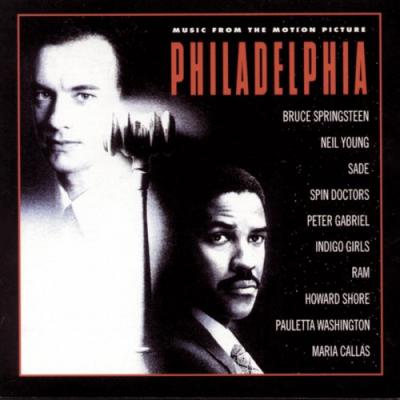
"Philadelphia" Soundtrack Lyrics
Movie • 1994
Track Listing
Bruce Springsteen
Peter Gabriel
Pauletta Washington
Ram
Sade
Spin Doctors
Indigo Girls
Maria Callas
Neil Young
Howard Shore
Gary Goetzman
Q Lazzarus
“Philadelphia (Music From the Motion Picture)” – Album Guide to Tracks and Key Scenes
Overview
What does justice sound like when the city is listening? Philadelphia answers with a quiet anthem at dawn, a grieving lullaby at night, and a single, devastating aria in between. The soundtrack (issued early 1994) braids new pop songs, classic soul, and opera into a single statement about dignity, love, and seeing one another clearly.
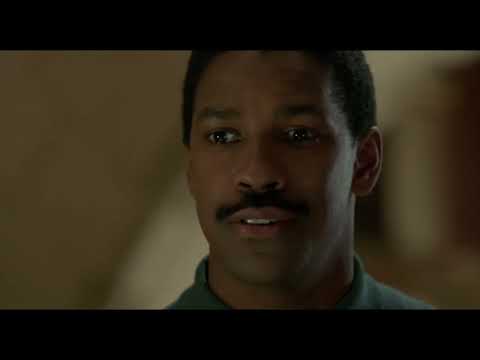
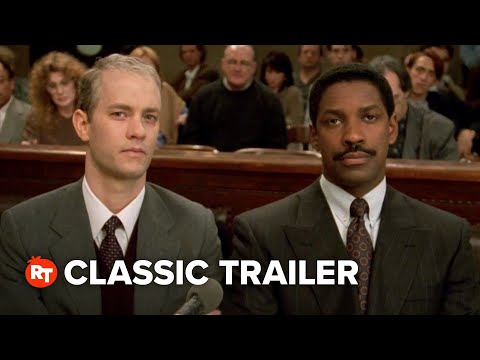
Andrew Beckett (Tom Hanks) sues for his unlawful dismissal; Joe Miller (Denzel Washington) fights a prejudice inside himself as much as in court. The album mirrors that arc: Bruce Springsteen’s “Streets of Philadelphia” walks us into the story with headphone intimacy; Peter Gabriel’s “Lovetown” offers wounded tenderness; Sade breathes prayer into Percy Mayfield’s plea; and Neil Young’s “Philadelphia” closes the circle at the wake. Between them sits Maria Callas — La mamma morta — the scene where music and meaning fuse.
Genres & themes in phases: minimalist soft-rock and drum-machine hush (isolation, streets at dawn) → adult-contemporary soul (empathy) → roots/alt covers (community texture) → operatic catharsis (truth without rhetoric) → elegiac folk-gospel (goodbye). According to Apple Music’s listing, the retail album runs 10 tracks and ~40 minutes; the film uses more music than the CD captures.
How It Was Made
Compilation & singles: The various-artists set was released by Epic/Reprise alongside the film’s U.S. rollout. Bruce Springsteen wrote and recorded “Streets of Philadelphia” for the opening montage; Neil Young contributed the end-title “Philadelphia.” Peter Gabriel’s “Lovetown,” cut during his Us era, became the album’s second original single.
Score: Howard Shore’s understated score supports testimonies and transitions; only one instrumental cue appears on the album (the disc focuses on songs). Editorially, Jonathan Demme and music editors place source cuts as diegetic room-tones (radios, parties) while the new songs bookend acts. As per Discogs/label notes, the compilation draws from Columbia/Epic families plus licensed catalog.
Tracks & Scenes
“Streets of Philadelphia” — Bruce Springsteen
Where it plays: Opening credits. Street photography of the city — faces, murals, stoops — glide past as a drum-machine heartbeat and hushed vocal set the film’s empathy key.
Why it matters: A pop song that whispers instead of shouts; it won the Academy Award for Best Original Song and defines the film’s tone.
“Lovetown” — Peter Gabriel
Where it plays: An interior-looking montage after the case heats up; a simmering R&B pulse that reads like late-night processing rather than triumph.
Why it matters: The lyric (“they want to build a wall around us…”) echoes the story’s barricades with tenderness rather than polemic.
“Please Send Me Someone to Love” — Sade
Where it plays: A reflective interlude; the camera lingers in close spaces, and Sade’s breathy plea turns the room into a prayer.
Why it matters: Humanizes the casework; love and mercy are the argument beneath the arguments.
“Have You Ever Seen the Rain?” — Spin Doctors (CCR cover)
Where it plays: Bar/party texture; a slice of communal normalcy between court days, with a bar-band lope that feels lived-in and local.
Why it matters: Keeps the soundtrack grounded in the everyday city — radios, jukeboxes, friends.
“I Don’t Wanna Talk About It” — Indigo Girls (Danny Whitten)
Where it plays: Introspective transition; the lyric makes space for grief the courtroom can’t hold.
Why it matters: Names the quiet parts — the film’s pulse slows so the people can breathe.
“La mamma morta” (Giordano) — Maria Callas
Where it plays: The opera scene. Andrew, on IV, turns up Callas in his loft and translates the aria for Joe; red light floods the room as the music peaks.
Why it matters: A cinematic thunderbolt. The aria externalizes Andrew’s inner life; Joe finally understands the man he’s defending.
“Philadelphia” — Neil Young
Where it plays: The wake/finale: home-movie footage of Andrew’s childhood flickers as Young’s piano and falsetto carry the last goodbye.
Why it matters: Gentle, direct, and utterly final — the album’s benediction.
Also heard (not all on the CD): Haitian roots pop (“Ibo lele” by RAM), Pauletta Washington’s soulful “It’s In Your Eyes,” and additional period/canon cues that texture parties and seasonal scenes.
Notes & Trivia
- The soundtrack album was released in early January 1994 with 10 tracks; the film uses more music than appears on disc (common for the era).
- Springsteen’s opener and Young’s closer were both Oscar-nominated; Springsteen won.
- Peter Gabriel’s “Lovetown” later appeared on his compilation Hit; single artwork involved input from Yayoi Kusama.
- Maria Callas’s 1950s recording of La mamma morta (from Giordano’s Andrea Chénier) is the exact performance used in the loft scene.
- Some retail editions credit the set under Epic Soundtrax/Reprise; a 2008 French CD/DVD paired the album with the feature.
Music–Story Links
Springsteen’s drum-machine and whispered vocal collapse city-scale into person-scale — you hear one man’s footsteps beneath a skyline. Gabriel’s “Lovetown” refuses righteous bombast; it chooses bruised compassion, which is the movie’s thesis. Callas’s aria breaks Joe Miller’s defenses because opera allows Andrew to translate the unsayable. And Neil Young’s end-title doesn’t argue — it remembers. The soundtrack is the film’s bridge from law to love.
Reception & Quotes
The album became a 1990s AC touchstone: a star-powered set that still plays like a single mood. Critics praised the bookends (“Streets…” and “Philadelphia”) and singled out the Callas scene as the film’s emotional summit. According to Ultimate Classic Rock’s retrospective, the finale’s home-movie pairing with Young’s song remains one of the decade’s indelible endings.
“More than a souvenir — a carefully tuned mood piece.” — contemporary album notes
“Springsteen whispers the city awake; Young tucks it in.” — retrospective coverage
“Callas turns explanation into revelation.” — opera press features
Interesting Facts
- Album shape: 10 tracks, ~40 min; digital versions mirror the original program.
- Chart life: “Streets of Philadelphia” topped charts across Europe and took the 1994 Oscar/Golden Globe/Grammys sweep for song categories.
- Single ladder: “Lovetown” reached the UK Top 50 and Modern Rock radio in the U.S.
- Opera cameo: The aria scene has been widely anthologized in “opera in film” essays and commemorations.
- Not-on-CD: Additional cues (holiday standards, bar jukebox) appear in-film but not on the retail album.
Technical Info
- Title: Philadelphia — Music From the Motion Picture
- Year: 1994 soundtrack release (film premiered December 1993)
- Type: Feature film — various-artists compilation with opera and one score cut
- Key originals: Bruce Springsteen “Streets of Philadelphia”; Peter Gabriel “Lovetown”; Neil Young “Philadelphia”
- Selected placements: Sade “Please Send Me Someone to Love”; Spin Doctors “Have You Ever Seen the Rain?”; Indigo Girls “I Don’t Wanna Talk About It”; Maria Callas “La mamma morta”; RAM “Ibo lele (Dreams Come True)”; Pauletta Washington “It’s In Your Eyes”.
- Label/album status: Epic/Reprise; retail and streaming editions available
- Awards: Best Original Song (Academy Awards/Golden Globes/Grammys) — “Streets of Philadelphia”
Questions & Answers
- Was the soundtrack released in 1993 or 1994?
- Early January 1994 for the album; the film opened December 1993 (U.S.).
- Which song opens the film?
- Bruce Springsteen’s “Streets of Philadelphia,” written specifically for the opening montage.
- What’s the opera in the loft scene?
- Maria Callas singing “La mamma morta” from Giordano’s Andrea Chénier; Andrew translates the lyrics for Joe.
- What plays over the final home-movie sequence?
- Neil Young’s “Philadelphia,” a piano ballad written for the film’s ending.
- Is every song in the movie on the CD?
- No. The retail album spotlights 10 tracks; several in-film cues (holiday and jukebox pieces) aren’t included.
Canonical Entities & Relations
| Subject | Verb | Object |
|---|---|---|
| Jonathan Demme | directed | Philadelphia (1993) |
| Howard Shore | composed | Original score for Philadelphia |
| Bruce Springsteen | wrote & performed | “Streets of Philadelphia” |
| Neil Young | wrote & performed | “Philadelphia” |
| Peter Gabriel | wrote & performed | “Lovetown” |
| Sade | performed | “Please Send Me Someone to Love” (Percy Mayfield) |
| Maria Callas | performed | “La mamma morta” (Giordano) used in-film |
| Epic / Reprise | released | Philadelphia — Music From the Motion Picture |
Sources: Apple Music album page; Discogs release page; Wikipedia (film & songs); OperaWire feature on the Callas scene; Ultimate Classic Rock retrospective; SoundtrackINFO index.
November, 18th 2025
A-Z Lyrics Universe
Cynthia Erivo Popular
Ariana Grande Horsepower
Post Malone Ain't No Love in Oklahoma
Luke Combs Good Riddance (Time of Your Life)
Green Day Bye Bye Bye
*NSYNC You're the One That I Wan
John Travolta & Olivia Newton-John I Always Wanted a Brother
Braelyn Rankins, Theo Somolu, Kelvin Harrison Jr. and Aaron Pierre The Power of Love
Frankie Goes to Hollywood Beyond
Auli’i Cravalho feat. Rachel House MORE ›