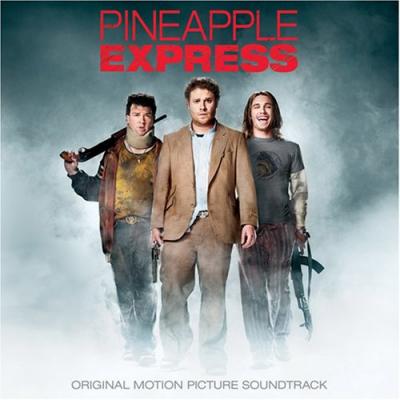
"Pineapple Express" Soundtrack Lyrics
Movie • 2008
Track Listing
Huey Lewis And The News
Eddy Grant
Cypress Hill
Public Enemy
Bell Biv DeVoe
Peter Tosh
Mountain
Graeme Revell
Moondog & The London Saxophonic
Brother Nolan
Arthur Lyman
Bone Thugs-N-Harmony
Graeme Revell
Spiritualized
Robert Palmer
“Pineapple Express (Original Motion Picture Soundtrack)” – Album Guide to Tracks and Key Scenes
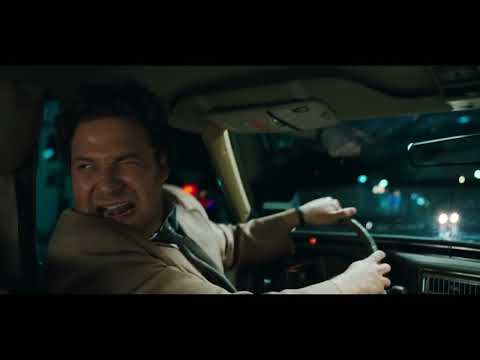
Overview
What happens when a sun-baked reggae shuffle crashes into Bruckheimer-grade action beats? Arrival — adaptation — rebellion — collapse: the soundtrack rides that arc, too. Pineapple Express bends its needle from blissed-out island grooves to adrenalized chase cues, mapping Dale and Saul’s weed-born flight with a crate-digger’s grin.
The palette is intentionally left-field for a studio action comedy: golden-age hip-hop and dancehall rub shoulders with exotica, 70s hard rock, and sleek original score. We get the swagger of Cypress Hill and Public Enemy, the lilt of Peter Tosh and Arthur Lyman, the crunch of Mountain, and Graeme Revell’s taut cues stitching it together. The effect is a stoned mixtape that keeps accidentally turning into an action album.
Crucially, the film’s marketing detonated a pop moment. The red-band trailer’s blast of M.I.A.’s “Paper Planes” turned a cult single into a mainstream earworm and colored how audiences “heard” the movie, even though the track isn’t in the film proper. The album doubles down on its own identity: an eclectic, summer-sticky listen with a gleefully unfancy vibe — then bursts of precision when the plot ignites.
Genres in phases: early-film hangouts lean reggae/exotica (indie grit → vulnerability); mid-film panic hits 70s rock and bombastic hip-hop (90s rap → attitude, forward motion); the finale leans bittersweet shoegaze/space-soul and score (dream-pop textures → fragile bromance), before a wink of retro pop for the ride home.
How It Was Made
Composer Graeme Revell delivers the glue: brisk, motif-driven cues that parody and embrace 80s/90s action grammar. They’re cut to David Gordon Green’s set-piece rhythms — quick hits, loud silences, then a whoosh of brass and toms. The album’s title song, cheekily crafted by Huey Lewis & The News, plays like knowingly “smooth” end-credits relief after chaos.
Music supervision steers the crate toward island cuts and canonical rap, keeping needle-drops character-true but punchline-ready. Clearances thread through reggae staples and catalog hip-hop; a handful of film-used tracks don’t appear on the commercial album due to rights or curation choices (see Notes & Trivia).
As Apple’s editorial blurb frames it, the set “freely mixes prime hip-hop and Jamaican influences… alongside 70s hard rock and even exotica,” with Revell’s cues acting as connective tissue — a neat summary of the album’s deliberate whiplash.
Tracks & Scenes
“Coconut Girl” — Brother Noland
Where it plays: Daytime dealing turns into a goofy dance-around with school kids. The camera treats the porch like a breezy lanai; conversation drifts; everyone’s a little too carefree. Diegetic-adjacent vibe, roughly early-act montage length.
Why it matters: Sets the island looseness that the story will immediately punish — innocence before the chase.
“Don’t Look Around” — Mountain
Where it plays: Dale and Saul bolt into the woods, paranoia spiking as twigs snap and voices carry. The guitar riff saws at their nerves as they stumble and argue. Non-diegetic, around the first-act escape.
Why it matters: Classic-rock churn = kinetic panic; it roughens the film’s soft edges.
“Hi‘ilawe” — Arthur Lyman
Where it plays: The famous “caterpillar high” walk. Sun leaks through trees; our duo exhale little clouds toward a drifting bug. Lyman’s vibraphone and bird-call exotica make the forest feel like a postcard. Non-diegetic.
Why it matters: Contrasts pastoral calm with looming danger; it’s the film’s most meme-able sonic joke.
“Time Will Tell” — Bob Marley & The Wailers
Where it plays: After a blow-up, Dale and Saul split. Dale’s pay-phone confession to Angie (“I love you… also I’m in way over my head”) lands over Marley’s steady ache. Non-diegetic, mid-film; a minute or so under dialogue.
Why it matters: A melancholic breather that reframes the bromance as something to salvage, not just survive.
“Bird’s Lament” — Moondog & The London Saxophonic
Where it plays: Saul shows off his surround system; a sax motif tap-dances across the living room while Dale sinks into the couch. The scene plays like a stoner tutorial on hi-fi pride. Mostly diegetic.
Why it matters: Quirky sophistication in a very unsophisticated apartment — perfect character comedy.
“Wanted Dread & Alive” — Peter Tosh
Where it plays: Fleeing and fretting; a reggae chorus about being “wanted” turns into a literal mission statement as headlights sweep across them. Non-diegetic, in a mid-act move-move-move passage.
Why it matters: On-the-nose? Absolutely. That’s why it works — the joke lands and the stakes rise.
“Lost at Birth” — Public Enemy
Where it plays: Dale returns to recruit Red; bathroom pep-talk, then jump-cut to car-ride bravado. The track’s militaristic sirens pump “we got this” energy into three deeply unprepared men. Non-diegetic.
Why it matters: Irony fuel — they’re cosplaying hard men to a song about revolution.
“Tha Crossroads” — Bone Thugs-N-Harmony
Where it plays: A grim beat between laughs: the crew considers consequences and near-misses. Brief needle-drop, transitional.
Why it matters: Mortality sneaks into the hangout movie.
“I Didn’t Mean to Hurt You” — Spiritualized
Where it plays: Firelight and dust in the finale melee; Dale hauls Saul from the blaze. Space-soul melancholy floats over the wreckage. Non-diegetic, late-film; plays long under action and aftermath.
Why it matters: The album’s secret heart — tenderness underneath the idiocy.
“Pineapple Chase (aka The Reprise of the Phoenix)” — Graeme Revell
Where it plays: Score cue for vehicular chaos; drum kit and brass hits punch edits as doors slam and tires cry. Non-diegetic.
Why it matters: Revell’s action grammar makes the laughs feel bigger by playing them straight.
“Pineapple Express” — Huey Lewis & The News
Where it plays: End credits victory lap. The sax and synths practically wink at the audience: “You survived. Munchies now?” Non-diegetic, full song.
Why it matters: An intentionally glossy comedown; the era-throwback varnish seals the mixtape.
Trailer & non-album notes: The theatrical/red-band trailers famously used M.I.A.’s “Paper Planes” — pivotal to the movie’s vibe in culture, but not in the film or on the OST. Grace Jones’s “Ring of Fire” turns up in the film yet skips the album.
Notes & Trivia
- The commercial album (Lakeshore) arrived the day before release; later got a Record Store Day vinyl edition.
- “Paper Planes” boosted the trailer’s virality and the song’s chart peak — despite not appearing in the film.
- Two Revell cues on album (“Pineapple Chase,” “Pineapple Fight”) sketch the movie’s action spine.
- “Time Will Tell” is in the movie but omitted from the OST — a common reggae-clearance wrinkle.
- Moondog’s “Bird’s Lament” resurfaced for a generation who knew the Mr. Scruff sample first.
Music–Story Links
When Dale drifts toward apathy, island tunes (“Coconut Girl,” “Hi‘ilawe”) paint his denial; when reality hits, riff-rock (“Don’t Look Around”) and siren-rap (“Lost at Birth”) shove him forward. The bromance wobbles? Marley’s “Time Will Tell” reframes the split as temporary. In the climax, Spiritualized lets tenderness score the rescue — a bittersweet coda that earns the silly breakfast epilogue.
Reception & Quotes
Critics clocked the album’s knowingly goofy range and the marketing coup of that trailer needle-drop. Fans of the film often cite the Moondog and Spiritualized cues as stealth MVPs; skeptics poke at the Huey Lewis title track (which is kind of the point — it’s a wink).
“A loopy soundtrack collection… freely mixes prime hip-hop and Jamaican influences alongside 70s hard rock and exotica.” Apple Music editorial
“Huey Lewis-led soundtrack.” Wired
“The trailer features M.I.A.’s ‘Paper Planes.’” The Playlist
“Most impressive use of ‘Paper Planes’ ever.” Los Angeles Times, via reportage
Interesting Facts
- Label of record: Lakeshore Records; the film released via Sony/Columbia.
- Music supervision credited to Jonathan Karp in agency materials; he’s a frequent Apatow/Rogen collaborator.
- Record Store Day pressing (double vinyl) arrived years later with cult-item status.
- Spiritualized’s closer turned a fire-fight into a love-letter to male friendship.
- Moondog cue is diegetic in-scene — a rare audiophile flex for a dealer’s apartment.
- “Ring of Fire” (Grace Jones) audible in-film; not on the OST CD/digital.
- Marketing’s “Paper Planes” splash helped push M.I.A. into U.S. Top 5 that fall.
Technical Info
- Title: Pineapple Express (Original Motion Picture Soundtrack)
- Year: 2008
- Type: Movie soundtrack (Various Artists + Original Score selections)
- Composer: Graeme Revell
- Music Supervision: Jonathan Karp
- Label / Release: Lakeshore Records — August 5, 2008 (CD/digital); later RSD vinyl
- Notable placements (film-used): “Coconut Girl,” “Hi‘ilawe,” “Don’t Look Around,” “Wanted Dread & Alive,” “Lost at Birth,” “I Didn’t Mean to Hurt You.”
- Marketing note: Trailers used M.I.A.’s “Paper Planes” (not on album / not in film).
- Availability: Streaming (album) and physical reissues; some in-film songs are album-omissions.
Questions & Answers
- Is “Paper Planes” actually in the movie?
- No — it’s in the trailers only, which still shaped how the film is remembered.
- Why is Bob Marley’s “Time Will Tell” missing from the OST?
- Rights and curation; it’s film-used but not cleared for the commercial album edition.
- Who did the score, and how much is on the album?
- Graeme Revell scored the film; two punchy cues are included to frame the needle-drops.
- What’s the end-credits song?
- Huey Lewis & The News’ knowingly shiny “Pineapple Express.”
- Where can I stream the album today?
- On major platforms via Lakeshore’s release; the track set matches the 15-song configuration.
Canonical Entities & Relations
| Subject | Relation | Object |
|---|---|---|
| David Gordon Green | directed | Pineapple Express (2008 film) |
| Graeme Revell | composed score for | Pineapple Express (2008 film) |
| Jonathan Karp | music supervised | Pineapple Express (2008 film) |
| Lakeshore Records | released | Pineapple Express (Original Motion Picture Soundtrack) |
| Huey Lewis & The News | performed | “Pineapple Express” (end-credits song) |
| M.I.A. | performed (trailer needle-drop) | “Paper Planes” |
| Peter Tosh | performed | “Wanted Dread & Alive” (film-used) |
| Spiritualized | performed | “I Didn’t Mean to Hurt You” (finale) |
| Moondog & The London Saxophonic | performed | “Bird’s Lament” (living-room demo) |
| Bob Marley & The Wailers | performed | “Time Will Tell” (film-used, album-omitted) |
Sources: Apple Music editorial; Discogs; SoundtrackCollector; SoundtrackInfo; WhatSong; Bandcamp (Lakeshore); Wired; The Playlist; Wikipedia.
November, 19th 2025
A-Z Lyrics Universe
Cynthia Erivo Popular
Ariana Grande Horsepower
Post Malone Ain't No Love in Oklahoma
Luke Combs Good Riddance (Time of Your Life)
Green Day Bye Bye Bye
*NSYNC You're the One That I Wan
John Travolta & Olivia Newton-John I Always Wanted a Brother
Braelyn Rankins, Theo Somolu, Kelvin Harrison Jr. and Aaron Pierre The Power of Love
Frankie Goes to Hollywood Beyond
Auli’i Cravalho feat. Rachel House MORE ›