Soundtracks:  A B C D E F G H I J K L M N O P Q R S T U V W X Y Z #


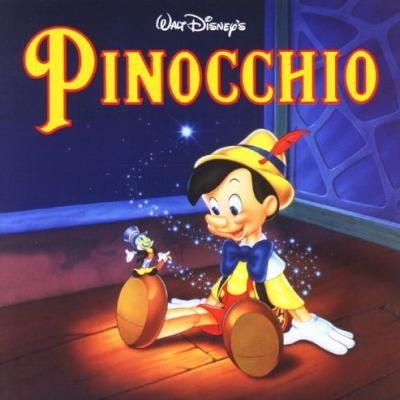
Pinocchio Album Cover

"Pinocchio" Soundtrack Lyrics

Cartoon • 1992

Track Listing


“Pinocchio (1992) — Original Video Soundtrack (Golden Films/GoodTimes)” – Album Guide to Tracks and Key Scenes

Overview

What happens when a direct-to-video fairy tale leans almost entirely on the public-domain canon? Arrival — adaptation — rebellion — collapse: this 49-minute 1992 cartoon rides that arc with a patchwork of famous classical cues and a single original theme, giving Collodi’s tale a jukebox quality that’s oddly charming.

Produced by Golden Films/GoodTimes, the movie sets Geppetto and his little wooden whirlwind against a backdrop of Tchaikovsky waltzes, Saint-Saëns menagerie sketches, Debussy moonlight, Wagnerian thunder, and Grieg’s piano romance. The exception — a jaunty pop-folk opener called “All for Me and All for Free” — functions as the project’s only bespoke song (as per IMDb credits and fan discographies). The rest draws from well-known library recordings of classical favorites, synchronized to story beats with broad, readable intent.

As a listen, it’s less an “album” than a curated sampler: snow-globe vignettes of gentle strings for heart-to-heart moments, comedic xylophones for the Fox and Cat’s mischief, stately minuets for puppet-show pageantry, and stormy overtures for whale-time peril. The patchwork gives the film a hand-me-down warmth — familiar melodies doing heavy lifting for mood and momentum.

Genre & theme phases: salon romanticism (innocence, home) → light scherzo/comedy (temptation, gullibility) → grand Romantic bombast (punishment, danger) → hymn-like calm (redemption, “real boy” grace).

How It Was Made

The production (scripted by Roger Scott Olsen; produced/directed by Diane Eskenazi) follows Golden Films’ early-’90s house approach: original main-title song plus a bed of licensed or public-domain classical tracks. According to multiple credit listings, the theme “All for Me and All for Free” is by Richard Hurwitz and John Arrias (frequent Golden collaborators). Classical selections commonly cited for this title include Tchaikovsky’s Nutcracker Suite, Saint-Saëns’ Carnival of the Animals (“Le Cygne,” “Fossils”), Debussy’s “Clair de lune,” Wagner’s “Ride of the Valkyries” and the Flying Dutchman Overture, Schumann’s “Träumerei,” Boccherini’s celebrated Minuet, and Grieg’s Piano Concerto in A minor.

Editorially, the team leans into bold, legible synchronization: lyrical cues for Blue Fairy visits, playful plucks for Pinocchio’s naïveté, martial flourishes when trouble snowballs. It’s economical, too — the same movement can recur across scenes, a recognizable hook that doubles as a budget-savvy motif.

Tracks & Scenes

“All for Me and All for Free” — Richard Hurwitz & John Arrias
Where it plays: Main titles / opening montage. Pinocchio’s first scamper through Geppetto’s shop is cued to a breezy, singable refrain that introduces the film’s lighthearted tone. Non-diegetic; short cue that reprises under transitions.
Why it matters: It’s the only original song written for this version; a mission-statement jingle for kid-friendly caper energy.

“Clair de lune” — Claude Debussy
Where it plays: Nighttime hush when the Blue Fairy’s magic turns the quiet shop luminous. Close-ups of wood shavings and a sleeping Geppetto give way to a shimmer of light as Pinocchio stirs. Non-diegetic.
Why it matters: Moonlit strings and piano bathe the origin moment in tenderness; it frames the transformation as grace, not spectacle.

“Träumerei” (Kinderszenen) — Robert Schumann
Where it plays: Soft reconciliation beats — Pinocchio promising to “be good,” Geppetto’s relieved smile, a small hand in a large one. Non-diegetic; a brief interlude.
Why it matters: A lullaby of forgiveness; it gives the father-son dynamic its lull.

Minuet in G (BWV Anh. 114) — Christian Petzold (trad. attrib.)
Where it plays: Classroom/puppet-stage bustle. The camera glides through tidy rows; later, marionettes bow in polite time as a crowd applauds. Source-feeling at first (onstage musicians), then non-diegetic bleed.
Why it matters: Polite order that Pinocchio can’t quite keep — a rhythmic joke about discipline.

Minuet from String Quintet in E, Op. 11 No. 5 — Luigi Boccherini
Where it plays: Town square pageant; banners flutter, the Puppet Master preens. The minuet’s courtly sway flatters cheap spectacle. Non-diegetic.
Why it matters: Elegant music underscoring shallow showbiz — that contrast is the gag.

“Fossils” (Carnival of the Animals) — Camille Saint-Saëns
Where it plays: Fox and Cat comic-business: quick cuts, exaggerated tiptoes, Pinocchio duped into “investments.” Non-diegetic; brisk scherzo length.
Why it matters: Xylophone clatter sells their rickety schemes; a sonic wink every time mischief returns.

“Le Cygne” (Carnival of the Animals) — Camille Saint-Saëns
Where it plays: A quiet “Blue Fairy watches over” passage — drifting camera, gentle strings, a hand on a shoulder. Non-diegetic.
Why it matters: The film’s most sincere cue; it softens the edges of a cautionary fable.

Selections from The Nutcracker Suite — Pyotr Ilyich Tchaikovsky
Where it plays: Toy-shop bustle and celebratory interludes — clockwork animals, dancing dolls, Geppetto’s delighted spin. Non-diegetic, cue fragments.
Why it matters: It literalizes wonder: toys “dance,” the world briefly becomes a music box.

Overture to The Flying Dutchman / “Ride of the Valkyries” — Richard Wagner
Where it plays: Big jeopardy beats: storm at sea; chase-and-escape sprints; Monstro-scale menace. Non-diegetic; emphatic brass swells.
Why it matters: Grand Romantic thunder gives a small production real stakes — instant epic.

Piano Concerto in A minor (Op. 16) — Edvard Grieg
Where it plays: A triumphant montage near the end — reunions, vows kept, the last mad dash home. Non-diegetic, excerpted statement of the famous opening.
Why it matters: Flash-card heroism; everyone hears “victory,” even kids.

Notes & Trivia

  • This version runs ~49 minutes and was released direct-to-video in 1992 by Golden Films/GoodTimes.
  • It features one original theme song (“All for Me and All for Free”) and an otherwise all-classical needle-drop approach.
  • Voice cast includes Jim Cummings, Cam Clarke, Jeannine Elias, and Frank Welker — a stacked ’90s VO lineup.
  • No official commercial soundtrack album is known for this title; cues are sourced from extant recordings.
  • Several releases and uploads list the same recurring classical selections; exact recordings can vary by edition.

Music–Story Links

When Pinocchio awakens in moonlight, Debussy’s “Clair de lune” frames the miracle as intimate, not flashy. The Fox and Cat keep returning with Saint-Saëns’ clattering “Fossils,” turning their cons into a running musical joke. Puppet-show pomp borrows stately minuets — Boccherini outside, Petzold inside — to underline how “proper” crowds cheer improper choices. And when consequences crash down, Wagnerian waves make the moral lesson feel myth-big; after, Schumann and Saint-Saëns restore gentleness as Pinocchio earns his last chance.

Reception & Quotes

The feature itself drew modest, kid-tuned notice, but its soundtrack approach remains a neat case study in early-’90s DTV scoring: one original hook plus a “best of” classical playlist. Fans cataloguing Golden Films entries often cite this one as the template.

“Theme song by Richard Hurwitz and John Arrias; the rest built from well-known classical pieces.” according to IMDb listings
“Recurring selections include Nutcracker, Carnival of the Animals, Debussy’s ‘Clair de lune,’ and Wagner overtures.” as cataloged on Moviepedia fan pages
“Golden Films’ house style pairs an original main title with public-domain classics.” per FilmAffinity credit overviews

Interesting Facts

  • One-song model: Many Golden titles of the period use a single bespoke theme — here, “All for Me and All for Free.”
  • Library lean: The film’s cues are drawn from classical warhorses whose recordings were inexpensive and familiar to families.
  • Scene economy: Movements return as motifs across different scenes — an editing tactic and a budget saver.
  • Multiple dubs/edits: International VHS editions sometimes swap or truncate cues; credits still point to the same classical pool.
  • No OST: Unlike Disney’s 1940 classic (reissued on CD in 1992), this DTV has no standalone, official soundtrack release.

Technical Info

  • Title: Pinocchio (1992) — Golden Films/GoodTimes
  • Year: 1992
  • Type: Cartoon (direct-to-video) soundtrack — Various classical recordings + 1 original theme
  • Original Theme: “All for Me and All for Free” — Richard Hurwitz & John Arrias
  • Common Classical Selections: Debussy “Clair de lune”; Saint-Saëns “Le Cygne,” “Fossils”; Tchaikovsky Nutcracker Suite; Boccherini Minuet (Op. 11 No. 5); Petzold Minuet in G; Schumann “Träumerei”; Wagner (Flying Dutchman Overture; “Ride of the Valkyries”); Grieg Piano Concerto in A minor.
  • Label / Album Status: No official OST album identified; film uses licensed/public-domain recordings.
  • Release Context: Part of Golden Films’ early-’90s fairy-tale line for home video.
  • Availability: Circulates on legacy VHS/DVD and online uploads; credits vary slightly by edition.

Questions & Answers

Is there an official soundtrack album for this 1992 cartoon?
No. Unlike Disney’s 1940 film, this direct-to-video version never received a commercial OST; it relies on existing classical recordings plus one original theme.
Who wrote the original song?
Richard Hurwitz and John Arrias are credited for “All for Me and All for Free,” the main-title theme.
Which classical pieces are actually used?
Recurring listings cite Debussy’s “Clair de lune,” Saint-Saëns’ “Le Cygne” and “Fossils,” Tchaikovsky’s Nutcracker, Boccherini and Petzold minuets, Schumann’s “Träumerei,” Wagner overtures, and Grieg’s Piano Concerto.
Are the exact recordings known?
Not consistently. Different releases/edits may substitute performances while keeping the same compositions.
How does this soundtrack differ from Disney’s?
Disney’s 1940 classic is a full original score with songs (Harline/Washington/Smith). The 1992 DTV version mainly needle-drops classical works with one new theme.

Canonical Entities & Relations

SubjectRelationObject
Diane Eskenazidirected/producedPinocchio (1992, Golden Films/GoodTimes)
Roger Scott Olsenwrote screenplay forPinocchio (1992)
Richard Hurwitzcomposed theme“All for Me and All for Free”
John Arriascomposed theme“All for Me and All for Free”
Claude Debussycomposed“Clair de lune” (used in film)
Camille Saint-Saënscomposed“Le Cygne”; “Fossils” (used in film)
Pyotr Ilyich TchaikovskycomposedNutcracker Suite selections (used in film)
Richard Wagnercomposed“Ride of the Valkyries”; Flying Dutchman Overture (used in film)
Edvard GriegcomposedPiano Concerto in A minor (used in film)
Golden Films / GoodTimesreleasedPinocchio (1992) direct-to-video

Sources: IMDb soundtrack/credits; Moviepedia (Pinocchio 1992) music list; FilmAffinity credit notes; YouTube/GoodTimes uploads for this edition.

November, 19th 2025


A-Z Lyrics Universe

Lyrics / song texts are property and copyright of their owners and provided for educational purposes only.