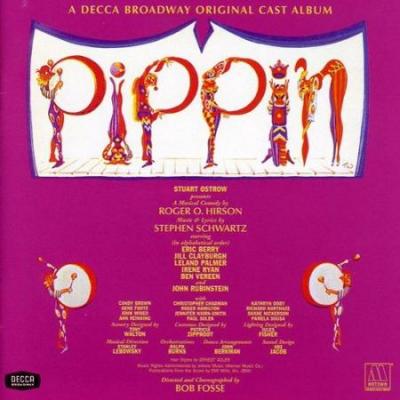
"Pippin" Soundtrack Lyrics
Musical • 2000
Track Listing
“Pippin (Original Broadway Cast Recording — 2000 Remastered Edition)” – Album Guide to Tracks and Key Scenes

Overview
How do you repackage a 1972 Broadway phenomenon for a CD generation without sanding off its Fosse bite? Arrival — adaptation — rebellion — collapse: the 2000 remaster of the Pippin original cast album mirrors the show’s arc, opening with an invitation (“Magic to Do”), cresting on youthful certainty (“Corner of the Sky”), then dismantling illusion until only a simple, human cadence remains.
The recording preserves the iconic originals — Ben Vereen’s velvet-razor Leading Player, John Rubinstein’s searching Pippin, Irene Ryan’s wink of steel as Berthe — and applies a clean, wider dynamic to Motown’s best-selling cast LP. The CD-era package adds high-profile 1970s pop covers of Schwartz’s songs as bonus tracks, framing how the score lived beyond the theatre. As a listen, it’s two stories at once: the show’s existential carnival and the score’s pop afterlife.
Across the album, orchestration shimmers between circus brass and chamber intimacy. Drums punch the war satire, woodwinds smirk at court politics, and rhythm section warmth turns the farmhouse into a refuge. Genre phases glide: jazz-pop vaudeville (wit) → rock-flecked anthems (ambition) → torch/folk hush (doubt, love) → stark theatre minimalism (choice).
How It Was Made
The core is the original Broadway cast recording (Motown, 1972), newly remastered and reissued on CD in 2000 by Decca Broadway with expanded notes and three historically important covers appended. That reissue honors the Motown provenance (one of the label’s earliest big theatre ventures) while sonically freshening the mix — articulation pops, string pads breathe, the drum kit snaps where the LP sometimes blurred.
Song order preserves the show’s flow and Fosse’s tease-and-reveal logic. As per the composer’s own song list, the spine runs from “Magic to Do” and “Corner of the Sky” through “Glory,” “Simple Joys,” “No Time at All,” “Morning Glow,” “On the Right Track,” “Extraordinary,” “Love Song,” and a chilling “Finale.” A couple of numbers that shifted in later licensed versions are heard here in their early-’70s Broadway placement.

Tracks & Scenes
“Magic to Do” — Ben Vereen & The Players
Where it sits: The curtain-raiser spell. The Leading Player beckons the audience into a troupe’s “show within a show,” promising miracles as the band hits a slow-burn vamp.
Why it matters: It defines the album’s theater-of-temptation frame — charm as a contract.
“Corner of the Sky” — John Rubinstein
Where it sits: Pippin’s thesis aria: post-graduation yearning, sung to the imagined horizon. The groove lifts from folk to pop anthem by the final refrain.
Why it matters: The score’s breakout standard — a compass for the character and a pop doorway for listeners.
“War Is a Science” — Eric Berry, Rubinstein & Soldiers
Where it sits: Charlemagne instructs Pippin in battle like it’s a tutorial; the band clicks through military patter, then flares into sarcastic brightness.
Why it matters: Satire sharpened by orchestral precision; the LP’s restoration lets inner voices bite.
“Glory” — Leading Player & Ensemble
Where it sits: The battlefield becomes a Broadway showstopper — martial rhythms, brass sizzle, bodies in geometric sync.
Why it matters: Fosse razzle-dazzle meets antiwar sting; the track is spectacle with a side of chill.
“Simple Joys” — Leading Player
Where it sits: After war’s hangover, a seductive sales pitch for hedonism. Guitar and reeds lean jaunty; the smile hides a hook.
Why it matters: The album’s grifter grin — pleasure as misdirection.
“No Time at All” — Irene Ryan & Ensemble
Where it sits: Grandma Berthe’s meta singalong, with a vaudeville bounce and audience claps baked into the arrangement.
Why it matters: Comic wisdom with steel; on record, the patter stays crisp and the band’s wink lands.
“With You” — Pippin
Where it sits: A pastoral tumble of romance vignettes; the arrangement flirts, then knowingly overflowers.
Why it matters: Desire as montage — and the first hint that “having everything” won’t satisfy.
“Spread a Little Sunshine” — Fastrada
Where it sits: Court plotting dressed as a positivity anthem; the groove sashays while the lyric sharpens knives.
Why it matters: Delicious dissonance: sugar on top, scheming underneath.
“Morning Glow” — Pippin & Company
Where it sits: A sunrise hymn placed right after a shocking coup — harmonies widen as torches lift.
Why it matters: The album’s moral whiplash; beauty scored against horror.
“On the Right Track” — Leading Player & Pippin
Where it sits: Mentor and mark in a soft-shoe pep talk; reeds chatter, hi-hat grins.
Why it matters: False comfort you can dance to.
“Kind of Woman” — Catherine
Where it sits: The farmhouse opens its door; warmth replaces brass. A gentle 70s pop-ballad contour introduces real stakes.
Why it matters: The sound of an exit ramp off spectacle.
“Extraordinary” — Pippin
Where it sits: Restless in domesticity, Pippin over-argues his uniqueness; the rhythm section teases him for it.
Why it matters: Ego put to music — a mirror more than a flex.
“Love Song” — Pippin & Catherine
Where it sits: Two voices, close-miked, almost no razzle-dazzle — a pocket of plain feeling in a glitter show.
Why it matters: The album’s honest whisper; the remaster lets the blend glow.
“I Guess I’ll Miss the Man” — Catherine
Where it sits: A rueful confession, half practical, half heartbroken, as the troupe’s spell thins.
Why it matters: A song that understands compromise; it softens the landing.
“Finale” — Leading Player, Pippin & Company
Where it sits: The “grand finale” seduction — flames, promises, erasure. The band strips away until almost nothing remains.
Why it matters: The album’s thesis in reverse: spectacle abandons the seeker; the human voice stays.
Bonus cuts (on the 2000 CD): The Jackson 5’s “Corner of the Sky,” The Supremes’ “I Guess I’ll Miss the Man,” and Michael Jackson’s “Morning Glow” — snapshots of how the score crossed into radio culture.

Notes & Trivia
- The 2000 Decca Broadway CD remasters the Motown OBC and appends three 1970s pop covers as bonuses.
- Motown’s Pippin LP was a hit outlier for the label — an early, successful foray into cast albums.
- “Morning Glow” follows an act of regicide in the stage plot — the prettiest moral gut-punch on the record.
- Later licensed versions often alter the ending and intermission placement; the album reflects original Broadway ordering.
- “No Time at All” doubles as a meta audience singalong in the theatre; on disc, you can still hear the “room” energy.
Music–Story Links
When Pippin chases glory, Glory weaponizes pizzazz — choreography and brass make violence look tidy on purpose. After the deed, Morning Glow sells renewal while the subtext curdles; that tension is the point. Fastrada’s Spread a Little Sunshine turns manipulation into a self-help bop. And when the Leading Player offers annihilation wrapped as transcendence, the Finale strips the band to reveal a choice: applause or authenticity.
Reception & Quotes
The remaster drew praise for clarity and for contextualizing the score’s 1970s pop reach. Modern features love to remind us how the opening number still feels like theatre’s mission statement, and anniversary concerts keep the score in public voice.
“One of the best-selling Broadway cast LPs of the ’70s… this reissue includes three bonus Pippin covers.” according to Decca Broadway’s reissue notes
“Few songs capture the wonder of theatre like ‘Magic to Do’.” as observed in The Guardian’s anniversary feature
“The show keeps resonating because the score frames our craving for meaning.” per recent concert press

Interesting Facts
- Label lineage: Motown (1972 LP) → Decca Broadway (2000 CD remaster).
- Pop crossover: Bonus tracks feature The Jackson 5, The Supremes, and Michael Jackson — all outside the show but crucial to its afterlife.
- Historic voices: Ben Vereen (Leading Player) and John Rubinstein (Pippin) anchor the album’s character signatures.
- Ending variants: The “Theo ending” that many revivals use isn’t what you hear on this recording.
- War satire DNA: “War Is a Science” and “Glory” read differently in every era — the remaster’s detail helps the sarcasm land.
- Chart echo: “Corner of the Sky” became a standard far beyond Broadway; the Jackson 5 single sealed that.
Technical Info
- Title: Pippin (Original Broadway Cast Recording — Remastered with Bonus Tracks)
- Year: 2000 (CD remaster/reissue)
- Type: Musical cast album (Original Broadway Cast, 1972 recording; 2000 remaster)
- Composer/Lyricist: Stephen Schwartz
- Book: Roger O. Hirson
- Principal Performers (on OBC): Ben Vereen; John Rubinstein; Irene Ryan; Leland Palmer; Eric Berry; Jill Clayburgh; The Players
- Label: Decca Broadway (CD remaster; original LP by Motown)
- Bonus material on 2000 CD: The Jackson 5 — “Corner of the Sky”; The Supremes — “I Guess I’ll Miss the Man”; Michael Jackson — “Morning Glow”
- Availability: Widely streaming as the OBC with bonus tracks; CD still in print/second-hand market
Questions & Answers
- What exactly is the “2000” edition?
- A Decca Broadway CD remaster of Motown’s 1972 original cast album, expanded with three 1970s pop covers.
- Does the album match the modern stage ending?
- No — it reflects the original Broadway structure; newer “Theo ending” versions came later.
- Are the bonus tracks part of the show?
- No. They’re chart-era covers that showcase the score’s pop footprint.
- Which tracks best preview the story?
- “Magic to Do,” “Corner of the Sky,” “Glory,” “No Time at All,” “Morning Glow,” and the stark “Finale.”
- Where should I stream it?
- Search for “Pippin (Original Broadway Cast) — Remastered/Bonus Tracks” on major platforms; the 18-track version is the 2000 configuration.
Canonical Entities & Relations
| Subject | Relation | Object |
|---|---|---|
| Stephen Schwartz | wrote music & lyrics for | Pippin (musical) |
| Roger O. Hirson | wrote book for | Pippin (musical) |
| Ben Vereen | performed as | Leading Player (Original Broadway Cast recording) |
| John Rubinstein | performed as | Pippin (Original Broadway Cast recording) |
| Decca Broadway | released (remaster) | Pippin OBC CD, 2000 |
| Motown Records | released (original LP) | Pippin Original Broadway Cast, 1972 |
| The Jackson 5 / The Supremes / Michael Jackson | recorded covers of | songs from Pippin (included as CD bonuses, 2000) |
Sources: Decca Broadway reissue notes; StephenSchwartz.com song list; MTI synopsis (licensed version notes); The Guardian anniversary feature; Discogs master/release pages; Spotify/Amazon “OBC — Bonus Tracks” listings.
November, 19th 2025
A-Z Lyrics Universe
Cynthia Erivo Popular
Ariana Grande Horsepower
Post Malone Ain't No Love in Oklahoma
Luke Combs Good Riddance (Time of Your Life)
Green Day Bye Bye Bye
*NSYNC You're the One That I Wan
John Travolta & Olivia Newton-John I Always Wanted a Brother
Braelyn Rankins, Theo Somolu, Kelvin Harrison Jr. and Aaron Pierre The Power of Love
Frankie Goes to Hollywood Beyond
Auli’i Cravalho feat. Rachel House MORE ›