Soundtracks:  A B C D E F G H I J K L M N O P Q R S T U V W X Y Z #


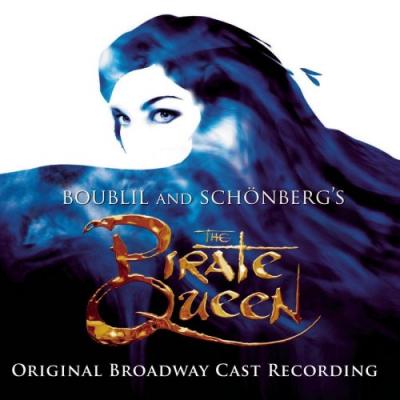
Pirate Queen Album Cover

"Pirate Queen" Soundtrack Lyrics

Musical • 2007

Track Listing


“The Pirate Queen (Original Broadway Cast Recording, 2007)” – Album Guide to Tracks and Key Scenes

Trailer-style preview image: sails, rigging and Irish coast motifs evoking the show’s sea-swept orchestral sound
The Pirate Queen — musical cast album (2007)

Overview

Can a storm-tossed, Riverdance-adjacent epic feel intimate on record? Arrival — adaptation — rebellion — collapse: the Pirate Queen cast album charts that arc in highlights. It introduces Grace O’Malley’s defiant voice, lifts to clan-and-crown conflict, and lands on a plea for home that lets the chorus swell like a tide.

With music by Claude-Michel Schönberg and lyrics (English adaptations) by Richard Maltby Jr. and John Dempsey, the Broadway production opened April 5, 2007 and closed June 17 after 85 performances. The cast album arrived July 3, 2007 on Masterworks Broadway as a highlights disc — not the entire score — centered on the show’s narrative spine and star features (as noted by Playbill and Wikipedia).

On record, the sound world blends symphonic sweep with Irish traditional colors: uilleann pipes, fiddle, bodhrán, Gaelic harp. Choral crowds thunder; a solo whistle can suddenly make the sea feel empty. It’s melodrama with shoreline grit.

Genres & themes in phases: Celtic-tinted overture & ballads (identity) → martial pageant & court pomp (power) → folk-dance propulsion (resistance) → hymnlike finale (legacy).

How It Was Made

Recorded at Legacy Studios (NYC) during the Broadway run and mixed at Angel Studios (London), the album features Stephanie J. Block (Grace), Hadley Fraser (Tiernan), Linda Balgord (Elizabeth I), Jeff McCarthy (Dubhdara), Marcus Chait (Donal) and company. Julian Kelly served as musical director/orchestrator for the production; the pit band’s Celtic timbres (pipes, fiddle, harp) are a defining signature heard throughout.

Masterworks Broadway released the disc on July 3, 2007; it’s widely streaming today. The program is curated: several stage numbers are absent, while core narrative beats remain (per Playbill’s album notice and the show’s song list).

Behind-the-scenes echo: ensemble sails and Irish dance accents that color the album’s orchestrations
How it was made — studio highlights from a large-canvas score

Tracks & Scenes

Note: The album is a highlights recording; items marked † in the “Musical–numbers” section of reference materials were not included on the OBCR. Below, scene placements follow the Broadway synopsis, with a focus on album-included selections.

“Prologue” — Orchestra
Where it sits: Opening sea tableau. Low strings surge, pipes keen, percussion hammers like rigging in a gale as Grace sneaks aboard her father’s ship.
Why it matters: Plants the maritime palette and the push-pull between duty and daring.

“The Pirate Queen” — Company (Dubhdara, Grace, Tiernan)
Where it sits: Early declaration after Grace proves herself in a storm — the crew hails her courage; Dubhdara recognizes a captain in the making.
Why it matters: Titles her myth in the mouths of others; gives the album its swagger.

“Woman” — Grace
Where it sits: Grace vents at constraints: canny belts over modal turns; a lone whistle answers like wind through sails.
Why it matters: Character thesis song — ambition vs. the world that says “no.”

“My Grace” — Dubhdara & Grace
Where it sits: Father–daughter reckoning after the storm; cello warmth over pipe ornamentation.
Why it matters: Humanizes the legend; the family bond carries weight later.

“Here on This Night” — Grace & Tiernan
Where it sits: Secret vow under starlight; hushed duet before politics intrude.
Why it matters: Stakes their love — a soft beacon the plot will test.

“The Waking of the Queen” / “Rah-Rah, Tip-Top” — Elizabeth, Court
Where it sits: London pageant: fanfares and word-play; Bingham is empowered to crush Irish resistance.
Why it matters: Establishes the opposing “court music” — polished, percussive, authoritarian.

“The Choice Is Mine” — Grace & Company
Where it sits: Clan politics force a marriage; Grace frames sacrifice as strategy.
Why it matters: A leader’s calculus set to a soaring chorus.

“Boys’ll Be Boys” — Donal & Company
Where it sits: Donal boasts before the wedding; a pub-stomp that telegraphs trouble.
Why it matters: Character color — charm curdles into cowardice later.

“The Wedding” — Company
Where it sits: Ceremony and choral glitter, shadowed by Tiernan’s silent heartbreak.
Why it matters: Locks the political bargain; points the love story off-course.

“I’ll Be There” — Tiernan
Where it sits: After the wedding, Tiernan vows to remain Grace’s ally; strings crest, then narrow to voice and guitar-like arpeggios.
Why it matters: A fan-favorite pop ballad moment for Hadley Fraser on disc.

“A Day Beyond Belclare” — Grace, Tiernan & Company
Where it sits: News of Dubhdara brings a race home; the women of Belclare will not be victims.
Why it matters: Triumph scored for the “left behind” — one of the show’s best narrative turns.

“Sail to the Stars” — Grace, Tiernan & Company
Where it sits: Funeral pyre on the water; voices layer over a rocking ostinato.
Why it matters: The album’s first-act catharsis — and baton pass to Grace as chieftain.

“Entr’acte” — Orchestra
Where it sits: Act II curtain up; motifs return with darker brass weight.
Why it matters: Signals a harder sea ahead.

“Enemy at Port Side” — Grace & Crew
Where it sits: Minutes after childbirth, Grace fights off an English attack — bodhrán and snare drive the set-piece.
Why it matters: Legend-building beat, rendered with adrenaline on the album.

“I Dismiss You” — Grace, Donal & Sailors
Where it sits: Grace ends her marriage “by the law of three years.” The chorus becomes a courtroom.
Why it matters: A rare musical “divorce” number — crisp, cutting, decisive.

“If I Said I Loved You” — Grace & Tiernan
Where it sits: The lovers meet as equals again; the tune is folk-simple, harmony rich.
Why it matters: Earned tenderness before politics resume.

“The Role of the Queen” — Elizabeth & Bingham
Where it sits: Elizabeth weighs crown vs. self; clipped phrases, cool strings, a steel-gloved aria.
Why it matters: Mirrors Grace’s conflict from a different throne.

“She Who Has All” — Elizabeth & Grace
Where it sits: The two women face the costs of power; melody arches, harmony hardens.
Why it matters: Their philosophies clash before any truce is possible.

“The Sea of Life” — Grace & Company
Where it sits: Grace sails for England to plead for Ireland; the chorus swells like surf on rock.
Why it matters: Carries the album toward parley and peace.

“Woman to Woman” / “Finale” — Elizabeth, Grace, Company
Where it sits: Private audience, mutual recognition; then a wedding-and-homecoming burst.
Why it matters: Resolution as communal benediction — the curtain’s warm wind.

Album moments mirrored: vows on a moonlit deck, court fanfares, women of Belclare rallying
Tracks & Scenes — sea battles, court pageant, and private choices

Notes & Trivia

  • The OBCR is a highlights album; several stage songs are absent (e.g., “It’s a Boy,” “Lament,” “Terra Marique Potens”).
  • Recorded in New York, mixed in London; released July 3, 2007 (Masterworks Broadway).
  • Irish traditional instruments in the pit: uilleann pipes, fiddle, bodhrán, Gaelic harp — credited players were noted in IBDB.
  • Linda Balgord (Elizabeth I) received a Drama Desk nomination; the show received no Tony nominations.
  • The musical is based on Morgan Llywelyn’s novel Grania: She-King of the Irish Seas.

Music–Story Links

When Grace scales the rigging, the orchestra “tilts” with her — drums emulate deck roll; high strings glint like spray. Court numbers for Elizabeth snap in tight meter to signal bureaucracy’s clockwork. The women of Belclare flip the show’s gender dynamic: choral brightness becomes a battle cry. And in “Woman to Woman,” orchestration thins so two philosophies can breathe — then returns full, as if the island itself answers.

Reception & Quotes

Critics were divided-to-cool on Broadway, though voices consistently praised Block and Balgord. The album preserves those central performances and the lush sonics that fans still champion online.

“All-plot, no-heart… persuasively sung by a valiant cast.” Variety (2007)
“Compares unfavorably with Les Misérables… yet Block and Balgord impress.” New York Times (2007)
“Cast album arrives July 3, 2007; recorded at Legacy Studios, mixed at Angel.” according to Playbill’s release notice
Curtain-call energy over rolling drums — the album’s finale glow
Reception — star turns, sumptuous sound, mixed notices

Interesting Facts

  • Highlights disc: The OBCR trims multiple ensemble/tableau cues; a full score recording has never been released.
  • Riverdance DNA: Produced by the creators of Riverdance, which shaped the show’s dance vocabulary.
  • Belclare beat: The “women take the town” sequence remains a cult-favorite set-piece among fans.
  • Fast voyage: Broadway run lasted just over two months post-opening (Apr 5–Jun 17, 2007).
  • Legacy bumps: London Coliseum gala (2020) revived interest and re-spotlit the score’s big solos.

Technical Info

  • Title: The Pirate Queen (Original Broadway Cast Recording)
  • Year: 2007 (recorded/mixed during Broadway run; released July 3)
  • Type: Musical — highlights cast album
  • Music: Claude-Michel Schönberg
  • Lyrics (English adaptations): Richard Maltby Jr., John Dempsey
  • Book: Alain Boublil, Claude-Michel Schönberg (English adaptations by Maltby Jr.)
  • Source Material: Grania: She-King of the Irish Seas by Morgan Llywelyn
  • Principal Cast on Album: Stephanie J. Block; Hadley Fraser; Linda Balgord; Marcus Chait; Jeff McCarthy; William Youmans; Company
  • Music Direction/Orchestrations (production): Julian Kelly; instrumentation includes uilleann pipes, fiddle, bodhrán, harp
  • Label: Masterworks Broadway (Sony); CD & digital
  • Notable Numbers on OBCR: “Woman,” “I’ll Be There,” “A Day Beyond Belclare,” “Sail to the Stars,” “If I Said I Loved You,” “The Role of the Queen,” “She Who Has All,” “The Sea of Life,” “Finale”
  • Availability: Streaming widely (full album playlist on major platforms)

Questions & Answers

Is the 2007 album complete?
No — it’s a highlights disc. Several stage cues (e.g., “It’s a Boy,” “Lament,” “Terra Marique Potens”) are not included.
Who are the main singers on the record?
Stephanie J. Block (Grace), Hadley Fraser (Tiernan), Linda Balgord (Elizabeth I), with Jeff McCarthy (Dubhdara) and others.
What track best introduces the show?
“Woman” for Grace’s voice; “A Day Beyond Belclare” for narrative swagger; “I’ll Be There” for the love story.
Where do the Irish instruments show up most vividly?
“The Pirate Queen,” “Sail to the Stars,” and “Enemy at Port Side” carry bold pipes, fiddle, and bodhrán colors.
Who released the album and when?
Masterworks Broadway on July 3, 2007; recorded at Legacy Studios (NYC), mixed at Angel (London).

Canonical Entities & Relations

SubjectRelationObject
Claude-Michel Schönbergcomposed music forThe Pirate Queen (musical)
Alain Boublilwrote original French lyrics/book forThe Pirate Queen
Richard Maltby Jr.adapted English lyrics/book forThe Pirate Queen
John Dempseyco-wrote English lyrics forThe Pirate Queen
Stephanie J. Blockperformed asGrace O’Malley (OBC/album)
Hadley Fraserperformed asTiernan (OBC/album)
Linda Balgordperformed asQueen Elizabeth I (OBC/album)
Julian Kellymusic directed & orchestratedBroadway production
Masterworks BroadwayreleasedThe Pirate Queen (OBC Recording, 2007)
IBDBdocuments orchestra personnel forBroadway production

Sources: Playbill album notice; Wikipedia (musical & song list); IBDB production/musician credits; CastAlbums & Discogs/retail listings for track highlights; streaming album pages.

November, 19th 2025


A-Z Lyrics Universe

Lyrics / song texts are property and copyright of their owners and provided for educational purposes only.