Soundtracks:  A B C D E F G H I J K L M N O P Q R S T U V W X Y Z #


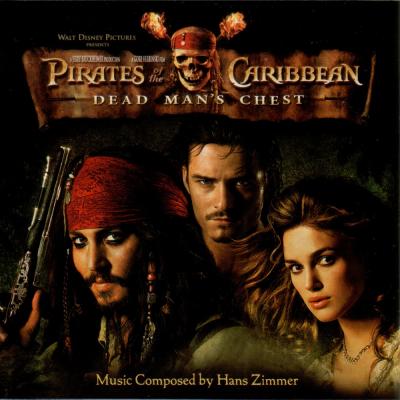
Pirates of the Caribbean Album Cover

"Pirates of the Caribbean" Soundtrack Lyrics

Movie • 2003

Track Listing


“Pirates of the Caribbean: The Curse of the Black Pearl (Original Motion Picture Soundtrack)” – Album Guide to Tracks and Key Scenes

Official trailer moment: the Black Pearl crests a wave under moonlight as drums and low brass surge
Pirates of the Caribbean — movie soundtrack (2003)

Overview

What if a swashbuckler swapped fiddles for furnace-hot brass and turned the high seas into a drumline? Arrival — adaptation — rebellion — collapse: the 2003 score comes on like a storm, learns to dance, breaks the rules, then salutes the horizon with a now-classic end-credits theme.

The soundtrack album (Walt Disney Records) distills Black Pearl’s action grammar into 43 tight minutes. Klaus Badelt headlines the credit, with Hans Zimmer producing; Remote Control’s team sound — low strings and brass in muscular ostinatos, bold modal hooks — became the franchise’s DNA. The album flows like an act-by-act suite: Port Royal intrigue, cursed-moon reveals, Isla de Muerta mayhem, and a victory lap that launched a thousand ringtones.

Tonally, it’s not your grandfather’s Errol Flynn: less jaunty jig, more rock-riff in orchestral clothing. Still, the score sneaks in romance (lyrical woodwinds/strings), stealth cues that slither, and a few winked sea-shanty gestures — with the parks’ “Yo Ho (A Pirate’s Life for Me)” used sparingly in-film as character business.

Genres & themes by phase: suspense & folk-tinged prologue (mystery) → rhythmic action ostinatos (pursuit) → cursed-moon atmospherics (horror-glint) → anthemic heroic statements (defiance) → triumphant credits fanfare (legend).

How It Was Made

Faced with a fast post schedule, the production leaned on the Remote Control playbook: Badelt composing with Zimmer producing and a bench of additional writers/orchestrators, then mixing for impact-forward clarity. The Hollywood Studio Symphony gives it mass; the album trims to feature clean narrative beats and the signature closer, “He’s a Pirate.” As noted in studio summaries, the score credits Badelt as composer with Zimmer producing, and additional music by several RC alums — a sprint-built sound that stuck.

Behind-the-scenes echo: close-up of compass and cutlass while the score’s ostinatos grind forward
How it was made — sprint-built orchestral muscle, producer-shaped

Tracks & Scenes

“Fog Bound” — Klaus Badelt
Where it plays: Prologue haze as a child sings of pirates; sails loom, a medallion glints. The cue begins in hushed mystery before hinting at the love motif that threads the film.
Why it matters: Establishes the score’s two poles — tenderness and threat — in under two minutes.

“The Medallion Calls”
Where it plays: Jack’s rakish entrance at Port Royal and the medallion’s narrative pull intertwine; swaggering rhythmic cells announce the franchise’s “strut.”
Why it matters: A thesis in miniature: character attitude married to plot engine.

“The Black Pearl”
Where it plays: Escape-and-chase energy as Port Royal erupts; marines scramble, Jack improvises, ropes snap.
Why it matters: The first big-room statement of the action language — brass like surf, strings like oars.

“Will and Elizabeth”
Where it plays: The smithy duel (ironically!) and later tenderness beats. The cue slaloms between kinetic scherzo and a warm, rising love figure.
Why it matters: Shows the score can pivot from steel to soft focus without losing pulse.

“Swords Crossed”
Where it plays: Candlelit dinner with Barbossa’s reveal cross-cut to skeletal moonlight chaos; later reprisals in melee.
Why it matters: Horror glitter over action chops — the “curse” sound.

“Walk the Plank”
Where it plays: Interceptor plans, ropework, and the first taste of orchestral cannon-fire motifs.
Why it matters: Rhythm as seamanship — ticks, snaps, then surge.

“Barbossa Is Hungry”
Where it plays: Interceptor vs. Pearl, rigging screams, powder flashes, deck-sprint edits.
Why it matters: The set-piece engine; everything the style promises delivered.

“Blood Ritual”
Where it plays: Bootstrap lore and Isla de Muerta bargaining; the music coils, then strikes.
Why it matters: Exposition turned suspense with a single harmonic twist.

“Moonlight Serenade”
Where it plays: Marooned Jack & Elizabeth — stars, rum, and ulterior motives — before the film pivots into its endgame.
Why it matters: A rare breath; even pirates need night air.

“To the Pirates’ Cave!”
Where it plays: Rescue runs and cave-fight geometry as factions collide under the gold’s glow.
Why it matters: Modular action writing that stays readable.

“Skull and Crossbones”
Where it plays: Barbossa v. Jack duel, steel-on-bone stingers, and aftermath beats on the open water.
Why it matters: The album’s sharpest “hit points.”

“Underwater March”
Where it plays: Cursed crew stride through the seabed toward Norrington’s men; timpani and contrabass grind like anchor chain.
Why it matters: Iconic image stamped by an equally iconic ostinato.

“One Last Shot”
Where it plays: Final reversals, muskets, and choices that reset the board before dawn.
Why it matters: A victory collage that earns the credits burst.

“He’s a Pirate”
Where it plays: End credits: the franchise anthem, a compact blaze of the score’s hookiest motifs.
Why it matters: The calling card — instantly memorizable, endlessly recyclable.

Diegetic nod: “Yo Ho (A Pirate’s Life for Me)” surfaces in playful character business (Elizabeth as a child; island scene with Jack) — theme-park DNA folded into the film’s world.

Trailer montage: moonlit skeleton pirates stride on the seabed as the ostinato hammers
Tracks & Scenes — cursed-moon reveals, cave battles, and that credits blaze

Notes & Trivia

  • The album dropped July 22, 2003 on Walt Disney Records, running ~43–44 minutes across 15 cues.
  • “He’s a Pirate” opens the credits and became a stand-alone hit; remixes and covers followed in later years.
  • Music department includes a credited music supervisor (Bob Badami) alongside Badelt’s score and Zimmer’s producer role.
  • The Black Pearl’s “underwater march” set-piece pairs one of the film’s most indelible visuals with a grinding, minor-mode ostinato.
  • The soundtrack’s action language (low-brass/low-string ostinatos + bold modal hooks) shaped the series’ later scores.

Music–Story Links

When Jack steps onto the dock, the groove struts first — character by rhythm. Elizabeth’s memories ride woodwind warmth that later blossoms into the love motif. Moonlight flips flesh to bone; the harmony cools, metals harden, cymbals hiss. During the seabed march, percussion becomes boots on sand; above water, the same pulse means cannon fire. Finally, the end-credits anthem reframes chaos as legend — a pirate’s life condensed to 90 seconds.

Reception & Quotes

Critics split: some missed classic swashbuckling color, others loved the clean, punchy modernism. Fans voted with ears — the closer became an instant franchise flag.

“Over the top in both movie and score… pleasing and well-matched to the onscreen action.” as one contemporary review put it
“There is really nothing swashbuckling about it… pounding and shouting.” argued a dissenting take
“Composer credit to Badelt with Zimmer producing; additional music by a bench of RC writers.” per production and album notes
Trailer tag: Jack on the masthead, horizon ahead, trumpets lifting into the end-credits theme
Reception — modern orchestral muscle, instant anthem

Interesting Facts

  • Album shape: 15 compact selections — no full-length sea shanties; momentum rules.
  • Theme-park echo: “Yo Ho (A Pirate’s Life for Me)” appears briefly in dialogue/sung moments; it’s not part of the album proper.
  • Team sprint: Additional music contributors (later franchise stalwarts) helped land the deadline.
  • Hook economy: The main anthem’s hook enters, states, and exits under two minutes — perfect for credits and trailers.
  • Mix aesthetic: Action cues favor percussive definition and tight low end over lush counterpoint — a conscious break from Golden Age swashbuckling texture.

Technical Info

  • Title: Pirates of the Caribbean: The Curse of the Black Pearl (Original Motion Picture Soundtrack)
  • Year: 2003
  • Type: Film score album
  • Composer: Klaus Badelt
  • Producer: Hans Zimmer (music producer)
  • Label: Walt Disney Records
  • Runtime/Format: ~43–44 minutes; 15 cues; digital/CD
  • Signature cue: “He’s a Pirate” (opens end credits)
  • Music Supervision: Bob Badami
  • Notable placements (album cues): “Fog Bound,” “The Medallion Calls,” “The Black Pearl,” “Will and Elizabeth,” “Swords Crossed,” “Barbossa Is Hungry,” “Underwater March,” “One Last Shot,” “He’s a Pirate.”
  • Availability: Streaming widely; physical editions ongoing via Disney/Hollywood distribution partners.

Questions & Answers

Who composed the 2003 film’s score?
Klaus Badelt is credited as composer; Hans Zimmer served as music producer, with additional music by several Remote Control colleagues.
What’s the end-credits theme called?
“He’s a Pirate.” It became the franchise’s signature and appears (in some form) across sequels and remixes.
Is “Yo Ho (A Pirate’s Life for Me)” on the album?
No — it’s used briefly in the film diegetically, but it isn’t part of the 2003 soundtrack program.
Does the album include the film’s entire score?
It’s a curated 15-track selection — highlights covering the narrative spine and set pieces.
Where should I start if I’ve never heard the score?
Play “The Medallion Calls,” “Will and Elizabeth,” “Underwater March,” and “He’s a Pirate” — you’ll hear mystery, heart, menace, and the anthem.

Canonical Entities & Relations

SubjectRelationObject
Klaus BadeltcomposedScore for Pirates of the Caribbean: The Curse of the Black Pearl
Hans Zimmerproduced music forThe Curse of the Black Pearl (score album)
Walt Disney RecordsreleasedPirates of the Caribbean: The Curse of the Black Pearl (2003 soundtrack)
Hollywood Studio SymphonyperformedScore recordings for the film
Gore VerbinskidirectedThe Curse of the Black Pearl (2003)
Bob Badamimusic supervisedThe Curse of the Black Pearl
“He’s a Pirate”appears inEnd credits of the 2003 film and soundtrack album
“Yo Ho (A Pirate’s Life for Me)”quoted/sung inSelect scenes of the film (diegetic)

Sources: album and studio credits; contemporary reviews; soundtrack listings and label pages.

November, 19th 2025


A-Z Lyrics Universe

Lyrics / song texts are property and copyright of their owners and provided for educational purposes only.