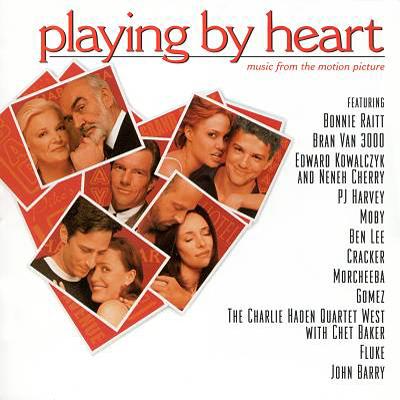
"Playing By Heart" Soundtrack Lyrics
Movie • 1999
Track Listing
Bran Van 3000
Bonnie Rait
Edward Kwalczyk and Neneh Cherry
Ben Lee
Moby
The Charlie Haden Quartet West with Chet Baker
John Barry
Gomez
Fluke
Morcheeba
Cracker
PJ Harvey
John Barry
“Playing by Heart (Music from the Motion Picture) / Playing by Heart (Original Score)” – Album Guide to Tracks and Key Scenes
Overview
How do you score eleven lives crossing in one city without drowning them in sentiment? Playing by Heart answers with a two-pronged soundtrack: a sleek late-career John Barry score and a curated sweep of late-90s alt/trip-hop singer-song cuts. The music doesn’t just decorate L.A.; it lends each entanglement its own emotional thermostat.
The film braids couples at different temperatures — vow renewals, false starts, last goodbyes, reckless beginnings. Barry’s themes move like warm air currents between stories: strings that linger, harmonica and muted trumpet that tilt conversations toward tenderness. Around them, needle-drops sketch the city’s pulse — clubby friction, coffeehouse vulnerability, and Westside drift — so that scene transitions feel like segues on a great mixtape.
Distinctiveness lives in the record’s contrasts: the contemplative orchestral writing sits beside Bran Van 3000, Morcheeba, PJ Harvey, Moby and Bonnie Raitt. That juxtaposition is the point — lush melody for what characters hope love could be, groove and grit for what love actually is on a Tuesday night in L.A.
Genres & themes in phases. Club trip-hop & downtempo — attitude, surfaces, flirtation. Indie/alt rock — self-sabotage, uncertainty. Adult-contemporary & torch standards — memory, regret, grace. Barry’s orchestral lyricism — forgiveness; vows and second chances.
How It Was Made
Composer John Barry wrote a romantic, slow-burn score, recorded with orchestra and spotlight features (notably trumpet/flugelhorn passages associated with the film’s reflective scenes). The score album — issued around the film’s release — packages cues like “Remembering Chet,” “Game of Hide and Seek,” and “Mark’s Graveyard Site,” a set that feels like a chamber suite for crossing destinies (as noted in contemporary score write-ups).
Running parallel is a songs compilation spearheaded on the studio side to mirror the film’s interlaced tone: Bran Van 3000’s “Drinking in L.A.,” Bonnie Raitt’s “Lover’s Will,” Morcheeba’s “Friction,” PJ Harvey’s “Angelene,” Gomez’s “Tijuana Lady,” Ben Lee’s “Cigarettes Will Kill You,” Moby’s “Porcelain (Playing by Heart Version),” and more. Clearances brought together Capitol/Decca era licensing and jazz catalog features (Chet Baker performances sit inside the score album track list via standards).
Music supervision duties on the production are credited in trade and platform listings to Tim Sexton, aligning the compilation’s late-90s AAA/downtempo palette with Barry’s through-line.
Tracks & Scenes
“Drinking in L.A.” — Bran Van 3000
Where it plays: Early in the film’s mosaic of Los Angeles, the track punctuates the city’s aimless daytime drift — characters in transit, one eye on their phones, the other on possibility. It lands as a mood board for motion, cutaways of streets and cafes. Non-diegetic, approx. early reels.
Why it matters: Establishes the film’s wry, wandering energy; a thesis for being “between things.”
“Lover’s Will” — Bonnie Raitt
Where it plays: Over a mid-film interlude of reconnection — phone calls made, pride swallowed. Non-diegetic montage that softens toward intimacy.
Why it matters: Raitt’s vocal timbre frames compromise as courage; it’s the film’s gentle truth-telling.
“Friction” — Morcheeba
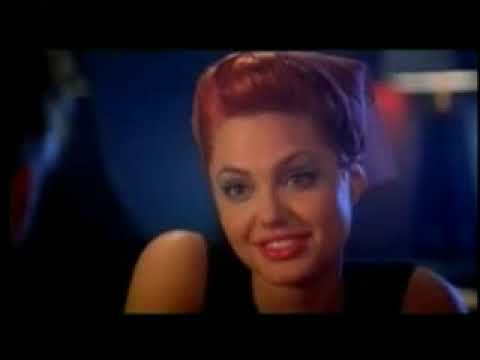
Where it plays: Club sequence orbiting Joan (Angelina Jolie): colored lights, bodies in close proximity, banter armed with a grin. The cut sustains the cat-and-mouse rhythm while conversations needle at boundaries. Mostly non-diegetic, edging diegetic as the camera crosses the floor.
Why it matters: Title as metaphor — Joan tests what sparks and what burns out.
“Angelene” — PJ Harvey
Where it plays: A breather between confrontations; shots of L.A. night streets layered under introspection. Non-diegetic.
Why it matters: Cartier-sharp lyric melancholy spotlights the film’s lonelier corners.
“Tijuana Lady” — Gomez
Where it plays: A drifting, desert-tinged respite cues sequences of quiet recalculation — someone at a window, someone else in a parked car, neither sure of the next sentence. Non-diegetic mid-film placement.
Why it matters: Gives space for characters to choose not to speak.
“Cigarettes Will Kill You” — Ben Lee
Where it plays: Quick-cut montage tracking self-sabotage: a date misfires; a confession lands wrong. Non-diegetic, montage-paced.
Why it matters: Irony and buoyancy thread through bad decisions — the film’s comic sting.
“Porcelain (Playing by Heart Version)” — Moby
Where it plays: Late-film reflective passage, city lights turning into pearls of bokeh; two characters walk apart before they walk back. Non-diegetic, near the denouement.
Why it matters: The signature shimmer that lets grief and hope share the frame.
“Been Around the World” — Cracker
Where it plays: Barroom connective tissue for Dennis Quaid’s raconteur bits; framing his habit of inventing identities. Diegetic spill from speakers between cuts.
Why it matters: A sly wink at stories we tell strangers.
“Dirty Little Mouth” — Fluke
Where it plays: Needle-drop under a kinetic L.A. glide — freeways, neon, the hum before the storm. Non-diegetic.
Why it matters: Injects propulsion exactly where the plot braids tighten.
Score: “Playing by Heart (Vows Renewed)” — John Barry
Where it plays: The vow-renewal sequence for Paul & Hannah arrives with strings that don’t rush; the theme holds a long breath while the camera listens. Non-diegetic, ceremony center.
Why it matters: Barry’s melody dignifies late-life love without sentimentality — a whole worldview in one cue.
Score: “Mark’s Graveyard Site” — John Barry
Where it plays: A graveside moment pauses the city. Sparse orchestration, a melody that steps down gently. Non-diegetic late-film cue.
Why it matters: Formalizes loss; it’s where the film admits what can’t be fixed.
Vintage standards within the score program — “Tenderly,” “You Go to My Head,” “These Foolish Things” (Chet Baker features)
Where it plays: Album-present performances and excerpts evoke smoky, after-hours rooms; in-film usage centers the score’s jazz inflection.
Why it matters: The old songs make the new hurts feel older — and realer.
Trailer music note: TV/online trailers circulate with Barry’s main theme and song underscoring; mixes vary by upload.
Notes & Trivia
- The film’s working title “Dancing About Architecture” inspired a line in-story — a meta-wink about trying to talk about love.
- Two albums circulate: a songs compilation and a separate original score album.
- Some pressings of the CD carry the alternate title text “If Only They Knew” on face/labels.
- Moby’s “Porcelain” appears in a specific “Playing by Heart” version on the OST.
- Barry’s program features recurring statements of a primary theme that blooms fully during the vow renewal.
Music–Story Links
When Joan spars and flirts, the club cut (Friction) puts syncopation into her dialogue — it’s a rhythm scene more than a plot scene. When Dennis Quaid’s drifter character shapeshifts at bars, alt-rock needle-drops become a sonic alibi. In family scenes, Barry’s strings lower the ambient temperature, guiding voices to indoor-voice honesty. And at graveside, his writing thins to its purest line; grief is given one unbroken phrase instead of a speech.
Across the braid, songs tend to score choices (go/stay, confess/hide), while Barry’s cues score the consequences (what that choice means for who you are).
Reception & Quotes
Contemporary critics called the film talky but affecting, often singling out Angelina Jolie and the ensemble for elevating the material. The soundtrack drew praise in score circles for the elegance of Barry’s writing and the tasteful, zeitgeisty curation of source tracks.
“It’s like one of those Alan Rudolph films… lonely seekers cruise the city seeking solace.” — Roger Ebert
“Overly talky, but benefits from witty insights and strong performances.” — Critical consensus
“The pick is the wonderful ‘A Place Inside Alive and Well’…” — A score review
“Barry wrote music for several more years after Playing by Heart…” — Retrospective
Interesting Facts
- Two-label story: the songs set is tied to Capitol/Universal handling; the score album is associated with Decca — a neat snapshot of late-90s catalog alignments.
- Barry & Botti: trumpet features on the score album highlight crossover jazz players within a film-score context.
- Title in the disc: some CD faces show the working title as a remnant — collectors’ catnip.
- Cut-to-city grammar: the OST’s sequencing mirrors the film’s montage habit — needle-drop, breath, orchestral resolve.
- Trailer grab-bag: circulating trailers mix Barry’s theme with song cues; uploads differ, so the exact trailer music isn’t uniform.
- Standards within the score program: Chet Baker performances (“Tenderly,” “You Go to My Head,” “These Foolish Things”) appear as album tracks alongside Barry’s originals.
- Club texture: Morcheeba’s inclusion places the film squarely in the trip-hop-adjacent ’98–’99 moment.
Technical Info
- Title: Playing by Heart (songs compilation) / Playing by Heart (Original Score)
- Year: Film U.S. release December 18, 1998; U.K. release August 6, 1999; soundtrack releases 1999.
- Type: Film soundtrack — compilation + original score.
- Composer: John Barry (score); select standards performed by Chet Baker on the score album.
- Music Supervision: Tim Sexton (credited on platform/credits listings).
- Notable placements: “Drinking in L.A.” (Bran Van 3000); “Lover’s Will” (Bonnie Raitt); “Friction” (Morcheeba); “Angelene” (PJ Harvey); “Porcelain (Playing by Heart Version)” (Moby); “Tijuana Lady” (Gomez); “Cigarettes Will Kill You” (Ben Lee).
- Release context: Tied to Miramax’s late-’98 awards corridor; separate Decca/Capitol affiliated issues for score/songs.
- Labels/album status: Songs compilation issued commercially; Barry score album available digitally and on CD; later vinyl reissues reported.
- Availability/Charts: Titles stream on major platforms; physical media appears regularly on marketplace/collector sites.
Questions & Answers
- Is there one soundtrack or two?
- Two: a songs compilation featuring various artists, and an original score album by John Barry.
- Which track underscores the vow-renewal scene?
- Barry’s “Playing by Heart (Vows Renewed)” — a fuller, luminous statement of the main theme.
- What’s the club sound that follows Joan’s nightlife scenes?
- Trip-hop/downtempo textures — think Morcheeba’s “Friction” — to match the flirt-and-parry cadence.
- Are the Chet Baker standards part of the film or just the album?
- They appear within the score album’s program, threading jazz lineage into Barry’s palette; film usage centers the score’s jazz color.
- Who supervised the music choices?
- Tim Sexton is credited in credits/platform listings as music supervisor for the production.
Canonical Entities & Relations
| Subject | Relation | Object |
|---|---|---|
| John Barry | composed score for | Playing by Heart (film) |
| Tim Sexton | music supervised | Playing by Heart (film) |
| Miramax Films | distributed | Playing by Heart (film) |
| Capitol/Universal | issued | Playing by Heart — Music from the Motion Picture (songs) |
| Decca | issued | Playing by Heart (Original Score) |
| Bran Van 3000 | performed | “Drinking in L.A.” (on songs compilation) |
| Morcheeba | performed | “Friction” (on songs compilation) |
| Moby | performed | “Porcelain (Playing by Heart Version)” (on songs compilation) |
| Chet Baker | performed | standards featured within score album program |
| Willard Carroll | wrote & directed | Playing by Heart (film) |
Sources: Rotten Tomatoes; Roger Ebert; Filmtracks; Movie-Wave; Discogs; Spotify; SoundtrackCollector; platform credits (Plex).
November, 19th 2025
A-Z Lyrics Universe
Cynthia Erivo Popular
Ariana Grande Horsepower
Post Malone Ain't No Love in Oklahoma
Luke Combs Good Riddance (Time of Your Life)
Green Day Bye Bye Bye
*NSYNC You're the One That I Wan
John Travolta & Olivia Newton-John I Always Wanted a Brother
Braelyn Rankins, Theo Somolu, Kelvin Harrison Jr. and Aaron Pierre The Power of Love
Frankie Goes to Hollywood Beyond
Auli’i Cravalho feat. Rachel House MORE ›