Soundtracks:  A B C D E F G H I J K L M N O P Q R S T U V W X Y Z #


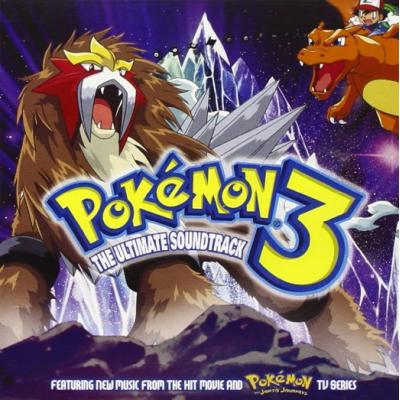
Pokemon 3: The Ultimate Soundtrack Album Cover

"Pokemon 3: The Ultimate Soundtrack" Soundtrack Lyrics

Cartoon • 2001

Track Listing

Pokemon Johto - Movie version

To Know the Unknown

Pikachu (I Choose You)

All We Wanna Do

He Drives Me Crazy

You & Me & Pokemon

Song of Jigglypuff

Pokemon GS

Two Perfect Girls

Pokemon Johto

Biggest Part Of My Life

Medley From "Spell Of My Life"

Pikachu (Karaoke)

Songs Of Jigglypuff (Karaoke)

You & Me & Pokemon (Karaoke)

Pokerap - TV video (Bonus Video Track)

Scene from Pokemon 3: The Movie

(song is Pokemon Johto) (Bonus Video Track)


“Pokémon 3: The Ultimate Soundtrack” – Album Guide to Tracks and Key Scenes

Pokémon 3: The Movie trailer frame—Ash, Pikachu and Entei against the Crystal Tower
Pokémon 3: The Movie — official trailer (2000/2001)

Overview

How do you package a film about an imaginary father conjured by living letters? With a hybrid album that’s half radio, half ritual. Pokémon 3: The Ultimate Soundtrack (2001) mirrors the movie’s split: an in-story score that treats the Crystal Tower like a cathedral and a pop compilation that sends kids out of the theater singing.

The film (Spell of the Unown: Entei) centers on Molly, a grieving child whose wish-world swallows a town. Inside the feature, the orchestral palette leans solemn and glassy; outside it, the album fronts TV-era anthems and bubblegum cuts. Per official listings, the disc stitches together a new end-credit single (“To Know the Unknown” by Innosense), TV themes (“Pokémon Johto”), character songs, a short “score suite,” and three karaoke instrumentals.

Distinctiveness? Curation. Where the previous movie leaned on adult-contemporary star power, this set positions the franchise’s “house band” of studio vocalists and kid-pop performers, then slips in an instrumental Medley from “Spell of the Unown” so the film’s musical spine isn’t absent. According to album notes/retail metadata, the U.S. release carried Koch Records branding; current digital storefronts also host a 12-track version under the Pokémon/Laced Records pipeline.

Genres & themes in phases. Kid-pop & teen-pop — friendship, courage, found family. TV-theme nostalgia — ritual, routine, “Saturday morning” energy. Orchestral suite — loss, wonder, restoration.

How It Was Made

Score & theme. The Japanese score is by Shinji Miyazaki; Western soundtrack materials and the album’s instrumental “Medley from ‘Spell of the Unown’” credit Ralph Schuckett and John Loeffler for the adapted/album presentation. That medley compresses the film’s crystalline motifs into a short concert cue.

Compilation & production. The CD markets itself as “The Ultimate Soundtrack,” drawing from TV-adjacent releases (Totally Pokémon) and recording new vocals with the JOHTO studio ensemble. Executive production ran through the 4Kids/Pokémon Company pipeline; Koch handled U.S. retail. A later digital listing presents a 12-track selection (sans karaoke) on major platforms.

Trailer still of the Crystal Tower forming as the score surges
Behind the music: film cues by Miyazaki (JP) / adapted on album; songs produced via the 4Kids studio stable.

Tracks & Scenes

“To Know the Unknown” — Innosense
Where it plays: End credits (U.S.). After Entei’s farewell and the tower’s collapse, the film exhales into a glossy teen-pop curtain.
Why it matters: A radio-facing bow that reframes Molly’s story as discovery rather than despair.

“Pokémon Johto — Movie Version” — PJ Lequerica, Elan Rivera
Where it plays: Album-first presentation; used for marketing tie-ins more than an on-screen needle-drop.
Why it matters: Bridges the feature to the TV era fans were living in every week.

“All We Wanna Do” — Elan Rivera & Jamily Gray
Where it plays: Album inclusion from the TV-adjacent songbook; not a feature scene.
Why it matters: Keeps the disc lively between theme and ballad, a tone match for companion shorts/promo reels.

“You & Me & Pokémon” — Elan Rivera & PJ Lequerica
Where it plays: Associated with series-era montages; appears here in both vocal and karaoke versions.
Why it matters: Singalong DNA — the franchise’s friendship thesis in four minutes.

“Two Perfect Girls” — Eric Stuart (Brock)
Where it plays: Character novelty tied to the series persona; album inclusion rather than feature placement.
Why it matters: A wink to TV fans — Brock’s comic voice gets a track.

“Medley from ‘Spell of the Unown’ (Instrumental)” — Ralph Schuckett & John Loeffler
Where it plays: Album-exclusive suite condensing the movie’s score material (shimmering strings, bell-like synths, grief-into-wonder arc).
Why it matters: Gives the compilation a heartbeat from the actual film.

Karaoke: “Pikachu (I Choose You)” / “Song of Jigglypuff” / “You & Me & Pokémon”
Where it plays: Disc-only instrumentals sourced from earlier releases.
Why it matters: Built for parties — the “Ultimate” in the title nods to these extras.

Trailer montage of Ash, Misty and Brock looking up at Entei as crystal spreads
Key placements: end-credit single; album-only TV cuts; a short suite that bottles the film’s glassy motifs.

Notes & Trivia

  • “To Know the Unknown” introduced Innosense — the Orlando-based pop group mentored in the late-’90s teen-pop boom.
  • Three karaoke instrumentals extend the disc to a generous runtime — a common practice on Pokémon CDs of the era.
  • The JOHTO studio ensemble (credited on the album) fronts many TV-theme derivatives compiled here.
  • A 12-track digital edition in current stores omits the karaoke cuts but keeps the headline tracks.
  • The album folds in one film-linked instrumental suite so the true Spell of the Unown color isn’t missing.

Music–Story Links

When Molly’s wish-world hardens, the film score turns glassy and hushed; you hear loss before anyone admits it. The album reflects that arc by sneaking in the “Medley” — a miniature of grief, awe, release. Then the credits flip the dial: Innosense sings the thesis in plain text, and TV-era cuts remind you that outside this one sad town there’s a big, bright Pokémon world. Low → high; inside → outside.

Reception & Quotes

Reviews were mixed on the feature, but fans welcomed a one-stop disc that bundled a new single, TV themes, and a taste of the score. As one listing puts it, the album is effectively a bridge between the movie event and Totally Pokémon, with a bonus score cue to tie it back.

“Track list pulls from Totally Pokémon with an exclusive ‘Spell of the Unown’ medley.” — fan/encyclopedia summary
“Koch Records release; later digital variant appears with 12 tracks.” — catalog listings
Trailer frame: Entei dissolving as sunlight breaks through the Crystal Tower
Reception snapshot: not a pure score album, but a useful snapshot of the 2001 Pokémon sound.

Interesting Facts

  • Label shuffle: Original U.S. physical release carried Koch branding; present-day digital shows Pokémon/Laced Records ownership for a trimmed version.
  • Enhanced disc: Some pressings were “Enhanced CDs” with computer extras.
  • Suite length: The instrumental medley clocks around three and a quarter minutes — short, but representative.
  • Character voice: Eric Stuart (Brock) performs “Two Perfect Girls,” continuing the series’ tradition of in-character songs.
  • Short stack: Theatrical program included the short Pikachu & Pichu; its Japanese songs aren’t on this album.

Technical Info

  • Title: Pokémon 3: The Ultimate Soundtrack
  • Year: 2001 (U.S. release around April 3)
  • Type: Film/TV hybrid compilation (songs + one score medley + karaoke)
  • Score creators: Shinji Miyazaki (film, JP); album medley credited to Ralph Schuckett & John Loeffler
  • Key tracks: Innosense — “To Know the Unknown”; PJ Lequerica/Elan Rivera — “Pokémon Johto (Movie Version)”; Eric Stuart — “Two Perfect Girls”; “Medley from ‘Spell of the Unown’” (instrumental)
  • Label: Koch Records (physical release); later digital via Pokémon/Laced Records pipeline (12-track)
  • Availability: Physical CD on secondary markets; streaming/download editions (track counts vary)

Questions & Answers

Is this a score album?
No. It’s a compilation: TV-era songs, the new credit single, one instrumental medley from the film, plus karaoke cuts.
Who composed the movie’s music?
Shinji Miyazaki composed the Japanese film score. The album’s medley credit lists Ralph Schuckett & John Loeffler for the adapted presentation.
Where does “To Know the Unknown” appear?
During the U.S. end credits of the feature.
Why are there karaoke tracks?
Pokémon soundtracks of the era often doubled as singalong discs; the “Ultimate” tag leans into that.
Why does the digital version have fewer tracks?
Modern listings typically present a 12-song edition (no karaoke), reflecting rights/format updates.

Canonical Entities & Relations

SubjectRelationObject
Shinji Miyazakicomposedoriginal film score for Pokémon 3: The Movie
Ralph Schuckett & John Loeffleradapted/arranged“Medley from ‘Spell of the Unown’” on the album
Innosenseperformed“To Know the Unknown” (end-credit single)
Koch RecordsreleasedPokémon 3: The Ultimate Soundtrack (U.S. physical)
Pokémon / Laced Recordsissuedcurrent 12-track digital listing
4Kids / The Pokémon Companyexecutive producedsoundtrack compilation

Sources: Discogs release/master entries; Bulbapedia album page; VGMdb catalog entry (KOC-CD-8911); Spotify/Apple Music current listings; Wikipedia film entry for credits context.

November, 19th 2025


A-Z Lyrics Universe

Lyrics / song texts are property and copyright of their owners and provided for educational purposes only.