
"Premium Rush" Soundtrack Lyrics
Movie • 2012
Track Listing
The Who
Titus Andronicus
Lykke Li
My Chemical Romance
Smith Westerns
Sleigh Bells
Manchester Orchestra
The Raconteurs
“Premium Rush (Original Motion Picture Soundtrack)” – Album Guide to Tracks and Key Scenes
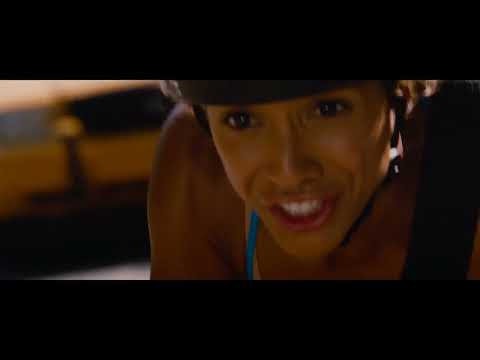
Overview
What does a movie about a brakeless bike have in common with an album that barely stops to breathe? Everything. Premium Rush moves like a courier threading cabs on Sixth Avenue, and David Sardy’s score keeps the chain taut while needle-drops give the chase a pop-rock grin.
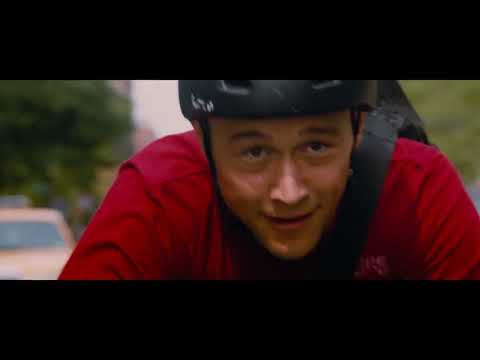
The plot is stripped for speed: Wilee (Joseph Gordon-Levitt), a New York bike messenger, grabs an envelope that a crooked cop (Michael Shannon) wants back now. Manhattan becomes a maze of deadlines and near-misses. The soundtrack mirrors the film’s two gears — adrenalized pulse (original score cues) and urban swagger (licensed tracks).
What makes it distinct? The film leans on percussive, riff-driven electronics and guitar to sketch velocity, then spikes the ride with bratty blasts of rock — you can practically feel the wind burn. A couple of can’t-miss placements — The Who and My Chemical Romance — punch up key beats and brand the film’s “no brakes” ethos.
Genre phases: post-punk/garage rock for attitude; indie noise-pop for chaos; electro-rock score for momentum; and classic rock as a mythic starter pistol. Translation: indie grit — vulnerability; 2010s alt-rock — fight-or-flight; classic rock — street-level legend status.
How It Was Made
Composer/producer David Sardy built a compact, pedal-hard score: clipped motifs, kick drum engines, and distorted guitars that surge, recede, and re-ignite. Orchestrator/conductor Tim Williams helped shape cue architecture, while mixers and editors kept attack and release razor-clean so the music could sprint alongside the cuts.
Licensed music adds identity at precise junctions — opening energy, envelope-pickup swagger, mid-run spikes — rather than wallpapering the film. The curated feel keeps the ride lean.
Album status: an official score album, Premium Rush (Original Motion Picture Soundtrack), later released digitally with 27 tracks and a sub-50-minute runtime.
Tracks & Scenes
“Baba O’Riley” — The Who
Where it plays: heard right at the start (about 00:01). A kinetic overture for street chess: gears click, traffic yawns open, and Wilee rolls. Diegetic bleed is minimal — this is a non-diegetic anthem framing the city as a stage.
Why it matters: it elevates a messenger’s morning into ritual. Classic rock as urban mythmaking.
“Na Na Na (Na Na Na Na Na Na Na Na Na)” — My Chemical Romance
Where it plays: early sequence when Wilee picks up the crucial envelope (around 00:10). The cut bounces between fix-gear finesse and the envelope’s weight. Non-diegetic, intercut with street sound.
Why it matters: bratty propulsion underlines Wilee’s cocky flow and the moment the plot “clicks in.”
“Titus Andronicus Forever” — Titus Andronicus
Where it plays: used as an aggressive surge during one of the hard-charging ride beats (non-diegetic).
Why it matters: punk-forward attack mirrors the film’s risk-embracing, elbows-out lane changes.
“Get Some” — Lykke Li
Where it plays: featured in the film as an attitude spike (non-diegetic), surfacing to color a cutaway/transition.
Why it matters: prowling toms + chanty hook = predatory momentum; it sharpens the cat-and-mouse dynamic.
“Weekend” — Smith Westerns
Where it plays: a lighter breath between sprints, non-diegetic.
Why it matters: gives the chase a momentary, youthful pop sheen — a reset before the next sprint.
“Crown on the Ground” — Sleigh Bells
Where it plays: noise-pop blast in an urban montage context (non-diegetic).
Why it matters: clipping drums and blown-out guitars equal the sensory overload of zipping through crosstown traffic.
“Pensacola” — Manchester Orchestra
Where it plays: brief emotional color in a quieter beat between confrontations (non-diegetic).
Why it matters: grittier alt-rock textures hint at dents in Wilee’s bravado.
“Salute Your Solution” — The Raconteurs
Where it plays: a riff-first charge underscoring decision-time momentum (non-diegetic).
Why it matters: snarling guitars as “go/no-go” fuel.
Score highlights — David Sardy
Where it plays: cues like “This Is My Bike,” “Monday Chase,” and “Chinatown Auto Destruct” punctuate the movie’s chase architecture; stutter-kick patterns and clipped bass sequences mirror lane-pick decisions and time-pressure edits (non-diegetic).
Why it matters: the cues behave like a metronome for danger. Every acceleration lands with editorial intent.
Notes & Trivia
- The film’s composer is credited simply as “Music: David Sardy.”
- The official score album arrived the year after release, in digital form, with 27 tracks.
- Opening drop of “Baba O’Riley” functions like an instant time-capsule of rebellious momentum.
- My Chemical Romance’s placement aligns with the envelope pickup — the story locks in as the song kicks.
- Several rock cues in the film are not on the score album; the album focuses on Sardy’s original cues.
Music–Story Links
When Wilee chooses a risky line through crosstown traffic, Sardy’s meter tightens — short, percussive loops mimic quick, hinge-like decisions. At the envelope handoff, the swagger of “Na Na Na” throws a bright flag: this is the instant the courier gig becomes a heist. In later stakes-ups, gnarlier guitars (“Crown on the Ground,” “Salute Your Solution”) arrive like shot-of-adrenaline lane changes. And when the film briefly exhales, the score thins: fewer hits, longer sustains, breathing room earned — until the next intersection.
Reception & Quotes
Critics generally tagged the movie as brisk, propulsive, and cut to move; the soundtrack rides shotgun with that consensus.
“Bike chases… jazzed up with on-screen graphics and pounding music.” Screen Daily
“An exciting and propulsive score by David Sardy.” The Ultimate Rabbit
“Deftly straddles the line between stupid and clever… brisk running time.” Variety
Availability: the Original Motion Picture Soundtrack (score by David Sardy) is available on major digital platforms.
Interesting Facts
- Label credit on the score album associates with Madison Gate Records (Sony’s in-house label for screen music releases).
- “Baba O’Riley” is often misnamed “Teenage Wasteland.” Here it’s the film’s cheeky, heroic opener.
- Score cues have short runtimes — built for editorial rhythm rather than album-length development.
- Rock placements skew 2000s-2010s (Raconteurs, Sleigh Bells, MCR) alongside a 1971 classic — time collapses at 25 mph.
- Some international trailers vary, but the core U.S. trailer locks the film’s speed-as-brand.
- The album’s cue titles (“Monday Chase,” “The Run Begins”) are nearly scene headings — handy for scene mapping.
- Music department includes dedicated programming, mixing, editing — the “machine room” behind the speed.
Technical Info
- Title: Premium Rush (Original Motion Picture Soundtrack)
- Year: 2012 film; soundtrack album released 2013
- Type: Feature film soundtrack (score album with select licensed tracks not included)
- Composer: David Sardy
- Music Department (selected): Tim Williams (orchestrator/conductor); music editors and programmers credited on the film
- Notable placements: “Baba O’Riley” — The Who; “Na Na Na” — My Chemical Romance; “Titus Andronicus Forever” — Titus Andronicus; “Get Some” — Lykke Li; “Crown on the Ground” — Sleigh Bells; “Salute Your Solution” — The Raconteurs; “Pensacola” — Manchester Orchestra
- Release context: U.S. theatrical release August 24, 2012; score album released digitally August 15, 2013
- Label/Album status: Digital release under Columbia Pictures/Madison Gate Records imprint
- Availability: streaming on major platforms; digital purchase
Questions & Answers
- Does the film use both an original score and licensed songs?
- Yes — Sardy’s score handles momentum; rock cuts punctuate key beats.
- Is “Baba O’Riley” actually in the movie?
- Yes, it opens the film and sets the tone instantly.
- Is the Who/MCR material on the official score album?
- No — the album focuses on Sardy’s original cues; the rock placements are part of the film but not the score album.
- What trailer should I sample for the film’s vibe?
- The official U.S. trailer communicates the cut-to-music style and the nonstop rhythm.
- One sentence vibe-check?
- Street-smart, riff-heavy, and edited like a sprint — the soundtrack never touches the brakes.
Canonical Entities & Relations
| Subject | Relation | Object |
|---|---|---|
| David Sardy | composed | Premium Rush (Original Motion Picture Soundtrack) |
| David Koepp | directed | Premium Rush (2012 film) |
| Sony Pictures Releasing | distributed | Premium Rush (2012 film) |
| Madison Gate Records | released | Premium Rush (Original Motion Picture Soundtrack) — digital |
| The Who — “Baba O’Riley” | licensed placement | Premium Rush (2012 film) |
| My Chemical Romance — “Na Na Na” | licensed placement | Premium Rush (2012 film) |
| Tim Williams | orchestrated/conducted | Premium Rush score sessions |
| Manchester Orchestra — “Pensacola” | licensed placement | Premium Rush (2012 film) |
Sources: WhatSong, Soundtrakd, Apple Music, MusicBrainz, Wikipedia (film entry), Variety, Screen Daily, The Ultimate Rabbit.
According to WhatSong, “Baba O’Riley” opens the film and “Na Na Na” tags the envelope pickup. As listed by Apple Music, the official score album arrives with 27 cues, dated 2013-08-15. Per Screen Daily, the chases are juiced with “pounding music,” while according to Variety the film’s brisk cut/feel is the point — the album follows suit.
November, 19th 2025
'Premium Rush', an American action-thriller film on Wikipedia and IMDbA-Z Lyrics Universe
Cynthia Erivo Popular
Ariana Grande Horsepower
Post Malone Ain't No Love in Oklahoma
Luke Combs Good Riddance (Time of Your Life)
Green Day Bye Bye Bye
*NSYNC You're the One That I Wan
John Travolta & Olivia Newton-John I Always Wanted a Brother
Braelyn Rankins, Theo Somolu, Kelvin Harrison Jr. and Aaron Pierre The Power of Love
Frankie Goes to Hollywood Beyond
Auli’i Cravalho feat. Rachel House MORE ›