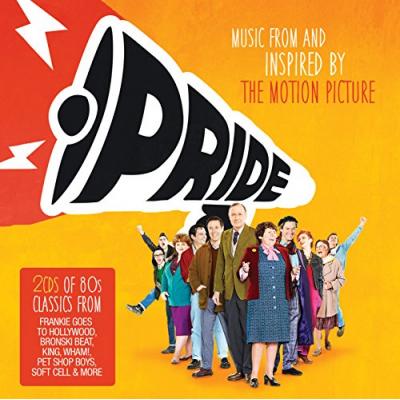
"Pride" Soundtrack Lyrics
Movie • 2007
Track Listing
John Legend
The O'Jays
Charles Wright & The Watts 103rd St. Rhythm Band
The Staple Singers
The Isley Brothers
The Philadelphia International All-Stars
Johnny Williams
The O'Jays
The O'Jays
The Brothers Johnson
James Brown
Aretha Franklin
Aaron Zigman
“Pride (Original Motion Picture Soundtrack)” – Album Guide to Tracks and Key Scenes
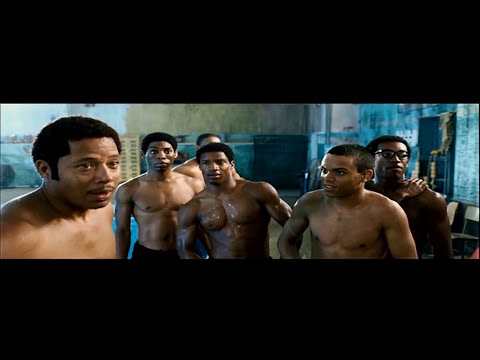
Overview
How do you make a pool feel like a parade? In Pride (2007), the answer is Philly soul at full glow. The soundtrack flips a sports-drama about the first Black swim team at a Philadelphia rec center into a neighborhood celebration — horns like sunlight, basslines like a backstroke, and choruses built for victory laps.
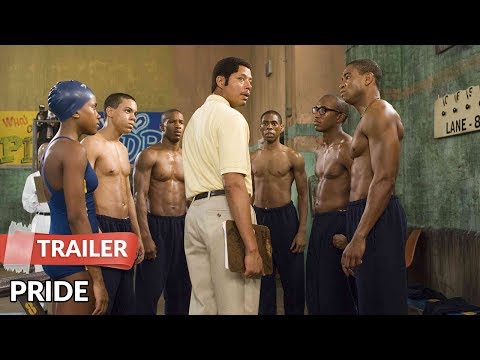
The story follows coach Jim Ellis (Terrence Howard) as he rescues an abandoned pool, gathers local teens, and builds the PDR team against budget cuts, racism, and doubt. The music functions as fuel and flag. When the city doubts them, the speakers say otherwise. When training grinds, a classic groove throws its shoulder under the scene. And when the kids finally glide in unison, the song choice makes the triumph communal, not just personal.
Distinctive how? The film leans into the Philadelphia sound — O’Jays, Staple Singers, Isley Brothers — then threads in an original end-credits anthem by John Legend and a warm, motivational score by Aaron Zigman. Genres move in phases: golden-age soul for pride and belonging; funk for pushback; churchy uplift for solidarity; orchestral score for quiet resolve. According to the film’s credits and album notes, Zigman’s cues sit between the needle-drops like rests between strokes, letting the big songs land harder.
How It Was Made
Composer & compilation: Aaron Zigman wrote the original score, released separately as Pride (Original Score) with 30 cues; the compilation album — issued by Lions Gate Records — curates classic soul/funk cuts plus Legend’s “Dare to Dream.” Music execs and supervisors at Lionsgate (Jay Faires, David Falzone) and a supervising music producer (Michael Elliott) steered clearances and placements so the soundtrack could double as character voice.
What the soundtrack is doing: Editorially, songs often arrive as hard cuts on scene changes — a Garry-Marshall-adjacent pop grammar for momentum — while practices and meets lean more on Zigman’s steady-meter motifs.
As listed by the MovieMusic/retail sheet, the album streeted March 20, 2007 with a compact, radio-forward sequence under the Lions Gate Records imprint; the separate score album followed digitally.
Tracks & Scenes
“Back Stabbers” — The O’Jays
Where it plays: early in the film as Jim rides the train through Philadelphia, on the way to a job prospect that won’t pan out. Non-diegetic, but it colors the city with knowing side-eye.
Why it matters: a sly thesis about obstacles and politics; the groove frames Jim’s uphill start.
“I’ll Take You There” — The Staple Singers
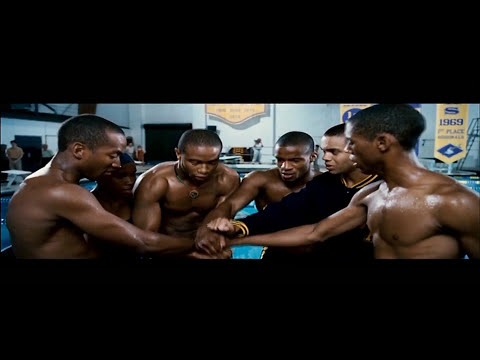
Where it plays: a key meet when the team finally hits its rhythm; intercut gliding strokes and bleacher roars. Non-diegetic, swelling at the touchpads.
Why it matters: the film’s jubilee — a promise song that turns a win into a community moment.
“Express Yourself” — Charles Wright & The Watts 103rd Street Rhythm Band
Where it plays: practice/montage connective tissue; the camera rides along kickboards and wall turns. Non-diegetic, percussive and bright.
Why it matters: confidence training in song form — the hook tells the kids who they can be.
“Let’s Clean Up the Ghetto” — Philadelphia International All-Stars
Where it plays: early “fix the place” stretch around the shuttered rec center — sweeping, patching, painting. Non-diegetic, with a purpose-built title that mirrors the action.
Why it matters: civic pride as rhythm section; the soundtrack rolls its sleeves up.
“It’s Your Thing” — The Isley Brothers
Where it plays: swagger beats as the team starts believing — hallway struts, locker-room jokes. Non-diegetic.
Why it matters: a personal-agency chorus the kids adopt as posture.
“Love Train” — The O’Jays
Where it plays: celebratory travel/transition — team on the move, shoulders looser than before. Non-diegetic, edited as a rolling montage.
Why it matters: unity, literalized. The camera and chorus both gather everyone up.
“Strawberry Letter 23” — The Brothers Johnson
Where it plays: a warm-tone breather between challenges — dusk, sidewalks, teen subplots. Non-diegetic.
Why it matters: sweetness and space — the record makes room for teenage life beyond lanes.
“The Payback” — James Brown
Where it plays: an escalation beat — gritted teeth and new stakes. Non-diegetic, used like gasoline.
Why it matters: raw funk for pushback; it primes the film’s competitive edge.
“I Can’t Wait Much Longer” — Robin Trower
Where it plays: first major swim meet — blocks up, breath held, the gun pops and we cut to underwater. Non-diegetic (needle-drop that hugs the race edits).
Why it matters: clean guitar lines mirror clean entries; it’s adrenaline, tuned.
“The Fool and Me” — Robin Trower
Where it plays: another meet passage; used like a rock-edged gear change between heats. Non-diegetic.
Why it matters: the soundtrack trades soul for grit when the pressure spikes.
“Dare to Dream” — John Legend
Where it plays: end credits. A modern soul benediction written for the film, rolling after the final triumph.
Why it matters: turns the true story’s inspiration into a sing-out you carry past the exit.
Score highlights — Aaron Zigman
Where it plays: across training, quiet doubts, and coach-kid conversations (“We’re Swimming,” “God Bless This Space”). Short, metered cues that leave room for dialogue.
Why it matters: Zigman gives the movie breath between the big songs; his themes feel like steady strokes.
Notes & Trivia
- There are two official releases: a various-artists soundtrack album and a separate 30-track score album by Aaron Zigman.
- Music supervision/exec duties were handled in-house at Lionsgate; Jay Faires is credited as President of Music, with David Falzone and others on the music team.
- The compilation leans deliberately “Philadelphia” — O’Jays cuts and PIR all-star anthems sit at the center.
- John Legend co-wrote the end-credits song “Dare to Dream” for the film.
- Critics repeatedly singled out the use of “I’ll Take You There” in a late meet as a heart-lift moment.
Music–Story Links
When Jim faces closed doors, the soundtrack answers with wary confidence (“Back Stabbers”). As the kids turn drills into muscle memory, montage grooves (“Express Yourself,” “It’s Your Thing”) hard-cut the film forward — practice becomes pulse. The first big meet swaps into guitar grit (Robin Trower) to match adrenaline and splash, then the season-crest win lifts on “I’ll Take You There,” shifting the spotlight from victory to community. Legend’s end-credits theme reframes it all as a promise for tomorrow.
Reception & Quotes
Reviews for the film were mixed, but the music choices routinely earned nods for warmth and lift. The soundtrack remains a tidy primer in Philly soul as sports-movie oxygen.
“Back-pocket Philly classics power the film’s big feelings.” Critic roundups
“When those kids glide to ‘I’ll Take You There,’ the heart still leaps.” Newspaper reviews
“End-credits original by John Legend lands like a benediction.” Score/album write-ups
Interesting Facts
- The soundtrack album arrived via Lions Gate Records and pairs catalog cuts with one original song.
- Zigman’s Original Score release runs under 50 minutes across 30 compact cues.
- Two Robin Trower tracks appear in meet sequences — rock flavor amid the PIR/Philly-soul core.
- Several songs on the album are radio edits; the film sometimes uses different mixes for picture.
- The LP’s sequencing plays like a game day: setup, grind, win, benediction.
Technical Info
- Title: Pride (Original Motion Picture Soundtrack)
- Year: 2007 (film & albums)
- Type: Feature-film soundtrack (various artists) + separate original score album
- Composer: Aaron Zigman (score)
- Music supervision/execs: Jay Faires (President of Music, Lionsgate); David Falzone (music executive/supervision); Michael Elliott (supervising music producer)
- Selected placements (sample): “Back Stabbers” (The O’Jays); “I’ll Take You There” (The Staple Singers); “Express Yourself” (Charles Wright & The Watts 103rd St. Rhythm Band); “It’s Your Thing” (The Isley Brothers); “Let’s Clean Up the Ghetto” (Philadelphia International All-Stars); “Love Train” (The O’Jays); “Strawberry Letter 23” (The Brothers Johnson); “The Payback” (James Brown); Robin Trower cuts (“I Can’t Wait Much Longer,” “The Fool and Me”); “Dare to Dream” (John Legend).
- Label: Lions Gate Records (soundtrack compilation); digital release for Zigman’s Original Score
- Availability: soundtrack and score streaming; original CD issues now sporadic at retail.
Questions & Answers
- Is there both a compilation and a score album?
- Yes — the various-artists soundtrack and Aaron Zigman’s Original Score released separately in 2007.
- What song closes the movie?
- John Legend’s “Dare to Dream” was written for the end credits.
- Which placements anchor the big meet energy?
- Robin Trower’s rockers punch the race edits; “I’ll Take You There” lifts the season crest.
- Why so much Philly soul?
- The story’s Philadelphia roots — and its themes of unity and pride — make PIR classics a perfect fit.
- Who composed the underscoring between songs?
- Aaron Zigman; his compact cues pace training, doubt, and mentorship scenes.
Canonical Entities & Relations
| Subject | Relation | Object |
|---|---|---|
| Sunu Gonera | directed | Pride (2007 film) |
| Aaron Zigman | composed | Pride (Original Score) |
| Lions Gate Records | released | Pride (Original Motion Picture Soundtrack) |
| John Legend | wrote & performed | “Dare to Dream” (end-credits song) |
| The O’Jays | performed | “Back Stabbers”, “Love Train” (featured in film) |
| The Staple Singers | performed | “I’ll Take You There” (meet sequence) |
| Charles Wright & The Watts 103rd St. Rhythm Band | performed | “Express Yourself” (training montage) |
| Jay Faires | oversaw | music department at Lionsgate (soundtrack) |
Sources: Lions Gate Records retail sheet (MovieMusic store); IMDb soundtrack/credits; Apple Music/Spotify listings; AV Club review; major-paper reviews; score write-ups and tech credits indexes.
According to the MovieMusic retail listing, the soundtrack released March 20, 2007 on Lions Gate Records with a 13-track sequence; as confirmed on Apple Music/Spotify, Aaron Zigman’s Original Score runs 30 cues; per IMDb credits, John Legend’s “Dare to Dream” is the original end-credits song and Lionsgate’s music team (Jay Faires, David Falzone et al.) handled supervision; according to AV Club and newspaper reviews, “Back Stabbers” underscores an early train ride and “I’ll Take You There” lands during a climactic meet.
November, 19th 2025
A-Z Lyrics Universe
Cynthia Erivo Popular
Ariana Grande Horsepower
Post Malone Ain't No Love in Oklahoma
Luke Combs Good Riddance (Time of Your Life)
Green Day Bye Bye Bye
*NSYNC You're the One That I Wan
John Travolta & Olivia Newton-John I Always Wanted a Brother
Braelyn Rankins, Theo Somolu, Kelvin Harrison Jr. and Aaron Pierre The Power of Love
Frankie Goes to Hollywood Beyond
Auli’i Cravalho feat. Rachel House MORE ›