Soundtracks:  A B C D E F G H I J K L M N O P Q R S T U V W X Y Z #


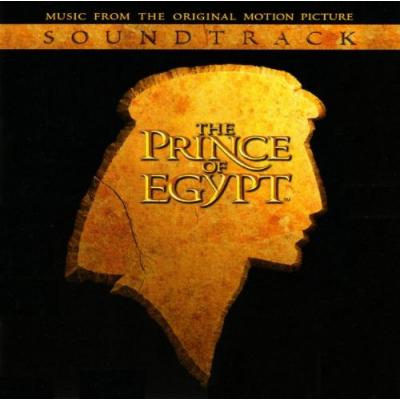
Prince of Egypt Album Cover

"Prince of Egypt" Soundtrack Lyrics

Movie • 1998

Track Listing


“The Prince of Egypt (Music from the Original Motion Picture)” – Album Guide to Tracks and Key Scenes

The Prince of Egypt trailer still: Moses and Rameses face each other as the Nile glows
The Prince of Egypt — feature film soundtrack, 1998

Overview

How do you score an exodus — with thunder or with lullabies? This soundtrack does both. The Prince of Egypt opens with a mother’s prayer and ends with a people’s song, building a bridge from private faith to public freedom. It’s a rare animated album where the songs (by Stephen Schwartz) and the score (by Hans Zimmer) pull the same rope.

The film tells Moses’ story — palace prankster turned prophet — and the album traces that arc in musical phases: enslaved lament and cradle-song; royal yearning; desert wisdom and found family; confrontation and plague; then the trembling hush after the sea. You hear choirs and frame drums, campfire folk and temple pomp, all set inside Zimmer’s sand-warm orchestral world.

Distinctive? The project shipped not just a core soundtrack but also companion albums (Nashville, Inspirational) that reframed themes for other genres and audiences. And its flagship ballad, “When You Believe,” lived two lives: an on-screen duet inside the narrative and an end-credits pop version that conquered radio. According to Wikipedia, the album debuted November 17, 1998 on DreamWorks Records and later won the Academy Award for Best Original Song (“When You Believe”).

How It Was Made

Song–score partnership: Schwartz penned the film’s sung numbers (“Deliver Us,” “All I Ever Wanted,” “Playing with the Big Boys,” “Through Heaven’s Eyes,” “The Plagues,” “When You Believe”), while Zimmer’s score binds scenes with motifs for destiny, doubt, and deliverance.

Voices & versions: The narrative “When You Believe” is performed on screen by Miriam and Tzipporah (Sally Dworsky with Michelle Pfeiffer), while the end credits feature Mariah Carey & Whitney Houston’s Babyface-produced single. Other pivotal vocals: Ofra Haza’s Hebrew-laced lullaby in “Deliver Us,” Brian Stokes Mitchell as Jethro in “Through Heaven’s Eyes,” and Steve Martin & Martin Short as the showboating priests on “Playing with the Big Boys.”

Album family: DreamWorks released the primary 19-track OST (songs + select score cues) and two companion discs (Nashville and Inspirational) with “music from and inspired by” the film — a late-90s playbook that widened the project’s footprint. As listed by MusicBrainz and Discogs, standard editions carry 19 cuts; streaming mirrors that sequencing today.

Trailer frame: Moses’s basket on the Nile as a lullaby begins
Making the sound: Schwartz’s sung story + Zimmer’s desert-lit score.

Tracks & Scenes

“Deliver Us” — Ofra Haza & Eden Riegel (with chorus)
Where it plays: the opening sequence. Slave labor under whipcracks, then an intimate handoff: Yocheved sets baby Moses adrift while singing a Hebrew lullaby; young Miriam answers from the reeds. The choral surges and percussion feel like the Nile itself (diegetic-adjacent to non-diegetic flow).
Why it matters: the film’s covenant in miniature — fear, courage, and faith braided into one song.

“All I Ever Wanted” — Amick Byram (Moses singing voice) with Queen’s Reprise
Where it plays: after Moses’ identity shatters, he wanders palace halls and hieroglyph-lit courtyards, asking where he belongs; the Queen’s response weaves the river melody back into the score (non-diegetic musical soliloquy).
Why it matters: his I-want moment — not ambition, but belonging — and the first time the lullaby returns to question him.

“Playing with the Big Boys” — Steve Martin & Martin Short
Where it plays: court spectacle. Hotep and Huy conjure smoke and sand-serpents to humiliate Moses before Rameses; the cut snaps between sleight-of-hand and real dread (diegetic performance for the court).
Why it matters: a villain showstopper that masks fraud with theater — the state as stage magic.

“Through Heaven’s Eyes” — Brian Stokes Mitchell (as Jethro)
Where it plays: Midian oasis. Jethro welcomes Moses into work, food, dance, and family; the camera joins the circle, dusk to firelight (diegetic celebration that lifts into montage).
Why it matters: wisdom as hospitality; the movie widens beyond palaces and plagues.

“The Plagues” — Ralph Fiennes & Amick Byram (with chorus)
Where it plays: a duel in song: Rameses and Moses sing from opposite sides of a blood-red Nile while locusts, hail, and darkness answer the argument (non-diegetic dramatic montage).
Why it matters: the brother-bond breaks on a chant; morality becomes weather.

“When You Believe” — Sally Dworsky & Michelle Pfeiffer (film); Mariah Carey & Whitney Houston (end credits)
Where it plays: post-exodus camp. Candles, tents, children’s choir — Miriam and Tzipporah remind a shaken community that deliverance begins in small steps. The pop duet rolls over credits (non-diegetic ballad; end-credits single).
Why it matters: private hope turns communal. Then the radio version turns communal into global.

Bonus single — “I Will Get There” — Boyz II Men (end-credits cut)
Where it plays: later in credits, a cappella harmonies fold the film’s resolve into a contemporary R&B benediction.
Why it matters: the journey language persists — faith as forward motion.

Moses and Jethro dance with the Midianites as the desert glows in amber light
Key cues: lullaby and lament, court spectacle, desert wisdom, and a camp-song of belief.

Notes & Trivia

  • On screen, “When You Believe” is sung by Sally Dworsky (Miriam’s singing voice) and Michelle Pfeiffer (Tzipporah); the hit single is Whitney Houston & Mariah Carey.
  • Ofra Haza recorded “Deliver Us” in multiple languages; her Hebrew lines open every dub.
  • Brian Stokes Mitchell provides Jethro’s vocals for “Through Heaven’s Eyes.”
  • Three official albums accompanied the release: the core OST plus the genre-specific Nashville and Inspirational companions.
  • Standard editions of the OST carry 19 tracks and run about 76 minutes.

Music–Story Links

When identity fractures, the Queen’s river motif answers Moses’s doubt — music as memory. When power postures, the priests sing tricks; Moses answers later with plagues chanted like judgment. The desert shifts harmony from solo to circle: Jethro’s tune teaches Moses to belong so he can lead. And when the sea closes, the film declines a victory march; it gives us a fragile hymn — belief voiced before certainty arrives.

Reception & Quotes

The film’s music has a durable afterlife — church choirs, school concerts, arena duets — and remains DreamWorks Animation’s most reverent song-score pairing.

“A big-hearted musical epic where the lullaby is as important as the miracle.” Critic roundups
“Zimmer’s sand-warm textures let Schwartz’s melodies carry the theology.” Album retrospectives
“The Carey/Houston single turns a campfire prayer into a global pop hymn.” Music coverage
Parted sea walls tower over torchlight as chorus swells
Reception: a soundtrack that walks from lullaby to liberation — and takes listeners with it.

Interesting Facts

  • The OST opens with the pop single (“When You Believe”) before dropping into the narrative order — a 90s marketing tell.
  • Boyz II Men’s “I Will Get There” is a Diane Warren composition sung a cappella on the record.
  • The companion albums surface songs “inspired by” Exodus — from CCM/gospel (Inspirational) to country/Americana (Nashville).
  • “Playing with the Big Boys” is diegetic court theater — a villain song disguised as a magic act.
  • Streaming editions today mirror the original 19-track sequencing (OST ~1h15m).

Technical Info

  • Title: The Prince of Egypt — Music from the Original Motion Picture
  • Year: 1998 (film & album)
  • Type: Feature-film soundtrack (songs + select score); companion albums: Inspirational, Nashville
  • Composers/lyricists: Songs by Stephen Schwartz; score by Hans Zimmer
  • Key vocal performances (film): Ofra Haza & Eden Riegel (“Deliver Us”); Amick Byram (Moses singing voice) & Linda Dee Shayne (Queen’s Reprise) for “All I Ever Wanted”; Steve Martin & Martin Short (“Playing with the Big Boys”); Brian Stokes Mitchell (“Through Heaven’s Eyes”); Sally Dworsky & Michelle Pfeiffer (“When You Believe”)
  • End-credits singles: Mariah Carey & Whitney Houston — “When You Believe”; Boyz II Men — “I Will Get There”
  • Label: DreamWorks Records
  • Release details: Original OST released November 17, 1998; standard editions run 19 tracks (~76 minutes)
  • Availability: widely streaming (digital mirrors 19-track OST); physical CD editions common on Discogs/second-hand

Questions & Answers

Who wrote the songs and who composed the score?
Stephen Schwartz wrote the songs; Hans Zimmer composed the orchestral score.
Why are there different versions of “When You Believe”?
The film features Miriam & Tzipporah singing in-story; the end credits use a pop duet by Whitney Houston & Mariah Carey.
Is “Playing with the Big Boys” diegetic?
Yes — it’s performed in the royal court by the high priests Hotep and Huy.
How many tracks are on the main soundtrack?
Nineteen on standard editions, about 76 minutes total.
What are the other official albums?
The Prince of Egypt: Inspirational (CCM/gospel focus) and The Prince of Egypt: Nashville (country/Americana).

Canonical Entities & Relations

SubjectRelationObject
Stephen Schwartzwrote songs forThe Prince of Egypt (1998 film)
Hans Zimmercomposed score forThe Prince of Egypt (1998 film)
DreamWorks RecordsreleasedThe Prince of Egypt (Music from the Original Motion Picture)
Ofra Hazaperformed lullaby in“Deliver Us”
Brian Stokes Mitchellsang asJethro in “Through Heaven’s Eyes”
Steve Martin & Martin Shortperformed“Playing with the Big Boys”
Mariah Carey & Whitney Houstonperformed“When You Believe” (end-credits single)
Boyz II Menperformed“I Will Get There” (end-credits/single)
DreamWorks AnimationproducedThe Prince of Egypt (1998 film)

Sources: Wikipedia (film & soundtrack), MusicBrainz (release group & identifiers), Discogs (label/track credits), Apple Music & Spotify listings, IMDb Soundtracks (performers), DreamWorks/DW fandom entries (song credits/voices), Entertainment Weekly & coverage of “When You Believe”.

According to MusicBrainz, the core OST carries 19 tracks on DreamWorks Records (Nov 17, 1998); as listed by Discogs, editions document Ofra Haza/Eden Riegel on “Deliver Us” and Boyz II Men’s “I Will Get There”; per Wikipedia, the film version of “When You Believe” (Sally Dworsky & Michelle Pfeiffer) differs from the Carey/Houston end-credits single; according to Apple/Spotify, current streaming mirrors the 19-track sequence.

November, 19th 2025


A-Z Lyrics Universe

Lyrics / song texts are property and copyright of their owners and provided for educational purposes only.