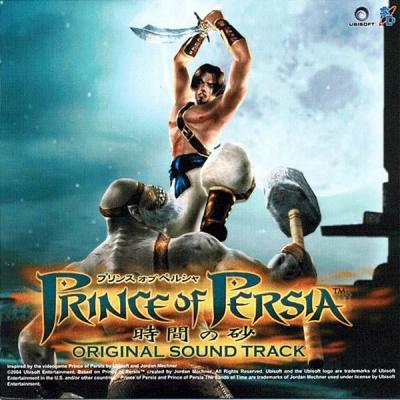
"Prince of Persia: The Sands of Time" Soundtrack Lyrics
Movie • 2010
Track Listing
Harry Gregson-Williams
Harry Gregson-Williams
Harry Gregson-Williams
Harry Gregson-Williams
Harry Gregson-Williams
Harry Gregson-Williams
Harry Gregson-Williams
Harry Gregson-Williams
Harry Gregson-Williams
Harry Gregson-Williams
Harry Gregson-Williams
Harry Gregson-Williams
Harry Gregson-Williams
Harry Gregson-Williams
Harry Gregson-Williams
Harry Gregson-Williams
Harry Gregson-Williams
Harry Gregson-Williams
Alanis Morissette
“Prince of Persia: The Sands of Time (Original Motion Picture Soundtrack)” – Album Guide to Tracks and Key Scenes
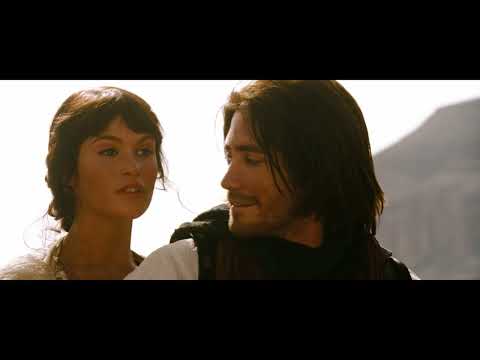
Overview
Can a popcorn adventure feel ancient and modern at the same time? This one does. Harry Gregson-Williams’ score for Prince of Persia: The Sands of Time blends desert-warm instrumentation with blockbuster orchestral muscle, so the music runs on sand and steel at once. You hear chant and choir, frame drums and electric strings, then a heroic theme that moves like a dune wind and a cavalry charge.
The film follows street-born Dastan and princess Tamina as they guard a dagger that rewinds time. The soundtrack charts that arc in pulses: stealth and siege, rooftop sprinting, comic relief (yes, an ostrich race), betrayals in the dark, and a final time-tear that resets fate. The palette toggles between tactile, regional color and big-screen spectacle — oud and ney against an 80-piece orchestra and choir — so action scenes feel rooted, not generic.
Distinctive touches include the end-credits single “I Remain” (Alanis Morissette) and score cues with scene-title clarity (“Raid on Alamut,” “The Passages,” “The Sands of Time”), making the album play like a storybook. According to Wikipedia, the soundtrack arrived via Walt Disney Records in May 2010; streaming editions carry 19 tracks, anchored by the main theme “The Prince of Persia.”
How It Was Made
Composer & instrumentation: Gregson-Williams wrote at Abbey Road and Remote Control with an 80-piece orchestra and 40-voice choir. He kept the melodies broadly cinematic, then painted them with regional color — oud, ney, tabla, hand percussion, electric cello/violin — to situate the story without leaning on pastiche. Interviews around release underline that “geography by orchestration” approach rather than strictly modal writing.
Album & single: The commercial release (19 tracks) pairs the score with Morissette’s “I Remain,” produced with Mike Elizondo, over the end credits. Retail and streaming lists align closely; the cue titles mirror key scenes, making it easy to map music to the film’s set pieces.

Tracks & Scenes
“The Prince of Persia” — Harry Gregson-Williams
Where it plays: opens the album and threads through the film as Dastan’s identity motif; first full statement over sweeping desert and title cards (non-diegetic).
Why it matters: a noble, rising line that returns whenever courage outruns caution — the score’s compass.
“Raid on Alamut”
Where it plays: the siege/parkour opener — scaling walls, street chases, and the leap into the city’s inner courts. Low percussion and tight ostinatos keep the scene breathless (non-diegetic).
Why it matters: binds the film’s two modes — historical pageant and kinetic platformer — in one cue.
“Tamina Unveiled”
Where it plays: first encounter with Tamina; the music swaps bravado for a lyrical, modal-tinted melody as the camera slows (non-diegetic).
Why it matters: introduces the romantic counter-theme that will braid with the main motif.
“Dastan and Tamina Escape”
Where it plays: rooftop flight after the palace turn; rhythmic strings under hand percussion, dagger ticks cutting through the mix (non-diegetic).
Why it matters: the score’s chase engine — nimble but weighty, it sells vertigo and speed.
“Ostrich Race”
Where it plays: comic-relief set piece in Sheikh Amar’s camp — feathers, bets, chaos (non-diegetic with percussive, playful writing).
Why it matters: a wink in a sandstorm; the orchestrations lighten without losing the palette.
“The Oasis Ambush”
Where it plays: night blades and torchlight — the Hassansin strike; choral stabs and low drones (non-diegetic).
Why it matters: villain color: snake-sleek textures and rhythmic feints.
“No Ordinary Dagger”
Where it plays: Dastan discovers what the knife truly does; the score blooms into shimmering synths and choir as time rewinds (non-diegetic).
Why it matters: magic gets a sound — glassy harmony and a breath-sucked-in swell.
“The Passages”
Where it plays: subterranean run to the hourglass; choir syllables (drawn from ancient Persian words) ride against tremolo strings (non-diegetic).
Why it matters: sacred-adventure tone — the quest tips from caper to destiny.
“The Sands of Time”
Where it plays: the time-tear set piece; motifs fold over each other as the world rewinds (non-diegetic).
Why it matters: catharsis cue — theme statements resolve as the story resets.
“Destiny”
Where it plays: epilogue grace note; the main theme softens for renewed beginnings (non-diegetic).
Why it matters: heroic energy exhaled — the album’s orchestral farewell.
“I Remain” — Alanis Morissette
Where it plays: end credits; intimate vocal over hand percussion and low strings, co-written and produced with Mike Elizondo (non-diegetic).
Why it matters: a contemporary coda that keeps the sand-and-string color while shifting to singer-songwriter focus.
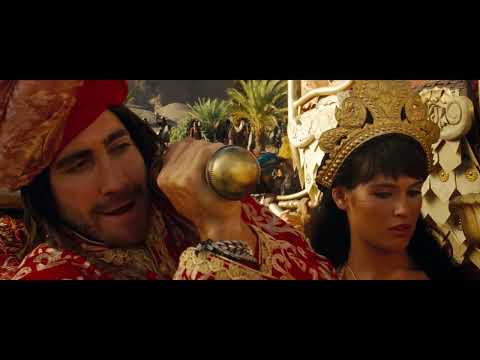
Notes & Trivia
- Alanis Morissette’s “I Remain” was written for the film and plays over the credits.
- Instrumentation blends oud, ney, tabla, electric cello/violin, and full orchestra/choir — a geographic tint over classic adventure writing.
- Track titles map cleanly to set pieces, so the album functions as a narrative outline.
- The score was recorded at Abbey Road; the album released by Walt Disney Records.
- The soundtrack charted on Billboard’s Top Soundtracks and the UK Official Soundtrack Albums list.
Music–Story Links
Whenever Dastan chooses courage over safety, the main theme rises; when Tamina’s guardianship pushes back, her lyrical phrase folds into it. The dagger’s rewinds trigger the score’s glassy, choral shimmer — your ear feels the time slip before you see it. Villainy gets sibilant textures and percussion traps; fellowship (Sheikh Amar’s camp) relaxes the harmony and invites wood and hand-drum color. By the finale, motifs braid: destiny, romance, and the dagger’s mystique land in one broad cadence.
Reception & Quotes
Contemporary reviews called the album a robust, throwback adventure score with smart color choices. According to AllMusic, it’s a “well-executed, spirited romp”; Filmtracks praised the choral/orchestral heft and theme writing.
“Heroic, haunting and romantic — a throwback to Old Hollywood.” Producer comments recapped in coverage
“A remarkably enjoyable score … robust orchestral and choral magnificence.” Score reviews
“A spirited romp through popcorn land.” Album capsules
Interesting Facts
- The cue “Ostrich Race” is exactly what it says — a comic, percussion-bright interlude on album and screen.
- Electric cello (often by Martin Tillman) provides the icy drones under sand-hot percussion.
- Choir syllables were built from ancient Persian words for select on-screen moments.
- “I Remain” was issued as a standalone digital single alongside the album.
- Charted modestly in both the U.S. and U.K., unusual for a mostly orchestral score in 2010.
Technical Info
- Title: Prince of Persia: The Sands of Time (Original Motion Picture Soundtrack)
- Year: 2010 (film & album)
- Type: Film score (19 tracks) + end-credits song
- Composer: Harry Gregson-Williams
- End-credits single: “I Remain” — Alanis Morissette (co-written/produced with Mike Elizondo)
- Label: Walt Disney Records
- Recording: Abbey Road Studios; orchestra/choir with regional instruments (oud, ney, tabla, etc.)
- Selected cues / placements: “The Prince of Persia” (main theme); “Raid on Alamut” (opening siege); “Tamina Unveiled” (first meeting); “Dastan and Tamina Escape” (rooftop chase); “Ostrich Race” (camp hijinks); “The Oasis Ambush” (night attack); “No Ordinary Dagger” (first rewind); “The Passages” (underworld run); “The Sands of Time” (time-tear); “Destiny” (epilogue); “I Remain” (end credits).
- Availability: widely streaming; original CD/digital on Disney; Discogs lists multiple editions.
Questions & Answers
- Who composed the score, and what’s the overall sound?
- Harry Gregson-Williams; classic adventure themes colored with oud, ney, tabla, and choir.
- What’s the song over the end credits?
- “I Remain” by Alanis Morissette, created for the film with producer/co-writer Mike Elizondo.
- Does the album follow the film’s set pieces?
- Mostly — cue titles like “Raid on Alamut” or “Ostrich Race” map directly to scenes.
- Who handled music supervision?
- Disney’s music team with Monica Zierhut credited as music supervisor on the album’s notes.
- How many tracks are on the standard release?
- Nineteen, ending with “I Remain.”
Canonical Entities & Relations
| Subject | Relation | Object |
|---|---|---|
| Harry Gregson-Williams | composed | Prince of Persia: The Sands of Time (score) |
| Alanis Morissette | wrote & performed | “I Remain” (end-credits song) |
| Mike Elizondo | co-wrote/produced | “I Remain” |
| Walt Disney Records | released | Original Motion Picture Soundtrack (2010) |
| Monica Zierhut | music-supervised | Prince of Persia: The Sands of Time (film) |
| Jerry Bruckheimer Films | produced | Prince of Persia: The Sands of Time (2010 film) |
| Mike Newell | directed | Prince of Persia: The Sands of Time (2010 film) |
Sources: Wikipedia (album/credits/overview), Apple Music & Spotify listings (track names & count), Discogs (label/editions/credits), Filmtracks & review sites (critical reception), press interviews/features on the score’s instrumentation, IMDb Soundtracks (songwriting/production for “I Remain”).
November, 19th 2025
A-Z Lyrics Universe
Cynthia Erivo Popular
Ariana Grande Horsepower
Post Malone Ain't No Love in Oklahoma
Luke Combs Good Riddance (Time of Your Life)
Green Day Bye Bye Bye
*NSYNC You're the One That I Wan
John Travolta & Olivia Newton-John I Always Wanted a Brother
Braelyn Rankins, Theo Somolu, Kelvin Harrison Jr. and Aaron Pierre The Power of Love
Frankie Goes to Hollywood Beyond
Auli’i Cravalho feat. Rachel House MORE ›