Soundtracks:  A B C D E F G H I J K L M N O P Q R S T U V W X Y Z #


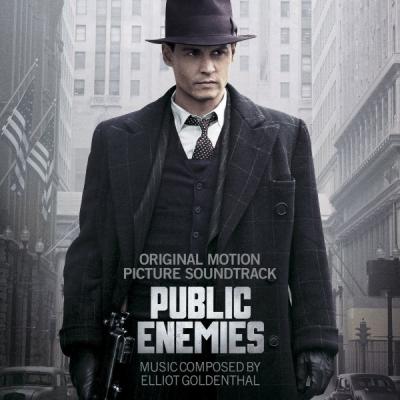
Public Enemies Album Cover

"Public Enemies" Soundtrack Lyrics

Movie • 2009

Track Listing


“Public Enemies (Original Motion Picture Soundtrack)” – Album Guide to Tracks and Key Scenes

Public Enemies trailer frame with John Dillinger stepping from a vintage car, 1930s Chicago streets
Public Enemies — theatrical trailer imagery, 2009

Overview

What do you score a folk hero who robs banks like clockwork yet smiles like a movie star — jazz, blues, or a funeral march? Michael Mann’s Public Enemies answers with a braid of sources and score: pre-war standards, Delta ghosts, and a modern orchestral pulse that rides the film’s digital immediacy.

The album pairs Elliot Goldenthal’s brooding cues with 1930s–40s selections and a few sly anachronisms that fit the film’s mythic register. It doesn’t reenact a museum’s playlist; it feels like the fever of the chase — cool rooms, hot guns, and a doomed romance. The music is lean, propulsive, and then suddenly tender, like a last cigarette in a police corridor.

Across the arc — arrival → adaptation → rebellion → collapse — the soundtrack tracks Dillinger’s legend from jailbreak bravado to Chicago twilight. Period jazz and blues sketch the world’s surface polish; Goldenthal’s strings and low brass burrow into inevitability. Genres in phases: Delta/roots blues — grit and fatalism; swing-era jazz — public glamour; torch standards — intimacy and masks; orchestral modernism — consequence closing in.

How It Was Made

Composer Elliot Goldenthal reteamed with Mann (after Heat) and built a largely acoustic score that could sit beside source cues without breaking the period spell. Mann wanted early American blues and torch songs in the mix; the pair sifted through catalogs, then Goldenthal composed around that sonic world, keeping the dramatic writing “timeless” rather than 1:1 period mimicry. The album (Decca) folds in licensed recordings and score, produced by Michael Mann and Matthias Gohl.

Music supervision (led by Kathy Nelson) balances era authenticity with Mann’s muscular storytelling: Diana Krall’s late-night club warmth, Benny Goodman for chic bustle, Blind Willie Johnson’s slide as moral undertow. And the most famous needle drop — Otis Taylor’s “Ten Million Slaves” — stamps the trailer and the film’s early momentum.

Public Enemies trailer image: bank lobby chaos as Dillinger’s crew moves through the marble hall to the getaway
Building the mix: archival-feeling source cues plus a modern, inexorable score.

Tracks & Scenes

“Ten Million Slaves” — Otis Taylor
Where it plays: After the opening jailbreak, the early-acts chase through woods clicks into this groove — boots on pine needles, dogs in the distance, Dillinger smiling in the chaos. An instrumental variant punches bank-robbery momentum later.
Why it matters: A 21st-century blues cut that plays like old blood in new veins — the outlaw’s heartbeat.

“Guide Me O Thou Great Jehovah” — Indian Bottom Association Old Regular Baptists
Where it plays: Post-escape respite at a rural farm — men wash up, reload, breathe. The unaccompanied hymn floats like a judgment the gang pretends not to hear.
Why it matters: Austerity as counterpoint; crime dramatized against American devotionals.

“Chicago Shake” — The Bruce Fowler Big Band
Where it plays: Dinner-club bustle — coats checked, waiters threading, Dillinger surveying the room as if it were another bank to case.
Why it matters: Swagger in 3 minutes — social camouflage for a celebrity criminal.

“Ballroom Bounce” — The Bruce Fowler Big Band
Where it plays: Second course, same club: tighter cuts, closer smiles; the brass keeps spirits high just long enough for a plan to form.
Why it matters: Companion cue that turns a dining room into a staging ground.

“Bye Bye Blackbird” — Diana Krall
Where it plays: Dillinger and Billie dance in a hotel ballroom — soft lights, the band unhurried; the camera watches hands rather than faces.
Why it matters: The film’s “we could be ordinary” fantasy, sung at lounge distance.

“King Porter Stomp” — Benny Goodman & His Orchestra
Where it plays: Coat check / hotel glide: hats, mirrors, and a short reprieve before the next sprint.
Why it matters: Era electricity — a radio hit that sells the room’s air.

“Love Me or Leave Me” — Billie Holiday (with Teddy Wilson)
Where it plays: Private interlude and kiss — the world goes quiet; the needle finds Holiday’s velvet and the shot lingers too long.
Why it matters: A torch ultimatum that mirrors Billie Frechette’s gamble.

“Am I Blue?” — Billie Holiday & Her Orchestra
Where it plays: Radio in Billie’s apartment after trouble hits — the music is diegetic, almost too pretty for the room.
Why it matters: Irony as comfort; the lyric says what no one can.

“The Man I Love” — Billie Holiday (Carnegie Hall live)
Where it plays: Tucson hotel sequence after the racetrack — a dream of escape that’s already evaporating.
Why it matters: Longing, unsugared.

“Nasty Letter” — Otis Taylor
Where it plays: In-car after a jailbreak. Road noise, headlights, a vow that sounds like a warning.
Why it matters: Modern blues as prophecy — choices, consequences, repeat.

“Dark Was the Night, Cold Was the Ground” — Blind Willie Johnson
Where it plays: Bar backroom while strings are pulled to fix deportation — slide guitar hums like a prayer you say when no one’s looking.
Why it matters: A moral undertow under all that gangster polish.

“The Last Round-Up” — Gene Autry
Where it plays: Closing credits — a cowboy curtain call after a city tragedy.
Why it matters: American myth saluting another — outlaw as rodeo ghost.

Score highlights — Elliot Goldenthal
Where it plays: “Billie’s Arrest” (procedural dread); “Phone Call to Billie” (strings suspending time); “Drive to Bohemia” and “Love in the Dunes” (brief, intimate bridges).
Why it matters: The orchestral through-line that makes the needle drops feel fated, not random.

Public Enemies trailer shot: dance floor with bandstand, Diana Krall song ambience
Key moments: dances, escapes, and the phone calls that change everything.

Notes & Trivia

  • The album blends licensed period songs with Goldenthal’s original score and was issued by Decca in late June 2009.
  • Two Otis Taylor cuts (“Ten Million Slaves,” “Nasty Letter”) bookend the film’s outlaw energy; the former also powers the trailer.
  • Diana Krall’s “Bye Bye Blackbird” is the film’s most tender diegetic mood-setter — Mann loves romance smuggled into public spaces.
  • Blind Willie Johnson’s 1927 recording turns a backroom favor into a spiritual reckoning.
  • Goldenthal’s score earned a Satellite Award nomination that season.

Music–Story Links

When Dillinger walks a crowd like a stage, big-band sides sell his celebrity sheen; when he hides, unadorned hymnody frames the hiding as penance. Holiday’s torch cuts ground the lovers in private time — stolen minutes — while Goldenthal’s low strings and weary brass say the future’s already written. And every time Taylor’s guitar snarls back in, the film remembers: he’s not escaping danger; he is danger, rolling.

Reception & Quotes

Reviewers called the album both eclectic and purposeful — brooding score plus needle drops that deepen character beats. As one trade put it, the “brooding score combines with period music” to make an effectively hybrid sound; another critic heard a “surging, sombre” orchestral thread channeling classic noir moods. AllMusic praised the album’s flow as a story of its own.

“Haunting and memorable on its own, ending in darkness and tears.” AllMusic
“Brooding score combines with period music — effectively eclectic.” Variety
“A surging, sombre orchestral score.” The Guardian
Public Enemies trailer still: marquee lights over the Biograph Theater night exterior
The final walk: image, orchestra, inevitability.

Interesting Facts

  • Goldenthal and Mann screened/dug through large blues catalogs before writing a note — then wrote a mostly acoustic score to live beside them.
  • The soundtrack sequencing lets Krall’s lounge standard sit between terse, minute-long score cues — a deliberate breath.
  • “Ten Million Slaves” comes from Taylor’s banjo-driven project; the film uses both vocal and instrumental approaches.
  • Old Regular Baptist hymnody appears unaccompanied — a rare sound in a big-studio crime film.
  • Gene Autry’s Western closer reframes Dillinger as an American archetype, not just a headline.
  • Decca’s issue lists Mann as album co-producer alongside longtime collaborator Matthias Gohl.
  • Executive music credits include studio veteran Kathy Nelson, who also supervised Mann’s music needs.

Technical Info

  • Title: Public Enemies (Original Motion Picture Soundtrack)
  • Year: 2009 (film and album)
  • Type: Film soundtrack (score + source)
  • Composer: Elliot Goldenthal
  • Producers (album): Michael Mann; Matthias Gohl
  • Music Supervision: Kathy Nelson
  • Label: Decca
  • Notable licensed cuts: “Ten Million Slaves,” “Nasty Letter” (Otis Taylor); “Bye Bye Blackbird” (Diana Krall); “Love Me or Leave Me,” “Am I Blue?” (Billie Holiday); “King Porter Stomp” (Benny Goodman); “Dark Was the Night, Cold Was the Ground” (Blind Willie Johnson); “The Last Round-Up” (Gene Autry)
  • Availability: Streaming (digital), original CD issue; selections widely available on major platforms
  • Awards note: Satellite Award nomination — Best Original Score (Goldenthal)

Questions & Answers

Who composed the score?
Elliot Goldenthal, in his second collaboration with director Michael Mann after Heat.
What’s the trailer song everyone remembers?
Otis Taylor’s “Ten Million Slaves,” which also appears in the film.
Are the club numbers diegetic?
Yes — the ballroom and dinner-club scenes use in-world bands and radio, with score taking over for pursuit and aftermath.
Does the album include only period music?
No. It mixes licensed era pieces with Goldenthal’s modern, mostly acoustic score.
Did the score receive awards attention?
Yes — it was nominated for a Satellite Award for Best Original Score.

Canonical Entities & Relations

SubjectRelationObject
Public Enemies (2009 film)directorMichael Mann
Public Enemies (2009 film)music byElliot Goldenthal
Soundtrack albumrecord labelDecca
Soundtrack albumproducersMichael Mann; Matthias Gohl
Soundtrack albumexecutive musicKathy Nelson (music supervisor)
Filmfeatures songs byOtis Taylor; Diana Krall; Billie Holiday; Benny Goodman; Blind Willie Johnson; Gene Autry

Sources: Decca album credits; IMDb Soundtracks; Apple Music listing; AllMusic/press reviews; Reelsoundtrack scene list.

November, 19th 2025


A-Z Lyrics Universe

Lyrics / song texts are property and copyright of their owners and provided for educational purposes only.