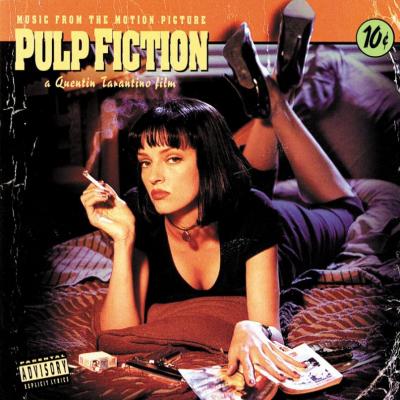
"Pulp Fiction" Soundtrack Lyrics
Movie • 1994
Track Listing
Roth, Tim
Jackson, Samuel L
Kool & The Gang
Green, Al
Tornados
Nelson, Ricky
Springfield, Dusty
Medeiros, Maria De
Hoban, Jerome Patri
Urge Overkill
McKee, Maria
Green, Peter
Statler Borthers
Travolta, John
Lively Ones
Jackson, Samuel L
“Pulp Fiction (Music from the Motion Picture)” – Album Guide to Tracks and Key Scenes
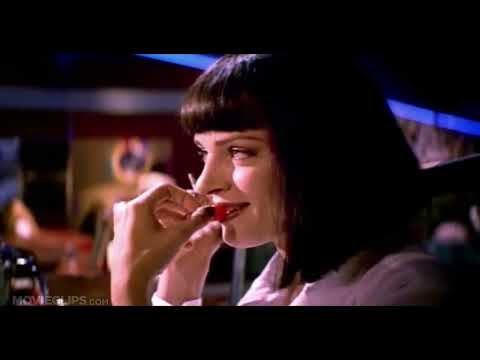
Overview
How do you soundtrack a crime mosaic where the present feels like a mixtape of the past — surf-guitar adrenaline, diner doo-wop, and velvet torch songs? Pulp Fiction answers by ditching a traditional score and letting pre-existing records carry pulse, irony, and plot. Needle drops aren’t decoration here; they’re narrative muscle.
The album is a time-capsule jukebox: Dick Dale’s “Misirlou” detonates the opening credits, Kool & The Gang funnels funk into the title card, Dusty Springfield and Al Green glow over intimate, sideways love scenes. Dialogue snippets sit between songs like turntable talk — the movie’s voice literally pressed onto the record.
The arc — arrival → adaptation → rebellion → collapse — plays out musically: surf and rockabilly for swaggering entrances; soul and girl-group warmth for seduction and second chances; garage twang and Baptist hymnody when fate closes in. Genres & themes in phases: surf rock — cool bravado and forward motion; 60s/70s soul — romance, nostalgia, and moral ambiguity; rockabilly/doo-wop — American kitsch reframed; sacred blues/hymn — judgment and consequence.
How It Was Made
No composer, no conventional score — by design. Quentin Tarantino and music supervisor Karyn Rachtman built the film’s sound from existing recordings, then cut picture to music as often as the other way around. Friends and consultants (notably Chuck Kelley and Laura Lovelace) fed crates of possibilities; surf music became the film’s “default score,” its staccato guitars functioning like a noir Morricone for LA diners and dead ends. The soundtrack album (MCA) arrived September 27, 1994, with dialogue interludes threading the songs.
Production-wise, the record keeps a tight 41 minutes — lean sequencing, purposeful reprises. The later Collector’s Edition (2002) expanded the set with additional cuts and a Tarantino interview, a small window into his “needle-drop first” approach. As one list essay notes, the curation introduced Gen-X audiences to older gems and made surf rock mainstream again.
Tracks & Scenes
“Misirlou” — Dick Dale & His Del-Tones
Where it plays: Title blast over the opening credits after the diner cold open; the camera and edits lock to the tremolo-picking surge.
Why it matters: Announces the film’s grammar — kinetic surf as pulp fanfare, mythic and modern at once.
“Jungle Boogie” — Kool & The Gang
Where it plays: Slams in under the title card and early Vincent/Jules beats, swaggering the film into motion.
Why it matters: Funk as narrative fuel; a wink that this crime story can dance.
“Let’s Stay Together” — Al Green
Where it plays: Butch meets Marsellus in the nightclub. Red light, quiet threat, Green’s croon folding irony over a fixed fight.
Why it matters: Silk over menace — romance language underscoring transactional doom.
“Bustin’ Surfboards” — The Tornadoes
Where it plays: Vincent buys heroin from Lance; the reverb haze turns a suburban kitchen into a beach of bad decisions.
Why it matters: Surf as satire — chill tones over hard drugs.
“Son of a Preacher Man” — Dusty Springfield
Where it plays: Vincent arrives at Mia’s; her voice on the intercom, Dusty on the stereo, flirtation in the editing.
Why it matters: Teases seduction while winking at morality — temptation with perfect phrasing.
“Bullwinkle Part II” — The Centurions
Where it plays: Heroin prep close-ups; horn stabs and surf sax under the needle draw.
Why it matters: Contrapuntal cool — style against squeamish detail.
“Waitin’ in School” — Gary Shorelle (Ricky Nelson cover)
Where it plays: Arrival at Jack Rabbit Slim’s; diegetic rockabilly through the room as Vincent and Mia take in the floor show.
Why it matters: In-world band sets the 50s theme park vibe — kitsch made ritual.
“Lonesome Town” — Ricky Nelson
Where it plays: At the table as Mia orders the $5 shake; the track drifts like overheard nostalgia.
Why it matters: Loneliness as garnish — small talk with an ache.
“Ace of Spades” → “Rumble” — Link Wray
Where it plays: Jack Rabbit Slim’s, as the conversation deepens and Mia pitches her pilot; Wray’s twang slinks under the chatter.
Why it matters: The guitar tone is attitude — danger in slow motion.
“Since I First Met You” — The Robins
Where it plays: Vincent sips the $5 shake while Mia steps away; doo-wop patience between sparks.
Why it matters: A courtship beat without saying the word.
“Teenagers in Love” — Woody Thorne
Where it plays: Still at Jack Rabbit Slim’s; Mia and Vincent banter about foot massages.
Why it matters: Oldie sweetness as comic counterpoint.
“You Never Can Tell” — Chuck Berry
Where it plays: The twist contest. The camera glides; they’re dancing, and the movie exhales.
Why it matters: Everyday joy framed as legend — the film’s most beloved dance floor.
“Girl, You’ll Be a Woman Soon” — Urge Overkill
Where it plays: Mia at home, the needle drop that rolls into the overdose spiral.
Why it matters: A 90s cover that re-charts after the movie — pop culture recursion.
“Flowers on the Wall” — The Statler Brothers
Where it plays: Butch drives after parting ways with Vincent; he sing-alongs the line about “Captain Kangaroo.”
Why it matters: Gallows humor on the move.
“If Love Is a Red Dress (Hang Me in Rags)” — Maria McKee
Where it plays: Pawn shop aftermath — a hush of aftermath, choices made, debts tallied.
Why it matters: The soundtrack’s sole original song — bruised, fatalistic.
“Comanche” — The Revels
Where it plays: Butch turns back to rescue Marsellus. The cue goes from kitsch to nightmare in seconds.
Why it matters: Irony weaponized; surf becomes terror.
“Out of Limits” — The Marketts
Where it plays: Butch and Fabienne ride off — engine as lullaby, surf as curtain call (chronologically the film’s last story beat).
Why it matters: Escape with question marks.
“Surf Rider” — The Lively Ones
Where it plays: Diner coda into end credits after Jules and Pumpkin/Honey Bunny’s standoff resolves.
Why it matters: A sunny melody after dark choices — the movie’s bittersweet wave goodbye.
Notes & Trivia
- The original 1994 album runs just over 41 minutes with dialogue interludes; not every film cue made the record.
- The 2002 Collector’s Edition adds several songs and a Tarantino interview.
- Laura Lovelace and Chuck Kelley are credited as music consultants; Lovelace also plays the diner waitress Laura.
- “If Love Is a Red Dress (Hang Me in Rags)” is the soundtrack’s only original song, written and performed by Maria McKee.
- The UK charts kept the album in rotation for years; it peaked Top 5 on the Official Compilations Chart.
Music–Story Links
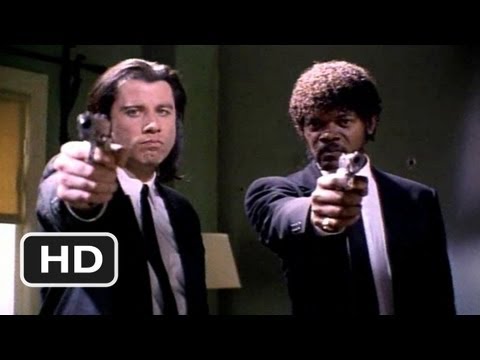
When Vincent and Jules stride through a hallway, funk and surf make their professionalism feel like choreography — swagger that cracks the minute decisions turn deadly. When Butch wavers, a country chestnut (“Flowers on the Wall”) drapes the choice in bitter calm. When Mia and Vincent test boundaries, Dusty Springfield and Chuck Berry turn risk into rhythm. Then, in the pawn shop, kitsch curdles; surf becomes a siren, and the movie’s ethics snap into focus.
Reception & Quotes
The compilation earned long chart life and helped reignite 60s surf and soul for a new generation. Critics have called it eclectic but precise, a playlist with plot. As one feature put it, the film’s “musical universe is freewheeling and omnivorous,” recasting older singles for a 90s story. AllMusic praised the flow; trade coverage emphasized how the soundtrack itself became a pop-culture object.
“Haunting and memorable on its own, ending in darkness and tears.” AllMusic
“Here is a quintessential ’90s film in which a ’70s disco icon dances the twist in a ’50s-themed burger joint.” Pitchfork
“Brooding cool and crate-dug gold, sequenced like a movie.” Album review
Interesting Facts
- The album peaked at No. 21 on the Billboard 200 and lingered for well over a year.
- Urge Overkill’s “Girl, You’ll Be a Woman Soon” re-charted in 1994 off the film’s momentum.
- Three songs used in the film (“Waitin’ in School,” “Ace of Spades,” “Teenagers in Love”) were absent from the original album — licensing quirks at work.
- Karyn Rachtman’s supervision helped lock several “never in a million years” clearances.
- “Misirlou” became a 2000s sample touchstone — the Black Eyed Peas’ “Pump It” blasted it back onto radio.
Technical Info
- Title: Pulp Fiction (Music from the Motion Picture)
- Year: 1994 (album & film); expanded Collector’s Edition 2002
- Type: Film soundtrack (pre-existing songs, dialogue; no traditional score)
- Key Music Personnel: Music Supervisor — Karyn Rachtman; Music Consultants — Chuck Kelley, Laura Lovelace
- Producers (album): Quentin Tarantino, Lawrence Bender (executive/album producers as credited on releases)
- Label: MCA Records
- Notable placements: “Misirlou” (opening titles); “Let’s Stay Together” (Butch/Marsellus); “You Never Can Tell” (twist contest); “Girl, You’ll Be a Woman Soon” (Mia’s overdose); “Flowers on the Wall” (Butch driving); “Comanche” (pawn shop rescue); “Surf Rider” (final diner/credits)
- Availability: 1994 CD and digital; 2002 expanded edition; multiple later pressings/LP issues
Questions & Answers
- Why is there no traditional score?
- Tarantino built the film’s sound from existing recordings; surf & soul function as the “score,” with dialogue tracks bridging songs.
- What’s the song in the twist contest?
- Chuck Berry’s “You Never Can Tell,” played diegetically at Jack Rabbit Slim’s.
- Which track plays during Mia’s overdose sequence?
- Urge Overkill’s cover of “Girl, You’ll Be a Woman Soon,” leading into the frantic aftermath.
- What’s the only original song written for the soundtrack?
- “If Love Is a Red Dress (Hang Me in Rags)” by Maria McKee.
- Were all film songs on the original 1994 album?
- No — several in-film cues were missing (“Waitin’ in School,” “Ace of Spades,” “Teenagers in Love”); the 2002 set added some extras.
Canonical Entities & Relations
| Subject | Relation | Object |
|---|---|---|
| Pulp Fiction (1994 film) | director | Quentin Tarantino |
| Pulp Fiction (1994 film) | music supervisor | Karyn Rachtman |
| Pulp Fiction (1994 film) | music consultants | Chuck Kelley; Laura Lovelace |
| Soundtrack album | record label | MCA Records |
| Soundtrack album | album producers | Quentin Tarantino; Lawrence Bender |
| Film | features songs by | Dick Dale; Kool & The Gang; Dusty Springfield; Al Green; Chuck Berry; Urge Overkill; The Statler Brothers; The Revels; The Marketts; The Lively Ones |
Sources: Wikipedia (film & soundtrack); AllMusic; RadioTimes scene guide; ScreenRant features; Pitchfork list/essay; IMDb Soundtracks.
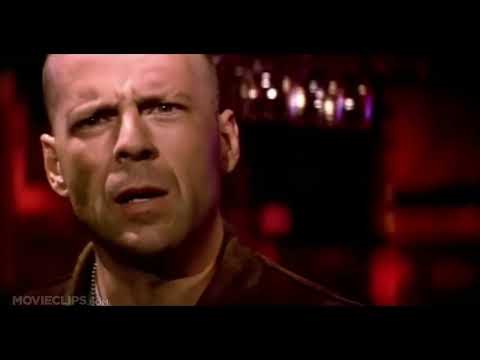
Quentin Tarantino filmed this movie only at USD 8.5 million, while raised over 213 millions. It was a huge comeback for John Travolta, who was experiencing some career troubles at that time and was a main leap for everyone who participated from both sides of the camera. It has become of cult film of all times, contributing to every sphere of life – music, cinema, restaurants, travels and so on. The most-spoken phrases are mainly adored in the post-soviet region, but in the USA and the rest of the world, it has definitely changed minds of many people too. ‘Zed is dead, baby, Zed is dead’ – wonderful saying by Bruce Willis in one of storylines of the movie, that later transformed onto lyrics of the piece of this soundtrack. Who knew the band Urge Overkill before they performed fantastic Girl, You'll Be a Woman Soon for that soundtrack? Or how do you like Hoban, Jerome Patri with the most known dance came out from this movie (You Never Can Tell)? It is so exciting and narrative and truly entertaining! Fake Marilyn Monroe with the same fake Richard Nixon are inimitable, but the spot light was given to the dancing Uma Thurman and John Travolta. After their dance following a song with absolutely witty lyrics were breathtakingly watching millions of people (and these are only in YouTube), including the author of these lines, when he was a small kid yet. The perfect acting skills of every person in this movie, along with torn narrative line, combined with changes of tempo of the plot, unusual twists and famous scenes like shooting in the head of a guy in the car or sticking the long needle right in the chest of Uma Thurman, cherried on top with ‘furious anger’ from the speech of Samuel L. Jackson – these all are breathtaking elements of tremendous success of this motion picture!November, 19th 2025
A-Z Lyrics Universe
Cynthia Erivo Popular
Ariana Grande Horsepower
Post Malone Ain't No Love in Oklahoma
Luke Combs Good Riddance (Time of Your Life)
Green Day Bye Bye Bye
*NSYNC You're the One That I Wan
John Travolta & Olivia Newton-John I Always Wanted a Brother
Braelyn Rankins, Theo Somolu, Kelvin Harrison Jr. and Aaron Pierre The Power of Love
Frankie Goes to Hollywood Beyond
Auli’i Cravalho feat. Rachel House MORE ›