Soundtracks:  A B C D E F G H I J K L M N O P Q R S T U V W X Y Z #


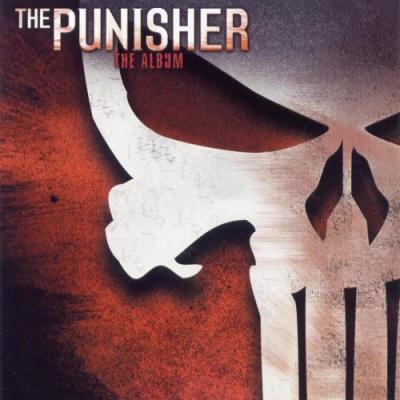
Punisher Album Cover

"Punisher" Soundtrack Lyrics

Movie • 2004

Track Listing


“The Punisher (Music From and Inspired by the Motion Picture)” – Album Guide to Tracks and Key Scenes

The Punisher (2004) official trailer frame with Frank Castle brooding beside a muscle car
The Punisher — theatrical trailer imagery, 2004

Overview

How do you score a grieving vigilante who treats justice like a ritual? With two parallel records. One is a crunch-and-croon mixtape of early-2000s rock — radio-ready anger and anthems. The other is Carlo Siliotto’s orchestral tragedy, the pulse of Frank Castle’s loss and resolve. Together they make The Punisher (2004) feel like a revenge opera wearing a leather jacket.

The Punisher: The Album (Wind-up Records) leans nu-metal, hard rock, and post-grunge: Drowning Pool’s “Step Up,” Seether & Amy Lee’s “Broken,” Queens of the Stone Age’s “Never Say Never,” and more. Meanwhile, Siliotto’s score (La-La Land Records) plays elegy and iron — strings and low brass with a subtle western tint. One album sells the swagger; the other sells the sadness.

The arc — arrival → adaptation → rebellion → collapse — is audible. Early songs posture; mid-film cues turn inward; late cues mix irony (opera over a brawl) with straight-up catharsis. In phases: alt-metal/post-grunge — grit and confrontation; acoustic country-folk — fate knocking at the diner; Italianate orchestral writing — grief, discipline, consequence.

How It Was Made

Director Jonathan Hensleigh tapped Carlo Siliotto for an emotional, theme-driven score — “tragic hero” music that could stand beside radio tracks without clashing. Marvel’s music point man Dave (David) Jordan handled supervision; Wind-up packaged an “inspired by + in-film” compilation to amplify the release cycle. As per label notes and interviews, singles were pushed hard: Drowning Pool’s “Step Up” (used in the film’s end credits) and Seether’s “Broken” (recut with Amy Lee) anchored the campaign.

The Punisher trailer still of Frank Castle at his workbench as the score theme swells
Behind the sound: radio-ready singles outside; an elegiac score underneath.

Tracks & Scenes

“In Time” — Mark Collie (as Harry Heck)
Where it plays: Diegetic performance in a roadside diner. A rockabilly hitman sits with a guitar, sings directly at Castle, then tries to ambush him outside. The entire scene runs like a country murder ballad come to life.
Why it matters: Fate with a melody — the film’s most on-the-nose musical omen.

“La donna è mobile” — Giuseppe Verdi (from Rigoletto)
Where it plays: Diegetic on Bumpo’s stereo during the brutal apartment fight with the Russian. The lilting tenor aria keeps playing as bodies crash through walls and cookware flies.
Why it matters: Operatic irony weaponized: comic surface, savage interior.

“Step Up” — Drowning Pool
Where it plays: End credits. After the fire and the skull-emblem vow, the track slams in, turning resolution into a rallying cry.
Why it matters: The album’s fist-pump thesis — punishment as posture.

“Broken” — Seether feat. Amy Lee
Where it plays: Released as a film single and used across promotion and music video tie-ins; the re-recorded duet became the soundtrack’s crossover centerpiece.
Why it matters: Soft edge, hard ache — it reframed a post-grunge cut as pop tragedy.

Score moments — Carlo Siliotto
Where it plays: “The Massacre” and “Death and Resurrection of Frank Castle” carve the Puerto Rico sequence into grief and rebirth; “Good Memories Can Save Your Life” and “Call Me ‘The Punisher’” bracket Castle’s code with mournful resolve.
Why it matters: The orchestral spine that keeps the movie human while the album swings its fists.

The Punisher trailer frame of the apartment melee foreshadowing the operatic fight with the Russian
Key cues: a diner ballad as threat; an aria over a demolition derby.

Notes & Trivia

  • The commercial soundtrack went Gold in the U.S. and spotlights Wind-up’s 2004 rock roster.
  • Siliotto’s score album runs roughly 68 minutes and carries a distinct Italian/western color.
  • Music supervisor credit on the film goes to Dave (David) Jordan, a longtime Marvel collaborator.
  • “Step Up” doubled as a single on Drowning Pool’s Desensitized and is the movie’s credited end-titles song.
  • Country singer Mark Collie appears on screen as assassin Harry Heck — he sings his own threat.

Music–Story Links

When Castle buries a family, Siliotto writes lament. When Castle builds a new method, the score hardens into ritual. The diner scene literalizes the idea that enemies “sing their intent” before striking; later, opera over ultra-violence turns the apartment into a stage, as if Frank’s crusade were a dark comic opera. And when the credits hit, a nu-metal hook reframes grief as momentum — not healed, just weaponized.

Reception & Quotes

Rock press treated The Album like a 2004 time capsule — heavy rotation names, radio hooks, a crossover ballad. Film-music coverage singled out the score’s unexpected tenderness inside an action package; some reviewers called it a throwback to tragic-hero writing. According to trade and database listings, “Step Up” explicitly tags the end credits, while “Broken” carried the soundtrack’s mainstream footprint.

“The main theme is strong — emotive writing in a bruiser of a picture.” Film-music review
“Radio-ready crunch outside; a surprisingly elegiac score underneath.” Album/score round-up
The Punisher trailer frame with the flaming skull logo forming under end credits
End credits energy: vow made, guitars up.

Interesting Facts

  • “In Time” exists both diegetically (sung in-scene) and as the album’s closing track.
  • Wind-up’s compilation sequencing mirrors a classic “set”: openers that posture, mid-tempo remorse, a heavy closer.
  • That operatic fight? Releases credit “La donna è mobile” separately from the score cues.
  • The score album’s track names map plot beats almost line-for-line — handy for scene recon.
  • Promos leveraged two distinct audiences: rock radio (singles/videos) and score collectors (La-La Land CD).

Technical Info

  • Title: The Punisher — The Album (music from & inspired by)
  • Year: 2004 (album & film)
  • Type: Film soundtrack (various artists) + separate original score
  • Composer (score): Carlo Siliotto
  • Music Supervision: Dave (David) Jordan
  • Labels: Wind-up Records (album); La-La Land Records (score)
  • Notable placements: “In Time” (diner assassin serenade); “La donna è mobile” (apartment brawl with the Russian); “Step Up” (end credits)
  • Singles: “Broken” (Seether feat. Amy Lee); “Step Up” (Drowning Pool)
  • Certification: RIAA Gold (US) for The Album
  • Availability: Streaming & digital retail; 2004 CD issues for both album and score

Questions & Answers

Is there both a song compilation and a score album?
Yes. Wind-up issued the various-artists album; La-La Land released Carlo Siliotto’s orchestral score.
Which track plays during the end credits?
“Step Up” by Drowning Pool.
Who sings to Frank in the diner?
Mark Collie, in character as assassin Harry Heck, performing “In Time.”
What’s the opera during the big apartment fight?
“La donna è mobile” from Verdi’s Rigoletto, heard diegetically.
Where does “Broken” appear?
It was the soundtrack’s marquee single and promotional centerpiece tied to the film’s release.

Canonical Entities & Relations

SubjectRelationObject
The Punisher (2004 film)directorJonathan Hensleigh
The Punisher (2004 film)music byCarlo Siliotto (score)
The Punisher — The Albumrecord labelWind-up Records
The Punisher (score album)record labelLa-La Land Records
Filmmusic supervisorDave (David) Jordan
Filmfeatures songs byDrowning Pool; Seether feat. Amy Lee; Queens of the Stone Age; Mark Collie; Verdi (aria)

Sources: Wikipedia (film; soundtrack album; score); Discogs (album & score credits); RIAA certification database; Apple Music listing; SoundtrackNet interview; SuperHeroHype announcement; trailer video page.

November, 19th 2025


A-Z Lyrics Universe

Lyrics / song texts are property and copyright of their owners and provided for educational purposes only.