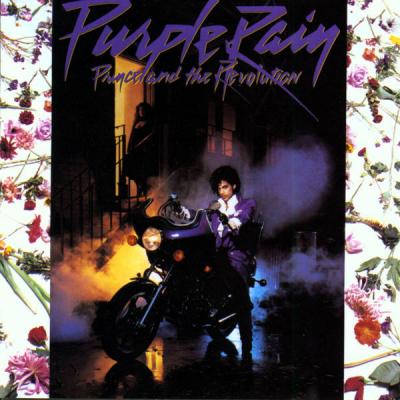
"Purple Rain" Soundtrack Lyrics
Movie • 1990
Track Listing
Prince
Prince
Prince
Prince
Prince
Prince
Prince
Prince
Prince
“Purple Rain (Music from the Motion Picture)” – Album Guide to Tracks and Key Scenes
Overview
How do you soundtrack a love story, a rivalry, and a self-rescue — all inside one club? Purple Rain answers by turning a movie into a concert and a concert into a confession. The soundtrack doesn’t sit under the film; it is the film’s bloodstream — stage numbers that spill straight into character beats, then back to the crowd.
Across the Kid’s arc — arrival → adaptation → rebellion → collapse — the album threads neon-slick rock with bruised R&B and hymnal catharsis. It opens with a sermon and a snare crack, detours into lust and ego, then lands on forgiveness that sounds like thunder. The music is both diegetic (on-stage at First Avenue) and psychological: solos feel like arguments, synths like walls coming down.
Genres & themes in phases: Minneapolis funk-rock — bravado and groove; torch balladry — intimacy and apology; new wave/synth pop — nightlife masks; gospel-tinged rock — reckoning and renewal. According to contemporary label notes and standard references, the album arrived in June 1984, one month before the film’s release, to set the tone for everything that followed.
How It Was Made
Prince and the Revolution built the record across club stage and studio — crucial pieces captured live at First Avenue (Minneapolis) and then sculpted at Sunset Sound and other rooms. The film’s music department leaned into true performance: the cameras drank in full songs; the plot trusted the setlist. Purple Rain was issued by Warner Bros. as both a studio album and the movie’s official soundtrack, with Prince producing and arranging across the set.
“When Doves Cry,” famously bass-less, was written late in the process to score a montage of heartbreak, family ghosts, and the Kid’s self-doubt — Prince cut every part himself, then removed the bass to keep the track stark. That willingness to break rules defines the album’s feel: club heat meeting chamber drama, riffs arguing with silence.
Tracks & Scenes
“Let’s Go Crazy” — Prince and the Revolution
Where it plays: Cold-open sermon to camera → detonating opener at First Avenue. The Kid’s band is tight; the crowd is louder. Purple lights, a grin that dares the night to try him.
Why it matters: Sets the theology of the film — joy as rebellion, music as salvation.
“Jungle Love” — The Time
Where it plays: Rival set at the same club. Morris Day showboats, Jerome mirrors him; the Kid watches from the wings, jaw set.
Why it matters: Establishes the competitive ecosystem — charisma with a smirk, and the heat under the Kid’s pride.
“The Bird” — The Time
Where it plays: Another Time showpiece, the crowd in flock formation, hands flapping; the Kid takes notes he won’t admit to taking.
Why it matters: Party electricity used as plot pressure — his throne is not guaranteed.
“The Beautiful Ones” — Prince and the Revolution
Where it plays: Stage confession aimed at Apollonia while Morris watches; the falsetto climb feels like a dare and a plea.
Why it matters: Vulnerability goes public; the love triangle turns operatic.
“Darling Nikki” — Prince and the Revolution
Where it plays: Provocation set — the Kid weaponizes lust to punish Apollonia. Strobes, tongue-out taunt, band on a tight leash.
Why it matters: Brilliance as self-sabotage; the performance costs him.
“When Doves Cry” — Prince
Where it plays: Montage after rupture: motorcycle through Minneapolis nights, flashes of his parents’ violence, memory of intimacy; the bass-less track leaves space for panic.
Why it matters: Internal monologue as pop epic — a diary with no bottom end.
“Purple Rain” — Prince and the Revolution
Where it plays: The finale at First Avenue. He dedicates it “to my father.” A slow-build wave; tears in the room; the solo sounds like letting go.
Why it matters: Forgiveness and acceptance staged as a rock hymn.
“I Would Die 4 U” → “Baby I’m a Star” — Prince and the Revolution
Where it plays: The encore run — lights full up, crowd levitating, the band a single organism. Friends reconciled, rivals disarmed.
Why it matters: After catharsis, celebration; community restored.
Notes & Trivia
- The album dropped a month before the film — a rare case where the record primed the movie’s story world.
- Live basics for the title track and other cuts were recorded at First Avenue and then refined in the studio.
- “When Doves Cry” features no bass guitar — a deliberate, rule-breaking production choice.
- The Time (Morris Day & Jerome Benton) supply the movie’s hottest rival sets, including “Jungle Love” and “The Bird.”
- The film premiered in 1984; a 1990 Prince feature connected to this universe is Graffiti Bridge — not Purple Rain.
Music–Story Links
Every stage number plays double-duty. The Time’s party bangers rankle the Kid into risk; “Darling Nikki” turns performance into punishment; “When Doves Cry” pulls us inside a brain under siege. And when “Purple Rain” lands, the show becomes a reconciliation ritual — band and audience as witnesses, the Kid finally choosing tenderness over pose.
Reception & Quotes
The album became an era-defining phenomenon — multi-platinum sales, chart domination, a template for pop films using truly original music. Critics heard a complete world: club sweat, spiritual ache, and pop precision. Deluxe editions later surfaced unheard vault tracks and a landmark live film, underscoring how much was captured at the time.
“Haunting, ecstatic, and unguarded — a confessional you can dance to.” album review
“A soundtrack that functions as a movie in miniature.” retrospective feature
“The live-to-tape roots give even the gloss a pulse.” reissue coverage
Interesting Facts
- First Avenue is both a filming location and the beating heart of the record — the room is part of the sound.
- Prince tracked every part on “When Doves Cry,” then stripped the bass to keep it emotionally exposed.
- The album is officially both a studio set and the motion-picture soundtrack — not a “various artists” compilation.
- Posthumous deluxe editions added vault cuts and the 1985 concert film Prince and the Revolution: Live.
- Apollonia 6’s “Sex Shooter” and Dez Dickerson’s “Modernaire” color the movie’s club ecosystem beyond the Kid vs. The Time.
Technical Info
- Title: Purple Rain (Music from the Motion Picture)
- Year: 1984 film & album (the user-stated 1990 likely refers to the related 1990 film Graffiti Bridge)
- Type: Film soundtrack (original songs performed primarily by Prince and the Revolution)
- Artist/Producer: Prince and the Revolution
- Recording: May 1983–March 1984; live basics at First Avenue; additional work at Sunset Sound and other studios
- Label: Warner Bros. Records
- Notable placements: “Let’s Go Crazy” (opening sermon/opener); “The Beautiful Ones” (public plea); “Darling Nikki” (provocation set); “When Doves Cry” (heartbreak montage); “Purple Rain” (finale dedication); “I Would Die 4 U” → “Baby I’m a Star” (encore)
- Availability: Original 1984 issue; numerous reissues including Deluxe/Expanded editions; streaming on major platforms
Questions & Answers
- Was Purple Rain released in 1990?
- No — the film and soundtrack arrived in 1984. The 1990 Prince film is Graffiti Bridge, a spiritual sequel.
- Are the songs in the movie truly live performances?
- Core elements (especially for the title track) were recorded live at First Avenue and then refined in the studio.
- Why does “When Doves Cry” have no bass?
- Prince removed the bass line to keep the track stark and emotionally raw — an unusual choice for an ’80s hit.
- Who are the rival performers we see on stage?
- Morris Day & The Time, plus Apollonia 6 and Dez Dickerson, populate First Avenue’s lineup alongside the Kid’s band.
- Is this a various-artists soundtrack?
- No. It’s primarily Prince and the Revolution, with a few in-film cuts by other acts rounding out the club world.
Canonical Entities & Relations
| Subject | Relation | Object |
|---|---|---|
| Purple Rain (1984 film) | stars | Prince; Apollonia Kotero; Morris Day |
| Purple Rain (album) | artist/producer | Prince and the Revolution |
| Purple Rain (album) | label | Warner Bros. Records |
| First Avenue (Minneapolis) | venue for | live recordings used on the album |
| Film | features songs | Prince and the Revolution; The Time; Apollonia 6; Dez Dickerson |
Sources: Wikipedia (album/film); IMDb Soundtracks; PrinceVault (album & film pages); Discogs master/release notes; American Songwriter (context on “When Doves Cry”).
If you don’t like Prince, then you shouldn’t watch the movie “Purple Rain”. It is 100% soaked with Prince and his music. It was 1984 and he was young, but already a big star. Every single song in this soundtrack is by him – almost a dozen. Let's Go Crazy expresses his youth and endless energy. Another pop I Would Die 4 U can be characterized as girlish pop, where snotty lyrics, coupled with repulsively maudlin music are everything. Purple Rain, the main theme of the film, is lachrymose multiplied at weepy – now you can understand that the soundtrack is so girlish that any normal man should never adopt it as something that can really exist in the world. In the film, Prince was trying to look cool. Even there is a poster, when this dandy is sitting on the bike, dressed-up in lilac purple with white. This combination works only for 6-y.o. girls after 2000. For this film was especially created a girls band named Apollonia 6, consisting of 3 members. Their leader Apollonia Kotero, was selected by Prince instead of the girl, who was dedicated for this role previously. We can’t say whether they were lovers, but Prince supported this music band for 2 years, until their parting in 1985. They had nothing really significant and no one actually can remember this band after 30 years. They were just a faded reflection of Prince himself, making stupid music with boring lyrics. When Doves Cry and other songs, similar like two droplets of water throughout Prince’s singing path, is a song, when he extensively exhibits his feelings and soul, making it look girlish. Yes, you can see from our description of this film that we don’t like this singer at all. And even the fact that he died, can do with our opinion nothing but to leave it the same.November, 19th 2025
A-Z Lyrics Universe
Cynthia Erivo Popular
Ariana Grande Horsepower
Post Malone Ain't No Love in Oklahoma
Luke Combs Good Riddance (Time of Your Life)
Green Day Bye Bye Bye
*NSYNC You're the One That I Wan
John Travolta & Olivia Newton-John I Always Wanted a Brother
Braelyn Rankins, Theo Somolu, Kelvin Harrison Jr. and Aaron Pierre The Power of Love
Frankie Goes to Hollywood Beyond
Auli’i Cravalho feat. Rachel House MORE ›