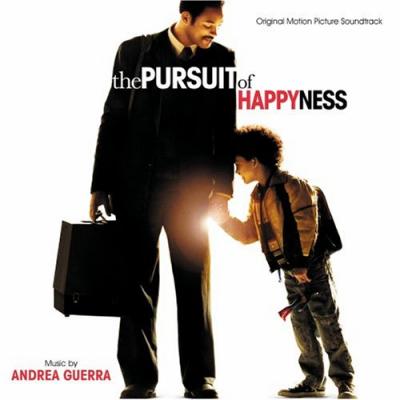
"Pursuit of Happyness, The" Soundtrack Lyrics
Movie • 2006
Track Listing
Moby
The Five Stairsteps
Christina Aguilera
Chantal Kreviazuk
“The Pursuit of Happyness (Original Motion Picture Soundtrack)” – Album Guide to Tracks and Key Scenes
Overview
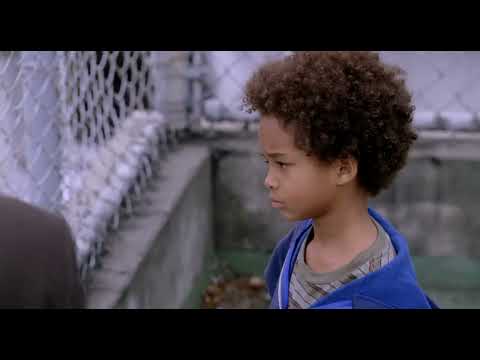
How do you score a father who can’t promise tomorrow but refuses to break today? With small, sturdy themes and the occasional soul classic. The Pursuit of Happyness keeps music close to the bone: Andrea Guerra’s quiet motifs shadow Chris and his son block by block, while a handful of needle drops — gospel, jazz, 70s soul — surface like memories people carry in their pockets.
The soundtrack favors restraint. Strings and piano move in short breaths; cues arrive like thoughts you can’t shake. Songs step in when the story needs community — a choir drifting past a shelter line, a radio humming an old comfort, a voice in the credits to say what pride won’t. It’s not a big, brassy inspirational score; it’s practical hope.
Genres & phases: intimate orchestral score — persistence and day-to-day resolve; classic soul & gospel — dignity and moral ballast; blues & standards — America at street level. According to studio/label notes, the commercial album collects sixteen score cues (about 40 minutes) — compact, replayable, and sequenced to mirror Chris’s grind.
How It Was Made
Italian composer Andrea Guerra wrote the original score, leaning on piano, soft strings, and low woodwinds — melodic fragments that can carry dialogue without crowding it. The album was issued under the “Original Motion Picture Soundtrack” tag with Madison Gate handling the release for Columbia/Sony’s music arm. Music supervision stitches period soul and jazz into the city soundscape; end credits feature a contemporary original written for the film.
Direction-wise, the approach is human scale: short cues that can turn on a dime — from frustration to tenderness — and songs that land precisely where they’re needed rather than filling every silence.
Tracks & Scenes
“Opening” — Andrea Guerra
Where it plays: Establishing morning in San Francisco — sidewalk rush, bones of the city, Chris lugging scanners. The piano line is steady, almost stubborn.
Why it matters: Introduces the score’s vocabulary: small phrases, big heart.
“Rubiks Cube Taxi” — Andrea Guerra
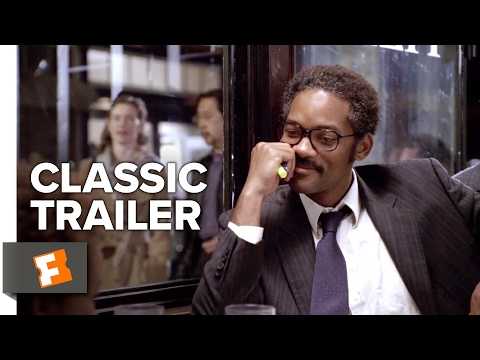
Where it plays: The famous cab ride with Dean Witter’s partner. Chris solves the cube as traffic keeps time; the strings flicker with each turn. The cue ends as opportunity cracks open.
Why it matters: Shows the score can sprint without shouting — intellect as momentum.
“Homeless” — Andrea Guerra
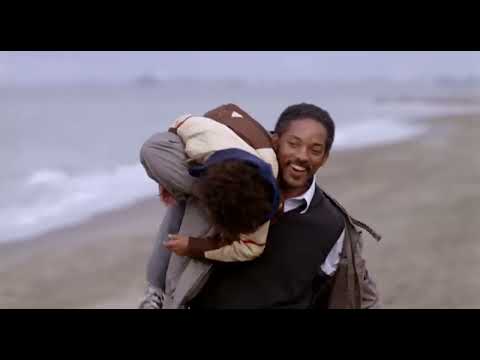
Where it plays: Shelter line at dusk. Christopher sleeps on Chris’s shoulder; the music barely rises above breathing, just enough to hold the moment together.
Why it matters: Empathy in a few bars — no varnish.
“Happyness” — Andrea Guerra
Where it plays: Late-film turning point as perseverance finally meets luck. A warmer harmony enters, but the arrangement stays humble.
Why it matters: Earned glow, not a fireworks cue; the film’s title spelled the way a child might.
“A Father’s Way” — Seal
Where it plays: End credits after the handshake that changes everything. A contemporary pop-soul original written for the film, it turns the story’s thesis into a vow.
Why it matters: The larger-voice catharsis the movie withholds until the very end.
“Bridge Over Troubled Water” — Roberta Flack
Where it plays: Needle-drop used in the film (cover of the Simon & Garfunkel classic). It surfaces like a benediction — compassion when the characters can’t ask for it aloud.
Why it matters: Gospel-tinged reassurance, sung from outside the frame.
“This Masquerade” — Leon Russell (famously covered by George Benson)
Where it plays: Catalog needle-drop heard in-film. A late-70s mood piece that momentarily reframes Chris’s hustle as night-city jazz.
Why it matters: Sophisticated melancholy — the sound of adult compromise.
“Jesus Children of America” / “Higher Ground” — Stevie Wonder
Where it plays: Period soul selections credited in the film; used as diegetic/radio color in city sequences.
Why it matters: Roots the story in a broader American soundtrack of faith and fight.
“I Know It’s a Sin” — Jimmy Reed
Where it plays: Brief blues needle-drop, the guitar sting like a shrug at another closed door.
Why it matters: A line of grit connecting Chicago blues to Bay Area sidewalks.
Notes & Trivia
- The score album runs 16 cues (~40 minutes) and was issued under the Madison Gate/Columbia Pictures banner in December 2006.
- Composer credit on the film and album: Andrea Guerra; the production kept the instrumentation intentionally small.
- Seal’s “A Father’s Way” was written specifically for the film and plays over the end credits.
- Among credited source songs: Roberta Flack’s “Bridge Over Troubled Water,” Leon Russell’s “This Masquerade,” Stevie Wonder’s “Jesus Children of America” and “Higher Ground,” and Jimmy Reed’s “I Know It’s a Sin.”
- The official album contains only Guerra’s score; the popular songs are film credits/needles, not on the score release.
Music–Story Links
When Chris runs between appointments, Guerra’s strings tick with him — breath, footfalls, bus doors. When the story goes quiet (bathroom floor, shelter bunks), the cues thin to almost nothing, letting the hum of the room carry pain. The soul selections function as communal memory: Wonder’s grooves lend backbone; Flack’s benediction offers grace; Seal’s closer gives the audience permission to exhale.
Reception & Quotes
Reviewers tagged the film’s music as “modest by design” — a score that refuses to grandstand and songs that arrive like friends. Awards chatter even floated the end-credits original for Best Original Song, while European critics singled out Guerra’s work for its humane restraint.
“A quiet, compassionate score that refuses to force tears.” album capsule
“End-credits uplift without schmaltz — the rare pop tie-in that fits.” feature note
Interesting Facts
- The score cue titles (“Rubiks Cube Taxi,” “Locked Out,” “Happyness”) basically storyboard the plot — handy for scene recall.
- Roberta Flack’s version of “Bridge Over Troubled Water” (1971) is the film’s cover, not the Simon & Garfunkel original.
- Seal’s “A Father’s Way” was among the season’s original songs considered in awards coverage.
- Two Stevie Wonder tracks are credited, anchoring the movie’s soul lineage.
- The official album excludes the pop/soul songs; it’s a pure score release by design.
Technical Info
- Title: The Pursuit of Happyness (Original Motion Picture Soundtrack)
- Year: 2006 (film & album)
- Type: Film score (Andrea Guerra) with additional licensed songs in the film
- Composer: Andrea Guerra
- Label/Release: Madison Gate Records (Dec 2006); 16 cues (~40:00)
- Notable licensed songs (in film, not on score album): “Bridge Over Troubled Water” (Roberta Flack); “A Father’s Way” (Seal — end credits); “This Masquerade” (Leon Russell/George Benson); “Jesus Children of America,” “Higher Ground” (Stevie Wonder); “I Know It’s a Sin” (Jimmy Reed); “When the Saints Go Marching In” (Traditional)
- Availability: Streaming on major platforms (score album); songs available on respective artist releases
Questions & Answers
- Who composed the score?
- Andrea Guerra — a restrained, piano-led approach that keeps emotions honest.
- Is there an official “songs + score” album?
- No. The commercial release is the score only; the familiar soul/blues tracks are film needle drops.
- What plays over the end credits?
- Seal’s original “A Father’s Way,” written for the film.
- Which version of “Bridge Over Troubled Water” is used?
- Roberta Flack’s 1971 cover — not the Simon & Garfunkel original.
- What’s the cue during the cab/Rubik’s Cube moment?
- “Rubiks Cube Taxi” — a brisk string/piano cue that mirrors Chris’s quick thinking.
Canonical Entities & Relations
| Subject | Relation | Object |
|---|---|---|
| The Pursuit of Happyness (2006 film) | director | Gabriele Muccino |
| The Pursuit of Happyness (film) | music by | Andrea Guerra |
| Soundtrack album | record label | Madison Gate Records (Sony/Columbia affiliate) |
| Film | features song | “A Father’s Way” — Seal (end credits) |
| Film | features song | “Bridge Over Troubled Water” — Roberta Flack (cover) |
| Film | features songs by | Stevie Wonder; Jimmy Reed; Leon Russell/George Benson |
Sources: Apple Music album page; Madison Gate Records listing; Discogs release entry; film credits/song listings (IMDb excerpts); composer biography and film page.
November, 19th 2025
A-Z Lyrics Universe
Cynthia Erivo Popular
Ariana Grande Horsepower
Post Malone Ain't No Love in Oklahoma
Luke Combs Good Riddance (Time of Your Life)
Green Day Bye Bye Bye
*NSYNC You're the One That I Wan
John Travolta & Olivia Newton-John I Always Wanted a Brother
Braelyn Rankins, Theo Somolu, Kelvin Harrison Jr. and Aaron Pierre The Power of Love
Frankie Goes to Hollywood Beyond
Auli’i Cravalho feat. Rachel House MORE ›