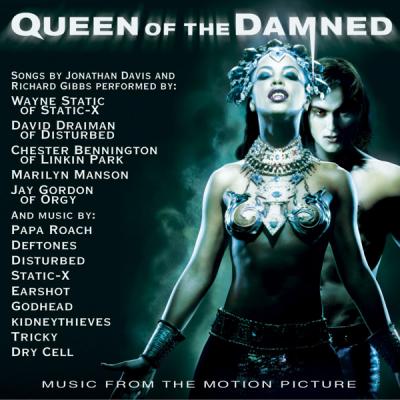
"Queen of the Damned" Soundtrack Lyrics
Movie • 2002
Track Listing
Wayne Static of Static-X
David Draiman of Disturbed / KoRn
Chester Bennington of Linkin Park
Deftones
Marilyn Manson
Papa Roach
Godhead
Jay Gordon of Orgy
Disturbed
Static-X
Earshot
Dry Cell
Tricky
Kidney Thieves
Marilyn Manson
"Queen of the Damned (Music from the Motion Picture)" – Album Guide to Tracks and Key Scenes
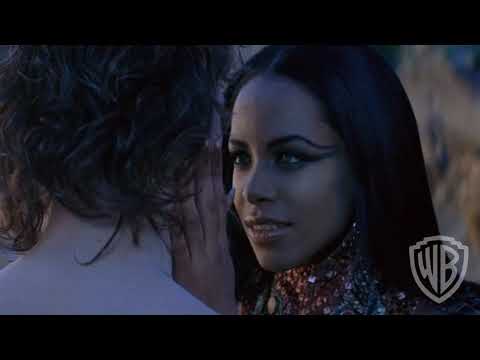
Overview
How do you turn a centuries-old vampire into a 2002 rock idol without breaking the spell? This soundtrack shows the path: arrival in distortion, adaptation through hooks, rebellion via blast-furnace choruses, and a final collapse into desert-wind ambience after the Death Valley show.
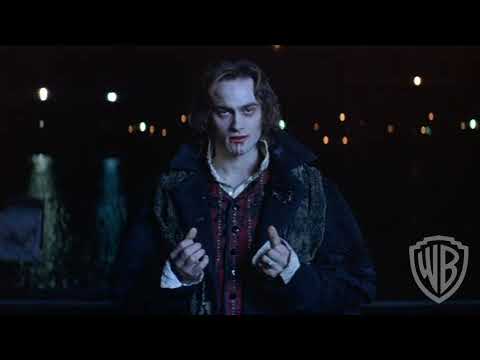
The album is a nu-metal time capsule and a narrative device. Jonathan Davis (Korn) and composer Richard Gibbs engineered Lestat’s on-screen sound — serrated guitars, sub-pressure bass, and violin glissandi that slice like fangs. Because of label constraints, Davis didn’t sing on the retail album; instead, five frontmen take turns as Lestat’s voice on disc, while Davis’s vocals haunt the film prints themselves. That duality — one voice for the movie, five for the album — gives the whole project an uncanny echo.
Meanwhile, the compilation stitches in alt/industrial staples (Deftones, Disturbed, Static-X, Kidneythieves), building a club-to-stadium arc that mirrors Lestat’s ascent. The score album complements the grit with eerie strings and electronics — trancey pulses, ceremonial drums, and a recurring, slithering motif for Akasha. According to contemporary album notes, music supervisors Frank Fitzpatrick and Rich Dickerson leaned into a “band-first” identity, letting the film behave like a concert movie in disguise.
Genres & themes in phases: nu-metal & industrial (seduction as spectacle); trip-hop/alt (urban nocturne); string-driven score (ancient hunger); arena metal finale (apotheosis and reckoning).
How It Was Made
Director Michael Rymer tasked Gibbs and Davis with inventing Lestat’s modern catalog — songs that could plausibly mint a vampire rock star overnight. Davis wrote and recorded leads for key cues (“System,” “Forsaken,” “Not Meant for Me,” “Slept So Long,” “Redeemer”) and, on set, became Lestat’s singing voice. For the commercial album, contractual barriers meant those vocals were re-cut by Chester Bennington, David Draiman, Wayne Static, Jay Gordon, and Marilyn Manson. Strings by L. Shankar and heavyweight session drummers (Terry Bozzio, Vinnie Colaiuta) thickened the blood.
The music department framed everything around Lestat’s “brand”: promotional videos, diegetic club playbacks, and that quarry-staged Death Valley mega-gig. Editorially, the film often lets songs breathe — full verses on screen, crowd noise knitted into the stems — so the soundtrack isn’t wallpaper; it’s plot.
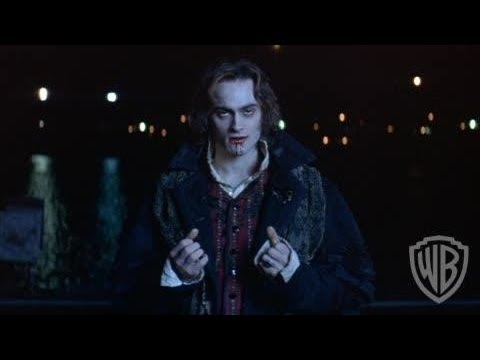
Tracks & Scenes
“System” — vocal: Chester Bennington (album) / Jonathan Davis (in-film)
Where it plays: In the Admiral’s Arms massacre: Akasha strolls into a vampire den; when the chorus detonates, bodies turn to ash as she claims Lestat. Mid-film; mostly non-diegetic over carnage with diegetic spill from the club system.
Why it matters: Pure domination. The cut binds Akasha’s hunger to Lestat’s celebrity noise — power recognizes power.
“Change (In the House of Flies)” — Deftones
Where it plays: Intimate blood-sharing montage with Lestat and Akasha — candlelit decadence, slow camera, breathy vocals like a spell. Late mid-film; non-diegetic with sensual SFX foregrounded.
Why it matters: The lyric’s metamorphosis metaphor scores Lestat’s slide from performer to accomplice.
“Headstrong” — Earshot
Where it plays: Lestat and Marius watch Los Angeles from a rooftop, arguing futures; headlights smear below. ~00:49:00; non-diegetic bed that fades under dialogue.
Why it matters: A moody, mid-tempo reset — two immortals, one spotlight.
“Dead Cell” — Papa Roach
Where it plays: Crowds streaming toward the Death Valley concert; Jesse fights through hecklers and merch-hawkers as the production swells. ~00:56:00; source-adjacent pre-show hype.
Why it matters: Kinetic montage fuel; it makes fandom feel feral.
“Down with the Sickness” — Disturbed
Where it plays: Final-act build as caravans converge on the desert venue; Lestat psychs himself backstage. Late film; non-diegetic, cut with PA noise.
Why it matters: Anthemic menace — the arena is a feeding ground now.
“Before I’m Dead” — Kidneythieves
Where it plays: London legwork and Talamasca business: Marius crosses into David Talbot’s office as Jesse and Lestat shadow one another through rain-slick streets. Early-mid film; non-diegetic.
Why it matters: Trip-hop pulse equals clandestine scholarship.
“Not Meant for Me” — vocal: Wayne Static (album) / Jonathan Davis (end-credits film mix)
Where it plays: Credits coda after the desert showdown — the camera leaves Lestat to his legend. End credits, first position.
Why it matters: The project’s paradox in one cue: album vs. film voice, same obsession.
“Slept So Long” — vocal: Jay Gordon (album) / Jonathan Davis (in-film)
Where it plays: Lestat’s rise montage: rehearsal footage, club crush, filmed promos — vampirism as pop brand. Early-mid film; mostly diegetic/performance with intercut non-diegetic sections.
Why it matters: Immortality marketed. The hook is a manifesto.
Score cues — Richard Gibbs & Jonathan Davis
Where they play: Violins and low synths stalk Akasha’s entrances; dreamy pads trace Jesse’s visions; percussion swells at the Death Valley ritual. Throughout; non-diegetic with occasional source bleed.
Why they matter: They sand the hard edges between bangers and plot, keeping myth in the mix.
Trailer music notes
Where it plays: Theatrical trailers lean on “System” hits and the album’s guitar stabs; edits cut to fangs, floodlights, and roar-shots of the desert crowd.
Why it matters: Marketing sold a concert movie about a god — and the album backs the boast.
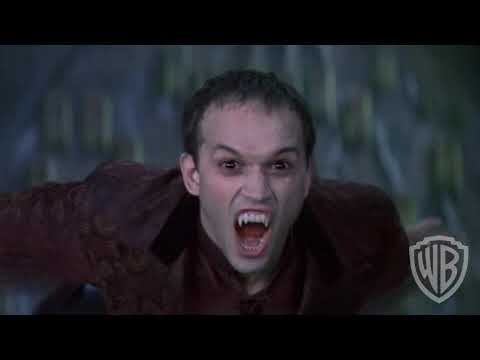
Music–Story Links
- When Akasha annihilates the Admiral’s Arms, “System” turns massacre into choreography — each downbeat equals a dusting vampire.
- Jesse’s research threads use chillier textures (Kidneythieves; score pads), sounding like the Talamasca’s fluorescent quiet — knowledge against noise.
- The rooftop debate over Los Angeles plays against a radio-ready groove; immortals bicker while the city hums — fame as background radiation.
- The Death Valley build-up stacks bangers (Papa Roach → Disturbed) so the showdown feels like a festival drop — then the music cuts, and ritual starts.
Notes & Trivia
- Davis’s label deal barred his voice from the retail album, so five guest singers carried his melodies on disc, while his vocals remain in the film mix.
- During credits, the film plays Davis’s “Not Meant for Me,” even though the album credits list the Wayne Static version.
- A planned Davis–Aaliyah duet never happened; Aaliyah died in 2001 after finishing her scenes as Akasha.
- Music supervisors Frank Fitzpatrick and Rich Dickerson shepherded both the compilation and the on-screen placements.
- A separate Score Album (Gibbs/Davis) was released alongside the songs compilation.
Reception & Quotes
Critics knocked the film but largely saluted the album’s swagger; over time it’s become a cult favorite that also introduced a wider audience to Davis’s songwriting outside Korn. As one feature put it, the soundtrack “outshone the movie and defined its afterlife.”
“Nearly everyone recognised the brilliance of its soundtrack.” feature retrospective
“Davis had to ‘become’ a vampire to write it — and you can hear the method in every riff.” music interview
“Deftones to Disturbed — a blood-sticky mixtape that still hits.” album round-up
Interesting Facts
- The album dropped February 19, 2002, just days before the U.S. release.
- Label/packaging varies by territory: Warner Records/Warner Sunset branding appears across editions.
- Shankar’s double-violin lines lace through several Lestat cuts — a sinuous, “ancient” color amid crunch guitars.
- Session royalty: Terry Bozzio and Vinnie Colaiuta traded drum duties on core tracks.
- Davis cameo: he’s the ticket scalper who tries selling Jesse seats for the big show.
- “Careless (Akasha’s Lament)” didn’t make the OST; Davis later issued it digitally and on a live release.
- Both a songs album and a dedicated Score Album are available on major platforms.
Technical Info
- Title: Queen of the Damned (Music from the Motion Picture)
- Year: 2002
- Type: Film soundtrack (compilation) + separate score album
- Primary Creators: Jonathan Davis (songwriting/production); Richard Gibbs (score & co-production)
- Vocalists on album: Wayne Static, David Draiman, Chester Bennington, Marilyn Manson, Jay Gordon
- Music Supervision: Frank Fitzpatrick; Rich Dickerson
- Label: Warner Records / Warner Sunset
- Release context: Album released Feb 19, 2002; film opened Feb 22, 2002 (U.S.)
- Availability: Streaming/download/CD; companion Score Album (Gibbs/Davis) also available
- Signature placements: “System” (Admiral’s Arms slaughter); “Change (In the House of Flies)” (Lestat/Akasha feeding); “Dead Cell” & “Down with the Sickness” (concert build); “Not Meant for Me” (end credits)
Questions & Answers
- Why are there different singers for Lestat’s songs on the album?
- Contract terms barred Jonathan Davis’s vocals from the retail OST, so guest vocalists re-cut his parts; Davis’s voice remains in the film mix.
- Which song scores Akasha’s most brutal entrance?
- “System” — it turns the Admiral’s Arms sequence into a syncopated execution.
- Is there a separate score release?
- Yes. A dedicated Score Album by Richard Gibbs & Jonathan Davis was issued alongside the songs compilation.
- Does the film actually use the Wayne Static version of “Not Meant for Me”?
- No — the film plays Davis’s version over the credits, while the album features Wayne Static.
- Where can I hear the omitted “Careless (Akasha’s Lament)”?
- It was later released digitally by Jonathan Davis and appears in his live repertoire.
Canonical Entities & Relations
| Subject | Relation | Object |
|---|---|---|
| Jonathan Davis | wrote/produced | Lestat songs (“System”, “Forsaken”, “Not Meant for Me”, “Slept So Long”, “Redeemer”) |
| Richard Gibbs | co-wrote/composed | Score & Lestat songs |
| Wayne Static | performed (album vocal) | “Not Meant for Me” |
| David Draiman | performed (album vocal) | “Forsaken” |
| Chester Bennington | performed (album vocal) | “System” |
| Jay Gordon | performed (album vocal) | “Slept So Long” |
| Marilyn Manson | performed (album vocal) | “Redeemer” |
| Frank Fitzpatrick | music supervision | Compilation & placements |
| Rich Dickerson | music supervision | Compilation & placements |
| Warner Records / Warner Sunset | released | Soundtrack (2002) |
| Michael Rymer | directed | Queen of the Damned (film) |
| L. Shankar | performed | double-violin lines on core tracks |
Sources: Wikipedia (film & soundtrack); IMDb Soundtracks & Credits; Apple Music listing; MusicBrainz; Discogs editions; WhatSong scene placements; Loudwire/Metal Hammer features.
November, 18th 2025
A-Z Lyrics Universe
Cynthia Erivo Popular
Ariana Grande Horsepower
Post Malone Ain't No Love in Oklahoma
Luke Combs Good Riddance (Time of Your Life)
Green Day Bye Bye Bye
*NSYNC You're the One That I Wan
John Travolta & Olivia Newton-John I Always Wanted a Brother
Braelyn Rankins, Theo Somolu, Kelvin Harrison Jr. and Aaron Pierre The Power of Love
Frankie Goes to Hollywood Beyond
Auli’i Cravalho feat. Rachel House MORE ›