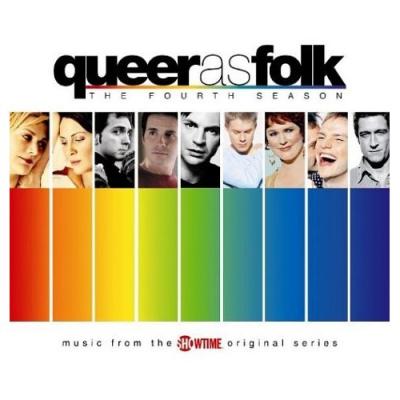
"Queer As Folk Season 4" Soundtrack Lyrics
TV • 2004
Track Listing
Burnside Project
Suede
Jason Nevins
Goldfrapp
Eels
Ima Robot
Reindeer Section
The Uncut
TV On The Radio
Andrea Menard
Circlesquare
Origene
Kodo
Black
"Queer as Folk — The Fourth Season (Music from the Showtime Original Series)" – Album Guide to Tracks and Key Scenes

Overview
What happens when a club-first series arrives in a heavier year — adapts, rebels, and refuses to collapse? Season 4’s soundtrack answers with leaner BPMs and sharper edges: the euphoric Babylon anthems make room for alt-pop bruises and sober dawns.
The headline shift: the opening theme changes to Burnside Project’s “Cue the Pulse to Begin”, a nervy indie-electro sprint that resets the show’s pulse for its final two seasons. Around it, the album trades some hi-NRG gloss for indie and art-pop (Suede, Goldfrapp, TV on the Radio) and melancholic pop (Eels, Black). It still knows the floor — Origene and Kodo bring kinetic lift — but the afterglow lasts longer.
Season 4’s narrative carries harder turns — illness, recovery, activism, relapses — and the music tracks those stakes. Big-room moments get flanked by guitars and hushed vocals; montages lean into resignation and resolve. It plays like a night out where the conversation matters as much as the drop.
Genres & themes in phases: indie/electro-rock (reckoning, self-definition); alt-pop and trip-pop (quiet resilience); deep club cuts (ritual and release); torch-pop closers (hard-earned perspective).
How It Was Made
Season 4’s album was released by Tommy Boy under its Silver Label banner on June 22, 2004, reflecting a conscious tone pivot from the earlier RCA Victor, club-dominant compilations. The curators threaded recognizable Babylon staples with left-field selections better suited to heavier plot beats. The theme handoff — Greek Buck’s “Spunk” (Seasons 1–3) to Burnside Project — signaled the aesthetic shift right in the main titles.
Track choices mix source-like club energy (Origene’s “Sanctuary,” Kodo’s “Strobe’s Nanafushi — Satori Mix”) with guitar-forward and down-tempo pieces (Suede’s “Attitude,” Eels’ “Love of the Loveless,” Black’s “Wonderful Life”). The album sequencing mirrors that pendulum: kick drums → contemplation → one last lift. According to the label’s release notes and retailer metadata, the set runs just under an hour and gathers 14 cuts from across the season’s cue sheets and promos.
Tracks & Scenes
“Cue the Pulse to Begin” — Burnside Project
Where it plays: New opening titles for Seasons 4–5 — jittery drums and jump-cut synths replace the old wink as the credits lock in (every episode open; non-diegetic).
Why it matters: Announces a darker, faster heartbeat for the back half of the series.
“Attitude” — Suede
Where it plays: Babylon floor and promo usage around identity-posturing scenes; quick flashes of catwalk confidence and razor banter (early-mid season; diegetic bleed + overlay).
Why it matters: Post-glam strut that fits the season’s “perform or be performed” stakes.
“Train” — Goldfrapp
Where it plays: A hedonistic club montage — cameras low and fast, lights in hard cuts while bodies move in lockstep (mid-season; diegetic).
Why it matters: Sleek menace; the lyric’s appetite threads temptation arcs without preaching.
“Love of the Loveless” — Eels
Where it plays: A morning-after or hospital corridor passage; quieter frames let the vocal sit over hard news (mid-late season; non-diegetic).
Why it matters: Turns plot fallout into a humane pause.
“Satellite” — TV on the Radio
Where it plays: City-night connective tissue — headlights, wet pavement, characters walking toward or away from each other (mid-season; non-diegetic).
Why it matters: Hypnotic hum for decisions made in motion.
“Sanctuary” — Origene
Where it plays: Babylon apex or runway moment; arpeggios blossom while camera sweeps mezzanine to floor (late mid-season; diegetic/club).
Why it matters: A dance-lit respite before the next hard conversation.
“Strobe’s Nanafushi (Satori Mix)” — Kodo
Where it plays: High-intensity montage; drums and ritual thrum under quick-snap edits (late season; non-diegetic push).
Why it matters: Primal energy amplified — activism and resolve staged like ceremony.
“Wonderful Life” — Black
Where it plays: Closing stretch or end-episode reflection; a bittersweet reset after loss and repair (late season; non-diegetic).
Why it matters: Soft-spoken perspective — the show earns this kind of grace note here.
Trailer / promo note
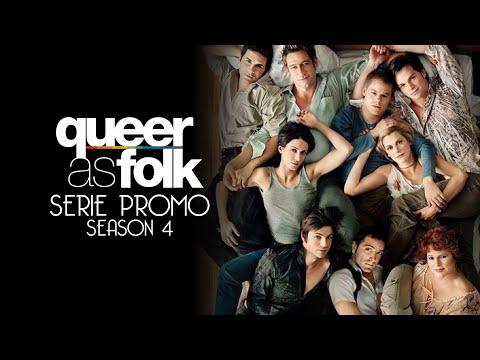
Where it plays: Showtime’s Season 4 promos lean on the new title theme and cut-ins from the album’s darker selections over story teasers.
Why it matters: Marketing matched the sonic pivot: less gloss, more grit.

Music–Story Links
- Theme swap to Burnside Project reframes the show’s POV: urgency first, comfort second — exactly where Season 4’s arcs live.
- Alt/indie cues (Suede, Goldfrapp, TV on the Radio) let character conflicts breathe between club peaks; the camera lingers, the downbeat waits.
- Dance selections (Origene, Kodo) remain Babylon’s lingua franca, but they often bracket tougher scenes — ritual joy before/after consequence.
- Torch-pop closers (Eels, Black) turn end cards into reflection instead of victory laps.
Notes & Trivia
- Season 4 introduced the new main-title theme “Cue the Pulse to Begin” (used through Season 5).
- The soundtrack label changed after Season 2; Season 4’s disc came via Tommy Boy’s Silver Label.
- Compared to earlier volumes, critics noted a more somber album that mirrors the season’s heavier arcs.
- Home-video and later streaming versions may swap certain broadcast-era cues due to licensing updates.
- Selections from S4 were later repackaged alongside S3 and S5 material on a multi-disc compilation.
Reception & Quotes
Contemporary blurbs called the set “darker, better,” praising how it broadened QAF’s sound beyond Babylon while keeping the club heartbeat close. Fans embraced Burnside Project’s theme as a clean break into the show’s endgame. According to the season soundtrack overview, critics in niche press singled out the indie/alt stretch (Suede → Goldfrapp → Eels) as the album’s center of gravity.
“The somber fourth-season disc fits a show that finally stares down its scars.” music column
“Less glitter, more grit — and it works.” album round-up
“A theme-song switch that says the quiet part out loud: the stakes just got real.” retrospective note
Interesting Facts
- Release date landed June 22, 2004 — mid-series run, not a post-season dump.
- Retail metadata credits Tommy Boy Entertainment/Silver Label across territories, with Festival Mushroom branding in AUS/NZ editions.
- “Sanctuary” became a fan shorthand for late-night Babylon lifts in S4 playlists.
- Kodo’s taiko-driven mix is one of the franchise’s boldest needle-drops — a percussive outlier that still feels on-brand.
- Some digital editions vary track count/order compared with the original CD.
Technical Info
- Title: Queer as Folk — The Fourth Season (Music from the Showtime Original Series)
- Year: 2004 (album); TV season aired 2004
- Type: Television soundtrack (songs compilation; theme + needle-drops)
- Main-title (S4–S5): “Cue the Pulse to Begin” — Burnside Project
- Label: Tommy Boy / Silver Label (regional variants include Festival Mushroom)
- Release: June 22, 2004 (CD/digital; ~14 tracks, ~55 minutes)
- Signature selections: “Attitude” (Suede), “Train” (Goldfrapp), “Love of the Loveless” (Eels), “Satellite” (TVOTR), “Sanctuary” (Origene), “Strobe’s Nanafushi (Satori Mix)” (Kodo), “Wonderful Life” (Black)
- Availability notes: Widely available on major platforms; some streaming episodes feature replacement songs vs. broadcast/DVD.
Questions & Answers
- When did the opening theme change?
- Season 4 — the titles switch to Burnside Project’s “Cue the Pulse to Begin,” used through Season 5.
- Is the S4 album more “indie” than earlier discs?
- Yes. It balances Babylon-ready cuts with indie/alt and melancholic pop that track the season’s heavier storylines.
- Who released the soundtrack?
- Tommy Boy (Silver Label) issued the album on June 22, 2004, with some regional co-branding (e.g., Festival Mushroom in AUS/NZ).
- Do streaming episodes match the original broadcast songs?
- Not always. Some cues were replaced for digital rights reasons, so episode audio can differ from the CD.
- Where should I start if I want the season’s essence?
- The arc “Attitude” → “Train” → “Love of the Loveless” → “Sanctuary” → “Wonderful Life” maps floor, fallout, and grace.
Canonical Entities & Relations
| Subject | Relation | Object |
|---|---|---|
| Burnside Project | performed | “Cue the Pulse to Begin” (main-title, S4–S5) |
| Suede | performed | “Attitude” (Season 4 placement/album) |
| Goldfrapp | performed | “Train” (Season 4 placement/album) |
| Eels | performed | “Love of the Loveless” (Season 4 placement/album) |
| TV on the Radio | performed | “Satellite” (Season 4 placement/album) |
| Origene | performed | “Sanctuary” (Season 4 placement/album) |
| Kodo | performed | “Strobe’s Nanafushi (Satori Mix)” (Season 4 placement/album) |
| Black (Colin Vearncombe) | performed | “Wonderful Life” (Season 4 placement/album) |
| Tommy Boy / Silver Label | released | Season 4 soundtrack (2004) |
| Showtime | broadcast | Queer as Folk Season 4 (2004) |
Sources: Wikipedia season-soundtrack overview; Tommy Boy release metadata; Apple Music/TIDAL listings; Fandom (QAF Soundtrack pages); Season 4 promo materials.
November, 18th 2025
A-Z Lyrics Universe
Cynthia Erivo Popular
Ariana Grande Horsepower
Post Malone Ain't No Love in Oklahoma
Luke Combs Good Riddance (Time of Your Life)
Green Day Bye Bye Bye
*NSYNC You're the One That I Wan
John Travolta & Olivia Newton-John I Always Wanted a Brother
Braelyn Rankins, Theo Somolu, Kelvin Harrison Jr. and Aaron Pierre The Power of Love
Frankie Goes to Hollywood Beyond
Auli’i Cravalho feat. Rachel House MORE ›