Soundtracks:  A B C D E F G H I J K L M N O P Q R S T U V W X Y Z #


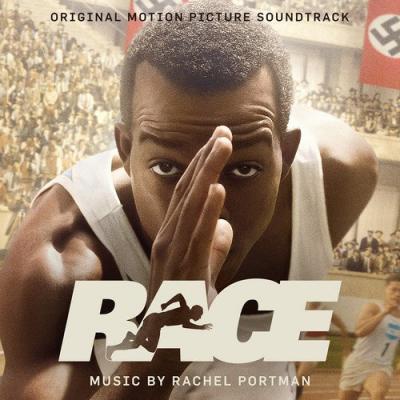
Race Album Cover

"Race" Soundtrack Lyrics

Movie • 2015

Track Listing


“Race (Original Motion Picture Soundtrack)” – Album Guide to Tracks and Key Scenes

Official trailer still for Race (2016) with Jesse Owens on the starting blocks — visual cue for the soundtrack’s athletic pulse
Race movie soundtrack cues, 2016

Overview

How do you score a race where the finish line is also a world stage? Race answers with a supple, classically minded orchestral score that keeps pace with Jesse Owens’ speed and the era’s politics. The music doesn’t shout; it breathes, then surges.

Composer Rachel Portman threads melodic motifs through training montages, committee rooms, and the Berlin cauldron. Warm strings carry the human story; snare and brass sharpen the competitive edge; woodwinds do the quiet character work. A single contemporary anthem — Aloe Blacc’s “Let The Games Begin” — bookends the experience with uplift during the credits.

The soundtrack charts the film’s arc: arrival — tentative piano figures and hushed strings; adaptation — rhythmic ostinatos and measured brass; rebellion — tighter snare patterns and nervier harmony when politics collide with sport; collapse/closure — lyrical reprises and a soaring stadium cue. According to Back Lot Music’s release notes, the album collects 23 cues by Portman plus Blacc’s end-title song, reflecting the film’s score-first identity.

How It Was Made

Portman recorded with the Berlin Session Orchestra, emphasizing rhythmic clarity over sheer volume so sprint and jump beats read instantly on screen. Orchestrations by Jeff Atmajian, David William Hearn, and Andrew Kinney keep textures lean during races, then widen for ceremony and consequence. Film Music Reporter detailed the February 2016 release and the inclusion of Aloe Blacc’s original track.

Editorially, short cues dovetail with sprint-length scenes: think setup → set → pop. Mixing favored forward strings and snare to cut through crowd noise in the stadium sequences. A handful of period tracks and classical excerpts (heard as source or ceremony) add historical color without crowding the score.

Trailer frame of Berlin’s Olympiastadion that aligns with Portman’s ceremonial themes and wide orchestral voicings
Recording + mix choices built for clarity in the Olympiastadion

Tracks & Scenes

“Race Opening Titles” — Rachel Portman
Where it plays: Over the opening credits and establishing montage, the theme sets the film’s athletic lyricism — a rising figure in strings answered by brass pulses.
Why it matters: Introduces the motivic cell Portman varies across training, setbacks, and triumphs.

“On the Bus to USC” — Rachel Portman
Where it plays: Owens’ transition to college life; exterior travel shots and dorm arrivals. Light percussion, modest woodwinds, and warm strings keep the momentum.
Why it matters: A “hand-off” cue — moving Jesse from home to the mentorship that will define his craft.

“The Men’s Broad Jump Final” — Rachel Portman
Where it plays: Long-jump set-piece. Tense tremolo under the approach, then brass accents snap to the takeoff; a brief hush as sand settles, followed by release.
Why it matters: Shows Portman’s “breathe-then-burst” method for athletic beats — suspense first, catharsis second.

“The 200M Final” — Rachel Portman
Where it plays: Curve-and-kick race sequence. Driving snare, racing ostinato, and a cresting brass line over the final straight.
Why it matters: A micro-hero’s journey in two minutes; technique meets willpower.

“Arrival at the Games” — Rachel Portman
Where it plays: Delegations reach Berlin; overheads of the city and the stadium infrastructure. Broader orchestration, dignified tempo.
Why it matters: Shifts the scale from personal to geopolitical — sport inside spectacle.

“The Olympic Stadium” — Rachel Portman
Where it plays: Tracking shots through the arena and during ceremonies. Noble brass chorale and luminous strings.
Why it matters: Gives the stadium its own “character” theme — awe with an edge.

“It’s Not Your Race” — Rachel Portman
Where it plays: A mentor–athlete confrontation just before competition; dialog-weighted scene with restrained underscoring.
Why it matters: Music steps back to let the moral stakes speak, then returns with resolve.

“The Final Event” — Rachel Portman
Where it plays: Climactic race. Percussion tightens, harmony brightens at the tape; applause tumbles into a quiet coda.
Why it matters: The payoff cue; Portman saves her boldest cadence for the last burst.

“Please Take Your Last Jump” — Rachel Portman
Where it plays: A request across lines — rivals acknowledging excellence. Subdued strings, intimate register.
Why it matters: Sportsmanship gets a theme; grace beats propaganda.

“Waiting for Ruth” — Rachel Portman
Where it plays: A personal reunion and release after the world stage thunder fades.
Why it matters: Returns the story to the human scale with gently restated motifs.

“Let The Games Begin” — Aloe Blacc
Where it plays: End credits — an anthemic, contemporary closer following the final montage. Non-diegetic.
Why it matters: A modern victory lap that reframes historical triumph for today’s ears.

Period & ceremonial source (as listed in film credits)
Where it plays: Early American scenes and Berlin ceremony sequences feature era-appropriate selections including “Won’t You Come Home Bill Bailey,” salon/vaudeville pieces like “A Kiss in the Dark,” classical excerpts (e.g., Wagner’s Lohengrin intro/“Flying Dutchman” overture), and national hymns for medal moments.
Why it matters: These cues situate time, place, and power — from collegiate dance floors to a propaganda-draped stadium.

Race trailer action cut — start gun and stadium swell, matching cues like “The 200M Final”
Set-piece pacing — breath, burst, release

Notes & Trivia

  • The album is score-forward: 23 cues by Portman plus Aloe Blacc’s single.
  • Recorded and mixed in Berlin with the Berlin Session Orchestra; conducting credited to Joris Bartsch-Buhle.
  • Back Lot Music handled the release to coincide with the U.S. theatrical opening in February 2016.
  • Classical Wagner excerpts turn up in Berlin-set sequences — a pointed historical texture.
  • Portman’s thematic cell is small but flexible — easy to reshape across sprint, long jump, and ceremony.

Music–Story Links

When Owens steps into the Olympiastadion, Portman widens the harmony and slows the pulse; the venue arrives as a character. In races, percussion dictates breath — eight bars of coil, then the cut to the gun. During committee debates, the score thins, reminding us the real battle isn’t just on the track.

Classical source under ceremonies underscores the regime’s pageantry; the same building hears a different music when Owens runs. And in the end, Blacc’s pop anthem says the quiet part out loud — this isn’t only memory; it’s legacy. As one review put it, Portman’s music “heightens the sense of occasion” without overpowering the drama.

Reception & Quotes

Critics were mixed on the film but generally warm to the music’s balance of dignity and drive. According to Film Music Reporter’s album brief, the package was positioned as a traditional, melodic sports score with a contemporary end-title.

“Portman keeps the stadium scenes noble and clear — ceremony without bloat.” — The Hollywood Reporter
“The score’s understated build is where Race is at its best.” — campus press review
“A safe slice of history that beats a snoozy lecture.” — Variety
Trailer title card — where the film’s end rolls into Aloe Blacc’s credits song
End titles — the baton pass to “Let The Games Begin”

Interesting Facts

  • Single drop: Aloe Blacc issued “Let The Games Begin” around the film’s rollout and performed it around Super Bowl festivities.
  • Multiple editions exist across regions; Apple Music lists a 23-track digital with Back Lot Music credits.
  • MusicBrainz notes Teldex Studio, Berlin for recording/mix — a home-field tie to the 1936 setting.
  • Discogs and retail listings confirm cue names like “The 200M Final,” “The Olympic Stadium,” and “Please Take Your Last Jump.”
  • Some classical pieces in the film (e.g., Wagner excerpts) appear only as on-screen source, not on Portman’s album.

Technical Info

  • Title: Race (Original Motion Picture Soundtrack)
  • Year / Type: 2016 — Film score with one original song
  • Composer: Rachel Portman
  • Orchestra/Conductor: Berlin Session Orchestra — Joris Bartsch-Buhle
  • Label: Back Lot Music (digital/CD)
  • Notable placements: Aloe Blacc — “Let The Games Begin” (end credits); period/source selections including “Won’t You Come Home Bill Bailey,” Victor Herbert’s “A Kiss in the Dark,” Dvořák’s “Andante Appassionato,” and Wagner excerpts in Berlin sequences; national anthems for medal ceremonies.
  • Release context: Album released mid-February 2016 to align with the U.S. theatrical debut.
  • Availability: Streaming on Apple Music/Spotify; cataloged on MusicBrainz and Discogs.

Questions & Answers

Is the film 2015 or 2016?
Trailers arrived in 2015, but the wide release — and soundtrack — landed in February 2016.
Who composed the score?
Rachel Portman wrote the score; the Berlin Session Orchestra performed it.
What’s the end-credits song?
Aloe Blacc’s “Let The Games Begin,” written for the film and released as a single.
Are the classical pieces on the album?
Most are film-only source/ceremony cues; the official album focuses on Portman’s score plus the Blacc single.
Where can I stream the soundtrack?
Apple Music and Spotify carry the full Back Lot Music release.

Canonical Entities & Relations

SubjectVerbObject
Rachel PortmancomposedRace (Original Motion Picture Soundtrack)
Back Lot MusicreleasedRace (Original Motion Picture Soundtrack)
Aloe Blaccperformed“Let The Games Begin” (end credits)
Berlin Session Orchestraperformedthe score for Race
Stephen HopkinsdirectedRace (film)
Focus FeaturesdistributedRace (U.S.)
Universal (Back Lot Music)handledsoundtrack release and distribution

Sources: Back Lot Music release notes; Film Music Reporter; Apple Music; Spotify; MusicBrainz; Discogs; The Hollywood Reporter; Variety; IMDb soundtrack list; Focus Features trailer channel.

In the musical collection to this film, dominate jazz and female voices (e.g., Alexis Cole, who performs A Kiss In The Dark or Bimini Bay among the rest of several compositions of her). There are few songs that make a blood flow faster and all the lyrics focused on sedation, rather than on an emotional jolt. Although the entire plot of this movie says about the other. In fact, for a long time, we haven’t seen on the screens, a film so rich in the content. Despite its micro-budget for the current time, which is only USD 5 million, less than in 1 week of rental, it has raised more than $7 million. The head role of coach of afro-American athlete plays Jason Sudeikis, who now apparently wants to demonstrate his dramatic talent, not only own comedic skills that he, without doubt, has. Together with him, we see here a high-end monster, Jeremy Irons, who is a very talented and versatile film’s and theater’s actor. He acted in more than 80 films and 20 musicals and collected in his life such awards (as or from): Oscar, Chicago Film Critics Association, Drama League Award, Golden Globe, LA Film Critics Association, NY Film Critics Circle, Emmy, Tony. Thus, he now possesses all major four awards on the world of show business. Serious film in which organically blended racism, Nazism, private and country leadership, opposition of political regimes, segregation, a love story, the story of achievements and an outstanding personality. The picture of a film completes with diverse music like Won't You Come Home Bill Bailey by Hughie Cannon – lyrical, very bright and not situational, that is – made to last. This film has many bright lyrics, as we see the confrontation of the hero to several adverse external factors. He becomes victorious from most situations and we should be proud of him for that.

November, 19th 2025

"Race" on IMDb, Wikipedia
A-Z Lyrics Universe

Lyrics / song texts are property and copyright of their owners and provided for educational purposes only.