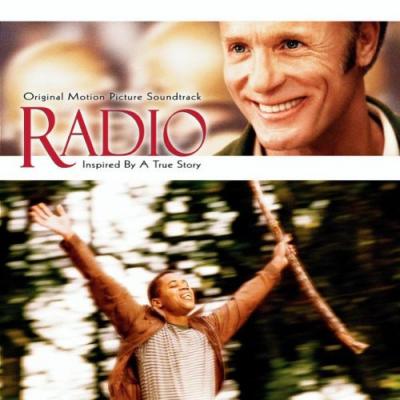
"Radio" Soundtrack Lyrics
Movie • 2003
Track Listing
Stevie Wonder
Stevie Wonder
Spinners
Spinners
Al Green
The Isley Brothers
Grand Funk Railroad
Harold Melvin/The Blue Notes
Harold Melvin/The Blue Notes
Friends of Distinction
“Radio (Original Motion Picture Soundtrack)” – Album Guide to Tracks and Key Scenes

Overview
How do you score empathy without syrup? Radio answers by braiding two currents: radio-era soul and James Horner’s compact, lyrical cues. One current is lived-in — 70s R&B that spins in kitchens, cars, and locker rooms; the other is intimate — woodwinds, strings, and small percussive nudges that track a friendship as it wobbles into trust.
The album is a hybrid: half crate-dug classics (Stevie Wonder, Al Green, The Spinners) and half Horner’s miniatures, some touched with wordless vocals by India.Arie. The songs place us in time; the score holds the camera on faces just a heartbeat longer. It’s sentimental, yes — but in the way small towns can be: proudly, publicly.
Formally, the record mirrors the film’s arc: arrival (needle-drops introduce place and year), adaptation (Horner’s motifs settle beside practice whistles), rebellion (tough meetings, setbacks, a funeral), and closure (end-credit balm). The official U.S. release landed October 21, 2003 on Hip-O Records, with 20 tracks running just over 71 minutes (as cataloged by MusicBrainz and editorial track lists).
Genres & themes by phase: Seventies soul for arrival — community and groove; AM-rock strut for adaptation — team ritual, bus rides; chamber-like score cues for rebellion — grief and doubt; voice-led ballad and gentle reprises for closure.
How It Was Made
Composer: James Horner writes small, song-adjacent cues rather than wall-to-wall underscore — clarinet/oboe leads, strings in close voice, and restrained rhythm. Several tracks weave India.Arie’s wordless voice into the texture; the end-credit original “Eyes of the Heart (Radio’s Song)” credits Horner alongside contemporary R&B writers. (As summarized by Filmtracks, Hip-O issued the album on Oct 21, 2003.)
Licensed music: The needle-drops lean classic soul and 70s radio rock, sequenced to feel like a Saturday-afternoon dial — Wonder to Spinners to Al Green — with placements that stay mostly diegetic (you can imagine the speaker on screen).
Album assembly: Hip-O/UMe packaged the songs-and-score set into a single disc; Spotify and retail listings reflect a 20-track compilation that splits roughly 12 songs / 8 cues. The running order keeps “Eyes of the Heart” and Horner’s “Radio’s Day” / “Never So Alone” as emotional bookends.
Tracks & Scenes
“Eyes of the Heart (Radio’s Song)” — India.Arie
Where it plays: End credits. After the final montage of real-life Radio and Coach Jones, the vocal enters over black, easing the film down.
Why it matters: A purpose-built curtain call; the lyric reframes the story as mentorship seen “with the heart.”
“We Can Work It Out” — Stevie Wonder
Where it plays: Heard in marketing and early passages; its buoyant clav and harmonica color the film’s upbeat community beats.
Why it matters: Sets the “choose grace” thesis in three minutes — and, yes, it’s the trailer’s signature cue.
“Sha La La (Make Me Happy)” — Al Green
Where it plays: Domestic spaces and team downtime — a needle-drop you believe you’re hearing from a countertop radio.
Why it matters: Turns the house into a safe room; warmth without molasses.
“The Rubberband Man” — The Spinners
Where it plays: Locker-room swagger/background source during lighter team business.
Why it matters: Groove-as-morale — the hook that makes a room taller.
“China Grove” — The Doobie Brothers
Where it plays: Bus/drive-time texture; a rock splash for field-to-town transitions.
Why it matters: Keeps the edit moving; a road cue with a grin.
“Wake Up Everybody (Part 1)” — Harold Melvin & the Blue Notes
Where it plays: Over civic/assembly montage material; the lyric’s exhortation doubles as theme statement.
Why it matters: The movie’s moral, sung out loud.
“Radio’s Day” — James Horner feat. India.Arie
Where it plays: A mid-film turning point: a gentle, lyrical cue that follows Radio through routine — hallways, sidelines, smiles.
Why it matters: Shows Horner at his softest; the melody lets us inhabit Radio’s POV without sentimentality overload.
“Never So Alone” — James Horner feat. India.Arie
Where it plays: Post-bereavement and quiet aftermath; voice like breath, strings like the room exhaling.
Why it matters: The album’s emotional nadir — and its most fragile writing.
“Radio” — Chuck Brodsky
Where it plays: A singer-songwriter coda tucked near the end of the album; editorially adjacent to the film’s epilogue energy.
Why it matters: Folky summation; names the man and the myth.
Also heard in-film (selection): “Sister Golden Hair” (America), “Let It Ride” (Bachman–Turner Overdrive), “Superwoman (Where Were You When I Needed You)” (Stevie Wonder), “Behind Closed Doors” (Charlie Rich), “For Your Precious Love” (Otis Redding) — used as period-authentic source around town, at home, and in transitional montages.
Notes & Trivia
- Label of record: Hip-O Records (a UMe imprint) handled the U.S. CD, released October 21, 2003.
- Album structure: ~12 licensed songs + 7 short Horner cues plus a Chuck Brodsky closer.
- India.Arie’s voice appears twice inside Horner’s cues (“Radio’s Day,” “Never So Alone”) and once as lead on the end title.
- Trailer hook: the main trailer leans on Stevie Wonder’s “We Can Work It Out.”
- Running time hovers around 71–72 minutes depending on edition metadata.
Music–Story Links
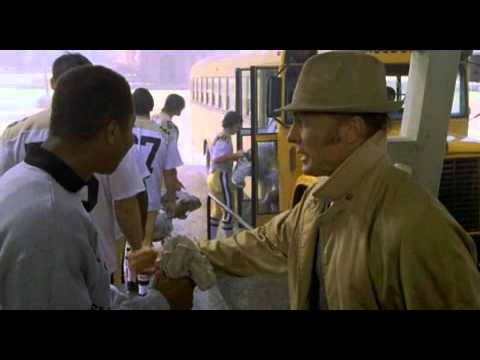
When Radio first becomes part of the sideline ritual, Horner keeps cues small — a clarinet phrase where other sports dramas would blast a brass fanfare. Later, when Coach Jones faces the town, songs fall away and the score does the breathing for him. The jukebox comes roaring back for game-night camaraderie and bus rides — source tracks that act like the team’s shared mood ring.
Grief pulls the music into close-mic space (voice + strings), then the finale releases tension with a sung benediction. Soul, then silence, then soul again — the movie’s rhythm in miniature.
Reception & Quotes
The film drew mixed notices, but soundtrack watchers praised the “songbook-plus-miniatures” approach and Horner’s restraint. The album remains widely available on major platforms; physical CDs circulate steadily through catalog channels.
“Music plays an important role… Horner’s gentle cues dovetail with sturdy, time-stamped needle-drops.” — Filmtracks review
“An easy front-to-back listen: radio hits, then heart.” — retail/editorial blurb
Interesting Facts
- Trailer tie-in: The marketing cut prominently features Stevie Wonder’s version of “We Can Work It Out.”
- Vocals in score: India.Arie’s wordless lines thread two Horner cues — a gentle Horner tradition from his 90s/00s work.
- Imprint: Hip-O Records (UMe) issued the CD; streaming mirrors usually credit Universal Music Enterprises.
- Songbook spine: The Spinners, Al Green, Harold Melvin & the Blue Notes, The Doobie Brothers — all appear on the album.
- Running order: The soul half leads into the score half, keeping the emotional slope pointed inward as the story deepens.
Technical Info
- Title: Radio (Original Motion Picture Soundtrack)
- Year / Type: 2003 — Film soundtrack (songs + original score)
- Composer: James Horner (score; with featured vocals by India.Arie on select cues)
- Featured artists (selection): India.Arie; Stevie Wonder; The Isley Brothers; The Spinners; Al Green; Grand Funk Railroad; The Doobie Brothers; Harold Melvin & the Blue Notes; Chuck Brodsky
- Label: Hip-O Records (UMe)
- Release: October 21, 2003 (U.S.)
- Availability: Digital streaming (Spotify/others); original CD in circulation
Questions & Answers
- Is the album mostly songs or score?
- Mostly songs on the front half, then Horner’s short cues and a closing folk track on the back half.
- Who sings the end-credits piece?
- India.Arie — “Eyes of the Heart (Radio’s Song),” written with Horner and collaborators.
- What label released it?
- Hip-O Records (a Universal/UMe imprint) handled the U.S. CD release.
- Is the Stevie Wonder track actually in the movie?
- Yes, and it’s also the main trailer’s signature song.
- Where can I stream it?
- Spotify hosts a 20-track edition; retail listings mirror the same sequence.
Canonical Entities & Relations
| Subject | Verb | Object |
|---|---|---|
| James Horner | composed | original score cues for Radio (2003) |
| Hip-O Records | released | Radio (Original Motion Picture Soundtrack) (U.S.) |
| India.Arie | performed | “Eyes of the Heart (Radio’s Song)” and vocals on select cues |
| Stevie Wonder | performed | “We Can Work It Out” (album/trailer use) |
| Chuck Brodsky | performed | “Radio” (album closer) |
| Mike Tollin | directed | Radio (film) |
| Columbia Pictures / Revolution Studios | distributed/produced | the film |
Sources: Filmtracks; MusicBrainz; Spotify album page; IMDb (Soundtracks); Wikipedia (film & soundtrack); retail listings.
November, 19th 2025
A-Z Lyrics Universe
Cynthia Erivo Popular
Ariana Grande Horsepower
Post Malone Ain't No Love in Oklahoma
Luke Combs Good Riddance (Time of Your Life)
Green Day Bye Bye Bye
*NSYNC You're the One That I Wan
John Travolta & Olivia Newton-John I Always Wanted a Brother
Braelyn Rankins, Theo Somolu, Kelvin Harrison Jr. and Aaron Pierre The Power of Love
Frankie Goes to Hollywood Beyond
Auli’i Cravalho feat. Rachel House MORE ›