Soundtracks:  A B C D E F G H I J K L M N O P Q R S T U V W X Y Z #


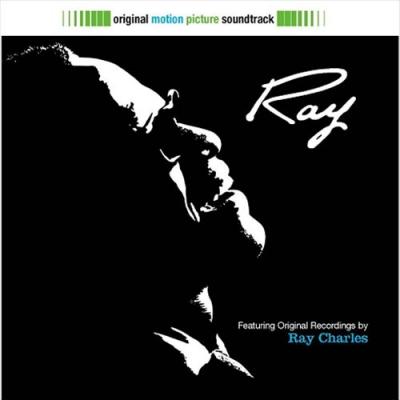
Ray Charles Album Cover

"Ray Charles" Soundtrack Lyrics

Movie • 2004

Track Listing


“Ray (Music From and Inspired by the Motion Picture)” – Album Guide to Tracks and Key Scenes

Ray (2004) trailer still — Jamie Foxx at the piano, spotlight tight, the band waiting for the downbeat
Genius, groove, and a life scored in 12-bar turns

Overview

How do you make a soundtrack for an artist whose recordings already scored a generation? Ray does the obvious — it lets Ray Charles sing — and then stitches an original dramatic score between the classics. The result is two complementary albums: a songs compilation pulling from Atlantic/ABC-era masters, and Craig Armstrong’s contemplative, blues-shadowed score.

The songs album is a focused primer: “Mess Around,” “I Got a Woman,” “(Night Time Is) The Right Time,” “What’d I Say,” “Hit the Road Jack,” “Georgia on My Mind,” and more, sequenced to mirror on-screen arc rather than strict chronology. Meanwhile, Armstrong’s cues trace interior weather — the cost of fame, addiction’s undertow, the quiet of work — so the film breathes between bangers.

Structurally the music maps the biopic’s four-beat rhythm — arrival (early club heat), adaptation (studio breakthroughs and crossover), rebellion (artistic control vs. personal collapse), closure (hard-won clarity). According to the film’s and soundtrack’s reference pages, the compilation landed in 2004 on Rhino/Atlantic (with later “More Music From Ray”), and Armstrong’s Original Motion Picture Score arrived the same year on Atlantic/Rhino.

How It Was Made

Voices & performance. Jamie Foxx plays (and looks) the piano — the film famously leans on his real chops — but the singing you hear as Ray Charles is drawn overwhelmingly from Charles’s own masters; Foxx only sings a few early, pre-Ray covers depicted in the film. That creative split preserves the grain of Charles’s voice while giving the performances live-body authenticity on camera.

Score. Composer Craig Armstrong wrote a spare, soulful orchestral score — strings, piano, and rhythm section that never fights the songs. Album producers sequenced cues as interludes between the big placements, a sober counterweight to the celebratory hits.

Curation. The songs album assembles 1950s–60s highs from Atlantic/ABC with liner notes tying each cut to story beat. Music supervision (and clearances) prioritized period-accurate mixes and, where possible, live takes that match the film’s staging.

Trailer frame — studio glass, talkback mic blinking; Ray at the piano as engineers roll tape
Masters and moments — how the film threads originals with score

Tracks & Scenes

“Mess Around” — Ray Charles
Where it plays: Early-Atlantic breakthrough montage and club sequence; Foxx-as-Ray locks into the left-hand vamp as the room tips from polite to raucous.
Why it matters: Establishes the movie’s “no-filler” policy — hits arrive as story beats, not wallpaper.

“I Got a Woman” — Ray Charles
Where it plays: Studio-to-stage crosscut showing the gospel-to-R&B fuse lighting. Producers and band exchange looks as the backbeat snaps in.
Why it matters: Frames the film’s central artistic leap: sacred feel, secular lyric.

“(Night Time Is) The Right Time” — Ray Charles (feat. Margie Hendricks)
Where it plays: Atlantic studio date; Margie steps up and the call-and-response turns incendiary. The camera rides the Raelettes on the hook.
Why it matters: The movie’s purest “in the room” electricity — chemistry you can hear.

“What’d I Say (Pts. 1 & 2)” — Ray Charles
Where it plays: Onstage improvisation to fill time after the set ends; Ray vamps, the band follows, the crowd answers, and a classic is born.
Why it matters: Improvisation as origin myth — the film turns a gig scramble into music history.

“Hit the Road Jack” — Ray Charles
Where it plays: Emotional fallout scene with Margie mirrored by a punchy studio performance; the lyric lands like a decision.
Why it matters: A pop knockout recast as character consequence.

“Georgia on My Mind” — Ray Charles
Where it plays: Late-film redemption flow into epilogue; brass and strings cradle the vocal while the narrative closes its loop.
Why it matters: State song, signature song — and the film’s soft landing.

“Unchain My Heart” / “Hallelujah I Love Her So (Live)” — Ray Charles
Where it plays: Tour montage beats and crowd POVs; live takes keep sweat in the frame.
Why it matters: Reminds you this was a working band long before legend calcified.

Score spotlight — “Hard Times” & “Ray’s Theme” — Craig Armstrong
Where it plays: Private space: withdrawals, motel silences, small mercies. Piano and low strings, almost whispering under the image.
Why it matters: Holds the parts of the story the hits can’t touch.

Trailer montage — club stage lights blistering as call-and-response ignites; engineers grin behind the glass
Studio alchemy, stage fire — when scenes double as sessions

Notes & Trivia

  • The film’s score is by Craig Armstrong; a dedicated Original Motion Picture Score album released in 2004 alongside the songs compilation.
  • The songs album draws on Ray Charles’s Atlantic/ABC masters and was issued by Rhino/Atlantic in 2004; a follow-up set, More Music From Ray, expanded the pool.
  • The compilation won the Grammy for Best Compilation Soundtrack Album for Visual Media (then named for motion pictures/TV).
  • Jamie Foxx plays the piano on camera; Charles’s voice is used for the signature songs (Foxx only sings a few early “cover” moments depicted).

Music–Story Links

Each signature tune earns its scene. “I Got a Woman” plays like a thesis defense — the movie introduces gospel mechanics and then flips the lyric. “What’d I Say” isn’t just a setlist add; it’s the film’s case for spontaneity as genius. When “Hit the Road Jack” arrives, the needle-drop becomes narrative verdict, while “Georgia on My Mind” reframes public honor as private reconciliation. Armstrong’s cues thread the aftermaths: the walk out of the room when applause stops.

Reception & Quotes

Reviewers praised the film for letting the music lead and Foxx for “breathing as one” with Charles’s performances; score critics singled out Armstrong’s restraint.

“The movie would be worth seeing simply for the sound of the music and the sight of Jamie Foxx performing it.” — Roger Ebert
“Armstrong’s score is the quiet truth the hits leave behind.” — score press capsule

The soundtrack’s curation and mastering also drew nods; as per one overview, the song CD is “fifteen classics as story beats,” with the score album offering a 50-minute interior companion.

Trailer end card — Ray at a grand, house lights low, horns standing by for the count-in
Final bow — the legend, the band, the book closes on a chord

Interesting Facts

  • Two-album approach: a songs compilation (Rhino/Atlantic) and a separate Craig Armstrong Score album (Atlantic/Rhino) — same year.
  • Producers on paper: the compilation credits Atlantic’s Ahmet Ertegun/Jerry Wexler era across multiple tracks; liner notes tie takes to story beats.
  • Live vs. studio: several album cuts are live versions used to match the film’s stage energy.
  • Awards run: beyond Foxx’s sweep, the soundtrack itself picked up a Grammy; Armstrong’s score drew strong reviews.
  • Follow-up disc: More Music From Ray mops up additional classics heard in-film or referenced in dialogue.

Technical Info

  • Title: Ray — Music From and Inspired by the Motion Picture (songs); Ray — Original Motion Picture Score (score)
  • Year / Type: 2004 — Film soundtrack (compilation of Ray Charles recordings) + Original Score album
  • Score Composer: Craig Armstrong
  • Music supervision/assembly: compilation curated to Charles’s original masters; supervision credited in album/production notes
  • Label: Rhino/Atlantic (songs); Atlantic/Rhino (score)
  • Representative placements: “Mess Around”; “I Got a Woman”; “(Night Time Is) The Right Time”; “What’d I Say (Pts. 1&2)”; “Hit the Road Jack”; “Georgia on My Mind”; “Unchain My Heart”
  • Film snapshot: Dir. Taylor Hackford; Universal Pictures; Runtime 152 minutes
  • Availability: Streaming (major platforms) for both albums; legacy CD issues widely available

Questions & Answers

Who composed the original score?
Craig Armstrong — a restrained, piano-and-strings score released as its own album in 2004.
Are those Ray Charles’s real vocals in the film?
Yes. Foxx plays piano on camera; the signature songs use Charles’s masters. Foxx only sings a few early “cover” scenes.
How many soundtrack albums are there?
Two primary ones from 2004: a Rhino/Atlantic songs compilation and an Atlantic/Rhino score album — plus a later “More Music From Ray.”
Did the soundtrack win awards?
The compilation won the Grammy for Best Compilation Soundtrack Album for Visual Media (name of the category then).
Where should I start if I want just a few tracks?
“What’d I Say,” “(Night Time Is) The Right Time,” “Georgia on My Mind,” and “Hit the Road Jack” — they’re the film’s dramatic keystones.

Canonical Entities & Relations

SubjectVerbObject
Ray Charlesperformedrecordings featured on Ray songs compilation
Craig ArmstrongcomposedRay (Original Motion Picture Score)
Rhino / AtlanticreleasedRay (Music From and Inspired by the Motion Picture)
Atlantic / RhinoreleasedRay (Original Motion Picture Score) (2004)
Taylor HackforddirectedRay (2004)
Universal Picturesdistributedthe film

Sources: film & soundtrack reference pages; label/retailer listings (Rhino/Atlantic); score reviews and discographic notes; composer biography features; official trailers.

November, 19th 2025


A-Z Lyrics Universe

Lyrics / song texts are property and copyright of their owners and provided for educational purposes only.