Soundtracks:  A B C D E F G H I J K L M N O P Q R S T U V W X Y Z #


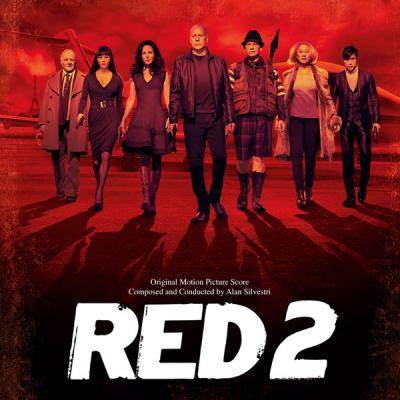
Red 2 Album Cover

"Red 2" Soundtrack Lyrics

Movie • 2013

Track Listing


"Red 2 (Original Motion Picture Score)" – Album Guide to Tracks and Key Scenes

Red 2 (2013) official trailer thumbnail with Bruce Willis, Helen Mirren and the ensemble
Red 2 — official trailer (2013)

Overview

How do superspies age into their soundtrack? Arrival — adaptation — rebellion — collapse: Red 2 plays that arc with Alan Silvestri’s slick, synth-laced orchestral engine and a cart of sly needle-drops that wink at the characters’ “retired, extremely dangerous” lives. The music doesn’t just goose the action; it keeps score on who’s still got it.

The album — Red 2 (Original Motion Picture Score) — runs nearly an hour, all business: muscular rhythms, jittery electronics, and brass that punches like a last cup of espresso. Around it, the film threads a handful of tunes that cue Costco normalcy, churchside irony, and end-credit mambo swagger.

Distinctive touches? Silvestri’s cues juggle stealth motifs with swagger pulses; the licensed songs arrive as character jokes that land quickly. According to Apple’s listing and the label’s notes, the score dropped digitally July 16, 2013, with a physical edition following via La-La Land Records — a tidy two-step that mirrored the film’s global rollout.

Genres & themes in phases. Phase 1 (arrival): easy-listening pop in-store — suburban camouflage. Phase 2 (adaptation): groove-leaning score — team re-forms, gears mesh. Phase 3 (rebellion): rock and dark alt — chaos, chase, teeth bared. Phase 4 (collapse/acceptance): jubilant mambo at the credits — we lived, we laugh.

How It Was Made

Composer Alan Silvestri took over from Christophe Beck for the sequel, recording with the London Philharmonic Orchestra at Abbey Road and folding in propulsive electronics. The cue list moves briskly through set pieces (“Paris Chase,” “Hangar Fight”), while character beats (“Speaking of Sarah,” “Victoria Calls”) keep the romance and rivalry simmering. As reported by the soundtrack’s liner details and coverage, the digital release landed on Lionsgate Records (July 16, 2013) with La-La Land’s CD two weeks later.

Music supervision & clearances. Industry ledgers and end-credit databases credit John Houlihan as music supervisor; he and the team thread a short, memorable set of source songs (Costco muzak to final-reel mambo) that play like punchlines the characters are in on.

Trailer frame from Red 2 suggesting Silvestri’s punchy blend of electronics and orchestra
Silvestri leans on tight percussion + low synth for spy snap, then opens into big brass when the team swings into action.

Tracks & Scenes

“Can’t Smile Without You” — Samy Goz (Barry Manilow cover)
Where it plays: Early on, Frank and Sarah shop at Costco, trying on the fiction of quiet domestic life. The tune floats over fluorescent aisles and coupon chatter — diegetic, through the store speakers.
Why it matters: Cornball sweetness = camouflage. It underlines how badly Frank wants “normal,” right before normal explodes.

“You Can’t Always Get What You Want” — Phil Parlapiano (organ rendition)
Where it plays: At a funeral scene with the team in uneasy attendance, the organist rolls through the Stones chestnut; the lyric’s moral hits harder when nobody’s saying what they really mean. Mostly diegetic (church organ).
Why it matters: Gallows humor by hymn — grief, with a wink.

“On the Road Again” — Canned Heat
Where it plays: After a narrow escape, Frank and Marvin barrel down the highway; the track’s droning shuffle turns flight into ritual. Non-diegetic, cross-fading into dialogue.
Why it matters: Old hands, old habits. The needle-drop says: of course they’re back at it.

“Howl” — Beware of Darkness
Where it plays: A convenience-store confrontation spikes into chaos; the song’s stomp-and-snarl rides the cut like an adrenaline fuse. Non-diegetic during the brawl beat.
Why it matters: Newer alt-rock color inside a legacy-star vehicle — the clash of eras fits the sequel’s faster, messier tone.

“Given Up” — Linkin Park
Where it plays: Briefly during late-act gearing-up, a flash of modern aggression that matches the stakes. Non-diegetic, used in a tight excerpt.
Why it matters: A serrated texture that Silvestri mirrors with synth arpeggios and percussion in the surrounding cues.

“Tango Toscana” — Quartet San Francisco
Where it plays: A European interlude dresses the caper in café chic — strings glide under whispers and misdirection. Source-music flavor (diegetic ambience) that tips the hat to spy elegance.
Why it matters: A palate cleanser between car chases.

Mozart: “Act II, Scene 2: Rondo – Per pietà, ben mio (Fiordiligi)”
Where it plays: Classical needle-drop in a refined setting punctures the tension with poise. Diegetic, briefly.
Why it matters: Irony as armor; the old world meets very modern espionage chaos.

“Papa Loves Mambo” — Perry Como
Where it plays: End credits. After the dust settles, the mambo sways in with a “we’re fine” grin. Non-diegetic; full-credits usage.
Why it matters: Curtain call with hips — the franchise signature of wry, old-school charm.

Score cues — Alan Silvestri
“Main Title,” “Safe House,” “Paris Chase,” “Hangar Fight,” “Catacombs”: Tight percussion and low-end synth pulse set pace, then strings and brass broaden the frame. Silvestri’s action writing favors ratcheting ostinatos that snap into clean payoffs.
Why it matters: The cues carry most of the runtime; they’re the film’s heartbeat between the winkier song placements.

Red 2 trailer still echoing the film’s Europe-hopping chase energy
Europe-hopping caper energy: the score keeps the wheels on while the jokes fly.

Notes & Trivia

  • The score was recorded at Abbey Road with the London Philharmonic Orchestra; Dennis Sands handled the mix.
  • Digital release: Lionsgate Records (July 16, 2013). Physical CD: La-La Land Records (July 30, 2013).
  • Executive soundtrack producer credit goes to music supervisor John Houlihan — unusual to see both roles tied so closely on the album paperwork.
  • Yes, that end-credits mambo is Perry Como — a deliberate tonal swing after the final set-piece.
  • Silvestri’s cue names map cleanly to plot hops: Paris → London → Moscow, then the hangar finale.

Music–Story Links

Costco muzak → fragile domesticity. “Can’t Smile Without You” sells Frank’s attempt at ordinary life so the later break from it lands as a choice, not an accident.

Organ Stones → black-comedy grief. “You Can’t Always Get What You Want” reframes loss as a pragmatic mantra for spies who know compromises better than closure.

Modern snarl → rising stakes. “Howl” and “Given Up” shove contemporary edge into a legacy-star romp, mirroring the sequel’s bigger weapons and thinner patience.

Mambo credits → genre reset. “Papa Loves Mambo” restores the franchise’s smirk; the audience leaves moving, not brooding.

Reception & Quotes

Reviews split on the album’s memorability but agreed it fits the film’s brisk, jokey pace. Trade critics called it “bombastic” and “exciting,” while specialty soundtrack sites noted the synth-forward palette. As one review put it, the score is “consistent and coherent,” even when themes take a back seat.

“Bombastic … a propulsive accessory to the film’s pyrotechnics.” Variety
“Exciting, timing-savvy underscore that keeps the caper buoyant.” The Hollywood Reporter
“Uniform sound, repeating cells — effective, if not ‘hummable.’” Synchrotones
Red 2 trailer frame teasing the hangar finale vibe matched by 'Hangar Fight'
Finale vibes: “Hangar Fight” brings the low-end grind and gleeful payoffs.

Interesting Facts

  • The official score clocks 24 tracks, ~58 minutes; the physical edition followed two weeks after the digital drop.
  • Several source songs (e.g., the organ rendition of a Rolling Stones classic) appear only in the film — not on the score album.
  • Silvestri recorded in London, mixed in L.A., and kept keyboards integral; a classic “hybrid” action palette.
  • End-credits song: “Papa Loves Mambo” — explicitly documented by credits watchers and stinger trackers.
  • The Costco opener sets a franchise pattern: start mundane, go mayhem.
  • A few region listings add brief scene notes (e.g., Costco, funeral, highway) helpful for quick rewatch hunts.

Technical Info

  • Title: Red 2 (Original Motion Picture Score)
  • Year: 2013
  • Type: Film score (with additional licensed songs in the film)
  • Composer/Producer: Alan Silvestri (producer with David Bifano)
  • Orchestra/Recording: London Philharmonic Orchestra; Abbey Road Studios (London) and U.S. rooms
  • Label/Release: Lionsgate Records (digital, July 16, 2013); La-La Land Records (physical, July 30, 2013)
  • Music Supervisor: John Houlihan
  • Notable source placements: “Can’t Smile Without You” (Costco scene); “You Can’t Always Get What You Want” (organ at funeral); “On the Road Again” (post-rescue drive); “Howl” (store confrontation); “Papa Loves Mambo” (end credits)
  • Availability: Streaming/download widely; CD release limited via specialty label

Questions & Answers

Who composed the score for Red 2?
Alan Silvestri, recorded with the London Philharmonic Orchestra and added hybrid electronics.
Was there a separate “songs” soundtrack?
No formal songs compilation — only the score was released; the film’s source tracks are documented in credits and databases.
When did the album come out?
Digital on July 16, 2013; the CD followed July 30, 2013.
What plays over the credits?
“Papa Loves Mambo” by Perry Como.
Who supervised the music?
John Houlihan is credited as music supervisor on the film.

Canonical Entities & Relations

SubjectRelationObject
Dean ParisotdirectedRed 2 (2013 film)
Alan Silvestricomposed score forRed 2
London Philharmonic OrchestraperformedRed 2 score sessions
John Houlihanmusic supervisedRed 2
Lionsgate Recordsreleased (digital)Red 2 (Original Motion Picture Score)
La-La Land Recordsreleased (CD)Red 2 (Original Motion Picture Score)
Perry Comoperformed“Papa Loves Mambo” (end credits)
Beware of Darknessperformed“Howl” (store confrontation)
Linkin Parkperformed“Given Up” (brief late-act placement)
Canned Heatperformed“On the Road Again” (post-rescue drive)

Sources: Apple Music; Wikipedia (Soundtrack); La-La Land Records; M-Endcredits; Metacritic credits; Spotify; Cineblog; MediaStinger; regional soundtrack databases.

As Wikipedia summarizes, Silvestri recorded at Abbey Road with the LPO; per Apple/Spotify listings, the commercial album contains 24 tracks at ~58 minutes; according to credits logs, John Houlihan served as music supervisor; and as stinger trackers note, “Papa Loves Mambo” rolls over the credits.

November, 19th 2025

'Red 2': Wikipedia, IMDb
A-Z Lyrics Universe

Lyrics / song texts are property and copyright of their owners and provided for educational purposes only.