Soundtracks:  A B C D E F G H I J K L M N O P Q R S T U V W X Y Z #


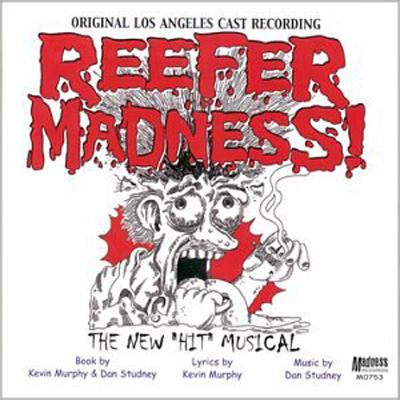
Reefer Madness Album Cover

"Reefer Madness" Soundtrack Lyrics

Musical • 2000

Track Listing


"Reefer Madness (Original Los Angeles Cast Recording)" – Album Guide to Tracks and Key Scenes

Reefer Madness the Movie Musical trailer frame, used here as a visual reference for the stage album’s world
Reefer Madness — trailer (film adaptation visual; stage album focus in this guide)

Overview

How do you turn a 1930s scare film into a belt-it-and-cackle showtune machine? Arrival — adaptation — rebellion — collapse: Reefer Madness (the stage musical) sprints through those phases with brassy satire, gospel send-ups, and torchy laments. Its Los Angeles cast album bottles the joke and the jolt: a prim Lecturer whipping up hysteria, sweethearts derailed by “the demon weed,” and a score that gleefully shifts styles like costumes.

On disc, the Original Los Angeles Cast Recording plays like a comic oratorio. Big company openers (“Reefer Madness”), boy-girl glow (“Romeo & Juliet”), Mae’s speakeasy grind (“The Stuff”), bonfire bacchanals (“Jimmy Takes a Hit/The Orgy”), pew-side ache (“Lonely Pew,” later versions), and a full-on show-biz visitation (“Listen to Jesus, Jimmy”) stitch together vaudeville, swing, croon, gospel, and Broadway belt. Jokes land fast, but the melodies stay catchy — dangerously catchy.

Distinctive here is the show’s evolution: the early L.A. edition (the one captured on this album) includes numbers later cut or swapped before New York (“We Know Best,” “The Monkey Song,” “The Trial”), while subsequent incarnations add material like “Mary Jane/Mary Lane” and “The Brownie Song.” The album preserves that first, wild blueprint — a collectible snapshot of the cult hit’s proto-form.

Genres & themes in phases. Phase 1 (arrival): pep-band brass & lecture-hall patter — authority framing panic. Phase 2 (adaptation): swing/cabaret — seduction and “harmless fun.” Phase 3 (rebellion): belt-and-gospel blowouts — mania, mobs, moral whiplash. Phase 4 (collapse/acceptance): mock-patriotic pageant and reprises — the Lecturer’s “lesson,” undercut by the show’s own grin.

How It Was Made

Origins. Music by Dan Studney, lyrics/book by Kevin Murphy, directed in Los Angeles by Andy Fickman. The musical premiered in L.A. in 1998 and moved Off-Broadway in 2001. Stock/amateur rights are licensed today via Concord Theatricals.

The album. The Original Los Angeles Cast Recording was issued commercially out of the L.A. run (1999 on Madness Records; widely circulated around 1999–2000). A later 2-CD Ghostlight set (2008) pairs the Movie Musical soundtrack with the original L.A. album, keeping both canons in print.

Reefer Madness trailer frame hinting at the Lecturer’s mock-moral panic that the album satirizes
Mock-morality pageant energy — exactly what the cast album captures.

Tracks & Scenes

Note: This guide focuses on the stage album’s content and the show’s standard scene placements. Numbering reflects the musical; some items differ between the 1999–2000 L.A. edition and later versions.

“Reefer Madness” — Lecturer & Company
Where it plays: Prologue/Opening. The Lecturer thunders a “civic warning,” the ensemble snaps to attention, and the curtain rips open on a cautionary pageant (Act I opening).
Why it matters: March-tempo zeal + brass blasts = the show’s thesis: fear sells.

“Romeo & Juliet” — Jimmy, Mary
Where it plays: Early courtship scene on a small-town bench; harmonies as innocent as their plans (Act I, early).
Why it matters: Establishes the straight-laced baseline the satire will corrupt.

“The Stuff” — Mae
Where it plays: In Mae’s den — a smoky cabaret turn that pitches reefer as romance and escape (Act I).
Why it matters: Torch-song seduction; addiction sells itself in 32 bars.

“Down at the Ol’ Five and Dime” — Company
Where it plays: Small-town bustle; gossip slides into gateway curiosity (Act I).
Why it matters: Community chorus doubles as peer pressure.

“Jimmy Takes a Hit / The Orgy” — Jimmy, Sally, Jack, Mae, Ralph, Goat-Man
Where it plays: First puff → plunge; kaleidoscopic debauch in the den (Act I mid).
Why it matters: A comic showstopper — choreography turns camp into “chaos you can hum.”

“Lonely Pew” — Mary
Where it plays: Church steps and stained glass; Mary prays for Jimmy as whispers mount (Act I, in later versions/New York script).
Why it matters: Earnest solo that the satire keeps nibbling.

“Listen to Jesus, Jimmy” — Jesus & Company
Where it plays: A Vegas-bright vision number; Jesus arrives with chorus girls to steer Jimmy straight (Act I late).
Why it matters: Gospel-glitz parody: salvation as floor show.

“Dead Old Man” — Jimmy
Where it plays: Jimmy’s guilt ballad after a hit-and-run spiral (Act I late in L.A. version).
Why it matters: Melodrama meets remorse, before the Lecturer twists the knife.

“Act I Finale” — Mary, Lecturer, Jack & Company
Where it plays: Cliffhanger of chaos; gavel bangs, morals shouted (end of Act I).
Why it matters: The show turns its lecture cards into drums.

“Jimmy on the Lam” — Jazz Trio Backup Girls
Where it plays: Act II opener: fugitive montage with smoky nightclub patter.
Why it matters: Film-noir wink; the plot moves on swing time.

“The Brownie Song” — (Jimmy / Den Ensemble)
Where it plays: Train-station temptation; one brownie later, the relapse is complete (Act II, New York/standard version; replaces “Monkey Song”).
Why it matters: Giddy novelty song with razor-sharp consequences.

“Mary Jane/Mary Lane” — Jimmy, Mary
Where it plays: Duet of confused devotion; love triangle with a leafy third wheel (Act I in later script / Act II film).
Why it matters: Wordplay lifts the satire into earworm territory.

“Little Mary Sunshine” — Ralph & Mary
Where it plays: Lure-and-corrupt patter; candy-coated menace (Act II).
Why it matters: Tin-pan grin masking a nightmare.

“Murder!” — Company
Where it plays: The mob roars; paranoia gets a key change (Act II).
Why it matters: Chorus mayhem as civic virtue — that’s the joke.

“Tell ’Em the Truth” — Pageant Ensemble (FDR, Uncle Sam, etc.)
Where it plays: Patriotic finale-within-a-finale; the Lecturer’s last fire-and-flag flourish (Act II late).
Why it matters: The moral arrives with tap shoes and bunting.

Cut numbers preserved on the L.A. album: “We Know Best” (parents’ lecture song), “The Monkey Song” (boxing addiction hallucination), “The Trial” (courtroom send-up). These vanished before N.Y. but live forever on the disc.

Trailer still evoking the show’s jazz-gospel pageant vibe mirrored on the cast album
Jazz hands meet gospel robes — the album’s gleeful blend.

Notes & Trivia

  • The L.A. cast album captures the pre-NY script; later versions add “Mary Jane/Mary Lane” and “The Brownie Song.”
  • The 2-CD Ghostlight set (2008) bundles the L.A. album with the 2005 movie soundtrack — handy for comparing versions.
  • Off-Broadway (2001) featured Kristen Bell and Christian Campbell, who returned for the 2005 film.
  • A 25th-anniversary L.A. revival dropped a fresh cast recording in 2025.
  • The title track’s mock-march is the show’s “brand”: pep-rally rhythm, doom-saying lyrics.

Music–Story Links

March → moral panic. The opener frames plot as “public service,” so every later belt lands as evidence in a rigged case.

Torch song → slippery slope. Mae’s “The Stuff” makes vice feel like love; future numbers just cash that check.

Gospel → guilt theater. “Listen to Jesus, Jimmy” sells salvation like a casino floor — showbiz sincerity as parody.

Patriotic pageant → propaganda loop. “Tell ’Em the Truth” turns finale uplift into satire: the lecture never ends.

Reception & Quotes

The show earned cult-status in L.A., won Ovation Awards, then jumped Off-Broadway. The album quickly became a collectors’ item and the reference for regional productions until the film and later releases widened access. As cast-album databases and label notes summarize, the disc is both time capsule and playbook.

“A riotous mash of swing, gospel and Broadway brass.” Cast-album roundups
“The rare comedy score that’s hooky and mean.” Fan/critic notes
End-card frame; the album’s finale mirrors this faux-uplift with a wink
Faux uplift, real earworms — the curtain falls, the lecture echoes.

Interesting Facts

  • The original L.A. disc includes two bonuses: “We Know Best” (cut song) and “Weather Changes” (from Studney/Murphy’s Valley of Kings).
  • Track orders differ slightly across issues; Ghostlight’s 2008 set cleanly labels “L.A. Cast” vs “Movie Musical.”
  • The Off-Broadway script standardized “Brownie Song”/“Mary Jane, Mary Lane,” which the early album lacks.
  • Concord now licenses the show; regional trailers often feature “Listen to Jesus, Jimmy” to sell the tone fast.
  • The Lecturer/Jack/Jesus track a single performer’s hat-trick — a casting gag you can hear on the album.

Technical Info

  • Title: Reefer Madness — Original Los Angeles Cast Recording
  • Year: Circulating 1999–2000 (initial issue 1999; commonly referenced as 2000 L.A. cast album)
  • Type: Stage cast album (satirical musical)
  • Music: Dan Studney; Lyrics/Book: Kevin Murphy
  • Key numbers: “Reefer Madness,” “Romeo & Juliet,” “The Stuff,” “Down at the Ol’ Five and Dime,” “Jimmy Takes a Hit/The Orgy,” “Listen to Jesus, Jimmy,” “Dead Old Man,” “Act I Finale,” “Jimmy on the Lam,” “Little Mary Sunshine,” “Murder!,” “Tell ’Em the Truth”
  • Cut-but-on-album: “We Know Best,” “The Monkey Song,” “The Trial”
  • Label/editions: Madness Records (1999 L.A. cast); Ghostlight Records (2008 2-CD set pairing film + L.A. album)
  • Rights/licensing: Concord Theatricals
  • Availability: Streaming (as part of Ghostlight’s combined edition); original CD appears on collector markets

Questions & Answers

Is the 2000 “cast album” the same as the 1999 L.A. recording?
Yes — the commonly cited “2000” refers to the Los Angeles cast disc that initially streeted in 1999 and circulated into 2000.
Why are some songs on the album not in later productions?
The show was revised for New York; “The Monkey Song,” “We Know Best,” and “The Trial” were cut and replaced by numbers like “The Brownie Song.”
What album should I get to hear both versions?
The Ghostlight 2-CD release pairs the L.A. cast album with the 2005 movie musical recordings — a neat compare/contrast.
Who starred on stage and in the film?
Christian Campbell led the L.A./Off-Broadway casts; the 2005 film added Kristen Bell and Alan Cumming (among others).
Where do I license the musical?
Concord Theatricals handles stock/amateur rights.

Canonical Entities & Relations

SubjectRelationObject
Dan Studneycomposed music forReefer Madness (stage musical)
Kevin Murphywrote lyrics/book forReefer Madness (stage musical)
Andy FickmandirectedReefer Madness (Los Angeles & film adaptation)
Christian Campbelloriginated role ofJimmy Harper (Los Angeles/Off-Broadway)
Jolie Jenkins / Stacy SibleyplayedMary Lane (Los Angeles)
Robert TortiplayedJack/Jesus (Los Angeles/film)
John KassirplayedRalph Wiley (Los Angeles/film)
Ghostlight Recordsreleased2008 2-CD set (Movie + Original L.A. Cast)
Madness RecordsreleasedOriginal Los Angeles Cast Recording (1999)
Concord TheatricalslicensesReefer Madness (stage)

Sources: Wikipedia (musical overview, song list, recordings); Discogs (1999 Original L.A. Cast release; 2008 2-CD set); CastAlbums Database (track listings); Ovrtur (L.A./Off-Bway numbers & recording notes); Concord Theatricals (licensing/production history); Spotify/Apple listings (combined 2008 set).

According to the show’s page, the original cast disc arrived in 1999 and the Ghostlight 2-CD (2008) pairs that album with the film soundtrack; as cast-album databases detail, numbers like “We Know Best,” “Monkey Song,” and “The Trial” appear on the L.A. disc but not later versions; per Concord, Off-Broadway bowed in 2001 with Fickman directing.

November, 19th 2025


A-Z Lyrics Universe

Lyrics / song texts are property and copyright of their owners and provided for educational purposes only.