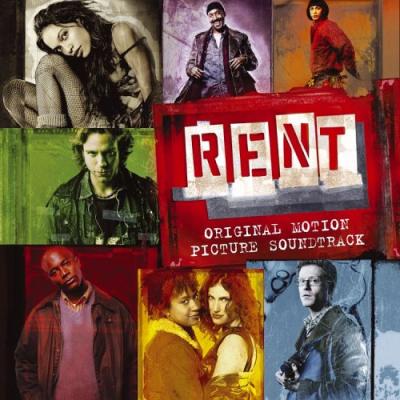
"Rent" Soundtrack Lyrics
Musical • 1996
Track Listing
Rent Cast
Rent Cast
Rent Cast
Rent Cast
Rent Cast
Rent Cast
Rent Cast
Rent Cast
Rent Cast
Rent Cast
Rent Cast
Rent Cast
Rent Cast
Rent Cast
Rent Cast
Rent Cast
Rent Cast
Rent Cast
Rent Cast
Rent Cast
Rent Cast
Rent Cast
Rent Cast
Rent Cast
Rent Cast
Rent Cast
Rent Cast
Rent Cast
Rent Cast
Rent Cast
Rent Cast
Rent Cast
Rent Cast
"RENT (Original Broadway Cast Recording, 1996)" – Album Guide to Tracks and Key Scenes
Overview
How do you measure a year — or a cast album that felt like an address to its own moment? Arrival — adaptation — rebellion — collapse: RENT drops us in Alphabet City, spins La Bohème into rock-opera vernacular, and turns diary scenes into choruses people wore on T-shirts. The 1996 Original Broadway Cast Recording (a complete, two-disc set) captures the show nearly end to end, so you hear the lives and the scaffolding that holds them together.
The sound is garage-gleam and downtown choir: guitar grit for squats and clubs; drum machines sneaking under live kit; piano and strings for the days that stick. “Seasons of Love” reframes time as tenderness; “One Song Glory” makes blocked creativity a prayer; “La Vie Bohème” is a manifesto in 6/8 and clatter. When intimacy narrows the room, the album hushes; when community widens it, the walls shake.
Distinctives matter. This is not a highlights LP — it’s the show’s spine, preserved. Dialogue snips, voicemail stingers, and traffic of motifs (“no day but today”) make the listen play like a night at the Nederlander with the best seats in the house.
Genres & themes in phases. Phase 1 (arrival): alt-rock pulse — hunger and hustle. Phase 2 (adaptation): club pop & ballads — found family hardens into promise. Phase 3 (rebellion): punk/funk pageant — protest becomes party and then creed. Phase 4 (collapse/acceptance): chamber pop & reprises — grief folds into grace.
How It Was Made
Origins. Music, lyrics, and book by Jonathan Larson, based on La Bohème. After its 1996 Off-Broadway bow at New York Theatre Workshop and Larson’s sudden passing the night before first preview, the show moved to Broadway’s Nederlander Theatre the same spring.
The album. DreamWorks released the two-disc Original Broadway Cast Recording on August 27, 1996. It was recorded at Sorcerer Sound, produced by Arif Mardin with music arranger Steve Skinner; a highlights disc (The Best of RENT) followed in 1999. The OBC closes with a studio rearrangement of “Seasons of Love” featuring Stevie Wonder.
Music team (stage). Arrangements by Steve Skinner; additional arrangements and musical supervision by Tim Weil; original concept and some lyric contributions by Billy Aronson. Orchestrations lean compact—keys, guitars, reeds, strings—so the pit sounds like a band that lives upstairs from the characters.

Tracks & Scenes
Note: Scene placements reflect the Broadway staging captured by the OBC; the album includes connective dialogue tags, but below focuses on musical numbers (not a full tracklist).
“Tune Up / Rent” — Mark, Roger, Company
Where it plays: Christmas Eve on Avenue B. Heat’s off, eviction looms, and the guitar riff becomes a rallying cry as Mark and Roger choose noise over panic.
Why it matters: Establishes the counter-anthem impulse: debt vs. dignity, shouted in harmony.
“One Song Glory” — Roger
Where it plays: Loft solitude. Roger stares down writer’s block and mortality, trying to trap a melody before time does.
Why it matters: Rock confessional as clock—his want song is a deadline.
“Light My Candle” — Mimi & Roger
Where it plays: A blown fuse, a knock on the loft door, and flirtation staged as search-and-rescue of a match.
Why it matters: Comic seduction with jagged edges; the album catches every smile in the dark.
“Today 4 U” — Angel (& friends)
Where it plays: Angel crashes in with drum-machine sass and a story so wicked it becomes legend by the second verse.
Why it matters: Club beat = heart beat; joy enters the room and the show changes temperature.
“Tango: Maureen” — Joanne & Mark
Where it plays: On the way to Maureen’s protest. Enemies-to-two-step; they roast the same woman and discover they’re both right.
Why it matters: Character comedy that sneaks in empathy—and perfect counterpoint.
“Out Tonight” → “Another Day” — Mimi; Roger & Ensemble
Where it plays: Mimi sells midnight as salvation; Roger answers with fear and a creed: “No day but today.”
Why it matters: Collision of coping styles; the motto escapes the duet and becomes community code.
“Will I?” — Company
Where it plays: Life Support circle. Simple canon, terrifying question—will I lose my dignity?
Why it matters: The album’s quietest avalanche.
“I’ll Cover You” — Angel & Collins
Where it plays: Street-corner vows turned into a skipping-stone duet.
Why it matters: Love as shelter; later, its reprise will break you.
“La Vie Bohème (A–B)” — Company
Where it plays: The Life Café explodes into a toast for every misfit present and not.
Why it matters: Inventory as identity; a table becomes a stage becomes a movement.
“Seasons of Love” — Company
Where it plays: Act II’s proscenium line—cast on the lip, counting minutes like prayers.
Why it matters: The show’s public square; the folk-gospel pivot that turned strangers into Rentheads.
“Take Me or Leave Me” — Maureen & Joanne
Where it plays: Lovers’ courtroom. Exhibit A: impossible artist; Exhibit B: impossible lawyer.
Why it matters: A breakup that slaps and sparkles; belt as arbitration.
“Without You” — Mimi (& Company montage)
Where it plays: Winter sunders the found family; time advances in hospital whites and unopened mail.
Why it matters: Pop-ballad lament that threads grief through everyday ritual.
“I’ll Cover You (Reprise)” — Collins
Where it plays: Funeral. A hymn from the same DNA as the earlier duet, now in a register that hollows the theater.
Why it matters: Love song, flipped to elegy—one of the great Broadway keystrokes of the ’90s.
“Finale B” — Company
Where it plays: The circle closes, not neatly but truthfully; the motto returns and means more.
Why it matters: Resolution without erasure. Community survives the calendar.
Notes & Trivia
- The OBC is a complete two-disc record, not a highlights sampler; a one-disc highlights album arrived in 1999.
- “Seasons of Love” closes the OBC with a studio rearrangement featuring Stevie Wonder on harmonica and ad-libs.
- Arrangement/orchestration credit backbone: Steve Skinner (arrangements), Tim Weil (additional arrangements & musical supervision).
- The stage production won the 1996 Tony for Best Musical and the Pulitzer Prize for Drama the same year.
- Rent: Filmed Live on Broadway (2008) and the 2005 film preserve later-era company performances; the OBC remains the reference blueprint.
Music–Story Links
Mottos become motifs. “No day but today” starts as defiance (“Another Day”) and returns as benediction (Finale B).
Duet → reprise → ritual. “I’ll Cover You” maps love as shelter; its reprise reframes the thesis through loss, deepening every earlier scene.
Public square moments. “Seasons of Love” and “La Vie Bohème” function as civic spaces where the story pauses to let the community define itself.
Private rooms, small bands. Sparse textures (“One Song Glory,” “Without You”) re-center character truth after party tracks blow off steam.
Reception & Quotes
The album became a 90s cast-recording landmark—charting, touring in glove compartments, and teaching a generation the math of a year. Critics called it urgent, hooky, and human. As album notes and histories recount, the OBC’s completeness helped RENT become lived-in even for listeners far from Broadway.
“Downtown grit wrapped around stadium-size feelings.” Cast-album roundups
“A community singing itself into existence.” Broadway histories
Interesting Facts
- The OBC was recorded at Sorcerer Sound; the release date was August 27, 1996.
- “Seasons of Love” became a cultural shorthand for AIDS remembrance events and year-in-review television moments.
- The music department’s compact orchestration helped regional productions keep the band intimate and portable.
- A 20th/25th anniversary wave (tour, live TV, revivals) sent listeners back to the OBC as the baseline.
- There’s also a full Rent film soundtrack (2005); useful for comparison, but the 1996 OBC sets the dialect.
Technical Info
- Title: RENT — Original Broadway Cast Recording
- Year: 1996 (released Aug 27, 1996)
- Type: Complete cast album (2×CD)
- Music/Lyrics/Book: Jonathan Larson
- Arrangements: Steve Skinner; Additional Arrangements & Musical Supervision: Tim Weil
- Label/Producers: DreamWorks Records; produced by Arif Mardin with Steve Skinner
- Recording: Sorcerer Sound, New York — early 1996
- Notable numbers (album highlights): “Rent,” “One Song Glory,” “Light My Candle,” “Today 4 U,” “La Vie Bohème (A–B),” “I’ll Cover You,” “Seasons of Love,” “Take Me or Leave Me,” “Without You,” “I’ll Cover You (Reprise),” “Finale B”
- Companion releases: The Best of RENT (1999 highlights); Rent: Original Motion Picture Soundtrack (2005)
- Availability: Streaming on major services; physical 2×CD widely reissued
Questions & Answers
- Is the 1996 album a full recording of the show?
- Yes — it’s a complete two-disc set with brief dialogue tags and the full musical sequence.
- Who handled arrangements and supervision?
- Steve Skinner arranged the score; Tim Weil provided additional arrangements and served as musical supervisor.
- Why is there a Stevie Wonder version of “Seasons of Love” on the OBC?
- The album closes with a studio rearrangement featuring Stevie Wonder—an extra cut unique to the release.
- How does the 2005 film soundtrack differ?
- Same songs in cinematic keys/edits with film cast; the OBC documents the original Broadway company and staging flow.
- Where can I license the stage show?
- Through Music Theatre International (MTI), which handles professional and amateur rights.
Canonical Entities & Relations
| Subject | Relation | Object |
|---|---|---|
| Jonathan Larson | wrote (music, lyrics, book) | RENT |
| DreamWorks Records | released | RENT — Original Broadway Cast Recording (1996) |
| Arif Mardin | produced | Original Broadway Cast Recording |
| Steve Skinner | arranged | RENT score (stage/album) |
| Tim Weil | provided additional arrangements & supervised music | RENT (Broadway) |
| Billy Aronson | originated concept & contributed additional lyrics | “Santa Fe,” “La Vie Bohème/I Should Tell You” |
| Nederlander Theatre | hosted | RENT (Broadway, 1996) |
| Music Theatre International (MTI) | licenses | RENT (stage) |
| New York Theatre Workshop | premiered | RENT (Off-Broadway, 1996) |
Sources: Wikipedia (musical & albums pages); IBDB entry; Discogs (OBC release details); MTI show page; KeyboardTEK (music team credits); YouTube trailers/performances for visual context.
Per the albums page, the OBC released August 27, 1996 on DreamWorks; as IBDB and KeyboardTEK list, arrangements are by Steve Skinner with Tim Weil as supervisor; according to the musical’s page, the show moved to Broadway in 1996 and won Tony & Pulitzer honors.
November, 19th 2025
A-Z Lyrics Universe
Cynthia Erivo Popular
Ariana Grande Horsepower
Post Malone Ain't No Love in Oklahoma
Luke Combs Good Riddance (Time of Your Life)
Green Day Bye Bye Bye
*NSYNC You're the One That I Wan
John Travolta & Olivia Newton-John I Always Wanted a Brother
Braelyn Rankins, Theo Somolu, Kelvin Harrison Jr. and Aaron Pierre The Power of Love
Frankie Goes to Hollywood Beyond
Auli’i Cravalho feat. Rachel House MORE ›