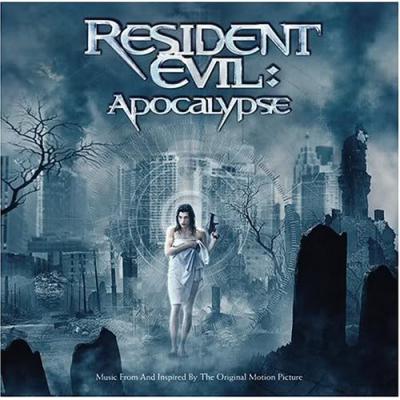
"Resident Evil: Apocalypse" Soundtrack Lyrics
Movie • 2004
Track Listing
Slipknot
The Used
The Cure
Lacuna Coil
A Perfect Circle
Killswitch Engage
Rammstein
DevilDriver
Cradle Of Filth
CKY
Deftones
H.I.M.
Demon Hunter
Thrice
36 Crazyfists
Cold
Rob Zombie
Massive Attack
"Resident Evil: Apocalypse (Music From and Inspired by the Original Motion Picture)" – Album Guide to Tracks and Key Scenes
Overview
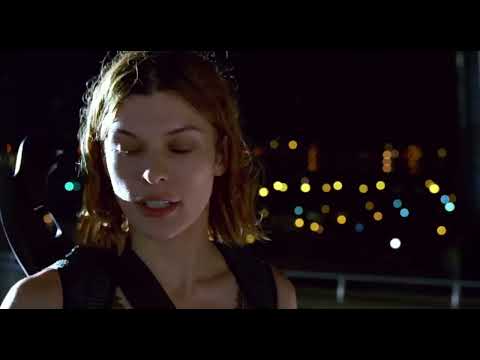
What if the end of the world sounded like a mixtape made in a moving Humvee? Arrival — adaptation — rebellion — collapse: Resident Evil: Apocalypse (2004) leans into post-2000 alt/metal and goth-rock for its song album while Jeff Danna’s orchestral score shoulders the on-screen dread. The contrast is deliberate — guitars for the street fights, orchestra for the chase and aftermath.
The various-artists disc on Roadrunner Records plays like a who’s-who of the era: Slipknot, The Used, The Cure, Lacuna Coil, A Perfect Circle (Renholdër mix), Killswitch Engage, Rammstein, Cradle of Filth, CKY, Deftones, HIM/Nightwish (regional variant), Demon Hunter, Thrice, 36 Crazyfists, Rob Zombie, Massive Attack. Meanwhile, Danna’s score (Varèse Sarabande) swaps the first film’s industrial churn for strings, brass, and percussion — a different kind of menace.
It works because the film’s arc is simple and brutal: city-wide outbreak, street-level survival, a Nemesis reckoning, and a nuclear goodbye. The album catches the swagger and the sting; the score catches the panic and the plan. According to AllMusic’s release notes, the compilation streeted late August 2004 with a healthy 76-minute runtime, while the score arrived as its own album with 18 cues.
Genres & themes in phases. Phase 1 (arrival): orchestral tension — sirens, cordons, evacuations. Phase 2 (adaptation): alt/metal & goth — convoy bravado and gallows humor. Phase 3 (rebellion): hard-hitting remixes — church, school, S.T.A.R.S. vs. Nemesis. Phase 4 (collapse/acceptance): end-credit anthems — grief processed at full volume.
How It Was Made
The split-release model. Roadrunner Records issued the Music From and Inspired by disc (songs + a film-tailored single) to pair with theatrical rollout; Varèse Sarabande released Jeff Danna’s Original Motion Picture Score on a separate album. Danna’s orchestral palette (London Philharmonia) was a tonal reset from the 2002 film’s industrial approach. As label and discography listings summarize, the song album also carried regional variations (HIM’s “Join Me in Death” vs. Nightwish’s “Nemo”).
Single & theme synergy. Killswitch Engage delivered “The End of Heartache (Resident Evil Version)” as the tie-in single — trimmed, radio-ready, and used as the first end-credits blast. Marketing splashed additional cuts (A Perfect Circle’s “The Outsider” mix; Slipknot’s “Vermilion”) across trailers and TV spots.

Tracks & Scenes
“The End of Heartache (Resident Evil Version)” — Killswitch Engage
Where it plays: First end-credits hit, immediately after the final image of the Raccoon City operation (non-diegetic).
Why it matters: The film’s de facto theme and breakout single — grief-anthem energy after two hours of attrition.
“Vermilion” — Slipknot
Where it plays: Prominent on the album; widely used across the film’s marketing cycle; kicks in during promo cuts featuring Nemesis and S.T.A.R.S.
Why it matters: Mood-setter for the franchise’s pivot from lab horror to city-war chaos.
“Swamped” — Lacuna Coil
Where it plays: Featured in film/soundtrack ecosystem during Raccoon City action; guitars and dual vocals underline street-level scrambles.
Why it matters: Gothic sheen meets bruiser pacing — a signature Apocalypse texture.
“The Outsider (Renholdër/Apocalypse Mix)” — A Perfect Circle
Where it plays: Album cut used in trailers/TV spots and franchise promotion; its surgical groove fits Umbrella’s cold calculus.
Why it matters: The series’ most durable remix motif — later reused around sequels.
“Nymphetamine” — Cradle of Filth
Where it plays: On the album; sync-adjacent to late-film momentum (montage-friendly pacing).
Why it matters: A theatrical goth pivot that mirrors the film’s escalation.
“Us or Them” — The Cure
Where it plays: Album highlight tied to city-collapse sequences and broadcast montages.
Why it matters: Post-punk unease for a moral no-win.
“Mein Teil” — Rammstein
Where it plays: Album feature; synced to campaign spots in some territories; industrial stomp that suits Nemesis imagery.
Why it matters: Heavy machinery, musically — the Umbrella vibe in four minutes.
“The Chauffeur” — Deftones (Duran Duran cover)
Where it plays: Album inclusion; used offscreen in the film’s music mix and tie-ins.
Why it matters: Dreamlike cool against ruin — an Apocalypse deep-cut mood.
“My Name Is Alice” — Jeff Danna (score)
Where it plays: Opening narration/recap. Alice lays out the Umbrella situation as tense strings and percussion establish the sequel’s urgency.
Why it matters: A new thesis statement for the series — orchestral, not industrial.
“Zombies in Church” — Jeff Danna (score)
Where it plays: The motorcycle-through-stained-glass fight; Jill and survivors regroup as Alice enters like a myth. Pounding low brass, cymbal shrapnel, and strings in overdrive.
Why it matters: The movie’s “we’re doing this” needle — pure kinetic writing.
“Search the School” — Jeff Danna (score)
Where it plays: Flashlight corridors, bone-dry hallways, a dog problem; orchestra ratchets tension beat-by-beat.
Why it matters: Classic survival-horror suspense, all in the writing and space.
“Alice Battles the Nemesis” — Jeff Danna (score)
Where it plays: S.T.A.R.S. square-off and the street duel with Nemesis; strings and drums punch like a boss fight timer.
Why it matters: The franchise’s action grammar, upgraded.
Notes & Trivia
- Jeff Danna composed the score; the album release credits Varèse Sarabande and features 18 cues (approx. 39 minutes).
- The Roadrunner song album clocks ~76 minutes and streeted August 31, 2004 in North America.
- “The End of Heartache (Resident Evil Version)” served as end-credits lead and the film’s promo single; it earned Killswitch Engage a Grammy nomination (Best Metal Performance).
- European/Japanese pressings swap HIM’s “Join Me in Death” for Nightwish’s “Nemo.”
- Renholdër’s A Perfect Circle remix became a recurring franchise trailer color in later entries.
Music–Story Links
City-scale chaos vs. personal stakes. Big-canvas songs (Slipknot, The Cure, Rammstein) sit over wides and montages; Danna’s cues snap to POV for church, school, and Nemesis fights.
Anthem → aftermath. The Killswitch single lands right where the plot can’t comfort anyone; the credit cue becomes the catharsis the characters don’t get.
Remix as corporate voice. The A Perfect Circle Renholdër mix mirrors Umbrella’s clinical brutality — controlled, surgical, relentless.
Reception & Quotes
Critics were cool on the movie but warmer on the soundtrack’s punch and the score’s clarity. According to AllMusic’s listings, the song set functions as a robust alt/metal snapshot, while reviewers singled out Danna for tightening the franchise’s suspense language.
“A convoy-ready playlist with an actual emotional coda.” Album roundups
“Danna trades clank for cut — strings that sprint, brass that bruises.” Score notes
Interesting Facts
- The AllMusic entry pegs the song album’s catalog as Roadrunner #618242 with an August 31, 2004 street date.
- Soundtrack Q&A logs from the release week confirm “The End of Heartache” as the first credits song.
- Slipknot’s “Vermilion” and APC’s “The Outsider” remix were heavily used in trailers/TV spots.
- Score cue titles map cleanly to big beats: “My Name Is Alice,” “Zombies in Church,” “Search the School,” “Alice Battles the Nemesis.”
- Some regional CDs replace HIM’s track with Nightwish’s “Nemo,” a fan-favorite swap in Europe/Japan.
Technical Info
- Title: Resident Evil: Apocalypse — Music From and Inspired by the Original Motion Picture (songs); Resident Evil: Apocalypse — Original Motion Picture Score (score)
- Year: 2004
- Type: Various-artists compilation (songs) + separate orchestral score album
- Composer (score): Jeff Danna
- Labels: Roadrunner Records (songs); Varèse Sarabande (score)
- Representative placements: Killswitch Engage — “The End of Heartache (Resident Evil Version)” (first end-credits hit); Slipknot — “Vermilion” (album/marketing); A Perfect Circle — “The Outsider (Renholdër Mix)” (album/promos); Lacuna Coil — “Swamped” (film/soundtrack feature); Cradle of Filth — “Nymphetamine” (album feature); Jeff Danna — “My Name Is Alice,” “Zombies in Church,” “Search the School,” “Alice Battles the Nemesis” (set pieces)
- Availability: Streaming (score & song set via major platforms); 2004 CDs (Roadrunner; Varèse Sarabande)
Questions & Answers
- Who scored the film?
- Jeff Danna — his orchestral score (18 cues) was issued separately by Varèse Sarabande.
- What song hits first in the end credits?
- “The End of Heartache (Resident Evil Version)” by Killswitch Engage.
- Is every song on the album used in the movie?
- No — it’s “music from and inspired by.” Several cuts are album/promotional features rather than on-screen needle-drops.
- Why do some editions list Nightwish instead of HIM?
- Regional variants: European/Japanese pressings often include Nightwish’s “Nemo” where North American discs carry HIM’s “Join Me in Death.”
- What’s different about this score compared with the 2002 film?
- Less industrial clank, more orchestral thrust — Danna’s writing emphasizes strings, brass, and tight percussion.
Canonical Entities & Relations
| Subject | Relation | Object |
|---|---|---|
| Alexander Witt | directed | Resident Evil: Apocalypse (2004) |
| Paul W. S. Anderson | wrote | Resident Evil: Apocalypse (screenplay) |
| Jeff Danna | composed score for | Resident Evil: Apocalypse |
| Varèse Sarabande | released | Resident Evil: Apocalypse — Original Motion Picture Score (2004) |
| Roadrunner Records | released | Resident Evil: Apocalypse — Music From and Inspired by the Original Motion Picture (2004) |
| Killswitch Engage | performed | “The End of Heartache (Resident Evil Version)” |
| Slipknot | performed | “Vermilion” (album/marketing) |
| A Perfect Circle | performed | “The Outsider (Renholdër/Apocalypse Mix)” |
| Lacuna Coil | performed | “Swamped” |
| Cradle of Filth | performed | “Nymphetamine” |
| Rammstein | performed | “Mein Teil” |
| Deftones | performed | “The Chauffeur” (cover) |
Sources: AllMusic (album page & release data); SoundtrackINFO (tracklist & end-credits Q&A); Discogs (compilation & score release metadata); Wikipedia/film & artist pages (composer credit, song single context); Resident Evil Fandom (regional track variants, promo usage); Apple Music & Spotify (score availability); official trailers.
According to AllMusic, the Roadrunner compilation released August 31, 2004 with a 76-minute runtime; per SoundtrackINFO’s Q&A, Killswitch Engage’s “The End of Heartache” is the first end-credits cue; as Discogs and Apple listings confirm, Jeff Danna’s score appeared separately on Varèse Sarabande; and fan/label discographies note regional swaps (HIM ↔ Nightwish) and Renholdër’s enduring A Perfect Circle remix.
November, 19th 2025
A-Z Lyrics Universe
Cynthia Erivo Popular
Ariana Grande Horsepower
Post Malone Ain't No Love in Oklahoma
Luke Combs Good Riddance (Time of Your Life)
Green Day Bye Bye Bye
*NSYNC You're the One That I Wan
John Travolta & Olivia Newton-John I Always Wanted a Brother
Braelyn Rankins, Theo Somolu, Kelvin Harrison Jr. and Aaron Pierre The Power of Love
Frankie Goes to Hollywood Beyond
Auli’i Cravalho feat. Rachel House MORE ›