Soundtracks:  A B C D E F G H I J K L M N O P Q R S T U V W X Y Z #


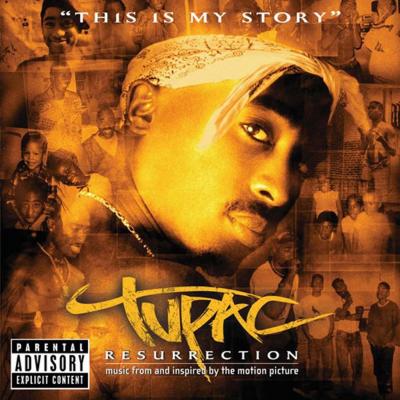
Resurrection Album Cover

"Resurrection" Soundtrack Lyrics

Movie • 2003

Track Listing


"Tupac: Resurrection (Music From and Inspired by the Motion Picture)" – Album Guide to Tracks and Key Scenes

Tupac: Resurrection 2003 official trailer thumbnail with archival footage of Tupac Shakur
Tupac: Resurrection — Official Trailer frames the album’s narrative spine, 2003

Overview

How do you soundtrack a voice that already narrates itself? The Tupac: Resurrection album answers by folding diary, documentary, and posthumous production into one arc — arrival → adaptation → rebellion → collapse — then refracts it through radio anthems and intimate confessions.

The 2003 documentary builds from archival tapes and interviews; the companion album threads classic 2Pac cuts with reconstructed songs that place his verses in new frames. The listening journey moves from early hustle to firebrand advocacy, from street reportage to spiritual introspection, closing on a legacy argument he practically delivers himself.

Distinctive angle: these aren’t just “greatest hits.” Studio curators recontextualize material so the film’s chapters feel scored from within. “Runnin’ (Dying to Live)” flips Edgar Winter’s lament into a eulogy you can’t quite stop nodding to, while “One Day at a Time (Em’s Version)” bends time — yesterday’s bars, today’s sonics. According to AllMusic, it’s the rare posthumous set that feels cohesive rather than stitched together.

Genres & themes by phase: Bay/West Coast grit — ambition and survival; G-funk & gangsta confessionals — armor and contradiction; political cuts — outrage with strategy; elegiac reflections — grief, faith, legacy.

How It Was Made

The album was released by Amaru Entertainment and Interscope in November 2003. Executive vision came via Afeni Shakur and (on key tracks) Eminem, who sifted vocals from archival sessions to build new productions beside familiar album cuts. The producer slate spans Easy Mo Bee, Johnny “J”, Red Spyda, Shock G, Stretch, and more — a compressed history of 2Pac’s sonic homes.

Editorially, the soundtrack follows the documentary’s internal narration: 2Pac tells 2Pac’s story. Cue choices mirror the film’s chapters, while several tracks appear only on the album (not in the film), a common “music inspired by” approach that widens the portrait. As per Billboard tallies, the set debuted at No. 2 on the Billboard 200 with a 420K first week, later certified platinum.

Trailer still of Tupac Shakur speaking directly to camera, mirroring the album’s first-person narration
First-person authorship — the music mirrors the film’s from-the-source narration

Tracks & Scenes

“Runnin’ (Dying to Live)” — 2Pac feat. The Notorious B.I.G. (prod. Eminem)
Where it plays: Late-film montage of headlines, interviews, and city fly-bys; the chorus lifts archival images into a requiem with pulse. The cut often underscores reflections on violence and rivalry, then fades to voiceover fragments. Non-diegetic, montage use.
Why it matters: A dialogue across time — Biggie and Pac share a stage they couldn’t in life; Winter’s sample turns grief into witness.

“One Day at a Time (Em’s Version)” — 2Pac feat. Eminem & Outlawz
Where it plays: Over recovery beats — family, fans, and philosophy. Quick-cut street footage interleaves with Pac’s advice-laced bars, turning the track into moving liner notes. Non-diegetic.
Why it matters: Frames 2Pac the counselor, not just the combatant; a thesis on endurance and focus.

“Holler If Ya Hear Me” — 2Pac
Where it plays: Activist segments: rallies, podiums, neighborhood shots. The hook hits like a chant, intercut with Pac’s commentary about representation and pressure. Non-diegetic into source audio.
Why it matters: The political backbone — anger sharpened into an organizing tool.

“Keep Ya Head Up” — 2Pac
Where it plays: Community portraits — mothers, block corners, childhood snapshots. The song softens pace and opens space for empathy before the narrative accelerates again.
Why it matters: Offsets the film’s harder frames with care; the album’s moral center.

“Starin’ Through My Rear View” — 2Pac
Where it plays: Nocturnal cruising and late-night interviews. The imagery narrows — car interiors, glass reflections — as Pac narrates paranoia and perspective. Non-diegetic layer with ambient city.
Why it matters: Places the audience in the headspace of fame under threat.

“The Realist Killaz” — 2Pac feat. 50 Cent
Where it plays: Album-only heat; not a featured film cue. Designed like a radio moment that extends the documentary’s present-tense conversation into the charts.
Why it matters: Shows how the project bridges eras — Pac’s archive meets 2003’s dominant voices.

“Ghost” — 2Pac
Where it plays: Album-only. A reconstructed cut that thematically locks to the film’s motif of vanishing and myth-making.
Why it matters: Demonstrates the curators’ light touch: new frame, intact voice.

Trailer & promo cues: The official trailer leans on percussion-forward edits, voiceover, and hook snippets, previewing how the movie/album braid interviews and anthems.

Trailer frame showing fast-cut montage of headlines and performances set to Runnin’ (Dying to Live)
Montage grammar — hooks ride across archival clips to stitch chapters together

Notes & Trivia

  • The soundtrack mixes catalog classics with newly produced tracks built from unreleased verses.
  • Some album inclusions don’t appear in the film — a deliberate “music from and inspired by” model.
  • “Runnin’ (Dying to Live)” samples Edgar Winter’s “Dying to Live,” a 1971 deep cut repurposed into a gospel-like refrain.
  • The album entered the Billboard 200 at No. 2 behind Jay-Z’s The Black Album.
  • Archival narration from 2Pac guides both film and album sequencing — he’s often the literal storyteller.

Music–Story Links

When the documentary confronts beef-era chaos, “Runnin’” reframes confrontation as elegy, letting two rivals coexist in memory. “Holler If Ya Hear Me” fires under images of protest and interviews, translating policy into pulse. “Keep Ya Head Up” counters with tenderness, so the next surge of anger lands with context. And “Starin’ Through My Rear View” pulls us into the anxiety of fame — the camera sits in the passenger seat while the lyric checks every mirror.

Reception & Quotes

Contemporary reviews praised the cohesion of the set and the emotional punch of its singles. According to Rolling Stone, the album purposefully bundles catalog cuts with newly built songs to serve the film’s narrative through-line.

“A diamond in the rough… an affective listening experience that avoids the usual posthumous pitfalls.” — AllMusic
“Catalog classics and new constructions, all bent toward story.” — Rolling Stone
Trailer image of Tupac on stage, spotlighted, echoing the album’s live-wire energy
Voice as compass — performance clips anchor the film and the album

Interesting Facts

  • Lead single “Runnin’ (Dying to Live)” became a Top 20 Hot 100 hit in the U.S.
  • Afeni Shakur’s oversight ensured the project balanced legacy protection with new audience reach.
  • Eminem’s involvement included production and executive input on key tracks.
  • Year-end tallies later placed the album at No. 1 on the 2004 Billboard Soundtrack Albums chart.
  • Official digital editions remain available globally; physical pressings include CD and vinyl variants.

Technical Info

  • Title: Tupac: Resurrection (Music From and Inspired by the Motion Picture)
  • Year: 2003
  • Type: Documentary soundtrack/compilation
  • Key producers: Afeni Shakur (executive), Eminem (producer/executive on select tracks), Easy Mo Bee, Johnny “J”, Red Spyda, Shock G, Stretch
  • Label: Amaru Entertainment / Interscope Records
  • Release: November 11, 2003
  • Availability: Streaming on major platforms; original CD/vinyl pressings widely circulated
  • Chart & sales notes: Debuted No. 2 on Billboard 200 (~420K first week); RIAA platinum certification; “Runnin’” peaked at No. 19 Hot 100
  • Notable placements: “Runnin’ (Dying to Live)” (montage/elegy); “One Day at a Time (Em’s Version)” (resilience passages); “Holler If Ya Hear Me” (activism sequences); “Keep Ya Head Up” (community interludes)

Questions & Answers

Is this a “best of” or a true soundtrack?
Both — it blends classics with newly assembled productions to align with the film’s chaptered narrative.
Which single defined the release?
“Runnin’ (Dying to Live),” a Top 20 hit that pairs 2Pac and The Notorious B.I.G. via archival verses.
Do all album songs appear in the movie?
No. A handful are album-only; the film uses a tighter set to serve scene flow.
What role did Eminem play?
He produced key tracks and helped steer the sound of reconstructed cuts while honoring 2Pac’s original vocals.
Where can I hear it now?
It’s on major streaming platforms; physical editions are common on the resale market.

Canonical Entities & Relations

SubjectVerbObject
Lauren LazindirectedTupac: Resurrection (2003) documentary
2Pac (Tupac Shakur)isprimary artist of soundtrack
Afeni Shakurexecutive-producedsoundtrack
Eminemproduced“Runnin’ (Dying to Live)” and other tracks
Amaru Entertainmentreleasedsoundtrack with Interscope Records
The Notorious B.I.G.featured on“Runnin’ (Dying to Live)”
Edgar Winterwrote“Dying to Live” (sampled on “Runnin’”)

Sources: Wikipedia album entry; AllMusic review; Rolling Stone coverage; Billboard charts/reporting; IMDb soundtrack page; official trailer channel. As per label listings and chart archives.

November, 19th 2025


A-Z Lyrics Universe

Lyrics / song texts are property and copyright of their owners and provided for educational purposes only.