Soundtracks:  A B C D E F G H I J K L M N O P Q R S T U V W X Y Z #


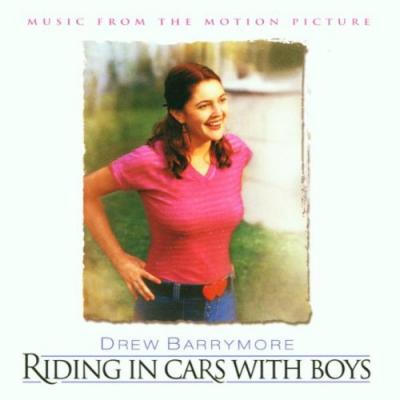
Riding in Cars With Boys Album Cover

"Riding in Cars With Boys" Soundtrack Lyrics

Movie • 2001

Track Listing


"Riding in Cars With Boys (Music From the Motion Picture)" – Album Guide to Tracks and Key Scenes

Riding in Cars With Boys 2001 trailer frame with Drew Barrymore and Steve Zahn in a late-60s sedan
Riding in Cars With Boys — Trailer teases a jukebox journey from 1961 to the mid-1980s

Overview

How do you soundtrack a life that keeps changing stations? Riding in Cars With Boys (2001) spins the dial from doo-wop tenderness to 80s neon — arrival → adaptation → rebellion → collapse — tracing Beverly Donofrio’s journey (teen mom to forty-something writer) with radio staples that mark time better than any calendar.

The album and film lean on period hits: Everly Brothers sweetness, Sonny & Cher romance, Brill Building sparkle, Tex-Mex stomp, and 80s power-pop, with a final coda of original score. As the story slides from 1961 into the 70s and mid-80s, the cues carry us from gym-floor slow dances to roadside reckonings and, finally, a kind of hard-earned peace.

Distinctive touch: this is a curation-first soundtrack. Instead of wall-to-wall score, the movie uses needle-drops the way memory works — a song summons a room, a dress, a feeling. The commercial album gathers 13 cuts for a concise listen; the film itself features additional songs that don’t appear on the CD.

Genres & themes by phase: early-60s harmony pop — innocence & first vows; girl-group/Brill building — plans & peer pressure; garage & Tex-Mex — grit & bad choices; 70s AM gold — coping; 80s radio — reckoning & relief.

How It Was Made

Supervision & production: The soundtrack package credits a seasoned team: executive music producers include R.A. “Bob” Badami and Elliot Lurie, with Glen Brunman and Lia Vollack steering the commercial release; Lynn Geller is credited on the film’s music team, with music editors shaping song/scene fits. The retail album arrived on Columbia/Sony in October 2001, timed to the film’s fall run.

Score presence: While pop songs lead, the picture closes with a brief original score cue by Hans Zimmer & Heitor Pereira, a reflective exhale after decades of radio memories.

Trailer still showing period costumes and cars, echoing the soundtrack’s decade-hopping playlist
Decade-hopping by design — music as a time machine

Tracks & Scenes

“All I Have to Do Is Dream” — The Everly Brothers
Where it plays: Early-60s montage and title-era setups: Bev’s world still fits inside a daydream; the harmony glows like gymnasium lights. Non-diegetic.
Why it matters: Establishes innocence and the film’s memory-album tone.

“I Got You Babe” — Sonny & Cher
Where it plays: Teen romance sequences around 1965; the lyric lands like a pact the couple can’t keep. Non-diegetic, with scene-to-scene carry.
Why it matters: The era’s promise in one chorus — and the movie’s first big irony.

“One Fine Day” — The Chiffons
Where it plays: Girlfriends, plans, and the future arranged like magazine clippings; chatter overlaps the hook. Non-diegetic.
Why it matters: A glittering wish — scaled to teenage bravado.

“She’s About a Mover” — Sir Douglas Quintet
Where it plays: Post-honeymoon reality checks and budget scrambles; that organ riff turns optimism into hustle. Non-diegetic montage.
Why it matters: You can hear responsibility arriving.

“Down in the Boondocks” — Billy Joe Royal
Where it plays: Blue-collar misadventures and class friction; the camera lingers on front porches and pay phones. Non-diegetic.
Why it matters: Location and class in three minutes — the song does heavy lifting.

“End of the World” — Skeeter Davis
Where it plays: After a fight that seems to break more than it fixes; the vocal floats above damage. Non-diegetic.
Why it matters: Turns melodrama into mood — the scene breathes.

“Girls Just Want to Have Fun” — Cyndi Lauper
Where it plays: Early-80s beat where the story briefly loosens — kitchen dancing, bad decisions feel funny again. Non-diegetic.
Why it matters: Nostalgia with a wink — a reset before truth catches up.

“Rebel Yell” — Billy Idol
Where it plays: Bar/club energy in the 80s timeline; attitude masks fatigue. Non-diegetic.
Why it matters: Bad-idea adrenaline fits the characters’ coping strategies.

“Dominick the Donkey (The Italian Christmas Donkey)” — Lou Monte
Where it plays: A holiday beat among family chaos; novelty cheer cuts through heavier news. Source-like needle-drop.
Why it matters: Cultural specificity, and a needed laugh.

“If I Could Be You” — Hans Zimmer & Heitor Pereira
Where it plays: Late-film reflection/credits — strings, a soft guitar figure, and air. Non-diegetic, end-title-leaning.
Why it matters: A small but essential breath after decades of jukebox storytelling.

Trailer frame of 70s wardrobe and pay phones underscored by AM-gold style cues
The needle-drops carry place, class, and time — not just vibes

Notes & Trivia

  • The retail album features 13 tracks (~43 minutes) and was issued October 16, 2001 on Columbia/Sony.
  • Several songs heard in the film do not appear on the CD (e.g., “Rebel Yell,” “Dominick the Donkey”) — a classic film-vs-album split.
  • Music leadership spans Bob Badami and Elliot Lurie on the film side, with Glen Brunman/Lia Vollack handling soundtrack executive roles.
  • Zimmer & Pereira receive an end-title credit for a short original piece rather than a full score presentation.
  • The story’s timeline (1961–1986) lets the soundtrack function as a pocket history of American radio.

Music–Story Links

When Bev and Ray first click, “I Got You Babe” plays the fantasy straight — then later reads like a dare. “Down in the Boondocks” reframes romance as logistics, while Sir Douglas Quintet’s organ riff busies the frame with “how we’re gonna make it” energy. By the time the 80s arrive, “Girls Just Want to Have Fun” and “Rebel Yell” feel like costume changes that only partially hide the bruise. Zimmer/Pereira’s coda admits what the pop never said aloud: growing up hurts, and it’s okay to come up for air.

Reception & Quotes

Reviewers pegged the soundtrack as a smart, radio-friendly spine for Penny Marshall’s period dramedy, with the selections doing subtle biographical work. Album guides called the CD a tidy, time-capsule set, even if favorite film-only drops were missing from the disc.

“A mixtape memoir — the hits tell the story without preaching.” — Album round-up
“The radio does the remembering while Barrymore carries the ache.” — Critic’s capsule
Trailer image of Bev driving at night, dashboard glow matching the soundtrack’s bittersweet tone
Bittersweet by design — harmony pop to hard truths

Interesting Facts

  • The album sequencing runs chronologically enough to feel like a life; the film uses extra songs to stitch scenes tighter.
  • Elliot Lurie (of Looking Glass) is among the film’s music executives — a pop songwriter helping curate other pop songwriters.
  • Yes, that’s Lou Monte’s “Dominick the Donkey” — a deep-cut holiday needle-drop that instantly dates a family scene.
  • Because the narrative spans 1961 to 1986, you’ll hear doo-wop, Brill Building, garage-rock, countrypolitan, and glossy 80s radio in one sitting.
  • The CD art credits Columbia/Sony; retail listings show U.S. catalog details and international pressings.

Technical Info

  • Title: Riding in Cars With Boys (Music From the Motion Picture)
  • Year: 2001
  • Type: Various-artists compilation with a short original score cue
  • Music execs (select): R.A. “Bob” Badami; Elliot Lurie; Glen Brunman; Lia Vollack; Lynn Geller (music dept.)
  • Label: Columbia / Sony Music Soundtrax
  • Album highlights: “All I Have to Do Is Dream” (The Everly Brothers); “I Got You Babe” (Sonny & Cher); “One Fine Day” (The Chiffons); “She’s About a Mover” (Sir Douglas Quintet); “Down in the Boondocks” (Billy Joe Royal); “End of the World” (Skeeter Davis); “Girls Just Want to Have Fun” (Cyndi Lauper); Zimmer & Pereira end-title
  • Also heard in film (not on CD): “Rebel Yell” (Billy Idol); “Dominick the Donkey” (Lou Monte) — and additional period cuts
  • Scope of story: The film’s timeline runs 1961–1986 (Drew Barrymore, Steve Zahn; dir. Penny Marshall)
  • Availability: Album streaming on major platforms; original U.S. CD issued October 16, 2001

Questions & Answers

Is there much original score?
No — the film is song-led. A short end-title by Hans Zimmer & Heitor Pereira provides the main score moment.
Why are some fan-favorite cues missing from the CD?
Licensing and album flow. The commercial disc is a 13-track snapshot; several in-film songs were cleared for picture only.
Does the album match the movie’s chronology?
Close enough to feel like it. Early tracks cluster in the 60s, with 70s/80s colors appearing late.
Who handled the music side for the film?
Music executives include Bob Badami and Elliot Lurie on the film, with Glen Brunman and Lia Vollack on the soundtrack release.
What years does the story cover?
From 1961 to 1986 — the soundtrack mirrors that span with era-specific picks.

Canonical Entities & Relations

SubjectVerbObject
Penny MarshalldirectedRiding in Cars With Boys (2001)
Beverly Donofriowrotememoir Riding in Cars with Boys (source)
R.A. “Bob” Badamiexecutive-producedfilm music
Elliot Lurieexecutive-producedfilm music
Glen Brunmanexecutive-producedsoundtrack album
Lia Vollackexecutive-producedsoundtrack album
Hans Zimmer & Heitor Pereiracomposedend-title cue
Columbia / Sony Musicreleasedthe soundtrack album
The Everly Brothersperformed“All I Have to Do Is Dream”
Sonny & Cherperformed“I Got You Babe”
Cyndi Lauperperformed“Girls Just Want to Have Fun”

Sources: Apple Music album page (release/date/length); AllMusic album entry; Discogs credits (executive producers & label); SoundtrackCollector & SoundtrackINFO track listings; IMDb soundtrack page (film-only songs and deep cuts); IMDb/Wikipedia film entries for timeline and credits.

November, 19th 2025


A-Z Lyrics Universe

Lyrics / song texts are property and copyright of their owners and provided for educational purposes only.