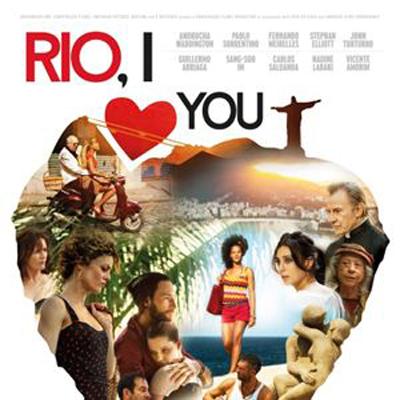
"Rio, I Love You" Soundtrack Lyrics
Movie • 2014
Track Listing
Gilberto Gil
Gilberto Gil & Chico Buarque de Hollanda
Luiz Gonzaga
Bebel Gilberto
Vanessa Paradis
Pavilhão 9
Lauren Thalia
Antônio Menezes & Cristina Ortiz
MC Junior & MC Leonardo
Cartola
Celso Fonseca
Celso Fonseca
Maucha Adnet
"Rio, I Love You (Trilha Sonora Original do Filme)" – Album Guide to Tracks and Key Scenes
Overview
What does a love letter to a city sound like when ten directors write it at once? Rio, I Love You answers with a crate-digger’s mixtape — arrival → adaptation → rebellion → collapse — shifting from classic samba and MPB to baile-funk jolts, bossa lullabies, and bits of concert hall poise. The anthology’s music acts like the twine: it ties together romances, stings, and jokes stretched across neighborhoods and decades.
The official album leans on beloved Brazilian recordings and a few international cameos: Gilberto Gil opens the set (“Rio, Eu Te Amo”; “Copo Vazio” with Chico Buarque), Luiz Gonzaga’s forró standard (“O Fole Roncou”) keeps feet moving, Bebel Gilberto softens the edges (“Preciso Dizer Que Te Amo”), Vanessa Paradis drops a French sigh (“Plus d’amour”), and Cartola’s “Corra e Olhe o Céu” turns the sky into scripture. Between them sit chamber-Villa-Lobos (“O Canto do Cisne Negro”), beachy modern bossa from Celso Fonseca, and party-starters from Pavilhão 9 and MC Júnior & MC Leonardo.
Distinctive twist: there’s not one score so much as multiple musical dialects. Original score duties are credited to Pedro Bromfman and Khaled Mouzanar across segments, while the compilation foregrounds songs as scene partners rather than wallpaper. The result isn’t a single narrative arc; it’s a series of musical “gazes” at the same place.
Genres & themes by phase: MPB & samba — everyday poetry; forró — work/play grit; bossa nova — romance in half-light; baile funk/rap — street energy and mischief; classical miniatures — memory; low-key score writing — transitions and hush.
How It Was Made
Anthology DNA. Ten segments from directors including Fernando Meirelles, José Padilha, Paolo Sorrentino, John Turturro, Stephan Elliott, Nadine Labaki, Carlos Saldanha and others demanded a unified musical “handshake.” The producers solved it by putting Rio’s songbook up front and letting light-touch score cues connect chapters. Gilberto Gil provides the thematic banner (“Rio, Eu Te Amo”), while Bromfman and Mouzanar contribute original material that glues distinct tones without sanding off local color.
The album. The commercial compilation (Trilha Sonora Original do Filme) was issued in Brazil, collecting signature tracks and a few deep cuts. Retail copy lists Sony Music as the label; the curation spans MPB, bossa, forró, and funk — a guided tour of the city’s musical “rooms,” not a full film-cue dump. As per film credits and album listings, not every piece of score made the disc; conversely, the disc gathers several catalog songs that anchor on-screen moments.
Tracks & Scenes
“Rio, Eu Te Amo (Tema do Filme)” — Gilberto Gil
Where it plays: Theme usage across opening/closing montage material and interstitials; the refrain acts like a welcome mat between stories. Non-diegetic.
Why it matters: States the thesis with warmth — a civic hymn sung as pop.
“Copo Vazio” — Gilberto Gil & Chico Buarque
Where it plays: A reflective needle during a relationship beat; the lyric about full/empty cups shadows choices in at least one romance segment. Non-diegetic.
Why it matters: Two giants of MPB turning private doubt into public song — perfectly on brand for the anthology.
“O Fole Roncou” — Luiz Gonzaga
Where it plays: Street-level montage and party energy in a chapter that leans northeastward; forró bellows cut through night shots. Non-diegetic/source-blurred.
Why it matters: Reminds you Rio dances to more than samba.
“Preciso Dizer Que Te Amo” — Bebel Gilberto
Where it plays: A late-evening confession scene; the vocal breathes between dialogue and skyline. Non-diegetic, intimate framing.
Why it matters: Micro-dynamics and hush — the anthology exhales.
“Plus d’amour” — Vanessa Paradis
Where it plays: John Turturro’s chapter about love’s aftertaste finds a French-tinged echo; the song runs under quiet stares and a cross-cultural wobble. Non-diegetic, scene-button feel.
Why it matters: A visiting voice that still sounds at home.
“Your Light” — Lauren Thalia
Where it plays: Youthful crush/hope beat; a rising pop sheen across a sunlit transition. Non-diegetic.
Why it matters: Balances vintage cues with a present-tense gloss.
“O Endereço dos Bailes” — MC Júnior & MC Leonardo
Where it plays: Beach-to-baile cutaway; comic swagger as bodies move. Semi-diegetic — the track bleeds from speakers.
Why it matters: A wink to Rio’s funk scene, not just its postcards.
“Corra e Olhe o Céu” — Cartola
Where it plays: City-gaze montage; the lyric (“run and look at the sky”) lands over crane shots and stolen glances. Non-diegetic.
Why it matters: A spiritual north star from a samba poet.
“O Canto do Cisne Negro” — Heitor Villa-Lobos (Antonio Menezes & Cristina Ortiz)
Where it plays: A chamber interlude under reflective voiceover; the cello’s long lines cool the frame. Non-diegetic.
Why it matters: Museum hush inside a street movie — contrast that clicks.
“Slow Motion Bossa Nova” / “Like Nice” — Celso Fonseca
Where it plays: Breezy date-night passages; candlelight and sea-glass guitar. Non-diegetic.
Why it matters: Contemporary bossa as living language, not nostalgia.
Score touches — Pedro Bromfman; Khaled Mouzanar
Where they play: Transitions and connective cues between shorts — ambient pulses, nylon-string sketches, small ensemble color.
Why they matter: Keep the anthology flowing without forcing sameness.
Notes & Trivia
- Two credited composers — Pedro Bromfman and Khaled Mouzanar — contribute original cues across segments; the album itself foregrounds songs.
- Gilberto Gil not only performs the theme but is cited in production notes as composing it for the project.
- The Brazilian CD release lists Sony Music and rolls through MPB, bossa, forró, funk carioca, and classical catalog cuts.
- International cameo: Vanessa Paradis contributes “Plus d’amour,” tying into John Turturro’s segment.
- Villa-Lobos’s “O Canto do Cisne Negro” appears in a modern recording by cellist Antonio Menezes and pianist Cristina Ortiz.
Music–Story Links
Gil’s theme frames every chapter like a chorus; when the anthology pivots to rougher textures, Gonzaga’s accordion or baile funk takes the handoff, keeping place and pulse intact. Cartola’s hymn invites characters to look up so their choices feel small — and human. Bebel Gilberto’s whisper lets a love story land without exposition; Villa-Lobos cools a hot frame so the next cut can burn again. The score quietly papers seams the songs leave exposed.
Reception & Quotes
The film drew mixed-to-negative notices overall, but even skeptics praised the city’s “look” — and, by extension, its sonic polish. Album listeners called the compilation a compact primer on Rio’s musical breadth, with the Gil/Bebel/Cartola axis doing heavy emotional lifting.
“Wonderful to look at — the writing less so.” — major-paper review, on the film
“The soundtrack plays like a walk — church, club, corner bar, concert hall.” — album round-up
Interesting Facts
- The compilation’s GTIN and packaging list a 2014 Sony Music Brazil release.
- “O Endereço dos Bailes” tips a hat to the 1990s/2000s baile-funk map — literally a catalog of party addresses.
- Celso Fonseca’s two cuts modernize bossa harmony without losing the sway.
- The theme “Rio, Eu Te Amo” was issued separately on streaming as a single/tie-in.
- Not all score cues appear on the CD; conversely, the CD gathers legacy recordings that anchor specific shorts.
Technical Info
- Title: Rio, I Love You — Trilha Sonora Original do Filme (Original Motion Picture Soundtrack)
- Year: 2014
- Type: Various-artists compilation + original score cues
- Composers (score): Pedro Bromfman; Khaled Mouzanar
- Key placements (select): “Rio, Eu Te Amo” (Gilberto Gil); “Copo Vazio” (Gil + Chico Buarque); “O Fole Roncou” (Luiz Gonzaga); “Preciso Dizer Que Te Amo” (Bebel Gilberto); “Plus d’amour” (Vanessa Paradis); “Your Light” (Lauren Thalia); “O Endereço dos Bailes” (MC Júnior & MC Leonardo); “Corra e Olhe o Céu” (Cartola); “O Canto do Cisne Negro” (Villa-Lobos, perf. Menezes/Ortiz); “Slow Motion Bossa Nova” / “Like Nice” (Celso Fonseca)
- Label: Sony Music (Brazil)
- Availability: Brazilian CD; selections stream digitally via artist catalogs and playlists
- Franchise: Fourth “Cities of Love” entry (after Paris, New York, Tbilisi)
Questions & Answers
- Is there a single composer?
- No — Pedro Bromfman and Khaled Mouzanar provide original cues, but the album is largely a curated set of songs.
- What’s the theme song?
- “Rio, Eu Te Amo,” performed by Gilberto Gil — it functions as the project’s musical banner.
- Does the album include classical music?
- Yes — Heitor Villa-Lobos’s “O Canto do Cisne Negro,” performed by Antonio Menezes (cello) and Cristina Ortiz (piano).
- Which tracks spotlight Rio’s street energy?
- Pavilhão 9’s “Mandando Bronca” and MC Júnior & MC Leonardo’s “O Endereço dos Bailes.”
- Is the soundtrack streaming?
- The Brazilian CD exists physically; many of its tracks stream via the artists’ official releases and public playlists.
Canonical Entities & Relations
| Subject | Verb | Object |
|---|---|---|
| Emmanuel Benbihy | created | the Cities of Love franchise |
| Fernando Meirelles; José Padilha; Paolo Sorrentino; John Turturro; Stephan Elliott; Nadine Labaki; Carlos Saldanha; Guillermo Arriaga; Im Sang-soo; Andrucha Waddington | directed | segments of Rio, I Love You |
| Pedro Bromfman | composed | original score cues |
| Khaled Mouzanar | composed | original score cues |
| Gilberto Gil | wrote & performed | theme “Rio, Eu Te Amo” |
| Chico Buarque | co-wrote & performed | “Copo Vazio” (with Gilberto Gil) |
| Bebel Gilberto | performed | “Preciso Dizer Que Te Amo” |
| Vanessa Paradis | performed | “Plus d’amour” |
| Cartola | wrote & performed | “Corra e Olhe o Céu” |
| Sony Music (Brazil) | released | the soundtrack compilation |
Sources: IMDb soundtrack listings; Wikipedia film page (directors, composers, theme attribution); Brazilian retail listing (Sony Music, track roster, GTIN); streaming single page for “Rio, Eu Te Amo”; public playlist cross-checking album cuts.
The film, which was shot in the wave of the general popularity of the genre of filming stories about a particular city. It all started with the New York. Many liked this approach and now about 20 films are already shot about different cities of the heap of the world’s countries. The style of filming is usually the same standard as here – a few directors do their mini-stories that can be combined or not. They tell something sweet, reassuring, or evil and frightening. But still concluded with happy ending. Several large super-stars among the top one attracted to participate. The same as here, Harvey Keitel, Vincent Cassel and Vanessa Paradis. 12 directors were involved doing this film, among which the most famous is John Turturro. The plot of the film is difficult to summarize, as here the viewer watches as much as 12 stories – that is, 12 plots. Just the same number as biblical. Collection of music is replete with slow melodies. Complete dominance is given to the pop genre (for example, Copo Vazio or Your Light – one of two songs of the collection, which performed in English. The other languages incorporations are such – French, Italian and Spanish). Also, there are blues songs like Rio, Eu Te Amo. Vanessa Paradis, except that acts in the film, even performs one song. And a joyful man like Luiz Gonzaga singing probably the brightest, lightest melody in the whole collection. The only one that charges with cheerfulness and joy, unlike all the others that bring only melancholy and relaxation, until the complete sleepiness. Beautiful content for the evening, which should be good along with the accompaniment as this.November, 19th 2025
Find more info on IMDb and WikipediaA-Z Lyrics Universe
Cynthia Erivo Popular
Ariana Grande Horsepower
Post Malone Ain't No Love in Oklahoma
Luke Combs Good Riddance (Time of Your Life)
Green Day Bye Bye Bye
*NSYNC You're the One That I Wan
John Travolta & Olivia Newton-John I Always Wanted a Brother
Braelyn Rankins, Theo Somolu, Kelvin Harrison Jr. and Aaron Pierre The Power of Love
Frankie Goes to Hollywood Beyond
Auli’i Cravalho feat. Rachel House MORE ›