Soundtracks:  A B C D E F G H I J K L M N O P Q R S T U V W X Y Z #


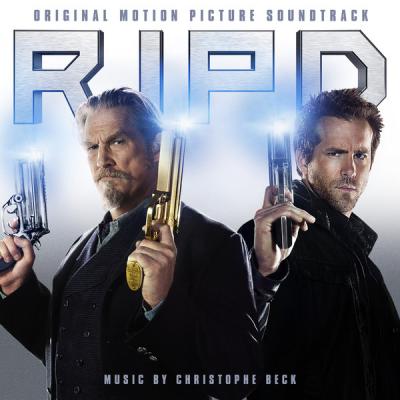
R.I.P.D. Album Cover

"R.I.P.D." Soundtrack Lyrics

Movie • 2013

Track Listing


“R.I.P.D. (Original Motion Picture Soundtrack)” – Album Guide to Tracks and Key Scenes

R.I.P.D. 2013 official trailer thumbnail showing Jeff Bridges and Ryan Reynolds in action, used as a visual cue for the soundtrack
R.I.P.D. movie soundtrack cues, 2013

Overview

What happens when a buddy-cop movie dies, goes to the afterlife, and brings a jukebox with it? R.I.P.D. answers with a slick mix of puckish needle drops and a propulsive, monster-hunting score. The music winks as much as it wallops.

Christophe Beck’s score is the spine — punchy brass, rhythmic ostinatos, and lean action cues — while a handful of songs drop in for attitude, irony, and a few shameless grins. The soundtrack keeps faith with the film’s tone: supernatural procedural by day, cartoon mayhem by night.

Structurally, the album favors swift cues (most under three minutes), a choice that mirrors the film’s chase-to-quip cadence. A late surprise — Jeff Bridges crooning an original country-rock tune — turns the end credits into a curtain call with twang.

Genres & themes by phase: electro-pop and classic rock for the “arrival” (orientation to the afterlife); swaggering funk-soul and gritty garage rock for “adaptation” (learning the ropes); heavy, percussive score during “rebellion” (Deado hunts, betrayals); and warm Americana at “collapse/closure” (the end-credits release). According to Back Lot Music’s release notes, the official album collects 23 tracks focused on Beck’s score with the featured song tie-ins arriving around the film and its credits.

How It Was Made

Composer Christophe Beck approached the film like an action-comedy with a spectral sheen — driving percussion for pursuit, bold brass for “Old West” swagger (a nod to Roy), and tense electronics to underline the grotesque shape-shifting of Deados. Short, modular cues let the edit snap from banter to brawl without losing musical continuity. As reported by Film Music Reporter, Beck boarded the project during post, tailoring themes to the final cut’s pacing.

Universal’s in-house music team cleared a small but pointed set of songs. The juxtaposition is deliberate: laid-back yacht-rock and playful electro rub against Beck’s muscular score to keep the mood mischief-first, horror-second.

Music supervision was coordinated through Universal, with preparation and music editing crediting a large studio team that funneled cues to the dub stage for tight sync with physical comedy beats.

R.I.P.D. trailer still of afterlife police HQ, aligning with the score’s orientation cues
Orientation & headquarters cues — Beck’s short motifs keep scenes buoyant

Tracks & Scenes

“Hey Nineteen” — Steely Dan
Where it plays: A running office gag in Proctor’s R.I.P.D. HQ — the song floats in the background as our heroes get chewed out and reassigned (early act one; brief reprises later). It’s diegetic, the kind of soft-rock spin you’d hear from a desk radio, and it pointedly contrasts the grotesque Deado cases on the corkboard.
Why it matters: The mellow groove undercuts the stakes with sly irony and gives Proctor’s realm a bureaucratic, “paperwork never dies” vibe that the film keeps punching.

“Konichiwa Bitches (Trentemøller Remix)” — Robyn
Where it plays: Featured in the film’s licensed-music set; most commonly heard associated with promotional cuts and background source in urban exteriors (brief, non-diegetic sting over a transitional montage; appears in some international versions’ music stems).
Why it matters: The remix’s rubbery bass and swagger fold neatly into the movie’s comic-book snap, giving city hunts a club-lit edge.

“Let’s Get It On” — Marvin Gaye
Where it plays: Used as a cheeky, blink-and-you’ll-smirk source gag in the mortal world — a quick diegetic tease that comments on mismatched avatars and romantic confusion (short excerpt).
Why it matters: Classic needle-drop humor: the world’s smoothest seduction anthem colliding with a hero who looks nothing like himself.

“Try It Again” — The Hives
Where it plays: Trailer placement. The stomping chant and handclaps pace quick-cuts of Roy and Nick popping Deados and bickering through Boston. Not in the score album.
Why it matters: As a marketing cue it sells the buddy-banter energy better than any line reading could.

“The Better Man” — Jeff Bridges
Where it plays: End credits. After the last Deado dust settles, Bridges’ warm, country-rock tune rolls over black and credit blocks, acting as Roy’s musical sign-off. Non-diegetic; full-length play in most territories.
Why it matters: It reframes Roy’s gruff bravado with tenderness and a wink — the album’s lone vocal closer and a fan-favorite discovery.

Score highlights — Christophe Beck
“Elevator Chase”: tight ostinato and brass blasts track a vertical set-piece that fake-outs into mid-air slapstick.
“Evidence Room”: a stealth cue that turns on a dime when the gold’s curse ripples through the scene.
“Mano a Mano”: showdown material — heavier low brass, clipped snare, and synth punctuation for transformation gags.

R.I.P.D. trailer action montage thumbnail, suited to chase cues like ‘Elevator Chase’
Action montage energy — short cues, big brass, quick payoffs

Notes & Trivia

  • The official album (Back Lot Music) is score-forward: 23 tracks, under 40 minutes — very “grab-and-go” listening.
  • Jeff Bridges’ closer was produced by T Bone Burnett, linking the film to Bridges’ country-blues recordings outside the franchise.
  • Steely Dan in a cosmic police bullpen? The tonal whiplash is the joke.
  • Several trailers used rock stompers not heard in the film proper — a classic marketing move.
  • Regional mixes varied slightly in how the Robyn remix was stemmed under transitions.

Music–Story Links

When Nick first reports to HQ, “Hey Nineteen” sands off the afterlife’s edges; it’s paperwork with pan flute. Later, during Deado pursuits, Beck’s pulses tighten as the camera breaks into crowds — the rhythmic insistence becomes the movie’s heartbeat. In the credits, “The Better Man” softens Roy, letting his persona step out from behind the mustache and spurs.

Small source cues — that quick Marvin Gaye smirk, a clubby Robyn sting — amplify the avatar gag and the partners’ oil-and-water dynamic. The songs aren’t many, but each one speaks in italics.

Reception & Quotes

The film’s box office face-planted, but the album landed on major platforms day-and-date and found a second life with listeners who like action scores with comic bounce.

“Opening was disappointing; the weekend belonged elsewhere.” — The New York Times
“No stingers to sit for — only a tune over the end.” — Mediastinger
“Beck keeps the mayhem light on its feet.” — Album retail/editorial blurb
R.I.P.D. trailer final frames with title card, aligning with Jeff Bridges’ credit-song placement
End titles energy — where “The Better Man” takes a bow

Interesting Facts

  • Label: Back Lot Music released the album digitally on July 16, 2013.
  • Streaming: The complete score and the Bridges track are available on Spotify and Apple Music.
  • Marketing: “Try It Again” by The Hives powered trailer cuts, but isn’t on the album.
  • Credit fun: Some territories list the Robyn remix in music cue sheets even when the usage is just a quick transitional stem.
  • Licensing irony: Yacht-rock inside a supernatural precinct is exactly the kind of tonal prank music supervisors live for.
  • Playlist tip: Beck’s “Elevator Chase” pairs neatly with his later Marvel action scherzos for a mini workout set.
  • Format: No widely distributed physical CD; digital storefronts and streams dominate availability.

Technical Info

  • Title: R.I.P.D. (Original Motion Picture Soundtrack)
  • Year / Type: 2013 — Film score with featured songs
  • Composer: Christophe Beck
  • Featured song/vocal: “The Better Man” — Jeff Bridges (prod. T Bone Burnett)
  • Label: Back Lot Music (digital)
  • Music supervision: Universal Pictures music team
  • Notable placements: “Hey Nineteen” (Steely Dan); “Konichiwa Bitches (Trentemøller Remix)” (Robyn); “Let’s Get It On” (Marvin Gaye; gag); “Try It Again” (The Hives; trailers)
  • Release context: Album dropped the week of the U.S. theatrical release (mid-July 2013)
  • Availability/Charts: Wide on Apple Music/Spotify; no major chart footprint reported

Questions & Answers

Is the album mostly songs or score?
Score. It’s a tight, 23-track Beck set with a handful of licensed songs referenced in the film and marketing.
What’s the end-credits song everyone asks about?
Jeff Bridges’ “The Better Man.” It’s the closer and the soundtrack’s curveball.
Is “Hey Nineteen” actually in the movie or just a rumor?
It’s in the film as office source music — a recurring gag in HQ.
Why doesn’t the trailer rock track show up on the album?
Trailers use separate licenses; “Try It Again” sells the tone but wasn’t part of the score release.
Where can I legally stream the album?
Major platforms — Apple Music and Spotify — carry the full 2013 album.

Canonical Entities & Relations

SubjectVerbObject
Christophe BeckcomposedR.I.P.D. (Original Motion Picture Soundtrack)
Back Lot MusicreleasedR.I.P.D. (Original Motion Picture Soundtrack) (digital)
Jeff Bridgesperformed“The Better Man” (end credits)
Robert SchwentkedirectedR.I.P.D. (2013)
Universal PicturesdistributedR.I.P.D. (film)
Steely Danperformed“Hey Nineteen” (source cue in HQ)
Robynfeatured“Konichiwa Bitches (Trentemøller Remix)” (film/marketing use)

Sources: Apple Music; Spotify; MusicBrainz; Wikipedia; Film Music Reporter; Mediastinger; YouTube trailers; studio credits databases.

November, 19th 2025

Read about 'R.I.P.D.' movie on Internet Movie Database and Wikipedia
A-Z Lyrics Universe

Lyrics / song texts are property and copyright of their owners and provided for educational purposes only.