"Robin Hood" Soundtrack Lyrics
Cartoon • 2001
Track Listing
Phil Harris
Roger Miller
Bryan Adams
"Robin Hood (Original Animated Motion Picture Soundtrack)" – Album Guide to Tracks and Key Scenes
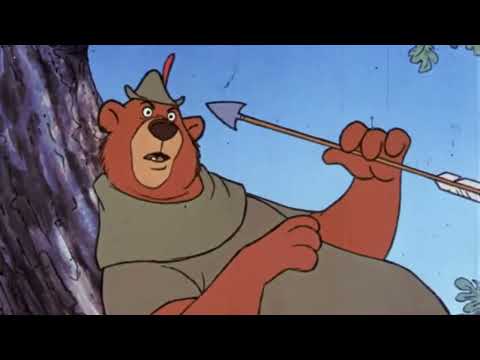
Overview
How do you make rebellion feel like a lullaby? Disney’s Robin Hood answers with whistled openings, porch-picking folk, and a score that winks even as taxes bite. Arrival → adaptation → rebellion → collapse; the music maps that arc with a troubadour’s grin and a jailhouse sigh.
Set in an animal-populated Sherwood, the film leans on Roger Miller’s narrator-songs to stitch scenes together while George Bruns’ orchestration gives the fox’s capers bounce and pomp. The soundtrack’s trick is tone: it’s playful on the surface, but when Nottingham’s cells fill up, the harmonies sag and the tempo slows. The result feels homespun and oddly modern — story told by songs told by a rooster.
Distinctiveness? A country-folk backbone threaded through a classic studio score. Miller’s plainspoken melodies (“Oo-De-Lally,” “Not in Nottingham”) humanize a fairy-tale economy; Bruns’ march themes puff up villains with pomp that never quite lands. According to the film’s production histories, Miller wrote the original tunes while Bruns shaped the underscoring — a division that keeps the album half porch, half pit orchestra.
Genres & themes by phase: Opening credits and early escapades — rustic country/folk (freedom, mobility); middle tournament and disguises — cheeky orchestral scherzos and source music (mischief, performance); prison and fallout — minor-key folk balladry with sparse strings (injustice, endurance); epilogue — jaunty reprise (restoration, communal relief).
How It Was Made
Songwriter–narrator Roger Miller (as Alan-a-Dale) penned and performed the film’s cornerstone tunes — whistled opener, campfire folk, and the rainy jail lament. Composer George Bruns supplied the orchestral architecture: heraldic themes for Prince John, jigs and fanfares for the archery set pieces, and lyrical interludes for the waterfall romance. Music supervision in this era meant in-house scoring and sessions under Disney’s music department — a lean, story-first pipeline where songs were recorded around animation beats rather than vice versa.
The soundtrack existed for decades as partial LPs and story-album pressings before a comprehensive restoration arrived in the Walt Disney Records: The Legacy Collection (expanded cues, alternates). As per the Legacy Collection notes and discographies, the release assembles both Miller’s songs and Bruns’ cues in film order, with archival mixes spruced up for modern listening.
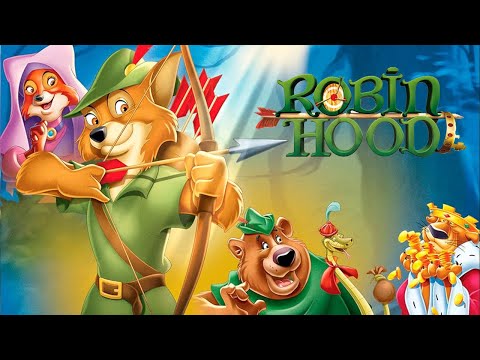
Tracks & Scenes
“Whistle-Stop” — Roger Miller
Where it plays: Over the illustrated opening credits, Alan-a-Dale’s wordless whistle and scat usher us into Sherwood; character roll-call cards flip by. Non-diegetic, pure curtain-raiser.
Why it matters: Sets a handmade, front-porch mood; the tune later found viral afterlife as the sped-up “Hampsterdance,” but here it’s a friendly welcome to an outlaw story.
“Oo-De-Lally” — Roger Miller
Where it plays: Prologue travel song as Robin and Little John amble through the forest, trading jokes and dodging danger. Sung by Alan-a-Dale with cutaways to the foxes’ banter. Diegetic-adjacent narration-song.
Why it matters: Establishes tone — outlawry as fellowship. The melody becomes a thematic shorthand for resourcefulness and play.
“Love” — George Bruns (melody) & romantic feature
Where it plays: Moonlit garden and waterfall courtship montage — Robin and Maid Marian dance among fireflies; the world seems to hold its breath. Non-diegetic vocal with gentle strings.
Why it matters: A rare, hushed Disney love cue of the era; its simplicity lets the scene glow without sugar overload. (The same recording later recurs in pop culture cameos.)
“The Phony King of England” — cast song
Where it plays: Merry Men hootenanny in Sherwood, lampooning Prince John. Staged diegetically as a raucous group sing; rhythmic cutaways rhyme with the Sheriff’s frustrations.
Why it matters: Lethal satire in homespun clothes — the community mocking power, and power looking silly.
“Not in Nottingham” — Roger Miller
Where it plays: Rain lashes the gaol. Prisoners huddle; Allan-a-Dale sings from within the story world, the camera lingering on faces more than action. Diegetic lament.
Why it matters: The movie’s moral center. Hope falls to a whisper; the ballad makes the injustice feel local and lived-in.
Score cues — George Bruns
Where it plays: Tournament fanfares (trumpet-led, mock-regal), chase scherzos with bassoon pranks, and a brief suspense motif during the burning tower rescue. Non-diegetic orchestral score, often mickey-mousing comic action.
Trailer notes: The classic trailers lean on “Whistle-Stop,” snippets of “Oo-De-Lally,” and brassy score swells rather than external licensing — standard for Disney’s 1970s marketing.
Music–Story Links
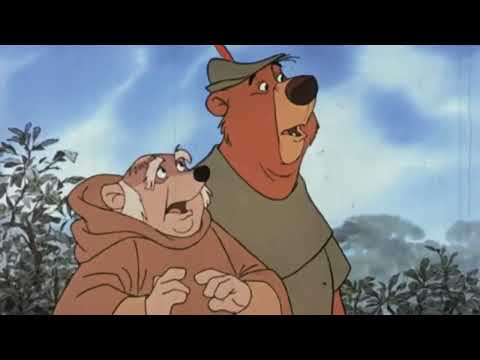
When Robin and Little John first saunter on, “Oo-De-Lally” encourages us to trust their mischief — melody as character witness. At the archery tournament, Bruns’ trumpets inflate the pageantry, letting Robin’s disguises puncture pretension beat by beat. The Sherwood hoedown weaponizes community song: laughter is protest.
Then comes the rain. “Not in Nottingham” lowers the ceiling; the camera stops bragging and starts listening. By the finale, a light reprise and jaunty rhythm tell us balance returns — not as triumphalist fanfare, but as a relieved exhale. As per contemporary summaries, the rooster’s songs function like chapter headings, reshaping time and tone between set-pieces.
Notes & Trivia
- Roger Miller serves double-duty: diegetic balladeer and narrator, a rare Disney pairing for the era.
- Prince John’s motif parodies grandeur — comic brass and pomp that keeps tripping over itself.
- “Whistle-Stop” later went viral in sped-up form as “The Hampsterdance Song,” years after the film’s release.
- The most complete official album arrived decades later in the Legacy Collection with alternates and restored score.
- “Love,” the waterfall cue, resurfaced in later films and ads, proof of its slow-burn staying power.
Reception & Quotes
Critics have warmed to the soundtrack’s homespun directness; fans never left. The songs read like folk standards smuggled into a studio cartoon. According to album retrospectives, the expanded release clarified how much score craft sits beneath the whimsy.
“A troubadour’s diary of Sherwood — plain, tuneful, and sneakily tough.” Album retrospective
“‘Not in Nottingham’ is the quietest Disney protest song.” Film music column
“Bruns’ brass puffs power up just to prick it with a joke.” Animation notes
Interesting Facts
- The soundtrack’s narrative voice (Miller) sits inside the story: songs aren’t cutaways, they’re town memory.
- Some LPs were “story-album” hybrids (dialogue + cues). The modern expanded set restores full instrumentals.
- “The Phony King of England” riffs on older folk lampoons of monarchy — cheeky lineage for a Disney singalong.
- Trailers relied on internal cues; no pop needle-drops — unusual by today’s marketing standards.
- The 2017 release finally sequenced pieces close to film order, resolving decades of partial availability.
- “Love” has been repurposed in later media; the melody’s fox-to-fox tenderness travels well.
- Villain cues use comic timing: bassoon smirks, slide-whistle gags, and brass “oops” cadences.
- “Whistle-Stop” + “Oo-De-Lally” are often covered by indie/folk artists in stripped arrangements.
Technical Info
- Title: Robin Hood — Original Animated Motion Picture Soundtrack
- Year / Type: 1973 — Animated feature (Disney)
- Primary Songwriter–Performer: Roger Miller (as Alan-a-Dale)
- Composer (Score): George Bruns
- Notable Song Placements: “Whistle-Stop” (opening credits); “Oo-De-Lally” (forest prologue); “Love” (garden/waterfall romance); “The Phony King of England” (Sherwood hootenanny); “Not in Nottingham” (rainy jail)
- Release Context: Theatrical release — November 1973; later comprehensive album via Walt Disney Records’ Legacy Collection
- Label / Album Status: Walt Disney Records — expanded, remastered edition available digitally and on CD
- Trailer ID (Figures): YouTube —
gzESAbBo08c
Questions & Answers
- Is there a full, official album of the songs and score?
- Yes. The Legacy Collection release compiles Roger Miller’s songs and George Bruns’ score with archival extras.
- Which songs are performed within the story world?
- “The Phony King of England” and “Not in Nottingham” are staged diegetically; “Oo-De-Lally” functions as a sung narration.
- Why does the soundtrack feel so “folk” compared to other Disney films?
- Miller’s troubadour role frames the tale like a campfire legend, while Bruns supplies the classic studio sweep underneath.
- What musical ideas define Prince John and the Sheriff?
- Pompous march figures, comic brass, and rhythmic stumbles — music that puffs itself up and then trips.
- Where can I hear the romance cue outside the film?
- “Love” appears on compilations and later media; it’s the same tender melody from the waterfall courtship.
Canonical Entities & Relations
| Subject | Relation | Object |
|---|---|---|
| Walt Disney Productions | produces | Robin Hood (1973 animated film) |
| Wolfgang Reitherman | directs | Robin Hood (1973) |
| George Bruns | composes score for | Robin Hood (1973) |
| Roger Miller | writes & performs songs for | Robin Hood (1973) |
| Alan-a-Dale | narrates within | Robin Hood (1973) |
| Walt Disney Records | releases | Legacy Collection: Robin Hood (expanded soundtrack) |
| Prince John (character) | underscored by | mock-regal march motifs |
| Nottingham prisoners | sing | “Not in Nottingham” (diegetic) |
Sources: Disney film and soundtrack credits; Walt Disney Records — Legacy Collection; Disney Wiki (song scene notes); Wikipedia (film & music sections).
November, 19th 2025
A-Z Lyrics Universe
Cynthia Erivo Popular
Ariana Grande Horsepower
Post Malone Ain't No Love in Oklahoma
Luke Combs Good Riddance (Time of Your Life)
Green Day Bye Bye Bye
*NSYNC You're the One That I Wan
John Travolta & Olivia Newton-John I Always Wanted a Brother
Braelyn Rankins, Theo Somolu, Kelvin Harrison Jr. and Aaron Pierre The Power of Love
Frankie Goes to Hollywood Beyond
Auli’i Cravalho feat. Rachel House MORE ›