Soundtracks:  A B C D E F G H I J K L M N O P Q R S T U V W X Y Z #


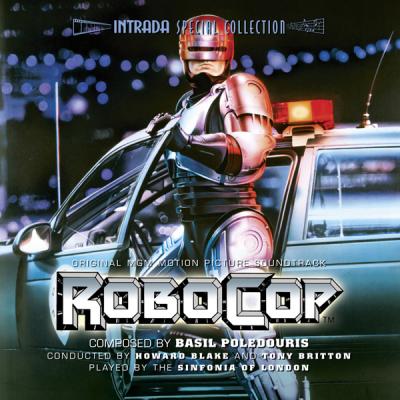
RoboCop Album Cover

"RoboCop" Soundtrack Lyrics

Movie • 2014

Track Listing


"RoboCop (Original Motion Picture Soundtrack & Songs)" – Album Guide to Tracks and Key Scenes

RoboCop (2014) official trailer still showing the black armor reveal with LED visor online
RoboCop (2014) — official trailer imagery, 2014

Overview

What does a human heartbeat sound like after it’s been routed through software? RoboCop (2014) answers with a hybrid: steel-sheen electronics welded to large-orchestra muscle, then punctured by cheeky, on-the-nose needle-drops. Arrival → adaptation → rebellion → collapse: the soundtrack rides that arc from clinical to conflicted to cathartic.

Composer Pedro Bromfman builds a score of processed strings, synth pulses and metallic percussion, occasionally flashing Basil Poledouris’ 1987 theme like a badge of continuity. Songs are minimal but pointed — a yodel-prog blast to taunt a combat sim, a noir-standard for corporate charm, and a punk classic for the walk-out credits. The mix frames José Padilha’s reboot as a debate between empathy and efficiency, with the music often arguing for the former.

Distinctive touches: a classical-guitar showpiece performed diegetically by a man with robotic hands; a sentimental standard warped into corporate smooth; and an end-credits wink that says “the law won,” but the system didn’t. Genre map: industrial-tinged action score (control, surveillance) → noir/standard source cues (image management) → prog rock and punk (mockery, dissent) → elegiac strings (reckoning).

How It Was Made

Bromfman (a Padilha collaborator) recorded an 80-piece orchestra and interlaced it with synthesizers and processed timbres — waterphone scrapes, hand percussion, even tool-like textures — to mirror Alex Murphy’s “man + machine” state. The orchestral writing stays modular for editorial flexibility, while the synth design carries the cybernetics motif. The score nods sparingly to Basil Poledouris’ original march, saving the homage for dramatic punctuation rather than wall-to-wall nostalgia.

On the song side, the film uses a lean set of placements. A licensed prog staple (“Hocus Pocus” by Focus) and a standards-book cut (“If I Only Had a Heart”) are deployed diegetically, staging music in the world so it can jab characters and theme in real time. An end-credits classic (“I Fought the Law”) lands as commentary more than celebration. As reported in album announcements and interviews, Sony Classical issued the score album day-and-date with release, highlighting the hybrid palette.

RoboCop 2014 trailer frame: Dr. Norton unveils Murphy’s remaining human parts as the score thins to glassy textures
Score design — acoustic orchestra interlaced with processed electronics to echo the cyborg body.

Tracks & Scenes

“If I Only Had a Heart” — Andrew Page (Tin Man cover)
Where it plays: In the indoor live-fire simulation, Mattox pipes this Wizard of Oz tune over the range as RoboCop squares off against EM-208 drones. The jaunty vocal bounces against muzzle flashes and telemetry readouts; it’s diegetic, playing through the facility PA as a taunt.
Why it matters: Irony as weapon. The lyric needles Murphy’s humanity — a heart inside the hardware — and underlines the film’s man-vs-machine thesis.

“Hocus Pocus” — Focus
Where it plays: During a later live-fire test with Mattox, the yodel-and-riff juggernaut blasts over the speakers while RoboCop carves through a maze of drones. Whip-pan edits ride the song’s starts and stops; it’s fully diegetic, Mattox DJ-ing the chaos.
Why it matters: Turns training into spectacle and satire. The song’s exuberant nonsense becomes corporate bravado — noise to mask moral drift.

“En Aranjuez con tu amor” — Joaquín Rodrigo (Adagio from the Concierto de Aranjuez), performed by Raffi Altounian
Where it plays: Early lab demo: a guitarist fitted with myoelectric prosthetic hands plays the Adagio in a sterile testing space. The camera lingers on mechanics over emotion; it’s staged diegetically as a proof-of-concept performance for robotics.
Why it matters: A classical meditation about memory and feeling reduced to a calibration exercise — the film’s empathy/efficiency argument in miniature.

“Fly Me to the Moon (In Other Words)” — Frank Sinatra
Where it plays: Light source cue at a corporate function/PR setting, heard on speakers as executives work the room. It’s background-diegetic, smoothing the edges of salesmanship.
Why it matters: Crooner polish as corporate perfume — a sonic contrast to RoboCop’s metallic reality.

“I Fought the Law” — The Clash
Where it plays: End credits. After the last standoff, the camera cuts to black and the iconic riff kicks in, carrying audiences out of Detroit.
Why it matters: Punk gallows humor. The hook reframes the story’s “law” as system, not justice — a final editorial wink.

Library/score-adjacent needle-drop: “Anguish” — Doug Bossi & Justin Knowell (5 Alarm Music)
Where it plays: Used as underscore-style source in a transitional sequence; it threads with the score’s electronics, feeling almost seamless.
Why it matters: Shows how production needle-drops can extend a score’s palette without blowing up the sonic identity.

Score cues — Pedro Bromfman
Where it plays: The album’s action architecture (“Restaurant Shootout,” “Vallon’s Warehouse,” “Code Red,” “Made in China”) hits kinetic set-pieces; intimate cues (“Calling Home,” “If I Had a Pulse”) thin textures to piano, pads, and high strings when Murphy’s family intrudes on the tech narrative.
Why it matters: The hybrid build — orchestra + synth — functions as character design. When the motif swells with Poledouris DNA, it reads as lineage more than fan-service.

Trailer notes: The marketing leaned on licensed trailer cues rather than film score — e.g., cuts by Jack Trammell and other trailer composers — a standard practice that sets pace and weight for two-minute storytelling without promising in-film usage.

RoboCop 2014 trailer montage of training floor firefight while Mattox blares music over the PA
Tracks & Scenes — diegetic songs weaponized on the training floor.

Music–Story Links

When Mattox cues “If I Only Had a Heart,” the soundtrack turns into a cudgel — song choice as bullying. Later, “Hocus Pocus” makes the same point louder: corporate and military actors can drown out ethical questions with bravura noise. The classically framed prosthetic-hands guitar demo converts feeling into data, underlining Dr. Norton’s dilemma: how much humanity can the system tolerate?

Bromfman’s score closes the loop. Cold, gated pulses govern RoboCop’s early “online” sequences; warmer harmonies surface when Clara or David appear. In the final reel, the orchestral writing asserts itself over the synth bed — a musical metaphor for Murphy asserting will over programming. A brief, respectful flash of the original RoboCop theme seals the continuum between versions without drowning the new film’s voice.

Notes & Trivia

  • Pedro Bromfman’s approach: blend an 80-piece orchestra with synth design and processed textures; include a hat-tip to Poledouris’ 1987 theme.
  • “Hocus Pocus” is used diegetically in a live-fire test — a prog-rock yodel becoming corporate swagger.
  • The guitarist demo uses Rodrigo’s Concierto de Aranjuez Adagio — a humanist classic inside a robotics lab.
  • The score album arrived via Sony Classical alongside the film’s release, featuring 25 cues and just-enough Poledouris DNA.
  • End credits blast The Clash’s “I Fought the Law” — a mordant send-off.

Reception & Quotes

Critical response to the film landed mixed; reactions to the score ranged from “solid hybrid” to “too anonymous,” with praise when the Poledouris theme surfaces and skepticism when modern action tropes take over.

“A solid, hybrid score… and yes, the original march makes an appearance.” Action A Go-Go
“Almost entirely bereft of personality… technically fine, dramatically bland.” Movie Music UK
“Set pieces are bountiful… the film doesn’t always make its satire land.” RogerEbert.com
RoboCop 2014 trailer still of bike launch across downtown as the bass synth locks with percussion
Reception — reviewers split on the film; listeners split on the score’s identity.

Interesting Facts

  • The score album is a Sony Classical release; first issued the week of the U.S. opening with 25 tracks.
  • “I Fought the Law” (The Clash) is the officially noted end-credits song.
  • Sinatra’s “Fly Me to the Moon” appears as suave background source music in a corporate/PR space.
  • Library cut “Anguish” (5 Alarm Music) slips in as a production needle-drop, blending with the score’s electronics.
  • Bromfman’s orchestral forces were recorded and then digitally altered to “sound” more machine — a conceptual mirror of Murphy’s body.
  • The film deploys only a handful of songs; most musical identity is carried by the score and by diegetic stings used for irony.

Technical Info

  • Title: RoboCop — Original Motion Picture Soundtrack (score) & featured songs
  • Year / Type: 2014 — Feature film
  • Composer: Pedro Bromfman (with thematic homage to Basil Poledouris)
  • Label / Album: Sony Classical — RoboCop (Original Motion Picture Soundtrack) (25 tracks)
  • Notable Song Placements: “If I Only Had a Heart” (Andrew Page) — training sim; “Hocus Pocus” (Focus) — live-fire test; “En Aranjuez con tu amor” (Rodrigo, perf. Raffi Altounian) — prosthetic-hands demo; “Fly Me to the Moon” (Frank Sinatra) — PR ambience; “I Fought the Law” (The Clash) — end credits.
  • Trailer ID (figures): YouTube — jBeSfnIT_Bw (Trailer #1)

Questions & Answers

Who scored the 2014 RoboCop and what’s the palette?
Pedro Bromfman. A hybrid of 80-piece orchestra and processed electronics, with selective nods to the 1987 theme.
What song blasts during RoboCop’s training floor scenes?
“Hocus Pocus” by Focus — played diegetically by Mattox over the PA during a live-fire test.
What’s the end-credits song?
“I Fought the Law” by The Clash.
Does the film use the original RoboCop theme?
Yes, Bromfman quotes Basil Poledouris’ march briefly as homage; most of the score is new material.
Is there an official soundtrack album?
Yes — a Sony Classical release titled RoboCop (Original Motion Picture Soundtrack) featuring 25 cues from the film.

Canonical Entities & Relations

SubjectRelationObject
José PadilhadirectsRoboCop (2014 film)
Pedro Bromfmancomposes score forRoboCop (2014 film)
Basil Poledourisoriginal theme byRoboCop (1987 film)
The Clashperform“I Fought the Law” (end credits)
Focusperform“Hocus Pocus” (training floor diegetic)
Andrew Pageperforms cover“If I Only Had a Heart” (diegetic taunt)
Raffi Altounianperforms“En Aranjuez con tu amor” (Rodrigo) in lab demo
Sony ClassicalreleasesRoboCop (Original Motion Picture Soundtrack) (2014)

Sources: Wikipedia (film & music section); Apple Music album page; MovieMusic/Discogs album listings; Soundtrakd & MediaStinger song notes; ET Online featurette; Movie Music UK review; RogerEbert.com review; Focus “Hocus Pocus” references.

November, 19th 2025

'RoboCop' (2014): IMDb, Rotten Tomatoes
A-Z Lyrics Universe

Lyrics / song texts are property and copyright of their owners and provided for educational purposes only.