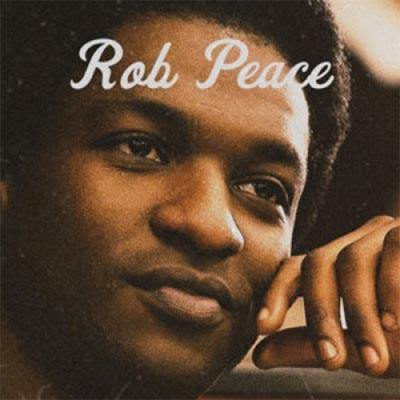
"Rob Peace" Soundtrack Lyrics
Movie • 2024
Track Listing
Grandmaster Flash, The Furious Five
O.C.
Layzie Bone, Tia
Mary J. Blige
Shabaam Sahdeeq
"Rob Peace (Original Motion Picture Score & Songs)" – Album Guide to Tracks and Key Scenes
Overview
How do you score a life that keeps outrunning labels — prodigy, hustler, son — all true and not enough? Rob Peace answers with a split-screen musical language: streetwise bangers and classic soul on one side, a transparent, aching score on the other. The mix mirrors Rob’s two worlds and the impossible math of making them add up.
The film follows Robert DeShaun Peace from Newark brilliance to Yale promise and back into the undertow of old loyalties. The soundtrack widens his interior space. Hip-hop landmarks and reggae heat sketch the environment that formed him; R&B and classic soul offer a moral temperature check; Jeff Russo’s original score threads through with strings, piano and quietly pressurized pulses that keep time with Rob’s calculations — plans, risks, rationalizations.
It’s a pragmatic, unshowy palette. Songs arrive not as nostalgia bait but as reportage from the ground, while the score provides air for the performances to breathe. And when the story tightens, the music doesn’t fight it; it recedes, lets silence sting, then returns with weight.
Genres & themes by phase: early chapters lean on old-school hip-hop (grit = survival mode); mid-film campus sequences flirt with throwback soul/funk and dance-floor cuts (warmth and possibility); the final act is carried by restrained, minor-key score cues (clarity, consequence, and, finally, quiet).
How It Was Made
The score is by Jeff Russo, whose sensibility for morally tangled dramas gives the film its steady emotional barometer. Russo writes in deceptively simple gestures — piano motifs and long-tone strings — that leave space for the actors. The music supervision (Jabari Ali) curates legacy tracks that speak to Newark and East Coast lineage without turning the movie into a jukebox; placements are purposeful, often diegetic, and pointedly regional.
Licensing leans on re-record or remastered versions where possible, keeping budgets sane while staying faithful to the cuts audiences recognize. Period alignment matters: the mixtape feel matches Rob’s era and community, but selections avoid clichés. According to Film Music Reporter, Russo boarded the film ahead of its Sundance 2024 premiere, giving post a consistent sonic through-line from festival cut to release.
Tracks & Scenes
“The Message (Re-Recorded)” — Grandmaster Flash & The Furious Five
Where it plays: Early in the Newark passages, the track colors a neighborhood montage — rowhouses, stoops, and bus rides; the lyrics land like marginalia over Rob’s observational gaze. Mostly non-diegetic, it bleeds into street ambience.
Why it matters: It’s the thesis of environment: don’t push me — the city’s gravity is real, and Rob knows it.
“Time’s Up” — O.C.
Where it plays: A transitional beat between grind and grind — hustling study sessions to hustling side gigs, jump-cut through dorm rooms and labs; non-diegetic, mixed tight under dialogue.
Why it matters: Brings East Coast rap bona fides; lyrically it frames consequence without moralizing.
“Respect Yourself” — The Staple Singers
Where it plays: A community interior — cookout/house gathering vibe — where the song is heard in-world off a stereo. Rob moves between conversations; the track is a warm reprimand, a generational voice in the room (diegetic).
Why it matters: A rare moment of ease that doubles as counsel; it softens the cut between home and campus selves.
“Ring the Alarm” — Tenor Saw
Where it plays: Nighttime exterior; a deal turns tense. Siren-like vocal hooks steer the rhythm section as we clock shifting faces and phone screens. Non-diegetic at first, then source-blended as a car idles up.
Why it matters: Signals a threshold — the point where calculus slides from clever risk to real danger.
“One Life to Live” — Main One
Where it plays: A cruising sequence with friends, windows cracked, laughter running over the beat; fully diegetic out of a trunk-rattling system.
Why it matters: The title says it — camaraderie, motion, a thin-ice kind of joy.
“Free” — Deniece Williams (remastered)
Where it plays: A soft-light interlude (post-visit, post-decision); the track floats like an exhale, cutting against the story’s clampdown. Non-diegetic, almost lullaby low in the mix.
Why it matters: A fragile idea — freedom — refracted through soul classicism.
Score cues — Jeff Russo
Where it plays: Throughout, but listen for the mid-film piano figure that returns in strings in the final reel; it’s reserved, then suddenly present. The motif maps to the father–son axis and to Rob’s private arithmetic.
Why it matters: Russo’s restraint is the point. Fewer notes, more truth; the silence between phrases becomes judgment, then grief.
Trailer note: The official trailer rides a modern, slow-burn swell; most public cue sheets identify “Redemption” (CS Armstrong) in trailer mixes rather than in-film placement.
Music–Story Links
When Rob first enters Yale spaces, the soundtrack loosens its shoulders: soul warmth and head-nod tempos humanize rooms that could read as alien. Later, as Rob re-enters Newark obligations, the palette hardens — bass forward, hooks with edge. The needle-drop of Tenor Saw’s “Ring the Alarm” primes us to expect escalation before the plot confirms it. Conversely, “Free” under a late moment reframes agency: what the character wants versus what systems allow.
Russo’s main motif is the film’s conscience. It floats during father–son scenes — memory as harmony — then thins during legal setbacks, almost withdrawing permission to hope. By the last passages, the cue returns, fuller yet colder, acknowledging what’s been lost.
Notes & Trivia
- Composer Jeff Russo wrote the original score; his TV work on ethically thorny stories pays off here.
- The song roster favors East Coast hip-hop history but swerves obvious anthems; re-record/remastered versions keep costs and clarity aligned.
- Several placements are diegetic — you “hear the room” — letting actors play off familiar tracks instead of wallpapering scenes.
- The cut premiered at Sundance 2024; the music approach stayed consistent through theatrical and streaming rollouts.
- Trailer music (“Redemption”) is not a guarantee of in-film use — classic trailer practice.
Reception & Quotes
Critics called the film empathetic, anchored by Jay Will, and noted the score’s restraint. As The Hollywood Reporter observed, montages often ride “poignant music” — editorial choices that keep momentum without glamorizing the grind. Variety praised the nuance if not the film’s every ambition.
“A moving fact-based tragedy… lifted by a magnificent lead performance.” The Guardian
“Ambitious… it could easily have run three.” RogerEbert.com
“Nuance in the story of a gifted student who sells drugs to classmates.” Variety
“Montages backed by poignant music.” The Hollywood Reporter
Interesting Facts
- Russo’s motif is built for editorial flexibility — piano first, then string doubling when stakes rise.
- Music supervision leans into region and era without leaning on overused “New York ’90s” staples.
- No full commercial “Original Motion Picture Soundtrack” album has been broadly listed; selections surface via cue sheets and playlists.
- Trailer cutdowns use contemporary dramatic soul/alt-R&B to bridge audiences who don’t know the book.
- Mary J. Blige, who acts and executive-produces, adds intertext: a soul icon in a story scored with quiet soul references.
- Festival screenings carried the same core musical identity that reached streaming — unusual stability across versions.
- Diegetic placements were staged to let rooms feel lived-in: you can tell where the speaker sits.
Technical Info
- Title: Rob Peace
- Year/Type: 2024 — Feature film
- Composer: Jeff Russo
- Music Supervision: Jabari Ali
- Notable Song Placements: “The Message (Re-Recorded)” — Grandmaster Flash & The Furious Five; “Time’s Up” — O.C.; “Respect Yourself” — The Staple Singers; “Ring the Alarm” — Tenor Saw; “One Life to Live” — Main One; “Free” — Deniece Williams
- Premiere/Release: Sundance Film Festival — January 22, 2024; U.S. theaters — August 16, 2024; streaming debut (U.S.) — November 11, 2024
- Label/Album Status: No widely released official soundtrack album confirmed; individual tracks identifiable via public listings.
- Trailer ID: YouTube — bugi-UdtjzI (Paramount Movies)
Questions & Answers
- Who composed the original score?
- Jeff Russo composed the score, favoring piano-and-strings textures that leave room for performance.
- Is the trailer song in the film?
- The trailer uses “Redemption” (CS Armstrong) — common for marketing — and it’s not central to the on-screen story.
- Are the big songs mostly diegetic?
- Many are; rooms play the music. The effect grounds scenes and avoids romanticizing the hustle.
- Why these particular hip-hop and soul cuts?
- They signal place and era while echoing the film’s ethics — consequence, self-respect, alarm bells.
- Is there an official soundtrack album?
- As of now, no broad release is confirmed; tracks are documented across public listings and reviews.
Canonical Entities & Relations
| Subject | Relation | Object |
|---|---|---|
| Chiwetel Ejiofor | directs | Rob Peace (film) |
| Jeff Russo | composes score for | Rob Peace (film) |
| Jabari Ali | music supervises | Rob Peace (film) |
| Jay Will | portrays | Rob Peace (character) |
| Mary J. Blige | portrays | Jackie Peace |
| Grandmaster Flash & The Furious Five | perform | “The Message (Re-Recorded)” |
| O.C. | performs | “Time’s Up” |
| The Staple Singers | perform | “Respect Yourself” |
| Tenor Saw | performs | “Ring the Alarm” |
| Main One | performs | “One Life to Live” |
| Republic Pictures | distributes | Rob Peace (film) |
| Sundance Film Festival | premieres | Rob Peace (January 22, 2024) |
Sources: IMDb; Wikipedia; Film Music Reporter; The Hollywood Reporter; Variety; RogerEbert.com; Ringo’s Tracklist / Soundtrackost.
November, 19th 2025
A-Z Lyrics Universe
Cynthia Erivo Popular
Ariana Grande Horsepower
Post Malone Ain't No Love in Oklahoma
Luke Combs Good Riddance (Time of Your Life)
Green Day Bye Bye Bye
*NSYNC You're the One That I Wan
John Travolta & Olivia Newton-John I Always Wanted a Brother
Braelyn Rankins, Theo Somolu, Kelvin Harrison Jr. and Aaron Pierre The Power of Love
Frankie Goes to Hollywood Beyond
Auli’i Cravalho feat. Rachel House MORE ›