Soundtracks:  A B C D E F G H I J K L M N O P Q R S T U V W X Y Z #


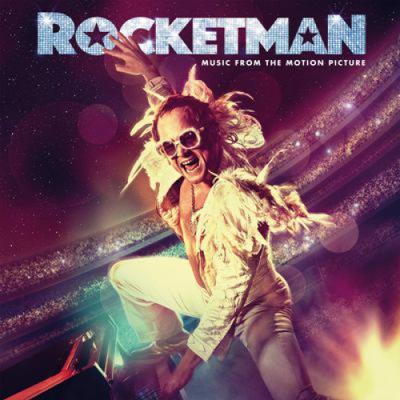
Rocketman Album Cover

"Rocketman" Soundtrack Lyrics

Movie • 2019

Track Listing


"Rocketman (Music From the Motion Picture)" – Album Guide to Tracks and Key Scenes

Rocketman official trailer still: Taron Egerton as Elton John in sequined Dodgers outfit at a roaring stadium
Rocketman — official trailer imagery, 2019

Overview

How do you soundtrack a life that insists on being a musical? Rocketman answers by letting the songs drive the scenes. Arrival → adaptation → rebellion → collapse: numbers bloom out of memory, arguments, and fantasies until biography becomes choreography. The album reframes Elton John’s hits as story engines, not souvenirs.

The key choice: the cast sings everything. Taron Egerton carries the vocals in newly arranged versions that swing between raw confession and splashy Broadway-adjacent staging. Producer Giles Martin rebuilds the catalog to fit character beats; Matthew Margeson’s underscoring stitches transitions so the drama never drops out. A brand-new closer — “(I’m Gonna) Love Me Again,” a duet between Elton and Egerton — seals the arc in neon.

What makes it distinct is how form mirrors feeling. Songs shift tempo and orchestration mid-scene; choruses swallow rooms; gravity gives up. Genres & themes by phase: teen rockabilly and pub stomp (hunger) → piano-pop and lush balladry (ascent) → glam excess (denial) → gospel-tinged resolve (recovery) → victory-disco end credits (integration). As one interview put it, the soundtrack is less jukebox and more “reimagined score.”

How It Was Made

Music production. Giles Martin (executive music producer) re-arranged Elton John’s catalog for the film and produced the 22-track soundtrack release (Virgin EMI/Interscope). His brief: tailor signature songs to character and scene rather than copy the studio masters; hence medleys, altered keys, and ensemble refrains built for choreography.

Score. Composer Matthew Margeson provides original score cues that frame and glue the big set pieces (overtures, scene-bridges, “invisible” pulses beneath musical numbers). His credit sits alongside the pop production because this is a true hybrid — musical film first, biopic second.

Album. The official set features cast performances and the Oscar-winning new song “(I’m Gonna) Love Me Again” (Elton John & Taron Egerton). Labels: Virgin EMI (UK) / Interscope (US). The LP edition followed the digital/CD rollout later that summer.

Rocketman trailer frame: Egerton at the piano as a crowd levitates in the Troubadour fantasy
How It Was Made — cast-sung, Giles Martin–produced reimaginings with Margeson’s score binding scenes.

Tracks & Scenes

“The Bitch Is Back” — Cast
Where it plays: A rehab doorway opens and a rhinestoned Elton storms in; the number explodes into a childhood street pageant with young Reggie at the center. The song becomes a prologue and framing device for the confession that follows.
Why it matters: Establishes Rocketman as a memory musical — truth filtered through spectacle.

“I Want Love” — Cast
Where it plays: A sad, still tableau across four rooms — mother, father, young Reggie, stepfather — each takes a verse while they move past each other like ghosts.
Why it matters: Turns a 2001 ballad into 1950s family x-ray; the lyric lands as a generational wound.

“Saturday Night’s Alright (For Fighting)” — Cast
Where it plays: Pub-to-fairground long take: a teenage Reggie darts through doors, alleys, a fence and a funfair, fists and fireworks popping on the beat as he ages into young Elton by the last chorus.
Why it matters: Coming-of-age in one breath — time, tempo, and tracking colliding.

“Your Song” — Taron Egerton
Where it plays: In a cramped flat with Bernie Taupin, Elton stops noodling and finds it. The room goes quiet; the song writes itself; career begins.
Why it matters: The film’s heart — friendship turns into a voice.

“Crocodile Rock” — Taron Egerton
Where it plays: The Troubadour debut erupts; as the band locks in, the crowd — and then Elton — levitate. Cameras float with them; applause slams back in on the downbeat.
Why it matters: Cinema takes flight to show what “first time everything works” feels like.

“Tiny Dancer” — Cast
Where it plays: A post-show house party glows at 3 a.m.; Elton wanders through rooms alone until John Reid appears, champagne and certainty in hand.
Why it matters: Soft-focus ache as prelude to love and trouble.

“Take Me to the Pilot” — Taron Egerton
Where it plays: A sensual cut that crossfades from flirtation to sex; riffs and bodies tumble into each other as the camera refuses to blink.
Why it matters: Desire as propulsion; the lyric’s surrender becomes literal.

“Honky Cat” — Taron Egerton & Richard Madden
Where it plays: A champagne-spray montage of penthouse excess: fur coats, planes, press junkets, jewel-box shopping sprees. Elton and Reid duet while spending like it’s sport.
Why it matters: Love song repurposed as capitalism satire — the high before the fall.

“Rocket Man” — Taron Egerton
Where it plays: Party → pills → pool. Elton sinks to an impossibly huge blue void and meets his younger self; as he’s lifted out on a gurney the melody follows into an ambulance and an ER corridor.
Why it matters: Centerpiece fantasia of addiction and dissociation — the title becomes diagnosis.

“Don’t Let the Sun Go Down on Me” — Taron Egerton
Where it plays: Stage lights blow out mid-show; the vocal strains to reach the rafters and can’t. Collapse, stretcher, headlines.
Why it matters: The public crack in the mirror — a plea sung to the whole arena and to himself.

“Goodbye Yellow Brick Road” — Taron Egerton & Jamie Bell
Where it plays: After the ruin, a quiet severing and a promise: Elton admits he must leave the fantasy to survive; Bernie nods. A friendship endures as the persona molts.
Why it matters: A gentle goodbye to mythmaking — and to a certain kind of pain.

“I’m Still Standing” — Taron Egerton
Where it plays: Sobriety epilogue that recreates the 1983 video shot-for-shot — Cannes promenades, sunstruck choreography, a wink to the original montage.
Why it matters: Joy as proof-of-life; cinema reflecting music video reflecting cinema.

End credits: “(I’m Gonna) Love Me Again” — Elton John & Taron Egerton
Where it plays: A full-circle curtain call rolling over archival clips and film footage; neon horns and disco sparkle usher us out.
Why it matters: New song as thesis: self-acceptance as encore.

Also heard: in-film snippets and interludes (“Rock & Roll Madonna,” “Pinball Wizard” tease, “Hercules” buttons) and pre-fame cues that nod to early gigs — used as bridges and scene glue beyond the retail album sequence.

Rocketman trailer montage: Troubadour audience begins floating during 'Crocodile Rock'
Tracks & Scenes — levitation, long takes, and lyrics used as plot.

Music–Story Links

“I Want Love” reframes a later-career track as origin-story wound — the first move in the film’s magic trick of time-shifting songs. “Tiny Dancer” moistens the fuse for the John Reid romance; “Honky Cat” then weaponizes that romance as indulgence. “Rocket Man” externalizes the spiral, while “Goodbye Yellow Brick Road” is the sober handshake that lets “I’m Still Standing” be honest rather than ironic. The choices aren’t chronological — they’re emotional geometry.

Notes & Trivia

  • The soundtrack’s new duet “(I’m Gonna) Love Me Again” won the Oscar and Golden Globe for Best Original Song; it plays over the end credits.
  • Producer Giles Martin rebuilt arrangements specifically for picture; cast vocals (led by Egerton) appear throughout rather than original Elton masters.
  • Matthew Margeson receives the film’s Music (composer) credit; his score beds the transitions between the big numbers.
  • The Troubadour levitation during “Crocodile Rock” is intentional fantasy — a stylish flourish, not reportage.

Reception & Quotes

Critics widely praised the set pieces and Egerton’s committed singing; some argued the re-arrangements trade raw studio magic for theatrical precision. Either way, the album plays like a narrative in headphones.

“New arrangements, new versions — a creative curve that Elton loved.” producer interview
“A wild hybrid: starker truths sewn to candy-colored surrealism.” feature piece
Rocketman trailer still: Elton’s rhinestone devil costume marching into a rehab room
Reception — the numbers land because the emotions do first.

Interesting Facts

  • The album released May 24, 2019 (UK/US), with a vinyl edition following in August.
  • Labels split by territory: Virgin EMI in the UK; Interscope in the US.
  • The soundtrack reached Top-40 album charts in multiple countries; in the US it cracked the Billboard Soundtracks top 10.
  • “Saturday Night’s Alright” was engineered as a complex long-take set piece — hundreds of audio tracks and foley layers in the mix.
  • “I’m Still Standing” closely recreates the 1983 video — fans circulate side-by-side comparisons.

Technical Info

  • Title: Rocketman — Music From the Motion Picture
  • Year / Type: 2019 — Feature film (musical biopic)
  • Director: Dexter Fletcher
  • Composer (Score): Matthew Margeson
  • Executive Music Producer / Arrangements: Giles Martin
  • Labels: Virgin EMI (UK); Interscope (US)
  • Key Set Pieces (album highlights): “The Bitch Is Back,” “I Want Love,” “Saturday Night’s Alright (For Fighting),” “Your Song,” “Crocodile Rock,” “Tiny Dancer,” “Take Me to the Pilot,” “Honky Cat,” “Rocket Man,” “Goodbye Yellow Brick Road,” “I’m Still Standing,” “(I’m Gonna) Love Me Again.”
  • Awards: Academy Award & Golden Globe — Best Original Song (“(I’m Gonna) Love Me Again”)
  • Trailer ID (figures): YouTube — S3vO8E2e6G0 (Paramount)

Questions & Answers

Who sings on the album?
The cast, led by Taron Egerton; performances were newly recorded and produced for the film rather than lip-synced to Elton’s originals.
Who handled the music behind the scenes?
Giles Martin produced/arranged the catalog for picture; composer Matthew Margeson supplied original score to bridge and support the numbers.
Is the order of songs chronological to Elton John’s career?
No — the film (and album) sequence prioritizes emotional logic over release dates, often time-shifting songs to fit character beats.
What’s new on the soundtrack?
“(I’m Gonna) Love Me Again,” written by Elton John & Bernie Taupin, performed by Elton and Egerton; it plays over the end credits and won major awards.
How faithful are the arrangements to the originals?
They’re reimagined for drama — keys, tempos, and textures pivot mid-scene to match character and choreography.

Canonical Entities & Relations

SubjectRelationObject
Dexter FletcherdirectsRocketman (2019 film)
Lee HallwritesRocketman (screenplay)
Taron Egertonportrays & sings asElton John (in film)
Jamie BellportraysBernie Taupin
Richard MaddenportraysJohn Reid
Giles Martinproduces/arranges music forRocketman (soundtrack)
Matthew Margesoncomposes score forRocketman (2019 film)
Virgin EMI / InterscopereleaseRocketman — Music From the Motion Picture
Elton John & Taron Egertonperform“(I’m Gonna) Love Me Again” (end credits)
The Troubadour (Los Angeles)depicted as venue for“Crocodile Rock” levitation set piece

Sources: official album/label notes; film credits; press interviews with Giles Martin; cinematography/mixing features; scene-by-scene breakdowns; soundtrack databases; trade features on set pieces and true-vs-fiction notes.

November, 19th 2025


A-Z Lyrics Universe

Lyrics / song texts are property and copyright of their owners and provided for educational purposes only.