Soundtracks:  A B C D E F G H I J K L M N O P Q R S T U V W X Y Z #


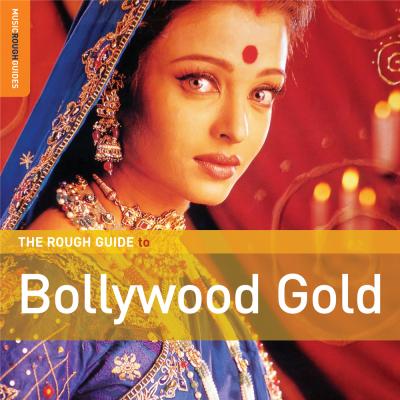
Rough Guide to Bollywood Gold Album Cover

"Rough Guide to Bollywood Gold" Soundtrack Lyrics

Movie • 2007

Track Listing


"The Rough Guide to Bollywood Gold (Various Artists, Compilation)" – Album Guide to Tracks and Key Scenes

Overview

What if one disc could time-travel through Hindi cinema’s most indelible musical moments? The Rough Guide to Bollywood Gold (2007) does exactly that — not a single-film soundtrack, but a carefully sequenced tour of “golden era” playback songs that defined the way stories felt, looked, and even moved.

Instead of following one protagonist, the album rides decades of heroes and heroines: street-philosopher wanderers, rebellious rich kids, good-girl courtesans, disco outlaws. As a listening arc it moves arrival → adaptation → rebellion → collapse: early 1950s optimism and pathos, swinging 60s attitude, 70s spectacle and danger, and finally late-era romance sheen. Along the way, it spotlights the craft of India’s legendary composers and lyricists — Shankar–Jaikishan, R.D. Burman, Khayyam, Sahir Ludhianvi, and more.

It’s also a primer in how songs are cinema in Bollywood. Each number originally appeared inside a story — diegetic dances, dream ballets, cabaret set-pieces, or the hero’s wandering soliloquy. Heard together, they play like a portable film festival with no filler, only peaks.

How It Was Made

Compiled by BBC DJ and curator DJ Ritu, the album was issued by World Music Network in its Music Rough Guides series. The brief: distill “Bollywood gold” into one listenable, globally friendly set without losing historical context. The enhanced CD reportedly includes a short multimedia extra with an interview and background notes, a very 2007 touch.

Clearances draw from classic Hindi films across studios and decades. The sequencing leans on contrast — street-sung philosophy into swing-era rock ’n’ roll; snake-charm “been” instrumentals into tender duet; village fair into rain-slicked cabaret — so a non-Hindi-speaking listener still hears narrative.

Tracks & Scenes

“Awaara Hoon” — Mukesh (from Awāra, 1951)
Where it plays: Raj (Raj Kapoor), the tramp-hero, strolls city streets singing his identity. Crowds gather; life pauses to listen. A street performance that doubles as character confession.
Why it matters: The anthem of the lovable drifter — a tune that escaped India to become a global pop-folk phenomenon.

“Chahe Koi Mujhe ‘Junglee’ Kahe” — Mohammed Rafi (from Junglee, 1961)
Where it plays: Shekhar (Shammi Kapoor) literally yodels his rebellion across snowy slopes, flinging off the rules of his uptight household.
Why it matters: “Yahoo!” became a generational shout — romance as joyous misbehavior.

“Tere Chehre Se Nazar Nahin” — Kishore Kumar & Lata Mangeshkar (from Kabhi Kabhie, 1976)
Where it plays: A campus-crush glide for Vicky (Rishi Kapoor) and Pinky (Neetu Singh) — looks linger, the camera drifts, Delhi turns into a soft-focus carousel.
Why it matters: Khayyam’s velvety arrangement and Sahir’s lyrics bottle big-city young love with old-world poise.

“Mehbooba Mehbooba” — R.D. Burman (from Sholay, 1975)
Where it plays: A campfire-side cabaret; Helen dances for outlaws as dacoits watch and plot. Drums, bouzouki-tinged riffs, danger at the edge of the frame.
Why it matters: A villain-adjacent showstopper that says, “fun comes at a price.”

“Aaja Aaja Main Hoon Pyar Tera” — Mohammed Rafi & Asha Bhosle (from Teesri Manzil, 1966)
Where it plays: Club stage explosion; Shammi Kapoor and Asha Parekh blur the line between concert and chase, choreography and flirtation.
Why it matters: R.D. Burman’s coming-out party — rock ’n’ roll orchestration, Indian rhythm engine.

“In Aankhon Ki Masti Ke” — Asha Bhosle (from Umrao Jaan, 1981)
Where it plays: A mehfil (salon) performance: Umrao (Rekha) sings with calm mastery as patrons fall silent; the camera worships gesture and gaze.
Why it matters: Classic ghazal poise; Khayyam’s restraint turns time to honey.

“Chandni O Meri Chandni” — Jolly Mukherjee & Sridevi (from Chandni, 1989)
Where it plays: A park-and-parasol fantasy, all white chiffon and spinning steadicam; romance as a breeze you can see.
Why it matters: The Yash Raj era’s shimmering template for late-80s/early-90s love duets.

“Awaara Hoon” (reprise note)
Where it plays: Heard multiple times in Awāra, binding Raj’s identity to the city that judges him.
Why it matters: A leitmotif before the term was common in Hindi film discourse.

Instrumental: “Nagin Theme” (from Nagin, 1954)
Where it plays: The famous been (snake-charmer) melody underscores seduction and revenge; dancers sway as myth meets modern studio craft.
Why it matters: One of Indian cinema’s most recognizable instrumentals — a studio innovation that became folk currency.

Notes & Trivia

  • Compiled by DJ Ritu for World Music Network’s long-running Music Rough Guides series.
  • First release date falls in March 2007; running time ~1:13:50.
  • Enhanced CD editions include a short multimedia extra with an interview and background links.
  • Some printings misspell a couple of track titles — a quirk noted by collectors.
  • Licensing spans multiple studios; the set balances superstar staples with deep-cut instrumentals.

Music–Story Links

These songs weren’t just background — they carried story. A wanderer’s self-portrait (“Awaara Hoon”) is pure character exposition set to melody. A rebel’s yodel (“Junglee”) detonates a class-bound plot without a line of dialogue. Cabaret numbers like “Mehbooba” inject danger by placing pleasure under a villain’s gaze. And student-city romance (“Tere Chehre Se…”) reframes the campus as carousel — cut to cut, the song moves the couple before they move themselves.

Reception & Quotes

Critics and cataloguers treated the album as a handy primer for newcomers and a tidy keepsake for veterans. As one early review put it, this was an infectious gateway into a vast song cinema. Another noted the compiler’s contextual notes and broad era coverage.

“A great place to start… you may find yourself dancing down the street.” Blogcritics, 2007
“Comes with typically good notes… seems to cover all the bases.” Elsewhere (NZ)

Interesting Facts

  • Global afterlife: “Awaara Hoon” became an unlikely smash across the USSR, China, and the Middle East.
  • Rock ’n’ roll, desi style: “Aaja Aaja” fuses surf/beat guitar with Hindustani rhythm — an RD Burman signature.
  • Cabaret as plot: “Mehbooba” usually signals moral risk — the camera’s POV does the judging.
  • Campus gloss: Khayyam’s “Tere Chehre Se…” helped codify the Hindi film “college romance” palette.
  • Snake-charm synths: The Nagin theme’s iconic “been” line influenced later electronic imitations on clavioline/keys.

Technical Info

  • Title: The Rough Guide to Bollywood Gold
  • Year: 2007
  • Type: Compilation album (various classic film songs), not a single-film soundtrack
  • Compiler: DJ Ritu
  • Label/Series: World Music Network — Music Rough Guides (catalog RGNET1182CD)
  • Length: ~73–76 minutes (15 tracks)
  • Format notes: Some pressings are enhanced CDs with interview/notes; later digital issues mirror the tracklist.
  • Representative films featured: Awāra (1951), Junglee (1961), Teesri Manzil (1966), Sholay (1975), Kabhi Kabhie (1976), Umrao Jaan (1981), Chandni (1989).
  • Availability: Streaming and CD; Discogs/MusicBrainz list multiple territorial pressings.

Questions & Answers

Is this a movie soundtrack?
No — it’s a 2007 compilation of classic songs from many Hindi films, sequenced as a “golden era” sampler.
Who curated the tracklist?
DJ Ritu compiled the set; her selections span 1950s–80s peaks and include both anthems and instrumentals.
What’s the most famous cut here?
“Awaara Hoon” is arguably the most internationally famous, while “Mehbooba Mehbooba” is the quintessential cabaret showstopper.
Are there liner notes?
Yes — and some CD editions add an enhanced multimedia segment with an interview and background notes.
Where can I find the original scenes?
Most songs live on official film/label channels; searching the title with the film name will surface the classic sequences.

Canonical Entities & Relations

SubjectVerbObject
World Music NetworkreleasedThe Rough Guide to Bollywood Gold (2007)
DJ RitucompiledThe Rough Guide to Bollywood Gold
Shankar–Jaikishancomposed“Awaara Hoon” (Awāra, 1951)
Mukeshsang“Awaara Hoon”
Mohammed Rafisang“Chahe Koi Mujhe Junglee Kahe” (Junglee, 1961)
Khayyamcomposed“Tere Chehre Se Nazar Nahin” (Kabhi Kabhie, 1976)
Sahir Ludhianviwrote lyrics for“Tere Chehre Se Nazar Nahin”
R.D. Burmancomposed & performed“Mehbooba Mehbooba” (Sholay, 1975)
R.D. Burmancomposed“Aaja Aaja Main Hoon Pyar Tera” (Teesri Manzil, 1966)
Asha Bhoslesang“In Aankhon Ki Masti Ke” (Umrao Jaan, 1981)

Sources: World Music Network/series listings; MusicBrainz release entry; AllMusic album page; Discogs master/release pages; Elsewhere (NZ) review; Blogcritics review; official film/label uploads for scene context.

November, 19th 2025


A-Z Lyrics Universe

Lyrics / song texts are property and copyright of their owners and provided for educational purposes only.