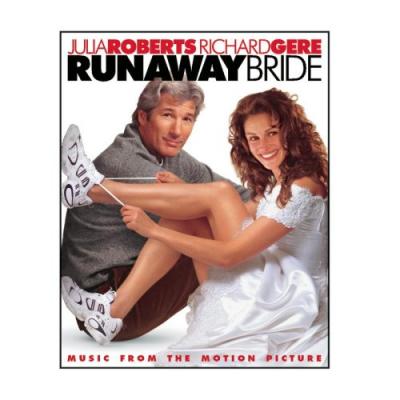
"Runaway Bride" Soundtrack Lyrics
Movie • 1999
Track Listing
U2
Dixie Chicks
Martina McBride
Daryl Hall and John Oates
Evan and Jaron
Eric Clapton
Daryl Hall and John Oates
Shawn Colvin
Dixie Chicks
Marc Anthony
Allure
Coco Lee
Billy Joel
Miles Davis
Kenny Loggins and Human Nature
"Runaway Bride (Music from the Motion Picture) & Original Score" – Album Guide to Tracks and Key Scenes
Overview
What does cold feet sound like? In Runaway Bride (1999), it’s country-pop pep giving way to glossy adult-contemporary sway — with a romantic-comedy heartbeat underneath. The retail soundtrack pairs marquee radio singles (Dixie Chicks, Eric Clapton, Hall & Oates, Shawn Colvin, Marc Anthony) with a few deep cuts, while James Newton Howard’s original score supplies the film’s nerves and tenderness.
Arrival → adaptation → rebellion → collapse: the album follows the film’s arc. Bright, fiddle-and-whistle energy greets Maggie’s legend; sleek pop underscores small-town pageants and city temptations; then Howard’s cues breathe through the turning points — a columnist catching feelings, a bride rethinking the script, a final ride toward the right “I do.”
Distinctive touches include a bespoke Diane Warren ballad sung by Eric Clapton (“Blue Eyes Blue”) and a country-anthem lead single (“Ready to Run”) that winks at the premise while doubling as a chart hit. The effect is a late-’90s time capsule that still plays like a wedding playlist with a conscience.
Genres & themes in phases: country-pop & yé-yé gloss — hype & gossip; adult-contemporary & soft-rock — romance in motion; light orchestral score — doubt & decision.
How It Was Made
Howard’s score (strings, woodwinds, a touch of Americana) sketches Maggie’s jitters and Ike’s begrudging softening; the thematic writing stays nimble, keeping out of the songs’ way. The commercial song album landed July 1999 via multiple labels (a typical multi-rights co-release), sequencing radio names around the movie’s set pieces. Kathy Nelson handled music supervision, balancing new singles with catalog pulls so scenes felt contemporary without drowning out the characters (as per trade credits).
Tracks & Scenes
“Ready to Run” — Dixie Chicks
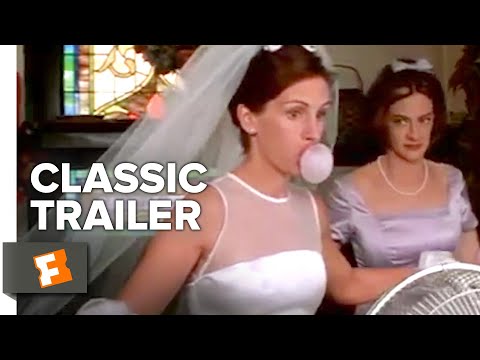
Where it plays: Over early film branding and promotional cuts; in-film it frames the “runaway” mythos — townsfolk chatter, Maggie’s legend set in motion, bridal shoes laced to sneakers.
Why it matters: The thesis in three and a half minutes — fleet, funny, and a hit in its own right.
“Blue Eyes Blue” — Eric Clapton
Where it plays: A reflective love-theme placement in the film’s back half and through end-credit context; the official video intercuts movie imagery with Clapton at the white church.
Why it matters: Diane Warren’s pop craft gives the album its velvety center.
“Maneater” — Daryl Hall & John Oates
Where it plays: A cheeky mid-movie montage needle-drop — salon chatter, dress fittings, and small-town swagger; the lyric toys with Maggie’s reputation as a heartbreaker.
Why it matters: Wry, irresistible shorthand for a heroine the town thinks it knows.
“Never Saw Blue Like That” — Shawn Colvin
Where it plays: Quiet interlude as feelings sharpen; dusk light, slower cuts, a look held a beat too long.
Why it matters: The album’s softest confession — a breath between comic sprints.
“You Sang to Me” — Marc Anthony
Where it plays: Reception-and-slow-dance texture near the story’s romantic pivot; crowd murmurs blur under a croon.
Why it matters: Late-’90s pop-Latin glow that sells sincerity without syrup.
“I Love You” — Martina McBride
Where it plays: Bridal-mag and shop-window montage energy — the film’s shiny wedding-industrial mood board.
Why it matters: Radio-friendly country warmth to match Main Street optimism.
“You Can’t Hurry Love” — Dixie Chicks
Where it plays: Lighter comic business — relatives, rehearsals, and the town’s “is she or isn’t she” whisper network.
Why it matters: A classic Motown sentiment, twanged and sped up for rom-com rhythm.
“From My Head to My Heart” — Evan and Jaron
Where it plays: Phone-call flurries and last-minute doubts, the song title practically reading the characters’ debate.
Why it matters: Earnest millennial-pop that fits the movie’s hinge.
“Before I Fall in Love” — Coco Lee
Where it plays: A gentle makeover of mood — city day into small-town night, reflections in shop glass.
Why it matters: The sonic glow that lets a joke scene exhale into a feeling.
Score cue set — James Newton Howard
Where it plays: Titles and transitions (“Main Title”), newsroom banter (“Ike Writes Column”), bridal-panic beats (“Hyperventilating”), the final hillside vows.
Why it matters: The film’s pulse when the jukebox stops; character first, then quip.
Notes & Trivia
- Music supervisor: Kathy Nelson. A veteran of big, song-forward studio comedies.
- Composer: James Newton Howard — lyrical romantic-comedy voice with gentle Americana touches.
- Diane Warren wrote “Blue Eyes Blue” specifically for the film; Clapton’s recording became an Adult Contemporary staple.
- Two cuts by Hall & Oates appear (“Maneater,” and “And That’s What Hurts”).
- The soundtrack’s country bookends (Dixie Chicks & Martina McBride) helped the album travel across radio formats.
Music–Story Links
When the town gossips about Maggie’s bridal body count, “Ready to Run” turns hearsay into hoofbeats. Later, “Maneater” reframes the same rumor mill as camp — a playful anthem that lets Maggie slip the punchline. Across the middle stretch, softer pop cues (“Never Saw Blue Like That,” “You Sang to Me”) slow the camera and widen the emotional frame. Howard’s cues bind it: the newsroom theme says Ike’s cynicism is a mask; the late, quiet scoring around the hillside ceremony lets the movie finally whisper instead of wink.
Reception & Quotes
Trade reviews credited the soundtrack’s polish and the score’s romance-first restraint. According to Variety’s credits, Nelson’s supervision and Howard’s music are integral to the film’s easygoing glide — you remember the dresses and jokes because the music keeps the mood buoyant.
“A crowd-pleaser of a package — radio-ready but scene-savvy.” Album capsule
“Howard’s writing keeps the film’s heart beating between needle-drops.” Score note
Interesting Facts
- Lead single fuel: “Ready to Run” doubled as a major country hit and awards magnet, driving the album’s profile.
- Video synergy: Clapton’s “Blue Eyes Blue” video intercuts film imagery with new church-yard performance shots.
- Two-format strategy: Country + AC/soft-rock cuts made the album a retail and radio crossover.
- Score collectors: Unofficial uploads circulate a compact Howard program with cue titles fans know by heart.
- Hall & Oates renaissance: “Maneater” found a second life with the movie’s montage placement.
Technical Info
- Title: Runaway Bride — Music from the Motion Picture (song album) & Original Score (James Newton Howard)
- Year: 1999
- Composer: James Newton Howard
- Music Supervisor: Kathy Nelson
- Key artists (album): Dixie Chicks; Eric Clapton; Hall & Oates; Shawn Colvin; Marc Anthony; Martina McBride; Evan and Jaron; Allure; Coco Lee; U2 (catalog)
- Selected placements: “Ready to Run” (opening mythos/marketing); “Maneater” (reputation montage); “Never Saw Blue Like That” (quiet pivot); “You Sang to Me” (slow-dance texture); “Blue Eyes Blue” (love-theme/end-credit context)
- Label/format: Multi-label compilation for songs; score issued separately; both widely available on streaming
Questions & Answers
- Who composed the score?
- James Newton Howard — lyrical, lightly Americana-tinted romantic-comedy writing.
- Who supervised the soundtrack?
- Kathy Nelson oversaw the needle-drops and singles strategy.
- What was the big single tied to the movie?
- “Ready to Run” by the Dixie Chicks — it also appears on their album Fly.
- What’s the Eric Clapton song in the film?
- “Blue Eyes Blue,” written by Diane Warren for Runaway Bride.
- Is the score available?
- Yes — selections circulate from Howard’s original program; the song compilation is widely streaming.
Canonical Entities & Relations
| Subject | Verb | Object |
|---|---|---|
| Garry Marshall | directed | Runaway Bride (1999) |
| James Newton Howard | composed | Runaway Bride original score |
| Kathy Nelson | served as | music supervisor |
| Eric Clapton | performed | “Blue Eyes Blue” (Diane Warren) |
| Dixie Chicks | performed | “Ready to Run”; “You Can’t Hurry Love” |
| Daryl Hall & John Oates | performed | “Maneater”; “And That’s What Hurts” |
| Shawn Colvin | performed | “Never Saw Blue Like That” |
| Marc Anthony | performed | “You Sang to Me” |
| Martina McBride | performed | “I Love You” |
| Paramount Pictures | distributed | Runaway Bride |
Sources: retail/streaming album listings; Variety credits; soundtrack catalogs; composer filmographies; official videos and trailer materials for context.
November, 19th 2025
A-Z Lyrics Universe
Cynthia Erivo Popular
Ariana Grande Horsepower
Post Malone Ain't No Love in Oklahoma
Luke Combs Good Riddance (Time of Your Life)
Green Day Bye Bye Bye
*NSYNC You're the One That I Wan
John Travolta & Olivia Newton-John I Always Wanted a Brother
Braelyn Rankins, Theo Somolu, Kelvin Harrison Jr. and Aaron Pierre The Power of Love
Frankie Goes to Hollywood Beyond
Auli’i Cravalho feat. Rachel House MORE ›