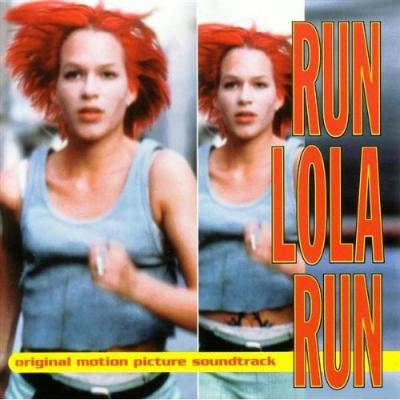
"Run Lola Run" Soundtrack Lyrics
Movie • 1999
Track Listing
Franka Potente
Sun Electric
Franka Potente
Franka Potente
Franka Potente & Tom Tykwer
Franka Potente, Susie Van der Meer, and Tom Tykwer
Franka Potente
Franka Potente
Franka Potente & Thomas D
Franka Potente
Franka Potente
Franka Potente
Franka Potente
Franka Potente
Franka Potente
Franka Potente
"Run Lola Run (Original Motion Picture Soundtrack)" – Album Guide to Tracks and Key Scenes
Overview
What does fate sound like when you get three tries? In Run Lola Run, it’s a relentless pulse — a club-tempo conscience that won’t let up until the last roulette spin. The soundtrack, co-composed by Tom Tykwer, Johnny Klimek, and Reinhold Heil, turns Berlin into a sequencer: footfalls become kicks, sirens ride the hi-hat, and every choice drops on the beat.
Across the film’s arrival → adaptation → rebellion → collapse pattern, the music morphs but never stops. Opening phone panic lights the fuse; each “run” gets its own propulsion and vocals; tension peaks at the casino where strings and synths swagger in step. A few vocal features — Franka Potente, Susie van der Meer, and a single with Thomas D. — lace the score with pop hooks so the album plays like a club set with plot.
Distinctive touches: diegetic bleed (street noise tucked into loops), track titles that literally map scenes (“Running One/Two/Three,” “Supermarket,” “Casino”), and a structure that treats repetition not as copy-paste but as remix. As one capsule put it, the music is “relentless, like an extended music video,” and that’s the point — the film is a mix in motion.
Genres & themes in phases: trance-techno & breakbeat — urgency; spoken-word whispers — doubt; orchestral pads — destiny tilts; industrial edges — risk; an almost-liturgical surge — luck, finally.
How It Was Made
Tykwer composed alongside Klimek and Heil, then produced the record with remixes that mirror the film’s looped narrative. Recording spanned Berlin, Stuttgart, and Santa Barbara studios, with the trio layering synths, drum programming, and minimal live elements. The commercial album dropped via TVT Records in June 1999, with earlier territorial discs in 1998; it sequences the core cues (tracks 2–9) and then kicks into remixes (10–15), “like alternate realities you can dance to.”
Vocal casting was in-house: Potente’s cool chant leads the “Running” cuts, Klimek fronts the sly “Supermarket,” and van der Meer’s “Somebody Has To Pay” provides a bruised ballad. A separate single, “Wish (Komm zu mir),” pairs Potente with Thomas D. from Die Fantastischen Vier — a promo cut that also surfaces in-film.
Tracks & Scenes
“Introduction” — Tykwer/Klimek/Heil
Where it plays: The clock swings, faces look up, and the world declares its rules. Over the opening montage and title, synths spool tension while percussion sets the film’s cadence.
Why it matters: It’s the thesis cue — time as groove, fate as arrangement.
“Running One” — feat. Franka Potente
Where it plays: The first 20-minute sprint: Lola bursts from her flat, ricochets through streets, collides with a dog, and careens toward her father’s bank. Vocals breathe in time with her stride; snare rushes mimic adrenaline.
Why it matters: Establishes the template — propulsion with human grain (Potente’s voice) woven into the beat.
“Supermarket” — vocals by Johnny Klimek
Where it plays: The attempted quick-cash fix during the first run — fluorescent light, jittery camera, a plan that frays as fast as the hi-hat.
Why it matters: Gallows humor under pressure; a sly vocal amid machine rhythm.
“Running Two” — feat. Franka Potente
Where it plays: Reset. The second route alters micro-moments — a different stride past the nuns, a truck that almost hits — as synth motifs shift like probability itself.
Why it matters: Same map, new variables; music marks the butterfly-effect edits.
“Running Three” — feat. Franka Potente & Susie van der Meer
Where it plays: Third pass, highest stakes. Two voices thread through percussion as camera moves get bolder. The groove feels inevitable — and then it breaks the pattern.
Why it matters: A duet with destiny; adding a second voice hints at convergence.
“Casino”
Where it plays: Lola storms the roulette table, hands trembling steady, crowd noise ducked under synth swells; the wheel spins like a delay pedal, time stretching on the downbeat.
Why it matters: The most iconic needle-turn — music, chance, and will power in lockstep.
“Somebody Has To Pay” — Susie van der Meer
Where it plays: A bruised lull between runs, reflective and low-lit, as consequences weigh on everyone not built to sprint forever.
Why it matters: Gives the album its ache; a human voice after so much machine will.
“Wish (Komm zu mir)” — Franka Potente & Thomas D.
Where it plays: Presents as a single and plays in credits/marketing context; in some editions it tags the movie’s come-down with a whisper-to-chant hook.
Why it matters: A pop handshake to the wider world — the film’s club DNA crossing to radio.
Remix suite (“Introduction”/“Running One”/“Running Two”/“Casino”)
Where it plays: Album-only alternates that recut the movie’s spine as after-hours mixes.
Why it matters: Mirrors the narrative design: same elements, different outcomes.
Notes & Trivia
- The core film cues are tracks 2–9 on most editions; tracks 10–15 are remixes cut by scene-linked collaborators.
- Potente isn’t just acting — she’s a featured vocalist across multiple running cues and on the single “Believe.”
- Region timing: Germany/Europe saw 1998 releases; the U.S. album streeted June 15, 1999.
- Music supervision in Germany credited Daydream Filmmusic Productions; the U.S. album arrived via TVT Soundtrax.
- The soundtrack’s constant presence turns the film into something like a live DJ set with jump-backs.
Music–Story Links
Each “run” is effectively a new mix: downbeats return, but the arrangement changes. When Lola hits the glass bank doors, percussion hiccups; when she pivots to the casino, pads swell as if the room itself is breathing. Vocals map perspective — Potente’s chant equals will; van der Meer’s ballad equals cost; Klimek’s murmured “Supermarket” vocal equals a bad idea you try anyway. And the remixes on the album literalize the film’s thesis: repeat, vary, learn.
Reception & Quotes
Contemporary reviews clocked the album as inseparable from the film — a kinetic partner rather than background. One critic called it “one of the most cohesive soundtrack albums in recent memory,” while another shrugged at its replay value without picture — fair, but the movie and music were built as a unit. As per the soundtrack’s credits and catalog entries, the TVT issue standardized the international program for U.S. listeners.
“Fast-paced, bass-heavy techno that starts as soon as the film begins and never lets up.” Essay capsule
“If you’re hooked on the film, this could hit the spot.” Album review
Interesting Facts
- Track-to-scene labeling: “Running One/Two/Three,” “Supermarket,” and “Casino” are literally what you hear where you see them.
- Studio triangle: sessions ran in Berlin, Stuttgart, and Santa Barbara — a Euro–U.S. hybrid production.
- Single life: “Believe” and “Wish (Komm zu mir)” traveled beyond the film, with regional single releases and radio edits.
- Remix logic: the back half behaves like the film: same stems, different outcomes — a structural in-joke.
- Endurance mix: play tracks 2–9 straight through to re-live the film’s narrative without dialog.
Technical Info
- Title: Run Lola Run (Original Motion Picture Soundtrack)
- Year: 1999 U.S. album (film 1998; U.S. release 1999)
- Type: Score/OST with vocal features + remix suite
- Composers/Producers: Tom Tykwer, Johnny Klimek, Reinhold Heil
- Key vocals: Franka Potente; Susie van der Meer; Johnny Klimek; Thomas D. (single)
- Labels: TVT Records (U.S.); BMG/RCA variants in Europe
- Representative tracks: “Introduction,” “Running One/Two/Three,” “Supermarket,” “Casino,” “Somebody Has To Pay,” “Wish (Komm zu mir)”
- Runtime: ~73–77 minutes depending on pressing
- Availability: Streaming/download widely; multiple CD pressings by territory
Questions & Answers
- Who wrote the music for Run Lola Run?
- Tom Tykwer, Johnny Klimek, and Reinhold Heil co-composed and produced the score/OST.
- Why does the album have so many remixes?
- They echo the movie’s looped structure — same core, different outcomes — and extend the club aesthetic.
- Is “Wish (Komm zu mir)” in the film or just a single?
- It functioned as a promo single and appears in film/credits contexts depending on edition; it’s on the OST.
- Which cue underscores the roulette scene?
- “Casino” — the music stretches time while the wheel spins and stakes spike.
- Where should I start if I want the film-in-album experience?
- Play tracks 2–9 in order (“Introduction” through “Wish”) — that’s the movie’s spine.
Canonical Entities & Relations
| Subject | Verb | Object |
|---|---|---|
| Tom Tykwer | directed | Run Lola Run (1998) |
| Tom Tykwer | co-composed | Run Lola Run soundtrack |
| Johnny Klimek | co-composed | Run Lola Run soundtrack |
| Reinhold Heil | co-composed | Run Lola Run soundtrack |
| Franka Potente | performed vocals on | “Believe,” “Running One/Two/Three,” “Wish (Komm zu mir)” |
| Susie van der Meer | performed | “Somebody Has To Pay” |
| TVT Records | released | Run Lola Run (U.S. soundtrack, 1999-06-15) |
| BMG/RCA (regional) | released | European soundtrack editions (1998–1999) |
Sources: soundtrack album listings and liner credits; Discogs/BMG/TVT pressings; film credits and soundtrack page; contemporary reviews/essays on the album’s design and use in the film.
November, 19th 2025
A-Z Lyrics Universe
Cynthia Erivo Popular
Ariana Grande Horsepower
Post Malone Ain't No Love in Oklahoma
Luke Combs Good Riddance (Time of Your Life)
Green Day Bye Bye Bye
*NSYNC You're the One That I Wan
John Travolta & Olivia Newton-John I Always Wanted a Brother
Braelyn Rankins, Theo Somolu, Kelvin Harrison Jr. and Aaron Pierre The Power of Love
Frankie Goes to Hollywood Beyond
Auli’i Cravalho feat. Rachel House MORE ›