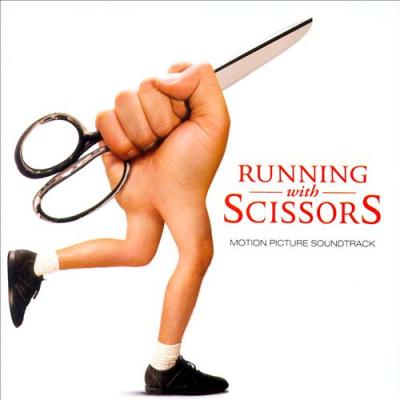
"Running With Scissors" Soundtrack Lyrics
Movie • 2006
Track Listing
Average White Band
Manfred Mann's Earth Band
10cc
Catherine Feeny
The 5th Dimension
Nat King Cole
Phoebe Snow
Elton John
Al Stewart
Vince Guaraldi Trio
James S. Levine
Nat King Cole
Crosby, Stills & Nash
"Running with Scissors (Music from the Motion Picture) + Original Score" – Album Guide to Tracks and Key Scenes
Overview
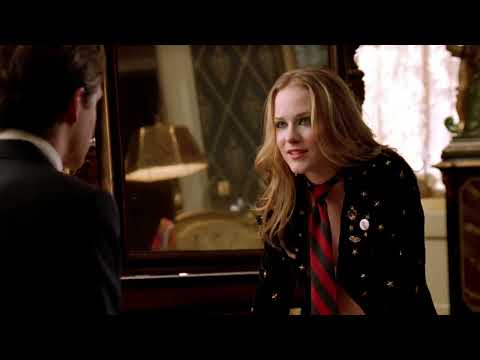
How do you soundtrack a memoir that keeps yanking the floorboards? With soft-rock comfort that slips, Christmas jazz that hurts a little, and a score that looks you in the eye when the jokes stop. Running with Scissors (2006) sets its 1970s coming-of-age chaos to a crate of AM-radio staples — 10cc, Elton John, Al Stewart, Crosby, Stills, Nash & Young — plus Nat King Cole torchlight and Vince Guaraldi’s brittle holiday glow. Between them threads James S. Levine’s original score: small motifs, slightly tilted harmony, feelings said in a half-whisper.
The film’s arc — arrival → adaptation → rebellion → collapse — is audible. We arrive with radio-friendly optimism; adapt to the Finch household’s wildness over jazzy and library picks; rebel when the needle-drops turn wry; and collapse into hushed cues as Augusten figures out how to write his way forward.
Distinctive touches include a recurring adaptation of Telepopmusik’s “Another Day” as an underlying theme and Bill Evans pieces used like delicate punctuation. The commercial album gathers thirteen cuts (Average White Band through CSNY) with one score cue (“A Great Ocean Liner”), while the rest of Levine’s writing lives inside the film and in composer credits.
Genres & themes in phases: 70s soft-rock & pop-soul — home illusions; classic jazz & lounge — Finch-house surreal; Christmas jazz — holiday ache; chamber-tinged score — clarity at last.
How It Was Made
Director Ryan Murphy asked for period songs that felt like the music these characters would actually have on — living-room LPs, car radios, the TV left on too long. P.J. Bloom supervised, balancing marquee catalog (Elton John, Al Stewart) with gentler textures (Phoebe Snow, Nat King Cole) so the needle-drops could carry irony without cruelty. James S. Levine composed the original score, keeping cues intimate — piano, lightly unsettled strings, and small pulses that stay inside Augusten’s head. The retail compilation arrived in late September 2006 via EMI/Capitol with 13 tracks sequenced as a bittersweet mixtape (as per label listings and credit sheets).

Tracks & Scenes
“Pick Up the Pieces” — Average White Band
Where it plays: Early domestic bustle and town-gloss montage; snappy horn stabs over a house that wants to look normal.
Why it matters: Funk as denial — a grin stretched over the fissures.
“Blinded by the Light” — Manfred Mann’s Earth Band
Where it plays: Driving sequences and kinetic transitions as Augusten ricochets between parents and the Finches.
Why it matters: Overstuffed, euphoric, a little incoherent — like the adults’ promises.
“The Things We Do for Love” — 10cc
Where it plays: A wry domestic interlude, Augusten watching romance-as-theory fail in real time.
Why it matters: Pop aphorisms as self-own — the lyric is the joke.
“Mr. Blue” — Catherine Feeny
Where it plays: A quiet, transitional beat (letters, longing, an empty room).
Why it matters: Indie hush among giants; gives space to breathe.
“One Less Bell to Answer” — The 5th Dimension
Where it plays: Kitchen-sink melancholy with Deirdre; chores done to keep the ache away.
Why it matters: Burt Bacharach’s bittersweet math fits the movie’s smile-through-it reflex.
“Quizás, Quizás, Quizás (Perhaps, Perhaps, Perhaps)” — Nat King Cole
Where it plays: Finch-house flirtations and deflections around adult conversations Augusten isn’t supposed to get.
Why it matters: Elegant evasion — everything said, nothing admitted.
“Poetry Man” — Phoebe Snow
Where it plays: A tender false-calm for Deirdre’s artistic self-myth; incense, drafts, big claims.
Why it matters: The most generous light the film gives her dream.
“Bennie and the Jets” — Elton John
Where it plays: A flash of brilliance and artifice at a gathering — the room turns sparkly for a minute.
Why it matters: Glam as coping mechanism; the chorus sells the performance everyone’s putting on.
“Year of the Cat” — Al Stewart
Where it plays: A rite-of-passage moment between teens; lamps low, curiosity high.
Why it matters: Soft-focus romance for a scene that changes what Augusten thinks he knows.
“O Tannenbaum” — Vince Guaraldi Trio
Where it plays: Holiday tableau in a house that can’t quite do “warmth” straight.
Why it matters: A Charlie Brown glow used for ache, not cheer.
“Stardust” — Nat King Cole
Where it plays: Night-scene reflection; a classic croon against unfamiliar ceilings.
Why it matters: Memory music for a kid trying to make one good one.
“Teach Your Children” — Crosby, Stills, Nash & Young
Where it plays: Late in the story as Augusten takes stock of the grown-ups’ report card.
Why it matters: The lyric lands harder than intended — that’s the movie.
Bill Evans cues (“Waltz for Debby,” etc.) — performed selections
Where it plays: Interludes inside the Finch house, gentle piano framing odd rules and rituals.
Why it matters: Jazz as fine china — delicate, a little sad.
“d-moll” — Tosca
Where it plays: The infamous “stew” sequence; the camera lingers; time goes syrupy.
Why it matters: Downtempo hypnosis — the scene’s unease without raising its voice.
Recurring theme adapted from “Another Day” — Telepopmusik
Where it plays: Under several connective passages and voiceover beats; a breathy loop tagging Augusten’s interior.
Why it matters: A modern thread through vintage rooms — memory heard as present tense.
Score: “A Great Ocean Liner” — James S. Levine
Where it plays: Album-only taste of the score; in-film, Levine’s palette supports departures, small epiphanies, and the last, necessary goodbye.
Why it matters: The cue title is the metaphor — forward motion, however slow.
Notes & Trivia
- Composer: James S. Levine — also a key musical voice on Ryan Murphy’s TV projects of the era.
- Music supervision: P.J. Bloom, with Jennifer Reeve coordinating and Tom Trafalski on music editing.
- Album: 13-track compilation on EMI America/Capitol, released September 26, 2006.
- Under-the-hood motif: An adaptation of Telepopmusik’s “Another Day” recurs throughout the film’s fabric.
- Jazz spine: Bill Evans pieces function as tone regulators inside the Finch household.
Music–Story Links
Soft-rock optimism (“The Things We Do for Love,” “Teach Your Children”) becomes ironic commentary the second adults fail their lines. When the story slides into ritual and unreality at Dr. Finch’s, jazz takes over — order imposed with fragile manners. Holiday scenes use Guaraldi’s O Tannenbaum to underline how thin the warmth is. And whenever Augusten narrates himself toward a future, Levine’s cues and that breathy “Another Day” adaptation step forward: a present-tense pulse that belongs to the writer, not the room.
Reception & Quotes
Reviews were mixed on the film, kinder to its soundtrack sense: familiar songs used with a slightly sour smile, and a score that knows when to back away. The compilation plays like a carefully sequenced LP — a little shine, a little sting — and the single included score cue hints at a fuller, quieter musical world off-album.
“70s radio turned into commentary — sweet on the surface, subversive underneath.” Album capsule
“Levine’s cues don’t push; they notice.” Score note
Interesting Facts
- Label maths: The compilation bears EMI America credits with Capitol listed as the record label steward.
- Catalog deepening: The album tucks one Levine cue among 12 songs; the rest of his work is in-film.
- Holiday twist: Guaraldi’s beloved jazz carol is deployed for ache, not cheer.
- Library/library-adjacent: Alongside big names, the movie folds in mood cuts (Bill Evans, Tosca) for off-kilter calm.
- Trailer glow: Elton John’s “Bennie and the Jets” became closely associated with promo materials even beyond the film itself.
Technical Info
- Title: Running with Scissors — Music from the Motion Picture (compilation) + Original Score by James S. Levine (in-film)
- Year: 2006
- Composer: James S. Levine
- Music Supervisor: P.J. Bloom (music coordinator: Jennifer Reeve; music editor: Tom Trafalski)
- Label: EMI America / Capitol Records (compilation)
- Representative songs (album): “Pick Up the Pieces,” “Blinded by the Light,” “The Things We Do for Love,” “Mr. Blue,” “One Less Bell to Answer,” “Quizás, Quizás, Quizás,” “Poetry Man,” “Bennie and the Jets,” “Year of the Cat,” “O Tannenbaum,” “A Great Ocean Liner” (score), “Stardust,” “Teach Your Children”
- Release notes: Compilation streeted Sept 26, 2006; film opened the following month.
- Availability: Streaming/download widely (13 tracks, ~52 minutes); physical CD issued in 2006.
Questions & Answers
- Who composed the score?
- James S. Levine — intimate piano/strings writing that stays close to Augusten’s POV.
- Who supervised the songs?
- P.J. Bloom led music supervision, with Jennifer Reeve coordinating.
- Is there a full score album?
- The retail disc is a 13-track song compilation with one score cut; Levine’s cues are otherwise in the film.
- Which tracks best define the film’s mood?
- “Year of the Cat” for tender rites-of-passage; “O Tannenbaum” for bittersweet holiday; “A Great Ocean Liner” for forward motion.
- What’s the recurring modern motif people notice?
- An adaptation of Telepopmusik’s “Another Day,” used as an underlying theme in several scenes.
Canonical Entities & Relations
| Subject | Verb | Object |
|---|---|---|
| Ryan Murphy | directed | Running with Scissors (2006) |
| James S. Levine | composed | original score for Running with Scissors |
| P.J. Bloom | served as | music supervisor |
| EMI America / Capitol | released | Running with Scissors — Music from the Motion Picture (2006) |
| Average White Band | performed | “Pick Up the Pieces” |
| Manfred Mann’s Earth Band | performed | “Blinded by the Light” |
| 10cc | performed | “The Things We Do for Love” |
| Elton John | performed | “Bennie and the Jets” |
| Al Stewart | performed | “Year of the Cat” |
| Vince Guaraldi Trio | performed | “O Tannenbaum” |
| Nat King Cole | performed | “Quizás, Quizás, Quizás”; “Stardust” |
| Columbia / TriStar (Sony) | distributed | Running with Scissors |
Sources: soundtrack retail/streaming listings; film credits & music department rosters; album notes; reputable summaries confirming Telepopmusik/Bill Evans/Tosca usages.
November, 19th 2025
A-Z Lyrics Universe
Cynthia Erivo Popular
Ariana Grande Horsepower
Post Malone Ain't No Love in Oklahoma
Luke Combs Good Riddance (Time of Your Life)
Green Day Bye Bye Bye
*NSYNC You're the One That I Wan
John Travolta & Olivia Newton-John I Always Wanted a Brother
Braelyn Rankins, Theo Somolu, Kelvin Harrison Jr. and Aaron Pierre The Power of Love
Frankie Goes to Hollywood Beyond
Auli’i Cravalho feat. Rachel House MORE ›