Soundtracks:  A B C D E F G H I J K L M N O P Q R S T U V W X Y Z #


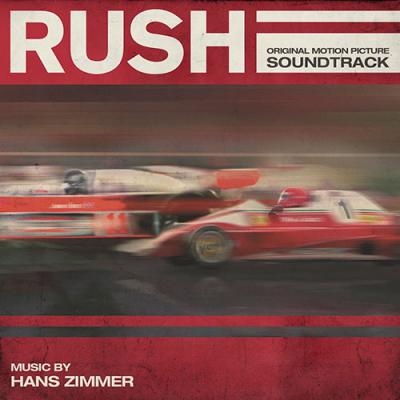
Rush Album Cover

"Rush" Soundtrack Lyrics

Movie • 2013

Track Listing


"Rush (Original Motion Picture Soundtrack)" – Album Guide to Tracks and Key Scenes

Rush trailer still — Hunt and Lauda on the grid as synth pulses rev like engines
“Rush” — 2013 film soundtrack, trailer still

Overview

What does rivalry at 300 kph sound like? In Rush (2013) the answer is a supercharged hybrid: Hans Zimmer’s tensile, motorik score welded to 1970s rock that smells of petrol and podium champagne. The album plays like a race weekend — tuning laps of synth and cello, then a green flag into glam, pub rock, and Bowie swagger.

The music traces the film’s arrival → adaptation → rebellion → collapse arc. We arrive in a glittering paddock scored by clipped, metronomic cues; adapt as James Hunt basks in pub-anthem glory; rebel as Niki Lauda’s discipline pushes back; collapse — and recover — through the Nürburgring inferno and Mount Fuji rain, where Zimmer’s themes carry the weight of consequence.

Distinctives: a full score album that sits comfortably alongside five classic cuts (Dave Edmunds, Mud, Thin Lizzy, David Bowie — plus a Steve Winwood-associated banger), and a handful of period selections and international radio cues that color specific circuits. The result? A soundtrack that’s both a time capsule and a precision engine.

Genres & themes in phases: synth ostinatos & electric cello — discipline; glam/pub rock — swagger; soul/reggae/Brazilian samba — world tour; elegiac strings + ticking percussion — reckoning.

How It Was Made

Zimmer frames speed with restraint: tight pulses, low strings (Martin Tillman’s electric cello as torque), and clean harmonic lines that “breathe” with gear changes. The commercial album (Sony Classical/WaterTower) arrived September 2013 with 24 tracks sequencing score cues alongside era singles — a rare case where the rock cuts feel like chapter titles, not just garnish.

Music editorial keeps engines and music in conversation — revs bleed into downbeats; crowd roar fades under a snare rush; crash aftermaths open into long tones. As per label notes, the program builds toward a late suite (“Nürburgring” → “Inferno” → “Mount Fuji” → “For Love” → “Lost but Won”) that functions as the film’s emotional endgame.

Trailer frame — the start lights count down as Zimmer’s metronome-like ticks stack
Precision first, fireworks later — the score’s discipline meets 70s excess

Tracks & Scenes

“I Hear You Knocking” — Dave Edmunds
Where it plays: Hunt (with Nancy) rolls up at a circuit; mechanics and reporters swarm as the groove struts into frame.
Why it matters: Announces Hunt’s rock-star aura — the paddock as backstage.

“Gimme Some Lovin’” — Steve Winwood (The Spencer Davis Group)
Where it plays: First race sequence blast — trackside cuts, flag marshals, elbows out.
Why it matters: A six-cylinder classic that sells the era’s adrenaline.

“Mama Weer All Crazee Now” — Slade
Where it plays: Driver-of-the-year celebration — bottles pop, flashbulbs strobe, Hunt leans into the circus.
Why it matters: Party-as-brand; the lyric is Hunt’s thesis.

“Dyna-Mite” — Mud
Where it plays: Party montage that distills Hunt’s 70s excess — dancing on carpeted yachts, grins too wide.
Why it matters: Pure glam fizz before reality bites.

“Sono una donna, non sono una santa” — Rosanna Fratello
Where it plays: A social stop on Lauda’s side: introductions, a sour handshake, and a curt exit.
Why it matters: Italian pop coloring a scene about culture clash and control.

“The Rocker” — Thin Lizzy
Where it plays: After Hunt loses the U.S. round to Lauda — stripped ego, revs echo, guitars snarl.
Why it matters: A musical shove — get up or get gone.

“Many Rivers to Cross” — Jimmy Cliff
Where it plays: Hunt’s sponsorship slump; late bar, too much reflection in the glass.
Why it matters: Sweet ache for a bruised pride.

“Ê Baiana” — Clara Nunes
Where it plays: Brazilian GP color — sambas and sun tucked under pit-lane bustle.
Why it matters: Honest local texture; the world tour feels global, not generic.

“Sad Sweet Dreamer” — Sweet Sensation
Where it plays: Needle-drop memory glaze around a quiet interlude.
Why it matters: Soft-focus respite before the hammer falls.

“Fame” — David Bowie
Where it plays: Post–World Championship catharsis — Hunt wins by a point and the camera drinks in the moment.
Why it matters: The glam anthem that turns victory into a question mark.


Score: “1976” — Hans Zimmer
Where it plays: Prologue and identity pass — heartbeat clicks, sinewy cello; the season comes into focus.
Why it matters: Establishes the film’s timing — metronome as destiny.

“Into the Red”
Where it plays: Hunt pushes machinery (and luck) past sensible limits; edit cuts like downshifts.
Why it matters: A musical overtake — risk as rhythm.

“Watkins Glen”
Where it plays: U.S. race texture; the cue rides percussion like curbing.
Why it matters: Regional grit — the track’s character in the pulse.

“Nürburgring” → “Inferno”
Where it plays: Lauda’s fateful lap and aftermath; engines drown to white noise, then strings hold the silence.
Why it matters: The film’s moral core — courage heard as restraint.

“Mount Fuji”
Where it plays: Monsoon finale in Japan; low ostinatos like wipers, brass like standing water.
Why it matters: Racecraft versus survival — the music sides with judgment.

“For Love” → “Lost but Won”
Where it plays: Epilogue — rivalry reframed as respect; photos, breath, rain steam.
Why it matters: One of Zimmer’s great afterglow codas — competitive fire cooling into grace.

Trailer collage — Hunt’s champagne spray, Lauda’s visor down, rain at Fuji; cues and cuts in lockstep
Rock for the swagger; score for the nerve endings

Notes & Trivia

  • Score + songs: the album mixes Zimmer cues with five era cuts (Edmunds, Winwood/Spencer Davis Group, Mud, Thin Lizzy, Bowie).
  • Trailer flavor: Flux Pavilion’s “I Can’t Stop” turns up in marketing, not in-film.
  • Headphone:X mix: the release promoted a binaural option to simulate theatrical placement.
  • Cello as engine: Martin Tillman’s electric cello is the soundtrack’s signature torque.
  • Suite finish: “Nürburgring” through “Lost but Won” plays like a miniature tone poem about risk.

Music–Story Links

Hunt’s world arrives scored to pub and glam anthems (“Dyna-Mite,” “Mama Weer All Crazee Now”), while Lauda’s scenes lean into meter and clarity (tick-tock cues like “Stopwatch,” “Into the Red”). When hubris meets weather at the Green Hell, guitars vanish and the score breathes — we sit with consequence. By Mount Fuji, the music argues for judgment over ego; the endgame suite then recasts rivalry as two men finishing the same sentence.

Reception & Quotes

Critics pegged the soundtrack as a sleek fit: rock for spectacle, Zimmer for steel. The album got singled out for how tightly its cues mirror gear-changes and for closing with one of the composer’s most affecting codas of the 2010s.

“Glass-and-guts precision; the music idles, then detonates.” Album capsule
“Zimmer’s ‘Lost but Won’ is the victory lap the film earns.” Score note
Trailer close-up — Lauda’s eyes through the visor while a dry, clicking pulse builds
Discipline has a sound — a metronome with teeth

Interesting Facts

  • Two-label release: issued through Sony Classical and WaterTower (territories/format split).
  • Rock spread: the featured classics span UK glam, Irish hard rock, U.S. pub rock, and Bowie’s art-funk.
  • World-circuit color: Italian schlager and Brazilian samba turn circuit stops into places, not wallpaper.
  • Cut-to-engineering: several cues are built around timing clicks recorded like race telemetry.
  • End-title lift: “Fame” over the championship aftermath gives triumph a suspicious grin.

Technical Info

  • Title: Rush (Original Motion Picture Soundtrack)
  • Year: 2013
  • Type: Film score with embedded classic-rock cuts
  • Composer: Hans Zimmer
  • Labels: Sony Classical / WaterTower Music
  • Representative score cues: “1976,” “Stopwatch,” “Into the Red,” “Watkins Glen,” “Nürburgring,” “Inferno,” “Mount Fuji,” “For Love,” “Lost but Won”
  • Representative songs (film): Dave Edmunds — “I Hear You Knocking”; The Spencer Davis Group — “Gimme Some Lovin’”; Slade — “Mama Weer All Crazee Now”; Mud — “Dyna-Mite”; Thin Lizzy — “The Rocker”; Jimmy Cliff — “Many Rivers to Cross”; Rosanna Fratello — “Sono una donna, non sono una santa”; Clara Nunes — “Ê Baiana”; Sweet Sensation — “Sad Sweet Dreamer”; David Bowie — “Fame”
  • Trailer-only highlight: Flux Pavilion — “I Can’t Stop”
  • Availability: 24-track digital/CD on major stores and streamers.

Questions & Answers

Who composed the score for Rush?
Hans Zimmer — sleek pulses, electric cello torque, and restraint over bombast.
Are the rock songs on the main album?
Yes — the retail album interleaves Zimmer cues with era cuts by Edmunds, Mud, Thin Lizzy, Bowie, and a Winwood-associated track.
Which cue covers Lauda’s crash and aftermath?
“Nürburgring” into “Inferno,” then “Mount Fuji” for the rain-lashed finale.
What’s that anthemic end-cue everyone shares?
“Lost but Won” — the reflective closer that reframes the rivalry.
What song blasts after the title is decided?
David Bowie’s “Fame.”

Canonical Entities & Relations

SubjectVerbObject
Ron HowarddirectedRush (2013)
Hans ZimmercomposedRush original score
Sony Classical / WaterTower MusicreleasedRush (Original Motion Picture Soundtrack)
Dave Edmundsperformed“I Hear You Knocking”
The Spencer Davis Group (Steve Winwood)performed“Gimme Some Lovin’”
Sladeperformed“Mama Weer All Crazee Now”
Mudperformed“Dyna-Mite”
Thin Lizzyperformed“The Rocker”
Jimmy Cliffperformed“Many Rivers to Cross”
Rosanna Fratelloperformed“Sono una donna, non sono una santa”
Clara Nunesperformed“Ê Baiana”
Sweet Sensationperformed“Sad Sweet Dreamer”
David Bowieperformed“Fame”

Sources: album/retail listings; soundtrack catalogs; film and music credits; scene-by-scene song notes from dedicated databases; trailer materials.

November, 19th 2025

Read about 'Rush' movie on Wikipedia, visit movie profile on Internet Movie Database
A-Z Lyrics Universe

Lyrics / song texts are property and copyright of their owners and provided for educational purposes only.