Soundtracks:  A B C D E F G H I J K L M N O P Q R S T U V W X Y Z #


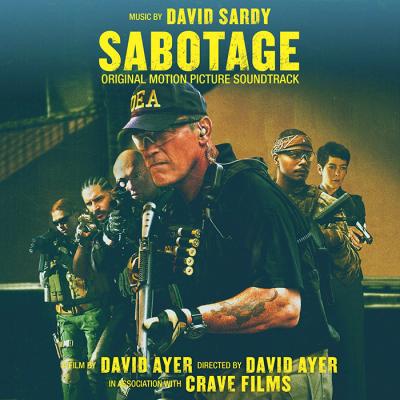
Sabotage Album Cover

"Sabotage" Soundtrack Lyrics

Movie • 2014

Track Listing


“Sabotage (Original Motion Picture Soundtrack)” – Album Guide to Tracks and Key Scenes

Sabotage (2014) official trailer frame — Arnold Schwarzenegger leading the DEA team
Sabotage — trailer mood & score palette, 2014

Overview

How do you score a manhunt that keeps turning the hunter into prey? Sabotage answers with serrated textures: distorted bass, metallic percussion, and short cues that feel like ambushes. The soundtrack—driven by David Sardy’s industrial-leaning score with a handful of needle-drops—tracks an elite DEA unit as bodies pile up and trust corrodes.

The music’s job isn’t romance; it’s pressure. Sardy’s cues slam from sub-bass pulses into clipped string figures and processed drums, then drop out to leave you in dead air just long enough to make the next hit land harder. The palette echoes the film’s tactical interiors—concrete rooms, fluorescent stain, gun-oil air—until the last-act switch to honky-tonk bar grit and border heat changes the timbre entirely.

The narrative arc—arrival → investigation → paranoia → retribution—maps neatly onto the album’s sequencing. Early cues set mission rhythm; mid-film cuts fracture it with uneasy motifs for each dead teammate; the closer stretches into a revenge road-movie cadence. As per official album notes and trade blurbs, this is Sardy in full “hard-edged thriller” mode: minimal melody, maximum momentum.

Genres & themes by phase. Industrial score & electronic grit — unit cohesion and hunt prep. Hybrid orchestral stabs — suspicion and splintering. Downtempo/electro needle-drops — nightlife and moral slide. Roots/Spanish-language cuts — border-town fatalism and last stands.

How It Was Made

Composer David Sardy (also credited as Dave Sardy) wrote the original score; the soundtrack album arrived via Metropolis Movie Music/BFD in mid-2014. The release collects 29 cues (≈61 minutes), including set-piece cues like “Raiding the Cartel,” “Team Training,” and “Apartment Raid.” According to Filmmusicreporter and the album listings, this was positioned as a straight score album with just the film’s licensed songs handled separately in the cue sheets.

Director David Ayer favors diegetic grit—bars, strip clubs, garages—so the mix leans hard on source textures (thudding rooms, crowd rumble) with Sardy’s cues punching through as mission clocks. Editorially, the score often starts as stealth beds under dialogue (interviews, interrogations) and then spikes into distorted hits at each discovery or kill site.

Sabotage trailer still — DEA raid prep and industrial score stingers
Industrial throb + tactical steel — Sardy’s sound of suspicion.

Tracks & Scenes

“Raiding the Cartel” — David Sardy (score)
Where it plays: Opening cartel safe-house assault: Go-pros, breaching charges, and a money room that hums like a beehive. The cue hits with sawtooth bass and percussive snaps as the team stacks on doors and clears rooms. Early film; largely non-diegetic, mixed with radio chatter.
Why it matters: Establishes the unit’s “metronome”—a surgical tempo later weaponized against them.

“Team Training” — David Sardy (score)
Where it plays: Gym and kill-house montage: pads slamming, simunitions, gallows humor. The rhythm breathes between pads and kicks, then chokes into clipped patterns whenever Breacher’s gaze hardens. Early-mid film; non-diegetic montage cue.
Why it matters: Builds the myth of competence the plot will proceed to dismantle.

“Interview” — David Sardy (score)
Where it plays: After the money goes missing, the feds lean in. Fluorescents buzz; a single synth holds, barely. Each question lands with a low thud; you can almost hear the team counting alibis. First act turn; non-diegetic underscoring to dialogue.
Why it matters: The pulse of paranoia begins—motifs fragment and never fully resolve.

“Apartment Raid” — David Sardy (score)
Where it plays: A strobe of muzzle flashes in a cramped complex; doors kicked, stairwells screamed over. The cue goes percussive-minimal, letting impacts and breath sit in the mix. Mid-film set piece; non-diegetic with on-set gunfire dominating.
Why it matters: Music cedes to noise—Ayer’s preference for realism; when the score returns, it feels like fate catching up.

“Breachers Backstory” — David Sardy (score)
Where it plays: Flashback reveals and home-video fragments. Soft-focus footage clashes with ugly truth; the cue introduces a rare lyrical fragment on synth pads before distorting. Late-mid film; non-diegetic under intercut reveals.
Why it matters: The only place Sardy lets melody surface—so it hurts more when it breaks.

“Heights 3” — JMIKE (needle-drop)
Where it plays: Club ambience during a celebratory night out; bodies and bottles blur while the camera prowls for suspects and tells. Non-diegetic source shifting to diegetic as we discover the DJ corner. Early-mid film nightlife beat.
Why it matters: Marks the transition from brotherhood to bravado; the party curdles into threat.

“Ball” — B Boy (needle-drop)
Where it plays: Parking-lot swagger cut with surveillance inserts; the track leaks from car speakers as the team splits. Diegetic source that the mix mutes as a watcher clocks license plates. Early-mid film.
Why it matters: Street-level flex juxtaposed with the film’s procedural eye—hubris on loop.

“Darkest (Dim)” — TOKiMONSTA feat. Gavin Turek (needle-drop)
Where it plays: Neon-blue interior, slow-shutter dancing, and a near-silent exchange between Raj & Caroline’s counterparts within the unit (a cat-and-mouse flirt that turns into intel). Club sequence; primarily diegetic.
Why it matters: Sleek, modern sheen that throws the unit’s bruiser energy into relief.

“All We Do” — Kaytranada (needle-drop)
Where it plays: After-hours drift through a back room; drinks on the table, eyes on the exits, a phone vibrates with bad news and the camera stays too long. Diegetic; low in the mix.
Why it matters: The rare moment the film lets the night breathe—and the dread seep in.

“Beer Bar Blues” — Lloyd Conger (needle-drop)
Where it plays: Roadhouse interlude on the way south: neon beer signs, boots on a rail, a TV hissing sports highlights nobody watches. Diegetic jukebox/source. Late film.
Why it matters: Color shift: from urban steel to border dust—music tells you we’ve crossed a moral line.

“La Casa Del Sol Naciente” — Alejandra Guzmán (needle-drop)
Where it plays: Spanish-language bar sequence near the border; the track rides under a tense negotiation while slot machines chime. Diegetic; background source. Late film.
Why it matters: Local texture with fatalist undertow—“house of the rising sun” as omen.

“Mafia Nueva” — El Komander (needle-drop)
Where it plays: Corrido-style blast as a cartel convoy rolls by; the camera steals faces while engines idle. Diegetic—truck radio. Late film.
Why it matters: Signals the cartel’s world on its own terms—swagger, myth-making, menace.

Sabotage trailer frame — corridor shootout and percussive score stabs
Hallway shock cuts, then silence — the score’s favorite trick.

Music–Story Links

  • Mission clocks: “Raiding the Cartel” and “Team Training” give the unit a shared tempo—later cues deliberately desynchronize it to mirror distrust.
  • Paranoia motif: “Interview” reduces harmony to a single held tone; every cut to a new suspect reintroduces that pitch like a lie detector.
  • Nightlife beats (“Heights 3,” “Darkest (Dim)”) frame bravado as camouflage; the same rooms become hunting grounds two scenes later.
  • Border music (“Beer Bar Blues,” “La Casa Del Sol Naciente,” “Mafia Nueva”) marks the morality shift—lawman code yields to personal vendetta.

Reception & Quotes

The film opened March 28, 2014 in the U.S. and drew mixed-to-negative reviews, but Sardy’s hard, utilitarian score fit Ayer’s procedural ruthlessness. The album arrived summer 2014 with 29 cues; physical CDs circulated via BFD/Red River distribution.

“The album features the film’s original score composed by David Sardy… released by Metropolis Movie Music.” Film Music Reporter
“29 songs, 1 hour 1 minute.” Apple Music album listing
“CD release with full track list and credits.” Discogs entry
Sabotage trailer still — late-film pursuit shifting toward border-town palette
From steel to dust — the soundtrack’s late-game color shift.

Notes & Trivia

  • The film was previously titled Ten (and at one point Breacher), a nod to Schwarzenegger’s character nickname.
  • Score credit appears as “David Sardy” and “Dave Sardy” across releases; same composer.
  • The official album is almost entirely score; the licensed songs above sit in the film’s cue sheet rather than the retail OST.
  • Multiple trailer cuts exist (green-band/RT, Open Road, international), all leaning on percussive hits—no iconic “theme” needle-drop.
  • The U.S. theatrical cut runs about 109 minutes; some international home-video versions were edited for rating, slightly altering music edits.

Interesting Facts

  • Label path: Metropolis Movie Music handled digital; BFD/Red River circulated CDs in mid-2014.
  • Track names = scene beats: titles like “Neck Nailed to Ceiling,” “Monster in the Fridge,” and “Apartment Raid” map directly to grisly reveals.
  • Mix philosophy: action scenes often duck the score to foreground gunfire and room tone, then slam a cue on cut—Ayer’s realism bias.
  • Corrido placement: late-film Spanish-language cues ground the border-town climax without over-scoring dialogue.
  • Catalog life: the album remains available on major streaming platforms in a consistent 29-track configuration.

Technical Info

  • Title: Sabotage (Original Motion Picture Soundtrack)
  • Year: 2014 (film released March 28, 2014; album July 2014)
  • Type: Feature film score (with additional licensed songs in-film)
  • Composer: David Sardy
  • Music supervision: Not individually billed in album notes; licensed tracks credited in film cue sheets.
  • Label / Catalog: Metropolis Movie Music (digital); BFD/Red River (CD distribution)
  • Album length / tracks: ≈61 min / 29 tracks (digital)
  • Availability: Apple Music, Spotify, retail CD (select territories)
  • Selected notable placements (in-film): “Heights 3” (JMIKE), “Ball” (B Boy), “Darkest (Dim)” (TOKiMONSTA feat. Gavin Turek), “All We Do” (Kaytranada), “Beer Bar Blues” (Lloyd Conger), “La Casa Del Sol Naciente” (Alejandra Guzmán), “Mafia Nueva” (El Komander)

Questions & Answers

Who composed the score?
David (Dave) Sardy composed the original score and appears on all 29 album tracks.
Is the Beastie Boys’ “Sabotage” used in the movie?
No. Despite the title overlap, the film does not feature that track; the OST is Sardy’s score plus separate in-film songs.
Where can I hear the official album?
It’s on major platforms (Apple Music/Spotify) under Sabotage (Original Motion Picture Soundtrack).
Why aren’t the club/bar songs on the OST?
Licensing: the retail album focuses on original score; needle-drops are cleared for film use and listed in cue sheets.
Does the music change in the finale?
Yes—the palette loosens toward bar-band/corrido textures to signal the border-town endgame.

Canonical Entities & Relations

SubjectRelationObject
David AyerdirectedSabotage (2014)
David SardycomposedSabotage (Original Motion Picture Soundtrack)
Metropolis Movie MusicreleasedSabotage (Original Motion Picture Soundtrack)
Open Road FilmsdistributedSabotage (U.S.)
Arnold SchwarzeneggerportraysJohn “Breacher” Wharton
Sam Worthington; Olivia Williams; Terrence Howard; Joe Manganiello; Mireille Enosco-star inSabotage (2014)
JMIKEperforms“Heights 3” (in-film song)
B Boyperforms“Ball” (in-film song)
TOKiMONSTA feat. Gavin Turekperform“Darkest (Dim)” (in-film song)
Kaytranadaperforms“All We Do” (in-film song)
Lloyd Congerperforms“Beer Bar Blues” (in-film song)
Alejandra Guzmánperforms“La Casa Del Sol Naciente” (in-film song)
El Komanderperforms“Mafia Nueva” (in-film song)

Sources: Film Music Reporter; Apple Music album page; Spotify album page; Discogs release page; IMDb title entry & soundtrack page; Wikipedia film entry; Soundtrakd (song list).

November, 26th 2025

'Sabotage' is an American action thriller film. Read more on Wikipedia and Internet Movie Database
A-Z Lyrics Universe

Lyrics / song texts are property and copyright of their owners and provided for educational purposes only.