Soundtracks:  A B C D E F G H I J K L M N O P Q R S T U V W X Y Z #


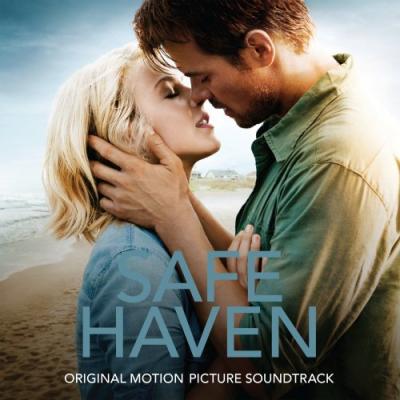
Safe Haven Album Cover

"Safe Haven" Soundtrack Lyrics

Movie • 2013

Track Listing


“Safe Haven (Original Motion Picture Soundtrack)” – Album Guide to Tracks and Key Scenes

Safe Haven 2013 trailer still — Katie and Alex in Southport, North Carolina, sunlit dock
Safe Haven — 2013 film soundtrack & trailer mood.

Overview

What if a small-town romance sounded like a diary written in guitar strums and late-night whispers—until danger kicks the door? Safe Haven answers with a gently rootsy compilation—acoustic pop, alt-folk, and diner-slow dances—braided with Deborah Lurie’s intimate score. The soundtrack follows Katie and Alex through arrival → thaw → confession → reckoning, always choosing warmth over melodrama until the third act ignites.

Singles do the heavy lifting. Colbie Caillat & Gavin DeGraw’s duet “We Both Know” frames the film as a two-voice promise; Brandi Carlile’s “Heart’s Content,” Ben Howard’s “Keep Your Head Up,” and Amos Lee’s “Violin” round out a palette that feels like Carolina summer—screen doors, cicadas, low tide. When suspense arrives, Lurie’s cues slip in like breath: a held string, a soft piano figure, then a pulse that won’t let you rest.

The album is built for replays: songs appear as source in diners and stores, then bloom into non-diegetic montage. According to the label rollouts and listings, the songs album (Republic/Relativity) dropped the week before the Valentine’s Day release, with Lurie’s separate score album hitting days later—classic Sparks-universe timing for date-night cinema.

Genres & themes by phase. Acoustic folk & singer-songwriter — guarded hearts and new routines. Americana & indie pop — trust, community, porchlight intimacy. Hymn-tinged ballads & score — memory, grief, and the twist. Upbeat covers (in trailers) — fate knocking.

How It Was Made

The songs album—Safe Haven (Original Motion Picture Soundtrack)—collects 13 tracks from various artists and was released by Republic/Relativity in early February 2013. The headline single “We Both Know” was issued in December 2012 to tee up the campaign; the full track list was announced mid-January. Composer Deborah Lurie (a frequent Lasse Hallström collaborator) delivered a separate 17-track score album through Relativity Music Group a week after the songs set.

Music editorial keeps a light touch. Acoustic pieces sit close-miked; jukebox cues feel lived-in. The big swing is structural: the diner sequence stacks three songs back-to-back so dialogue can breathe, then the end credits hand the story over to the duet. It’s tasteful, restrained, romantic—until the stalker motif takes the reins and Lurie’s low strings rumble like summer thunder.

Safe Haven trailer frame — rainy diner windows and warm interior light where multiple music cues play
Rain on glass, jukebox glow — where three songs stitch one conversation.

Tracks & Scenes

“Say Anything” — Tristan Prettyman
Where it plays: 0:03 — Opening minutes. Katie boards a bus, eyes fixed on the road out as city noise fades behind her. Non-diegetic, soft acoustic under the escape. ~45–60s excerpt.
Why it matters: Frames flight without exposition: hushed vocals as a vow to start over.

“Summer Child” — Dar Williams
Where it plays: 0:07 — Katie asks for work at a seafood place; clatter, grill hiss, the hum of a hopeful new routine. Source-adjacent feel, mixed like a small radio.
Why it matters: Establishes Southport’s rhythm—ordinary life as refuge.

“Parted Ways” — Heartless Bastards
Where it plays: ~0:14 — Police step into the restaurant; Katie slips out of sight. The track’s grit turns the air brittle. Non-diegetic, short needle-drop to button the beat.
Why it matters: First crack of threat; warmth curdles into worry.

“Sleepy Little Town” — The White Buffalo
Where it plays: 0:26 — Paint-roller montage as Katie fixes up a cabin; sawdust in sunbeams, a smile she doesn’t notice. Non-diegetic montage.
Why it matters: Home-making as healing; the lyric makes Southport feel earned.

“Wrap Your Arms Around Me” — Gareth Dunlop
Where it plays: 0:38 — Beach afternoon with Alex and the kids; gulls, laughter, then the water goes silver at magic hour. Non-diegetic moving toward source with ambient waves.
Why it matters: The moment trust gets a melody.

“Moonshine” — Sara Haze
Where it plays: 0:52 — Thunder pushes them into a diner; raindrops drum the windows. Source-like presence from the room’s system.
Why it matters: A storm makes two people a “we.”

“The Journey” — FM Radio
Where it plays: 0:52 — Immediately after; same booth, new warmth. The camera lingers on hands and half-sentences.
Why it matters: Seamless handoff that keeps conversation singing.

“Blue Eyes” — Middle Brother
Where it plays: 0:53 — Still at the diner; he listens, she deflects, the song does the seeing for them.
Why it matters: Subtext cue—what they won’t say, the harmony will.

“Heart’s Content” — Brandi Carlile
Where it plays: 0:53 — They dance between tabletops while lightning cools to drizzle. Non-diegetic bloom that feels diegetic.
Why it matters: The movie’s thesis: ordinary rooms, extraordinary tenderness.

“Joanna” — Jon Allen
Where it plays: 1:03 — Daylight, restaurant banter, life moving on. Short scene-setter.
Why it matters: Resets tone after a high—life, not fantasy.

“No Nostalgia” — Ages and Ages
Where it plays: 1:03 — Alex hurries to surprise Katie at the store; jump-cuts and goofy grin.
Why it matters: A pep-burst that says “go”—not “remember.”

“Violin” — Amos Lee
Where it plays: 1:06 — Post-date porchlight hush; the song tiptoes through a doorway they haven’t opened yet.
Why it matters: Permission to be vulnerable.

“My Baby’s Got to Pay the Rent” — The Deep Dark Woods
Where it plays: 1:31 — Tierney watches from the dark as Katie and Alex kiss; the cue’s sly swagger feels like a dare.
Why it matters: The stalker thread intrudes on the love story’s groove.

“We Both Know” — Colbie Caillat & Gavin DeGraw
Where it plays: 1:51 — First end-credits song. After flames and revelations, the duet lands like a promise kept. Full single cut over credits.
Why it matters: Emotional seal—two leads, two voices, one choice.

Trailer cue: “Go Your Own Way” — Lissie (Fleetwood Mac cover)
Where it plays: Marketing/trailer use—percussion and rasp underscoring quick flashes of running, beach light, and fireworks.
Why it matters: Signals independence and escape; the campaign’s grit against the film’s softness.

Safe Haven trailer frame — beach boardwalk at sunset, acoustic pop tone
Boardwalk gold and guitar strings — the album’s color temperature.

Music–Story Links

  • Flight → refuge: “Say Anything” and “Summer Child” turn logistics (bus, job) into character—songs about choosing quiet over chaos.
  • Community builds: “Sleepy Little Town” and “Wrap Your Arms Around Me” are montage glue; they knit Katie into Southport’s fabric.
  • Falling in real time: The diner triptych (“Moonshine” → “The Journey” → “Blue Eyes/Heart’s Content”) lets dialogue float while music advances intimacy.
  • Threat motif: When Tierney re-enters, swaggering source cues give way to Lurie’s low-end tremor—desire meets danger.
  • Coda: The end-credits duet reframes the twist as benediction—ghosts settled, hearts steady.

Reception & Quotes

The songs album charted modestly—Top 5 on the U.S. Soundtrack chart and a Billboard 200 berth—while the score drew praise from Sparks-film devotees for its tenderness. According to trade blurbs and album notes, the two-release strategy (songs + score) mirrored earlier Hallström adaptations.

“Features new duet ‘We Both Know’… plus Tristan Prettyman, Ben Howard, Brandi Carlile, Amos Lee.” Filmmusicreporter (announcement)
“13 songs, 44 minutes; Republic/Relativity release.” Apple Music listing
“Deborah Lurie’s 17-track score album released digitally a week later.” Filmmusicreporter (score details)
Safe Haven trailer still — fireworks on the water as the soundtrack swells
Fireworks, reflections, refrain — romance gets its curtain call.

Notes & Trivia

  • The film opened on February 14, 2013; the songs album dropped the week prior, with the score arriving ~February 12.
  • “We Both Know” premiered two months earlier to anchor the promo cycle.
  • The diner sequence stacks three songs without a hard cut—rare in a non-musical.
  • Composer Deborah Lurie previously scored Hallström’s Dear John and An Unfinished Life.
  • Trailer spots used Lissie’s cover of “Go Your Own Way,” not included on the OST.

Interesting Facts

  • Album split: Songs album on Republic/Relativity; separate score album via Relativity Music Group.
  • Chart notes: Peaked at #5 (U.S. Top Soundtracks) and #133 (Billboard 200); UK Soundtrack Albums Top 50 appearance.
  • Licensing mix: Several diegetic songs in the film aren’t on the retail OST—typical cue-sheet vs. album split.
  • Scene timing goldmine: Online cue sheets track exact minute-marks for 16 songs—handy for re-watch playlists.
  • End-credits choice: Rolling full single of “We Both Know” lets the twist land gently.

Technical Info

  • Title: Safe Haven (Original Motion Picture Soundtrack); companion: Safe Haven (Original Motion Picture Score)
  • Year: 2013 (film: Feb 14, 2013; songs album: Feb 5, 2013; score album: Feb 12, 2013)
  • Type: Feature film soundtrack (songs) + separate score album
  • Label: Republic Records / Relativity Music Group
  • Key artists (songs): Colbie Caillat & Gavin DeGraw, Tristan Prettyman, Ben Howard, Brandi Carlile, Amos Lee, The White Buffalo, Gareth Dunlop, Sara Haze, Middle Brother, FM Radio, Ages and Ages, Jon Allen, The Deep Dark Woods
  • Composer (score): Deborah Lurie
  • Runtime: Songs album ≈44:47 (13 tracks); Score ≈39:00 (17 cues)
  • Availability: Streaming/download; limited CD pressings (songs); digital score

Questions & Answers

Is the popular duet actually in the movie or just the credits?
“We Both Know” plays over the first end-credit roll—designed as a parting emotional capstone.
Which scene stacks the most songs?
The rainy diner run—three distinct tracks carry one long conversation, then a soft dance.
Why are some songs heard in the film missing from the OST?
Album clearances differ from film licenses; the retail OST prioritizes marquee tracks and flow.
Who composed the original score, and is it on a separate album?
Deborah Lurie wrote the score; yes—17 cues released as a stand-alone digital album.
What music is in the trailers?
A prominent spot used Lissie’s “Go Your Own Way” cover—energized, not on the retail soundtrack.

Canonical Entities & Relations

SubjectRelationObject
Lasse HallströmdirectedSafe Haven (2013)
Deborah LuriecomposedSafe Haven (Original Motion Picture Score)
Republic Records / Relativity Music GroupreleasedSafe Haven (Original Motion Picture Soundtrack)
Colbie Caillat & Gavin DeGrawperformed“We Both Know” (end-credits duet)
Brandi Carlileperformed“Heart’s Content” (diner dance)
Ben Howardperformed“Keep Your Head Up” (album cut)
Amos Leeperformed“Violin” (post-date scene)
The White Buffaloperformed“Sleepy Little Town” (home-fix montage)
Gareth Dunlopperformed“Wrap Your Arms Around Me” (beach afternoon)
Lissieperformed“Go Your Own Way” (trailer usage)

Sources: Apple Music album listing; Spotify album page; Wikipedia (soundtrack & film entries); Film Music Reporter (soundtrack & score posts); Discogs release page; IMDb Soundtracks; Soundtrackradar (scene/timestamp guide); Soundtrakd (scene list); official trailers on YouTube.

November, 26th 2025

Learn about 'Safe Haven', an American romantic drama thriller film on Internet Movie Database and Wikipedia
A-Z Lyrics Universe

Lyrics / song texts are property and copyright of their owners and provided for educational purposes only.