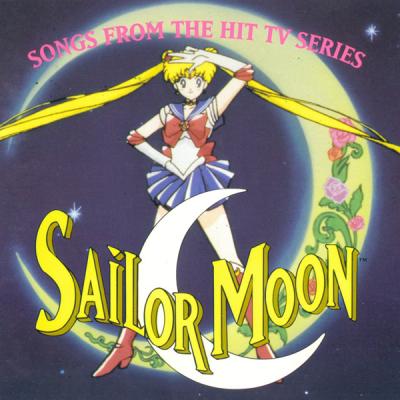
"Sailor Moon: Songs From The Hit TV Series" Soundtrack Lyrics
TV • 1995
Track Listing
Sailor Moon Cast
Sailor Moon Cast
Sailor Moon Cast
Sailor Moon Cast
Sailor Moon Cast
Sailor Moon Cast
Sailor Moon Cast
Sailor Moon Cast
Sailor Moon Cast
Sailor Moon Cast
Sailor Moon Cast
“Sailor Moon: Songs From The Hit TV Series” – Album Guide to Tracks and Key Scenes
Overview
How do you translate magical girl melodrama into mid-’90s North American radio? With hooks, heart, and a stack of instantly quotable ballads. Sailor Moon: Songs From The Hit TV Series bottles the DiC English-dub vibe — arrival → friendship → heartbreak → resolve — into a breezy, replayable set of original English songs and show-theme variants that aired across the 1995–96 TV run.
The album’s personality is pure after-school TV: bright synths and guitar sparkle (“I Wanna Be a Star”), diary-entry ballads (“My Only Love,” “Only a Memory Away”), and montage-ready empowerment cues (“The Power of Love,” “Carry On”). Voices associated with the dub (Jennifer Cihi, Patricia Tollett, Shandi Sinnamon) keep it “in-universe,” so when a track hits in an episode, the album version feels like déjà vu.
These aren’t random tie-ins — they’re plot furniture. “Rainy Day Man” consoles a friend mid-breakup, “Carry On” replaces the original Japanese theme in a late-season triumph, and Mercury’s “Only a Memory Away” gives an inner life to the quietest Scout. According to Discogs and fan-archived cue sheets, the CD/cassette landed in early 1996 under Kid Rhino (US) and EMI Music (Canada), aligning with peak syndication.
Genres & themes by phase. Bubblegum dance-pop — confidence and crushes. Power ballad & lite-rock — loyalty and farewell. Teen-pop anthem — friendship as superpower. Lullaby slow jams — memory and resolve.
How It Was Made
The English-language songs were commissioned for the DiC dub and produced by Bob Summers (Don Perry Music), Michael Benghiat (The Music Kitchen), and Matt McGuire (MusicWerks). The release compiles short TV edits and fuller album takes (≈29 minutes total), balancing “source-feeling” tracks that play under scenes with standalone pop cuts designed for CD players and Discmans of the day.
Editorially, the dub treated songs like scene glue: a verse under hallway chatter, a chorus over transformation sparkles, then instrumental beds reappearing as stingers. The album preserves that arc by interleaving pep songs and torch ballads, closing with end-credit-friendly cues.
Tracks & Scenes
“Sailor Moon Theme” — TV dub version
Where it plays: Every episode’s OP in the DiC era; a compressed verse–chorus sprint over transformation clips and team roll call.
Why it matters: One of the most recognizable 90s-dub hooks; it frames the show as a superhero serial with pop sparkle.
“I Wanna Be a Star” — Jennifer Cihi (as Serena/Usagi)
Where it plays: Performance/ambition beats, including talent-show antics and daydream montages early in the run; staged diegetically in “So You Want to Be a Superstar”-style moments.
Why it matters: Encodes Serena’s lovable vanity into an earworm; the dub’s poster-song for “dream big, trip often.”
“My Only Love” — Jennifer Cihi
Where it plays: Season 1 arc climax (U.S. episode 46 “Day of Destiny”): Serena faces impossible odds, memories surface, and the chorus lands as a vow. Non-diegetic over slow-motion battle inserts; reprise over aftermath.
Why it matters: The dub’s signature ballad — romance and destiny fused into one soaring hook.
“Rainy Day Man” — Patricia Tollett (Lita/Jupiter image song)
Where it plays: Episode 43 (DiC numbering): a downbeat street scene after a painful breakup; the melody folds into ambient rain as Luna watches over. Mostly non-diegetic, mixed like a radio in the next room.
Why it matters: Melancholy with a hug built in; it turned a character beat into a fan-favorite.
“Carry On” — Jennifer Cihi
Where it plays: Replaces the Japanese OP (“Moonlight Densetsu”) in episode 40 of the DiC dub; also used over late-season victory montage material.
Why it matters: A mission statement in three minutes — friendship as horsepower.
“Only a Memory Away” — Shandi Sinnamon (Ami/Mercury image song)
Where it plays: Sailor Moon R (English dub) episode 17: Ami’s introspective turn; study lamps, rainy windows, and a single brave decision. Non-diegetic with an in-scene hum as a bridge.
Why it matters: Gives the quiet Scout a theme of her own — gentle, precise, and proud.
“The Power of Love” — Jennifer Cihi
Where it plays: Episode 88 (DiC dub of “S” arc finale): against Death Phantom’s threat, the song replaces the stage anthem “La Soldier” as Serenity/Chibi-Usa rally. Big non-diegetic lift punctuating transformation cuts.
Why it matters: The dub’s all-hands anthem; emotional shorthand for “stand together.”
“Call My Name (I’ll Be There)” — Jennifer Cihi
Where it plays: Friendship rescue beats across early/mid episodes: Serena reaching for a teammate, or vice versa. Often enters on a cut from dialogue to action.
Why it matters: Codifies the show’s thesis — no one wins alone.
“Oh Starry Night” — album version
Where it plays: A prom-slow jam used in date-night vignettes and “look up and hope” tags; heard more fully on the album than on-air.
Why it matters: The dub’s rosy glow in song form.
Music–Story Links
- When Serena falters, “My Only Love” swaps quips for vulnerability — the chorus literally slows the fight to show feeling.
- “Rainy Day Man” turns a side-street talk into a mini-musical: melody as emotional POV for Jupiter.
- “Carry On” reframes team roll-call episodes as victories already in progress — the OP itself becomes encouragement.
- “Only a Memory Away” ties Mercury’s caution to courage; the song’s stepwise melody mirrors her methodical thinking.
- “The Power of Love” functions like a fuse: once it lights, everyone levels up.
Reception & Quotes
The CD became a mall-rack staple for dub-era fans, a compact “best of” the show’s English-language cues. Canadian and U.S. pressings circulated with small label differences, while episode guides elevated the ballads to cult status. According to fan discographies and retailer cards, runtime sits just under half an hour, with the major image songs represented.
“Short, sweet, and endlessly re-quotable — the dub’s emotional tent-poles in one place.” Fan discography notes
“Kid Rhino (US) / EMI (Canada), 1996 — compact and collectible.” Retail/label listings
Notes & Trivia
- The TV debut in North America was 1995, but the album streeted in early 1996 (US/Canada pressings).
- Several tracks exist in both TV edit and fuller album versions; the disc favors the latter where available.
- Writers/producers across the set include Michael Benghiat, Sandy Howell, Bob Summers, and Matt McGuire.
- “Carry On” and “The Power of Love” were used as replacements for Japanese themes in specific dub episodes.
- Sequels/companion discs followed (e.g., Sailor Moon & The Scouts: Lunarock).
Interesting Facts
- Two labels: Kid Rhino handled U.S. distribution; EMI pressed the Canadian edition.
- Catalog trivia: U.S. CDs/CD-tapes list Rhino catalog numbers; Canadian copies carry EMI barcodes and dates.
- Runtime bite: ≈29 minutes — intentionally “all killer, no filler” for a kid-pop audience.
- Episode-first: Many fans knew these songs from TV long before they found the disc, so the album played like memory retrieval.
- Ballad physics: Drop tempo, hold a note, cut to transformation — the dub’s reliable tear-button.
Technical Info
- Title: Sailor Moon: Songs From The Hit TV Series
- Year: TV era 1995 (NA debut); album release 1996 (US/CA)
- Type: Television soundtrack compilation (English-dub songs)
- Labels: Kid Rhino (USA); EMI Music (Canada)
- Producers: Bob Summers; Michael Benghiat; Matt McGuire (among others)
- Running time: ≈29:13 (standard CD/cassette)
- Notable placements: “Rainy Day Man” — ep. 43; “Carry On” — ep. 40 OP replacement; “Only a Memory Away” — R ep. 17; “The Power of Love” — ep. 88; “My Only Love” — season-one finale arc.
- Availability: Original CD/cassette (1996); later reissues/territorial pressings and digital uploads circulate.
Questions & Answers
- Is this the Japanese soundtrack?
- No — it’s the English-dub songs compilation created for the DiC TV version.
- Why do some songs replace Japanese themes?
- Localization choices: the dub swapped certain themes with English originals to match the target market and narrative beats.
- Who sings the big ballads?
- Jennifer Cihi handles “My Only Love,” “Carry On,” and “The Power of Love”; Shandi Sinnamon sings Mercury’s “Only a Memory Away”; Patricia Tollett performs “Rainy Day Man.”
- Was the album out during the show’s TV run?
- Yes — it followed the 1995 NA debut and arrived in early 1996 in the U.S. and Canada.
- Are the album versions the same as on TV?
- Mostly — several are fuller/longer than the TV edits, but melodies and vocals match their episode uses.
Canonical Entities & Relations
| Subject | Relation | Object |
|---|---|---|
| DiC Entertainment | localized | 1990s English TV dub of Sailor Moon |
| Kid Rhino (Rhino Records) | released (US) | Sailor Moon: Songs From The Hit TV Series (1996 CD/cassette) |
| EMI Music Canada | released (CA) | Sailor Moon: Songs From The Hit TV Series (1996) |
| Jennifer Cihi | performed | “My Only Love,” “Carry On,” “The Power of Love,” “I Wanna Be a Star,” “Call My Name (I’ll Be There)” |
| Patricia Tollett | performed | “Rainy Day Man” |
| Shandi Sinnamon | performed | “Only a Memory Away” |
| Michael Benghiat; Bob Summers; Matt McGuire | produced/wrote | multiple album tracks for the English dub |
| Naoko Takeuchi | created | Pretty Soldier Sailor Moon (original manga) |
Sources: Discogs master/release pages; Sailor Moon Dub Wiki (episode placements, label codes); Fandom episode/song pages for specific cues; retail card (US date/runtime); fan discography notes; official TV trailers/promos on YouTube.
November, 26th 2025
Sailor Moon - Songs From The Hit TV Series on Discogs and Amazon.comA-Z Lyrics Universe
Cynthia Erivo Popular
Ariana Grande Horsepower
Post Malone Ain't No Love in Oklahoma
Luke Combs Good Riddance (Time of Your Life)
Green Day Bye Bye Bye
*NSYNC You're the One That I Wan
John Travolta & Olivia Newton-John I Always Wanted a Brother
Braelyn Rankins, Theo Somolu, Kelvin Harrison Jr. and Aaron Pierre The Power of Love
Frankie Goes to Hollywood Beyond
Auli’i Cravalho feat. Rachel House MORE ›