Soundtracks:  A B C D E F G H I J K L M N O P Q R S T U V W X Y Z #


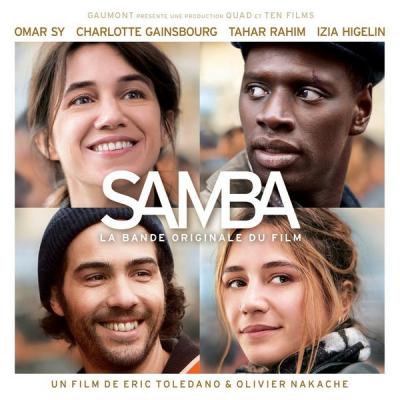
Samba Album Cover

"Samba" Soundtrack Lyrics

Movie • 2015

Track Listing


“Samba (La bande originale du film)” – Album Guide to Tracks and Key Scenes

Samba (2014/2015) trailer still — Omar Sy and Charlotte Gainsbourg crossing Paris in warm, restless hues
Paris in motion — Einaudi’s pulse meets crate-dug soul, reggae and electro-swing.

Overview

What happens when a migrant’s hustle meets a burned-out executive’s second chance? Samba (2014 FR / 2015 US) answers with a warm, mobile soundtrack: Ludovico Einaudi’s repeating-figure piano for the daily grind, and a run of soulful, global needle-drops for the moments when life finally opens up. The film’s journey — arrival → setback → connection → small acts of defiance — is mirrored in music that oscillates between minimalist focus and dance-floor relief.

The official album is a tight, 11–12 track compilation that blends Einaudi cues (“Time Lapse,” “Ascolta,” “Walk,” “Experience,” “Run”) with deep-feeling catalog selections: Terry Callier’s “Love Theme from Spartacus”, Gilberto Gil’s “Palco”, The Brothers Johnson’s “Stomp!”, Jorge Ben’s “Take It Easy My Brother Charles”, Bob Marley’s “Waiting in Vain”, and Syreeta’s “To Know You Is To Love You”. Together they sketch a Paris that is practical by day and borderless by night.

Why it lands: the score’s motor keeps time with paperwork, kitchens and commutes; the songs carry the heart. According to label notes and track listings, the album was issued in France under TF1 Musique/QUAD in mid-October 2014, just after the local theatrical release.

Genres & themes by phase. Minimalist piano — routine, tension, resolve. Afro-Brazilian pop & funk — community, celebration. Classic soul/reggae — tenderness and longing. Disco/funk — comic release and momentum.

How It Was Made

Score & supervision. Director duo Éric Toledano & Olivier Nakache return to Einaudi’s lyrical minimalism for interior beats while leaning on an eclectic songbook to place characters in lived-in, multicultural Paris. The compilation shows a careful balance: roughly half Einaudi, half licensed tracks.

Album & rollout. France received the album as “Samba — La bande originale du film” through TF1 Musique/QUAD in October 2014 (digital/CD). Streaming editions mirror the selection, often opening with Parov Stelar’s “Catgroove” (a key trailer/scene cut) before flowing into the Einaudi cues and catalog songs.

Samba trailer frame — a Paris kitchen line, Einaudi’s ostinato pushing the routine forward
Work, wait, repeat — minimalist piano as survival rhythm.

Tracks & Scenes

“Catgroove” — Parov Stelar
Where it plays: The film’s opening wedding sequence bursts to life; camera swirls, bodies laugh and spin, and the electro-swing beat turns introductions into a party. Non-diegetic, mixed like source in the room.
Why it matters: A thesis in one cut — joy survives bureaucracy.

“Time Lapse” — Ludovico Einaudi
Where it plays: Routine montage: dawn commute, kitchen shifts, paperwork queues. Piano figures mark the hours; strings enter as the pressure climbs.
Why it matters: The film’s metronome — every repetition is a step forward or back.

“Ascolta” — Ludovico Einaudi
Where it plays: After an official setback, the cue hushes the room; characters listen more than speak. Non-diegetic intimacy.
Why it matters: Lets silence become story.

“Walk” — Ludovico Einaudi
Where it plays: Transitional passages — bridges, Métro, the city seen in motion. The pulse feels like footfall and thought at once.
Why it matters: Momentum cue; it gently resets the film between storms.

“Love Theme from Spartacus” — Terry Callier
Where it plays: Night-walk tenderness: two people share space without performance; Callier’s baritone carries the weight they cannot say.
Why it matters: Soul classicism as emotional permission.

“Palco” — Gilberto Gil
Where it plays: A communal gathering & food-prep bustle flips into dance; pots, laughter and percussion braid together. Source-like lift into non-diegetic euphoria.
Why it matters: Celebrates diasporic Paris — and gives the film sunlight.

“Stomp!” — The Brothers Johnson
Where it plays: Comic relief montage: small victories stack up; faces loosen. The slap-bass hooks make the scene grin.
Why it matters: A groove that turns errands into triumph.

“Take It Easy My Brother Charles” — Jorge Ben
Where it plays: Street-level release after a bureaucratic gauntlet; the rhythm feels like shaking off dust.
Why it matters: Light on its feet, crucial in tone.

“Waiting in Vain” — Bob Marley & The Wailers
Where it plays: A reflective romance beat; glances hover, decisions stall. Non-diegetic; the lyric folds into the subtext.
Why it matters: Longing, uncomplicated and universal.

“Experience” — Ludovico Einaudi
Where it plays: Late-film reckoning; the theme expands with strings until a hard cut snaps us back to real time.
Why it matters: The score’s catharsis.

“Run” — Ludovico Einaudi
Where it plays: Urgent motion — corridors, trains, a plan that might work. Repetitions tighten like a spring.
Why it matters: Stakes without melodrama.

“To Know You Is To Love You” — Syreeta
Where it plays: Warm, earned intimacy; smiles are small but real. Album closer energy; the curtain falls soft.
Why it matters: Grace note ending — affection after effort.

Samba trailer frame — night streets of Paris, needle-drop glow over shared looks
When songs take over, conversations get shorter and hearts speak up.

Music–Story Links

  • Routine → rupture: Einaudi’s ostinatos track paperwork and shift work; song drops mark the moments when life spills past the frame.
  • Community as rhythm: “Palco,” “Stomp!” and Jorge Ben cut through stress with movement — joy as collective defense.
  • Private hope: “Waiting in Vain” and Callier’s “Spartacus” supply interior monologues the characters won’t risk aloud.
  • After the storm: “To Know You Is To Love You” is the film’s handshake good-night — imperfect, honest, hopeful.

Reception & Quotes

The soundtrack was praised for mixing Einaudi’s modern classicism with crate-digging soul and Brazilian cuts — an unfussy, human playlist for a film about holding on. Reviewers highlighted how the opening party cue and the late Einaudi swells frame the story’s two poles: celebration and struggle.

“Minimalist pulses for workdays, warm catalog for the heart — a simple, effective design.” film music coverage
“Soul and samba step in when words fail.” French soundtrack blogs

Notes & Trivia

  • The first scene (wedding) kicks off to Parov Stelar’s “Catgroove,” a fan-asked, production-confirmed placement.
  • Einaudi’s selections come from the early-2010s cycle around In a Time Lapse.
  • Reggae, Brazilian pop and U.S. funk sit comfortably together — a sonic portrait of Paris as crossroads.
  • U.S. theatrical release followed in 2015; the album remained a France-first rollout.

Interesting Facts

  • Label & date: TF1 Musique/QUAD issued the French album on Oct 13, 2014.
  • Album shape: 11–12 cuts, ~50–55 minutes depending on territory/streaming variant.
  • Opening tell: The electro-swing opener sets a lighter tone than the synopsis might suggest.
  • Catalog gems: Terry Callier’s “Spartacus” appears — an evergreen crate-dig favorite.
  • Score ratio: Roughly half the album is Einaudi cues; half licensed songs.

Technical Info

  • Title: Samba — La bande originale du film
  • Year: 2014 (FR album/film); 2015 (US release)
  • Type: Feature film soundtrack (score + songs)
  • Score: Ludovico Einaudi
  • Labels: TF1 Musique / QUAD (France)
  • Key tracks: “Time Lapse,” “Ascolta,” “Walk,” “Experience,” “Run” (Einaudi); “Catgroove” (Parov Stelar); “Love Theme from Spartacus” (Terry Callier); “Palco” (Gilberto Gil); “Stomp!” (The Brothers Johnson); “Take It Easy My Brother Charles” (Jorge Ben); “Waiting in Vain” (Bob Marley & The Wailers); “To Know You Is To Love You” (Syreeta).
  • Availability: Streaming/download (France & global stores/playlists); CD in select FR/EU markets.

Questions & Answers

Who composed the score cues?
Ludovico Einaudi — the album features several of his early-2010s pieces, used onscreen for routine, motion and resolve.
Is there an official soundtrack album?
Yes. France released “Samba — La bande originale du film” via TF1 Musique/QUAD; streaming mirrors the selection.
What song opens the movie?
“Catgroove” by Parov Stelar — it scores the opening wedding sequence.
Which classics appear?
Terry Callier’s “Love Theme from Spartacus,” Bob Marley’s “Waiting in Vain,” Syreeta’s “To Know You Is To Love You,” plus Brazilian favorites by Gil and Jorge Ben.
Does the album include only songs, or also score?
Both — about half Einaudi score cues and half licensed tracks.
Samba trailer still — late-night Paris streets where soul and reggae cues carry the subtext
When the city exhales, the catalog classics do the talking.

Canonical Entities & Relations

SubjectRelationObject
Éric Toledano & Olivier Nakachewrote & directedSamba (2014)
Ludovico EinaudicomposedScore cues (“Time Lapse,” “Ascolta,” “Walk,” “Experience,” “Run”)
Parov Stelarperformed“Catgroove” (opening wedding sequence)
Terry Callierperformed“Love Theme from Spartacus”
Gilberto Gilperformed“Palco”
The Brothers Johnsonperformed“Stomp!”
Jorge Benperformed“Take It Easy My Brother Charles”
Bob Marley & The Wailersperformed“Waiting in Vain”
Syreetaperformed“To Know You Is To Love You”
TF1 Musique / QUADreleasedSamba — La bande originale du film (2014)

Sources: Apple Music FR album page; Film Music Reporter tracklist; Discogs release page; IMDb Soundtracks; French soundtrack blog Zickma (opening scene song); Spotify/YouTube playlist items; official trailers on YouTube.

A film about an illegal immigrant who is trying to survive in France, despite the refusal to grant him citizenship on behalf of the authorities. Featuring the ins and outs of such a stay, yet the film seeks to define the humanity of individuals, against what the system is doing. A man named Samba, “just like a dance”, according to him, is charming and charismatic enough to start worrying about him from the very first minutes of this video narration. His character is alive, and he has the most natural desire in the world – to survive. Everything that happens, naturally emphasized by the soundtrack of about half of the instrumental (by Ludovico Einaudi), and the other half is similar to the salon music of America 40’s with its charming insouciance (as, for example, Catgroove ), discordant with what is happening on the screen. But, at the same time, there is also very quiet songs like Love Theme From Spartacus by Terry Callier, just like soporific. And of course, it would be a little strange if in a movie about a black migrant has not sounded at least one composition of Bob Marley – so, no strange at all now, as you will find the song there, it's all right. Overall, quite good quality selection, which captivates with its unpretentious, simple and vital way, just like the story of the protagonist of the film. It is intended to enjoy the good sound in the evenings under an excellent book, or simply closing own eyes with pleasure. Must hear.

November, 26th 2025

Find more about "Samba" movie on IMDb and Wikipedia
A-Z Lyrics Universe

Lyrics / song texts are property and copyright of their owners and provided for educational purposes only.