Soundtracks:  A B C D E F G H I J K L M N O P Q R S T U V W X Y Z #


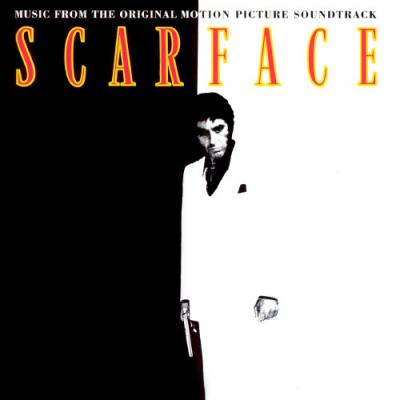
Scarface Album Cover

"Scarface" Soundtrack Lyrics

Movie • 2003

Track Listing


"Scarface (Music from the Original Motion Picture Soundtrack) — 2003 Remaster" – Album Guide to Tracks and Key Scenes

Scarface trailer frame — Tony Montana ascends Miami’s neon ladder while Moroder’s synths prowl
Scarface — neon grit, synth nerves, and a 2003 remaster.

Overview

What happens when a cult classic’s synth-drenched heart gets a 21st-century polish? The 2003 remaster of Scarface (Music from the Original Motion Picture Soundtrack) turns the film’s 1983 pulse — arrival → adaptation → rebellion → collapse — into a sharper, louder document of Tony Montana’s rise and ruin.

Giorgio Moroder’s score and songs were built for cocaine-rush drama: sequenced basslines, drum machines, and glossy hooks fronted by Debbie Harry, Paul Engemann, Amy Holland, and E.G. Daily. In album form, it’s compact and lethal: power-montage anthems paired with moody instrumentals that sweat under nightclub lights and fluorescent interrogation rooms.

The 2003 edition lands with remastered sheen and some alternate mixes; it was timed to a 20th-anniversary re-release of the film and a fresh home-video push. As album listening, it remains a time capsule and a blueprint — the sound of 80s synth-pop weaponized for gangster tragedy.

Genres & phases: synth-pop and dance-rock for ascents; noir electronics for paranoia; romantic pop for honey-trap interludes; orchestral-synth hybrids for doom-stamped finales.

How It Was Made

Composer/producer: Giorgio Moroder wrote and produced the original 1983 soundtrack with lyricist Pete Bellotte and a handful of featured vocalists. For 2003, Universal remastered and reissued the album on CD/digital alongside a theatrical/dvd refresh; some tracks appeared in noticeably different mixes compared with 1983 pressings (as per label/retailer notes and coverage).

Concurrently, the studio mounted a 20th-anniversary theatrical engagement using a remixed theater soundtrack, while home video upgraded the film to 5.1 — keeping Moroder’s cues central to the movie’s identity.

Behind-the-scenes vibe — 20th anniversary push: new prints, DVD remaster, and a refreshed album
How it returned — anniversary prints, DVD remaster, album refresh.

Tracks & Scenes

“Scarface (Push It to the Limit)” — Paul Engemann
Where it plays: The iconic money-and-power montage following Tony’s takeover — banks, blimps, bespoke suits; a kinetic diary of expansion.
Why it matters: The film’s thesis song — aspiration as accelerant — and the album’s most quoted cut.

“Rush Rush” — Debbie Harry
Where it plays: Early-film Miami energy and nightlife textures; non-diegetic pop glint that frames the “new world” Tony wants to buy into.
Why it matters: Moroder+Harry bottle the film’s seduction — glitter with a chemical aftertaste.

“She’s on Fire” — Amy Holland
Where it plays: Babylon Club-set momentum with Elvira’s aloof magnetism across the dance floor; a stylish swing between longing and danger.
Why it matters: Pop gloss as character study — desire scored like a trap.

“Turn Out the Night” — Amy Holland
Where it plays: Nightclub passage tied to Tony, Manny, and Gina’s orbit; a pulsing bed for jealousy and bad timing.
Why it matters: The title reads like fate: when the lights drop, someone always pays.

“Tony’s Theme” — Giorgio Moroder
Where it plays: Instrumental motif heard across transitions — from Freedom Town to Miami milestones — as a steely melody that keeps score on ambition.
Why it matters: The story’s bloodstream — cool, relentless, fatalistic.

Tracks & scenes collage — Babylon Club lights, briefcases, bank counters, and the blimp’s warning
Tracks & scenes — club heat, cash stacks, and warnings in the sky.

Notes & Trivia

  • The 2003 remaster arrived via Universal/UMe; streaming services commonly tag this edition as a 2003 release.
  • Trade coverage of the 20th-anniversary re-release noted new prints with remixed theatrical sound.
  • Home video (2003) upgraded the film to 5.1 Dolby Digital, modernizing the original audio presentation.
  • Some 2003 album mixes sparked debate among fans versus 1983 pressings; the sequencing stayed tight at ~10 tracks.
  • That same cycle birthed a separate hip-hop compilation, Music Inspired by Scarface, underscoring the film’s rap lineage.

Music–Story Links

When Tony steps out of the shadows, Moroder’s arpeggios turn breathing into timing — the music makes hustle sound inevitable. In the Babylon Club, sleek pop campaigns for desire; in the mansion, instrumentals harden into consequences. By the blimp’s flyover, the score isn’t cheering — it’s counting down.

Reception & Quotes

The remaster rode a wave of renewed attention. Fans welcomed cleaner transfers; purists argued for original mixes. Still, as a standalone listen, it’s compact, propulsive, and weirdly tender at the edges.

“Moroder’s moody instrumentals are quite moving; the vocal cuts are sheer fun.” as summarized from contemporary album guides
“New prints with a remixed soundtrack brought the film back loud and clear.” according to trade coverage

Interesting Facts

  • Chart footnote: The remaster even showed up on France’s album chart in early 2004.
  • Mix matters: Listeners often clock differences on “Rush Rush” and “Push It to the Limit” between 1983 and 2003 editions.
  • Legacy echo: The Scarface soundtrack became a hip-hop touchstone; 2003 also saw an “inspired by” rap compilation.
  • Game tie-in later: Several soundtrack cuts resurfaced in the 2006 video game Scarface: The World Is Yours.
  • Misprint lore: Early artwork sometimes printed “Turn Out the Light” — the song title is “Turn Out the Night.”

Technical Info

  • Title: Scarface (Music from the Original Motion Picture Soundtrack) — 2003 Remaster
  • Year: 2003 (reissue/remaster of 1983 album)
  • Type: Film soundtrack — songs + score cues
  • Composer/Producer: Giorgio Moroder
  • Key artists: Paul Engemann; Debbie Harry; Amy Holland; E.G. Daily
  • Label (2003): Universal/UMe
  • Signature placements: “Push It to the Limit” (rise montage); “She’s on Fire” (Babylon Club); “Turn Out the Night” (nightclub passage); “Tony’s Theme” (recurring motif)
  • Related 2003 items: 20th-anniversary theatrical re-release; DVD with 5.1 audio; hip-hop companion compilation (Music Inspired by Scarface)
  • Availability: CD/digital/streaming (commonly listed under 2003)

Questions & Answers

Is the 2003 album different from the 1983 LP?
Core tracklist is intact, but several mixes/masters differ; it was remastered for the anniversary cycle.
Which song scores Tony’s rise?
Paul Engemann’s “Scarface (Push It to the Limit)” — the definitive power-montage moment.
Who made the score and songs?
Giorgio Moroder composed the score and produced the songs with Pete Bellotte as key writing partner.
Did the film get new audio in 2003?
Yes — anniversary prints and the DVD featured updated theatrical/5.1 presentation while preserving Moroder’s material.
What’s with “Turn Out the Night/Light”?
Some artwork misprinted the title as “Light”; the Amy Holland song is “Turn Out the Night.”

Canonical Entities & Relations

SubjectRelationObject
Brian De PalmadirectedScarface (1983 film)
Giorgio Morodercomposed & produced music forScarface (1983 film)
Universal/UMeremastered & reissuedScarface soundtrack (2003)
Paul Engemannperformed“Scarface (Push It to the Limit)”
Debbie Harryperformed“Rush Rush”
Amy Hollandperformed“She’s on Fire”; “Turn Out the Night”
Reception frame — anniversary trailers, remastered audio, and the album’s evergreen montage cut
Reception — fresher sound, same ruthless heartbeat.

Sources: Universal/retailer listings; Discogs edition notes; Variety (anniversary re-release); streaming album pages; soundtrack overviews and scene references.

November, 26th 2025


A-Z Lyrics Universe

Lyrics / song texts are property and copyright of their owners and provided for educational purposes only.