Soundtracks:  A B C D E F G H I J K L M N O P Q R S T U V W X Y Z #


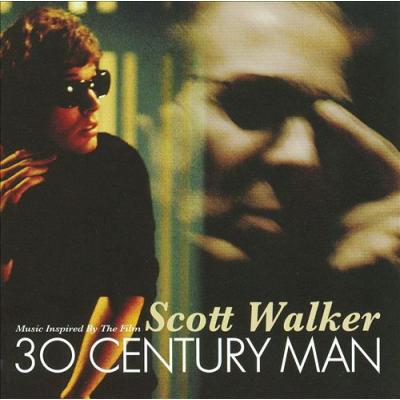
Scott Walker: 30 Century Man Album Cover

"Scott Walker: 30 Century Man" Soundtrack Lyrics

Movie • 2009

Track Listing


"Scott Walker: 30 Century Man (Music Inspired by the Film)" – Album Guide to Tracks and Key Scenes

Official trailer still for Scott Walker: 30 Century Man showing documentary montage
Scott Walker: 30 Century Man — Documentary Soundtrack, 2009

Overview

What kind of documentary asks you to listen harder? Scott Walker: 30 Century Man does. It builds a sonic biography from ruptures and whispers, tracing the crooner-turned-sound-sculptor through pop fame, retreat, and radical invention. The companion album, Music Inspired by the Film, refracts Walker’s catalog through contemporary artists, making the soundtrack less a scrapbook and more a prism.

The film’s arc—arrival, adaptation, rebellion, collapse—mirrors its music cues. Early sequences sketch fame’s glare; mid-film passages linger in the creative dark where Walker designs sound like architecture; the final stretch embraces the shock of his late-period methods. The soundtrack follows suit: covers that float, glitch, and brood instead of reenacting originals beat-for-beat.

Distinctiveness? The album centers interpretation over nostalgia. Artists translate Walker’s melodic melancholy into chamber hush, dream-pop drift, and electronic blur, while the film interleaves studio vérité (the infamous “pork percussion” session) with testimonies from acolytes. As one reviewer noted, it often feels “swathed in gauze”—a deliberate atmosphere that matches the documentary’s reverent, close-mic intimacy.

Genres by phase: 60s orchestral pop — “surface polish vs. inner mess”; 90s/00s avant art-rock — “pressure and abrasion”; ambient/electronic — “aftershock and memory.” In practice: indie hush signals vulnerability; synth beds suggest dread; chamber strings frame the lyrical surrealism.

How It Was Made

Directed by Stephen Kijak with David Bowie as executive producer, the film was shot across the UK and US, pairing interviews (Radiohead, Brian Eno, Jarvis Cocker, Alison Goldfrapp, Damon Albarn) with archival footage and scenes inside Walker’s studio. Music supervision was handled by Sophie Urquhart, with additional score elements by Dana Schechter, bridging clearances and tone so the film could juxtapose archival tracks with raw process sounds from the making of The Drift.

The soundtrack album arrived via Lakeshore Records in 2009 as an interpretive set: contemporary artists cover Walker songs rather than compiling the film’s source cues one-to-one. It’s an aesthetic choice—less “needle-drops from the doc,” more “responses to a legacy.” Think of it as an annex that speaks back to the movie’s themes.

Behind-the-scenes studio image from the trailer where Scott Walker shapes sounds in the booth
Inside the studio — the film’s signature soundcraft sequences.

Tracks & Scenes

“Clara” — Scott Walker
Where it plays: The film peers into sessions for The Drift, culminating in Walker directing an engineer to strike a slab of meat to capture a sickening, thudding percussion layer. The camera lingers on the ritual—the mic placement, the count-in, the unmusical “thwack”—before cutting to reflective commentary about historical violence, which the cue refracts into sound design. Non-diegetic outcome born from diegetic recording; approx. mid-film sequence.
Why it matters: It’s the Rosetta stone for late Walker: timbre as testimony; production as narrative.

“30 Century Man” — Scott Walker
Where it plays: The title concept frames sections that recount the Scott 3 era. Still photographs, LP sleeves, and talking-head reactions assemble a portrait of the songwriter as futurist romantic. Mostly non-diegetic, woven under clips and commentary; early-to-mid film.
Why it matters: The song gives the documentary its name and thesis: looking past fashion toward strange horizons.

“The Electrician” — The Walker Brothers (Scott Walker)
Where it plays: In segments addressing the darker political turn of Walker’s writing, interviewees listen on camera and parse the song’s threat and beauty. The film often pauses to let faces register what the music does. Diegetic (on playback in the scene) sliding into non-diegetic lift.
Why it matters: Hearing and seeing reaction collapses criticism into cinema; meaning is performed.

“Duchess” — Peter Broderick (from Music Inspired by the Film)
Where it plays: Album highlight rather than on-screen needle-drop. A close-mic rendition—piano, air, breath—reimagines Scott 4’s stately melancholy for a modern chamber register.
Why it matters: Demonstrates how the soundtrack functions as a chorus of heirs rather than a “best-of.”

“Big Louise” — Sally Norvell (from Music Inspired by the Film)
Where it plays: Album cut; torch-song pacing and negative space echo the film’s contemplative tone.
Why it matters: Keeps the dramatic scale small, human, interior—Walker’s specialty.

“A Lover Loves” — Jarboe (from Music Inspired by the Film)
Where it plays: Album cut; refigures the late-period hush as fever dream.
Why it matters: Puts Walker’s severity through a gothic filter—an argument that influence travels across scenes and decades.

Trailer music: The official theatrical trailer (Oscilloscope) uses an intercut of archival lines, interview swells, and rhythmic editing that foregrounds texture over any one song—a fair portrait of the film’s approach.

Trailer frame highlighting interviewees reacting to Scott Walker’s music
Interviews as listening sessions — a signature structural choice.

Notes & Trivia

  • David Bowie served as executive producer and appears on screen, framing Walker as a north star rather than a cult footnote.
  • The documentary originally premiered in 2006; US theatrical rollout followed later via Oscilloscope.
  • The companion album is not a straight OST; it’s a covers-and-interpretations set released in 2009.
  • The “pork percussion” moment records a meat strike to create the low, bruised thud heard in “Clara.”
  • Interview segments often film musicians listening in real time, turning reaction into narrative.

Music–Story Links

When the film reaches Walker’s turn from lush baroque pop to stark political writing, playback of “The Electrician” primes viewers for menace—drones and tremors undercut the elegy of the strings. Later, the meat-strike session ties sonics to subject: violence is not described; it is re-enacted as sound. Earlier recollections of the Scott albums ride on gentler cues, reinforcing the “public voice” before the plunge into the avant-garde. The album’s modern covers mirror this path: soft-lit homage (“Duchess”) → dream-disorientation (“A Lover Loves”).

Reception & Quotes

Critics generally praised the film’s focus on craft over gossip and the soundtrack’s interpretive tact. Some listeners noted the album’s pervasive hush—an aesthetic embrace of Walker’s late style rather than his chart-era sweep.

“Seriously focused on defining and promoting appreciation for the music itself.” Reverse Shot
“Covers that are often radical reimaginings… swathed in gauze, impossibly slow and quiet.” as one review put it
“Available on DVD with rich studio footage and testimonies from admirers.” GQ
Trailer still featuring Scott Walker in close-up during interview
Reception highlighted the film’s rare access and process detail.

Interesting Facts

  • Lakeshore Records issued the album in 2009; digital landed first, followed by physical.
  • Contributors include Saint Etienne, Laurie Anderson, Ulrich Schnauss, Damon & Naomi, Dot Allison, Jarboe, and more.
  • The album runs roughly 48 minutes—compact, immersive.
  • Discogs lists executive production on the album from label brass rather than film principals—another clue it’s an “inspired by” project.
  • Chapter names on the special-edition DVD (“Scott 4,” “Nite Flights”) map the film’s album-by-album march.
  • Bowie’s involvement was catalytic for financing and access; it also shapes the film’s on-screen chorus of devotees.

Technical Info

  • Title: Scott Walker: 30 Century Man — Music Inspired by the Film (companion album)
  • Year: 2009 (album); Film premiered 2006; US release via Oscilloscope followed
  • Type: Documentary soundtrack (covers/interpretations set)
  • Composers/Source: Songs by Scott Walker (various eras); additional film music by Dana Schechter
  • Music Supervision (film): Sophie Urquhart
  • Label: Lakeshore Records (digital/physical in April–May 2009)
  • Selected notable placements (album): “Duchess” (Peter Broderick); “Big Louise” (Sally Norvell); “A Lover Loves” (Jarboe)
  • Distribution (film): Oscilloscope Laboratories
  • Availability: Album on major digital storefronts; physical CD pressed; film available on disc/stream depending on region

Questions & Answers

Is the album the same as the film’s actual needle-drops?
No. It’s a curated set of covers inspired by Walker’s songs; the film mixes archival recordings and studio-process audio.
Where does the “pork percussion” scene fit into the music?
Those sounds become the brutal, low-end thud in “Clara,” from Walker’s The Drift, previewed in the film’s studio sequences.
Why use covers instead of originals for the album?
To echo the documentary’s thesis—Walker’s influence—by letting modern artists “speak back” to his catalog.
What role did David Bowie play?
Executive producer and on-screen advocate; his presence helped galvanize support and contextualize Walker’s reach.
How does the film structure its music story?
Album-by-album passages—Scott era through The Drift—intercut with interviewees listening on camera.

Canonical Entities & Relations

SubjectRelationObject
Stephen KijakdirectedScott Walker: 30 Century Man (film)
David Bowieexecutive producedScott Walker: 30 Century Man (film)
Lakeshore RecordsreleasedMusic Inspired by the Film (album)
Sophie Urquhartmusic supervisedScott Walker: 30 Century Man (film)
Dana Schechtercomposed additional music forScott Walker: 30 Century Man (film)
Scott Walkerwrote“Clara”, “The Electrician”, “30 Century Man” (source works)
Oscilloscope LaboratoriesdistributedScott Walker: 30 Century Man (US release)
Radiohead / Brian Eno / Jarvis Cocker / Alison Goldfrapp / Damon Albarnappeared inScott Walker: 30 Century Man (film)
Peter Broderick / Sally Norvell / Jarboe / Saint Etienne / Laurie Anderson / Ulrich Schnausscontributed toMusic Inspired by the Film (album)

Sources: Oscilloscope trailer; Lakeshore Records listings; AllMusic; Discogs; Pitchfork; Reverse Shot; IMDb/Metacritic credits.

November, 26th 2025


A-Z Lyrics Universe

Lyrics / song texts are property and copyright of their owners and provided for educational purposes only.